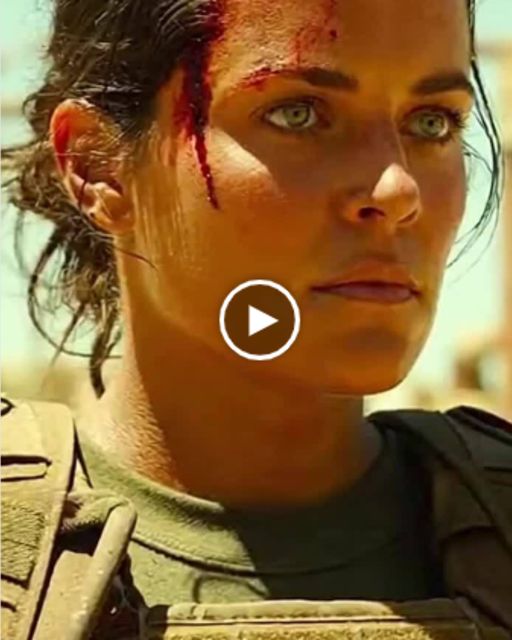
A Quiet Courtyard, A Loud Mistake
“End of the line, sweetheart.”
Dust hung in the air like a curtain, and the sun hammered down on a cracked courtyard that had seen too many bad days. Eleven men closed in around me in a loose circle, rifles up, eyes fixed. Their leader, a man named Briggs, held his weapon steady and pointed straight at my head. They believed I was a nurse who had been separated from a medical convoy they had just hit. They believed I was scared, confused, and alone.
They believed wrong.
My hands looked steady. My breathing was even. I kept my chin down and my pack tight to my body. The vest I wore was covered in hardened mud, the kind that clings after days in a desert. Under that crust, hidden from view, was the truth of who I was and why I was there.
They did not know that I had been following them for six long months. They did not know that the sudden static in their radios was my doing. They did not know about my brother, Danny, or how they had cast him off in a different dry valley, leaving him hurt and alone so their payday would arrive on schedule.
Briggs took a step closer. “Drop the gear!” he shouted, voice hard with the confidence of a man who thought he had already won. “No one is coming to save you, girl.”
“I know,” I answered, calm and simple. “I am not the one who needs saving.”
He hesitated. Men like Briggs recognize tone before they understand words. The air shifted. Small things like that matter in places like these.
I began to raise my hands. Not to surrender, but to the chest plate right over my heart. The mud there was thick and grainy. I ran my thumb across the spot where metal waited beneath, and a streak of dull gold flashed in the harsh light.
“Hands up!” he barked again, the command now an echo of itself.
I kept moving. One slow swipe cleared the rest of the grime and exposed the insignia I had worn for years. Sunlight caught it just right, and a bright flare shot into his eyes for a split second.
Briggs froze. Understanding cut through him like a chill wind. That symbol was known everywhere men like him worked. You could be a thousand miles from home, and still, a mark like that would drain the color from a face in an instant.
He lowered his rifle without meaning to. His head turned ever so slightly toward his men, and I could see the arithmetic of fear on all their faces. It took them about one heartbeat to do the math.
“It’s The Valkyrie,” he whispered. Three quiet words that clanged like a bell in that empty space.
His men broke. No shouts. No plan. Good operators survive because they know which fights to walk away from, and which names tell you to leave before you become a story someone else tells. One by one, they disappeared into shadowed doorways and alleys of sun-bleached stone, boots throwing up quick puffs of powder. In less than ten seconds, the courtyard went from crowded to nearly silent.
Briggs remained. The bravado fell away from him like a loose shirt. Fear replaced it, not the wild kind but the sober kind that knows it may not see another sunset.
“You’re supposed to be a myth,” he said, voice thinner now, eyes never leaving the insignia over my heart. “A ghost story they tell the rookies.”
“Myths don’t bleed,” I said as I took an easy step forward. “And they don’t hunt.”
What Brought Me There
He let his rifle drop. It hit the packed earth with a flat clack. His arms lifted in surrender, palms open. I could see small lines at the corners of his eyes, the kind carved by sun and sand and choices you wish you could take back.
“I didn’t want to do it,” he said. “It wasn’t my call. I swear.”
I stopped a few steps from him. Danny’s face flashed in my mind, the easy smile he always had in old photos. For six months, my heart had felt like ice. Right then, it cracked.
“Tell me about my brother,” I said, a quiet request that had waited a long time.
“The kid who ran comms? He was good,” Briggs said, voice shaking a little. “He was brave.”
“He was my brother,” I answered. “And you left him.”
The report I was handed after Danny was listed as lost in action did not fit the man I knew. He was careful, steady, and the best I ever saw with a radio and a plan. The words on the page were too neat to be true. So I stopped trusting the page and started following the trail myself.
I took leave. I pulled quiet strings. I spoke to people who do not write things down. Little by little, I put together a picture that explained what the words on that paper did not. Briggs and his team were on a private job, escorting a high-value asset across rough ground. Danny had been assigned to them for secure communications support.
Somewhere along the line, everything went wrong. An ambush. Shrapnel tore into Danny’s leg. He was hurt, not dying. But he could not move fast enough to comfort the clock they were trying to meet. The choice they made after that was not a mistake. It was a decision. They took his radio. They took his water. They left him to the sun and the silence and the slow kind of ending that no one deserves.
“Why?” I asked, and I felt the heat of that word in my throat.
“The package was priority one,” Briggs said, hands trembling. “Client said no delays, no liabilities. Anyone who slowed us down was to be left.”
“You were the leader,” I said. I took another step so I could see his eyes without shadow. “You gave the order.”
He shook his head quickly. “No. It came from above. Straight from the client.”
That piece of truth knocked something loose in me. I had believed Briggs made the call. That belief had lined my path with anger and long miles. His words felt like opening a door I did not know was there.
“Who was the client?”
He looked past me at the empty doorways, as if the men who had run might suddenly be back to help him choose his next sentence. “If I tell you, you’ll kill me,” he said.
“They already think you’re gone,” I answered. “They will tell a simple story: The Valkyrie caught you. No one will come looking.”
The truth in that settled on him as quietly as dust. He was already a name in someone else’s mouth, a story they would tell to cover their fear.
“Give me a name, Briggs. Do that, and you walk out of here.”
He swallowed hard. “General Miller. He ran the whole thing off the books, out of a control room in Germany.”
The name hit me like a wave breaking over cold rock. General Marcus Miller had been in our lives early on. He shook our hands at graduation. He told our father we made him proud. He told us we were the future. Then the floor of that old memory tilted, and I saw it from another angle. A man who used the words of honor to hide something dark.
“Why would he do this?” My voice stayed even, but my knees felt weak.
“Danny heard something he wasn’t meant to,” Briggs said, the truth spilling with relief. “Miller was working a side deal. Selling the asset’s information. Danny’s equipment caught a burst he tried to hide. Danny knew. That made him a risk.”
The pieces snapped into place. This was never about time or distance. It was never about the leg. It was a way to quiet the only person who could pull the rug off a betrayal.
The Evidence No One Could Bury
“Prove it,” I said.
Briggs reached slowly toward a small pouch on his vest and pulled out a rugged little data chip. “The audio from the mission. All comms. The order is on here. I kept it in case I needed it one day.”
I took it and felt its weight. Strange how something so small can hold moments that change whole lives.
“Thank you, Briggs,” I said.
He looked up as if the sun had eased off his shoulders. “So I can go?”
“I said you could walk out,” I answered. I reached for my sidearm and drew a steady breath. “I did not say you’d be running.”
The shot cracked once and bounced off the old walls. He went down hard with a shout, hands at his knee. I moved quickly, knelt, and pressed a field dressing into the wound. Firm, practiced, efficient. He would live. He would bear the scar. He would remember.
“This is for Danny,” I said, soft enough that only the dust and the sky could carry it away. “The real justice is for Miller. You’re coming with me as the voice that tells the truth when it matters.”
I sent a coded burst to a contact I trusted more than most. Coordinates. A brief message that said only what it needed to: detain one, wounded but stable. Someone would collect Briggs within the hour. He would be kept safe and alive, because there was more he had to say.
A Different Kind of War
Chasing Miller was not the kind of fight you meet with a rifle. It was a map of airports and quiet rooms. It was passwords and patient hours. The audio from Briggs was solid gold, but it was not enough by itself. Miller had built a life out of rank and reputation. He knew how to make doubt do his work for him.
I needed the truth to stand up on its own feet in daylight. I needed more than a recording. I needed a confession that could not be explained away.
Three weeks later, I found him far from any bunker. He was at home in the green spread of Virginia, where old trees hold up the sky and white fences draw straight lines across wide fields. He was hosting a garden party, all pale linen and soft laughter and the clink of glasses. He looked at ease, like a man who believed the past had already been tamed.
Getting onto the property did not test me. Security systems see many things but not everything. I moved where the cameras did not look. The stone wall that held in his roses might as well have been a curb. I crossed the lawn with the wind for company and kept to the edges until I could see him clearly.
He was laughing with a senator, a glass in his hand, a smile easy on his face. I thought of Danny’s hands on a cheap coffee cup, of the pride in our father’s eyes when we earned our places. I thought of a man who wore medals and said the right words while other people paid prices he did not. I swallowed that anger the way you swallow heat: slow, with care. There was work to do.
I did not approach him under the string lights. I waited instead. A long time. Patience is a useful tool. When the guests were gone and the house settled into the kind of quiet you can hear, I stepped through a side door and into a corridor that smelled faintly of old paper and waxed wood.
Face to Face
I found him in his study, a room built for sturdy books and serious conversations. He sat in a leather chair with a thick volume open on his knee. He looked up, puzzled but not worried. People who feel untouchable don’t reach for fear quickly.
“The help uses the other door,” he said, trying for humor, still not seeing me fully.
“I’m not the help,” I said as I stepped closer to the desk lamp’s glow.
He saw my eyes and lost a bit of his balance. He knew them. They were Danny’s eyes, and that memory made the space between us feel like a tight rope.
“Sarah,” he said, my name a breath. “What are you doing here?”
“I came to talk about my brother,” I said, my hand in my pocket around the chip Briggs had given me.
“A tragedy,” he said, the trained calm returning like a mask. “A heroic sacrifice.”
“It was murder,” I answered without heat. “And you gave the order.”
He stood up, careful to look offended. “That is a dangerous accusation.”
“Let’s test it,” I said as I placed a small audio player on his desk. “Briggs sends his regards. He was clear after things stopped going his way.”
I pressed play. His voice filled the quiet room, followed by the cold phrase that had ended my brother’s chances: “He’s a liability. Cut him loose. No trace.”
The color slid out of his face. He did not speak right away. Some truths land like a fall. You feel the drop and the ground at once.
“What do you want?” he asked finally, voice smaller than it had been in any speech or briefing I ever watched him give. “Money? Position? Name it.”
“This isn’t about what I want,” I said, and I found myself almost whispering, maybe so the room would keep the words safe. “It’s about what Danny deserved. He deserved to come home. He deserved truth attached to his name.”
He moved for a drawer, the kind that holds the things a man trusts more than others. I was faster. My hand hit the desk edge, and the message in my eyes seemed to be enough. He stopped.
“It’s over,” I said. “I’m not here to kill you. That would be too easy for you. Too simple for me. What happens now will take longer, and it will be honest.”
The Record That Ended a Career
“An hour ago,” I added, keeping my voice level, “the audio and Briggs’s signed statement went to the major newsrooms around the world and to the Joint Chiefs. Your life as you know it has reached its last page.”
He heard the sirens before I did, a faint rise in the distance that grew like a train rolling out of a tunnel. He sagged into his chair and looked older than he had outside under the lights.
“You’ll stand trial,” I said. “You’ll face the truth in a room where it cannot be managed away. You will remember my brother’s name every day you wake and every night you cannot sleep.”
I stepped back into a shadowed corner and waited for the knock on his door. When it came, I went out the same way I had gone in, as quiet as the second hand on a clock.
What Came After
Six months later, I stood on a beach that Danny and I loved when we were small. We would race the tide and skip stones, and our shoes would fill with sand not meant to be emptied quickly. The horizon had the same gentle curve it always had. The sky held orange and violet like a painter who knows restraint.
The trial had run its course. The verdict had been clear. General Miller was found guilty on every charge that mattered, the kind that do not disappear with time or influence. Danny’s name, the one I had said too many times to an empty room, was cleared in public. The record now said what the truth had always known: he was brave, he was good, and he was betrayed. They gave him the highest honor they could, even though the medal would hang on a uniform he would never wear again.
Briggs received a reduced sentence because he told the truth when it counted. It does not make him a hero. But it meant the full story stood tall, and sometimes that is the difference between darkness and a line of light under a door.
I held Danny’s dog tags in my hand and let the cool metal rest against my palm. I had lived for months on the sharp edge of anger. Standing there with the sound of water folding over itself, the fire inside me finally cooled. It did not leave me empty. It left me steady.
Justice, Not Just Vengeance
It would be easy to call it revenge and leave it at that. But revenge is a fire that eats through everything in its path. If you feed it long enough, it comes for you, too. It isolates you. It narrows your world to a single point and tells you nothing else matters.
Justice is different. Justice builds. It takes the wreckage and offers a way to make meaning out of it. It says a good man’s life cannot be erased by a lie. It says truth has weight, and that weight can shift the ground if you carry it far enough. Justice is slow sometimes, and it asks for patience most of us would rather not give. But when it comes, it leaves something useful behind.
In the end, I did not just avenge my brother. I honored him. I carried his name into rooms where it had been erased, and I set it down with care. I found the people who had traded him for convenience and I made sure the world knew what they had done. I did it not for the thrill of winning, but for the quiet of knowing a true thing had been said out loud.
Standing at the water’s edge, I let the tags slip through my fingers and catch the last of the day’s light. The grief did not leave me. It changed shape. It went from a storm to a stone I could hold. I could carry it without breaking underneath it.
The path of hatred ends in a wall. The path of truth winds, and it is hard, but it leads you out into a clearing where you can breathe. I learned that lesson with sand in my boots and dust in my throat. I will carry it the rest of the way.
If anyone ever asks me about that courtyard, I will tell them this: eleven men thought they had trapped a nurse, and maybe in a way they did. I have patched more wounds than I can count. I have held more hands than many people do in a lifetime. But that day, they did not find someone who needed saving. They found someone who knew that real saving often looks like telling the truth when it costs you, and standing still when everyone else wants you to run. They found someone who could clean the mud from her chest and show them exactly who she was. And that, in the end, was enough to change everything.