It was a blistering Saturday in Los Angeles, where the sun baked the streets and each breath felt like a warm breeze. Colonel Robert Hayes, a retired Army veteran, made his usual weekend journey down Main Street in his wheelchair.
At 68 years old, Robert wore his years with dignity. His medals gleamed on his chest, and the familiar ache in his shoulder was a constant reminder of his last deployment. He wasn’t seeking sympathy or praise. Instead, he wanted to support younger veterans at the nearby center, believing service evolves but never ends.
On the opposite side of the street, a lively crowd gathered at a café. What started as soft laughter suddenly turned sharp and loud.
Robert had politely asked a man to move his motorcycle, which was inconveniently blocking the curb ramp. However, this was no ordinary man. It was Trent Carter, known as “The Bull,” famous for his boisterous brawls and his need to assert dominance.
Trent sneered, “Can you see, old man, or are those medals just for show?”
Robert remained calm. “I earned these protecting folks like you,” he replied.
Those words struck a nerve with Trent, who moved closer. “Think that chair gives you special status?” he taunted before giving a brutal kick to the wheelchair.
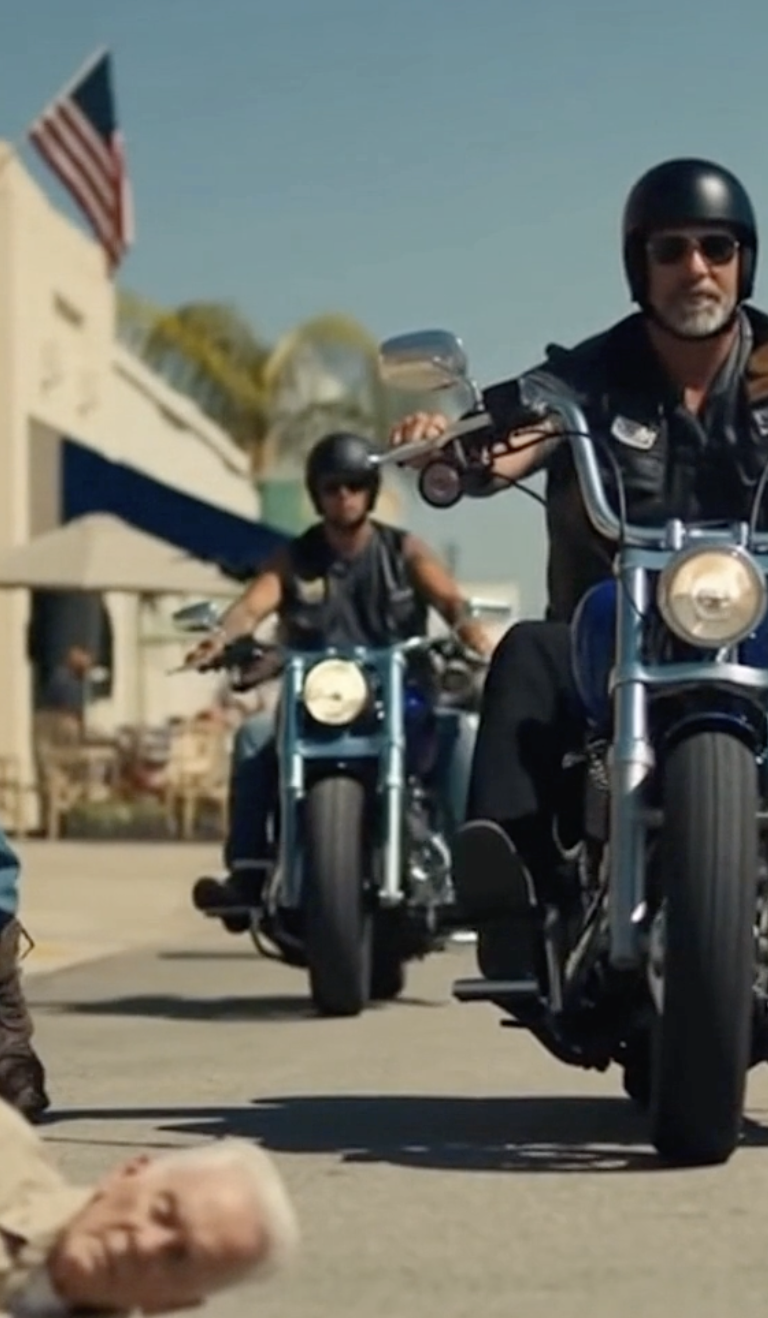
The wheel jerked. Robert crashed to the ground, his medals clattering against the pavement. For a moment, the street fell silent.
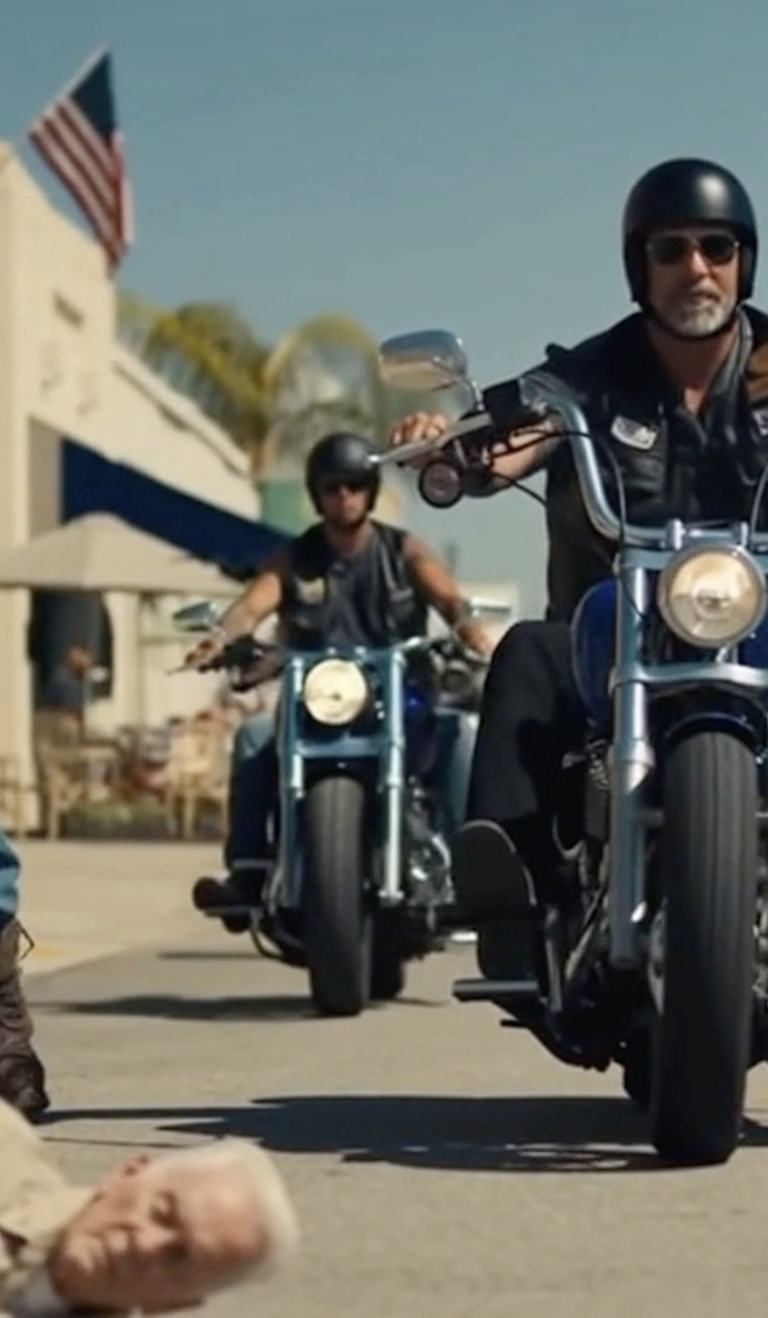
The stillness was broken by the distant roar of engines, a sound reminiscent of thunder. It grew louder, approaching with a heavy presence that demanded attention.
Despite his blurry vision, Robert lifted his head. His heart skipped as he saw a striking sight—six motorcycles rolled down Main Street, each rider bearing the insignia of an old group, The Liberty Vets.
This club of retired military bikers was known for keeping to themselves but never abandoning their comrades. Robert had once been part of their ranks.
As the bikes approached, the crowd respectfully parted. The lead rider, Wallace Crane, a former Marine and Vietnam veteran, parked in front of Trent, eyes locked on him.
Removing his helmet, Wallace addressed Trent, “You kicked a veteran out of his chair. Are you proud of that?”
Nervously, Trent tried to laugh it off, “The old man was in the way,” he mumbled. “No big deal.”
Wallace turned to Robert, then back to Trent. “Pick up the chair,” he commanded.
“Excuse me?” Trent scoffed.
“I said, pick up the chair,” Wallace repeated firmly.
Understanding the tense atmosphere, Trent noticed no one was laughing, including his café buddies.
“You have three seconds,” Wallace stated calmly.
Reluctantly, Trent picked up the wheelchair. Another biker gently helped Robert back into his seat.
Trent tried to explain, “I didn’t mean—”
Wallace interrupted, “We saw your intentions.” He leaned in closer, “And we won’t forget.”
Realizing further resistance was futile, Trent retreated, suddenly needing to be elsewhere.
The Liberty Vets remained with Robert, ensuring he was alright. “You good, brother?” Wallace asked.
“I didn’t expect the cavalry,” Robert replied with a smile.
Wallace laughed, “You taught me back in ’93, never leave a man behind.”
“I’d blanked on that,” Robert chuckled.
“No need to remember; we’ve got it covered,” Wallace assured.
Apologies flowed from the crowd. A young man who adjusted one of Robert’s medals spoke with admiration, “I want to be like you someday.”
Robert nodded, emotion filling his eyes. “It’s simple—stand for what’s right.”
Escorted by The Liberty Vets, Robert reached the veterans’ center, greeted by warmth and camaraderie from younger vets who had already heard of his ordeal.
A younger veteran, Marcus, told him, “You’ve got more fight than most men half your age.”
Robert grinned, “Charged by experience, not just years.”
The next day, a video of the incident surfaced online and quickly went viral, amassing millions of views. Headlines blared: “Veteran Assaulted on LA Street—Then Brotherhood Arrived.”
The public responded fiercely. Trent lost endorsements swiftly, his online presence was overwhelmed by demands for justice.
Meanwhile, veterans nationwide reached out to Robert. Many shared how his story rekindled hope and respect for veterans in their families and communities.
As Robert painstakingly read through the heartfelt messages, he felt an overwhelming sense of visibility and validation.
A few days later, Robert stood at City Hall, addressing officials and the media. His message was simple but powerful: “Being knocked down isn’t what matters—it’s who helps you back up. My brothers showed that honor still means something today, and maybe the world can learn from that.”
The room erupted in a standing ovation, even moving the mayor to tears.
Three weeks after, the veterans’ center received an anonymous grant—courtesy of a foundation inspired by Robert’s story. Improvements followed, including a new access ramp and updated facilities, culminating in the Hayes Honor Initiative.
Though Robert modestly declined the tribute, the honor of standing for others rang clear, even when he couldn’t stand himself.
Trent quietly faded from the public eye until six months later when he visited the veterans’ center. Humbled, he sought to apologize and redeem himself through action rather than words. With time, he was slowly accepted by some, illustrating that genuine remorse paired with effort can mend fences.
Throughout, Colonel Hayes remained grounded, assured someone would bear the torch of honor as he had. In a world often filled with noise and negativity, moments like these remind us there are people willing to stand up and do what’s right—without seeking recognition.
This tale of resilience began with a distant rumble, a moment of unexpected solidarity, proving strength takes many forms—sometimes in a chair, sometimes on two wheels, but always standing for righteousness.