
I was almost in the chair when I felt it being pulled away.
“You don’t belong here,” he said.
The sound of metal scraping on marble was louder than the chatter and music around us. My naval cap fell to the floor and spun, capturing everyone’s attention.
All eyes in the Norfolk banquet hall were on me.
I held my composure. Dressed in my full dress blues, I stood tall despite my father’s disapproval.
The emcee had proudly announced me as Lieutenant Commander Avery Cole moments before, but now I stood there, just a daughter shamed by her own father.
Colonel Richard Cole was that father, glaring at me as if I was a mere disappointment.
“You don’t belong at this table,” he repeated, this time with a hushed cruelty.
There was a tense clink as my stepmother’s fork hit her plate. Somewhere in the room, a whisper echoed my name.
I stood rigid, choosing silence.
And then—
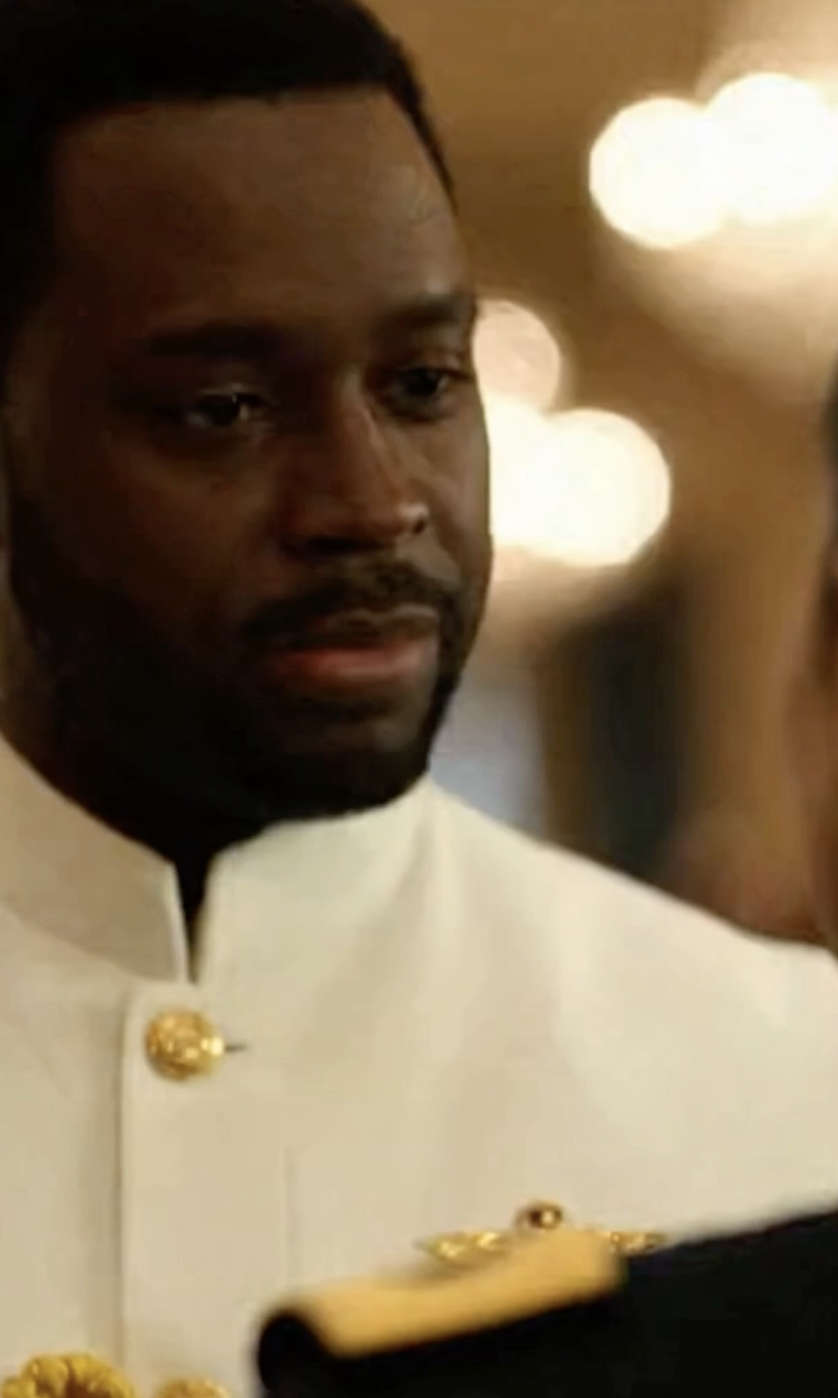
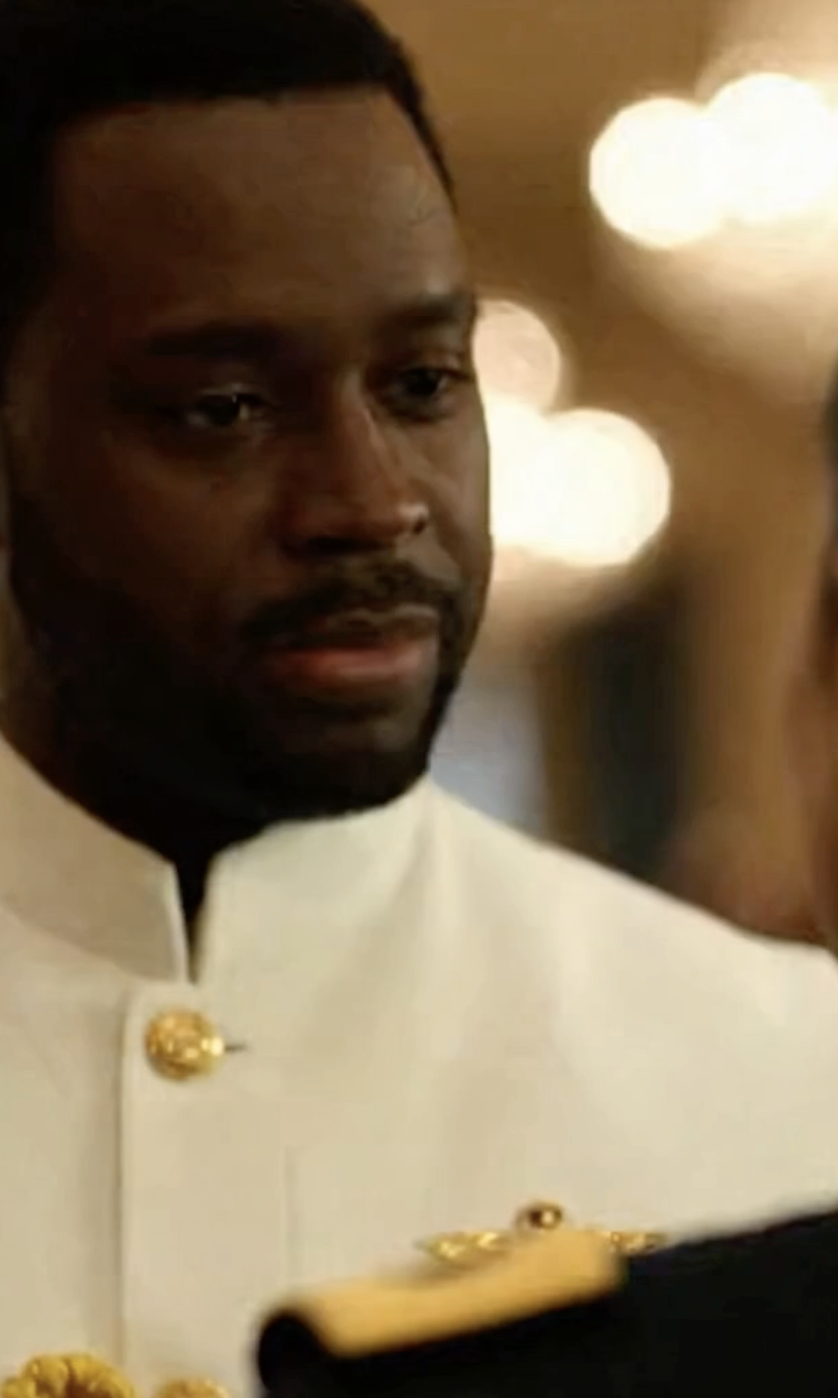
A figure stepped between us. Black polished shoes. Gold braid. A quiet authority.
“She outranks everyone here.”
He picked up my cap, dusted it gently, and handed it back like it was a treasure.
“Lieutenant Commander,” he addressed me, his eyes meeting mine. “It’s your table.”
I blinked, recognizing the voice.
In front of me stood Admiral Elias Grant. A four-star icon of the Navy, admired but also feared for his robust honesty and skill.
He was said to have mentored half the Pacific fleet, and now, he supported me.
My father was visibly stunned but silent. He sat as if annoyed, too stiff to react otherwise.
Admiral Grant glanced at the chair my father pulled away, then at me.
“I’d be honored to sit next you, Commander,” he said.
And so, he did.
Everyone in the hall witnessed this solidarity.
The most powerful man in the room chose to support me.
I took my seat, hands trembling. My cap, now a symbol of new strength, rested on my lap.
Why had my father tried to diminish me? And why did Admiral Grant come to my aid?
The mystery unfurled throughout the evening.
He leaned over, speaking softly.
“You’re even braver than your mother was,” he said.
My mom?
She passed away when I was twelve. Her name was Clara, and she had been our family’s gentle spirit, a nurse known for her quiet kindness.
My father seldomly reminisced about her; I never dared to ask. Her memory was treated as a forbidden topic.
I turned to the Admiral, seeking answers. “You knew her?”
He nodded. “More than your father ever did.”
That revelation tangled my thoughts, but the ceremony continued, leaving me with unanswered questions.
The evening moved on, serving dinner, dropping us into a sea of polite chitchat. Yet, our table held steady in silence.
My father ate mechanically, still refusing to acknowledge me. My stepmother watched uncomfortably but kept her silence.
Halfway through the meal, Admiral Grant leaned closer once more.
“I didn’t come tonight to stir things up, but I couldn’t let him diminish you,” he said.
I nodded, grateful. “Thank you, sir.”
“I met your mother in Naples. She saved me once from severe sepsis after a failed surgery. She defied orders to ensure my survival.”
I was awestruck.
“She often spoke of you. She said you were untamable, which she admired. She might have wished otherwise, but it didn’t overshadow her pride in you.”
My throat tightened. “I didn’t know anyone still remembered her.”
He assured me, “Some of us carry her memory still.”
The remainder of the night passed swiftly. Clapping, speeches, more honorees within the haze of celebration, yet an emotional turmoil brewed in me.
As the event drew to an end, Grant approached.
“Walk with me?”
We strolled under the stars, which shone dimly but steadily above Norfolk. The parking area was mostly abandoned.
“I know he’s your father,” Grant said, “but he hasn’t regrouped from your decision to chart your own course.”
“I mirrored him. Isn’t that what he wanted?” I asked, holding back frustration.
Grant gave a knowing grin. “He sought a shadow, Avery, not an equal. Your independence threatened his hierarchy.”
I protested, “That’s unfair.”
“Indeed,” Grant agreed, “yet it’s your truth.”
We stopped, surrounded by the stillness of officer vehicles. Together, we paused.
He handed me a small, worn envelope.
“From your mother,” Grant explained. “She wanted me to give this to you ‘when you were ready.’ Now feels right.”
With reverence, I accepted it.
“Thank you, sir.”
His voice softened, “Your mother would be immensely proud.”
As he walked away, I stood holding a piece of my own history.
At home, I didn’t open it immediately. I savored its presence, delicate handwriting addressing only my name: Avery.
With tea in hand and a heart full of anticipation, I opened her letter.
“Dear Avery,
If you’re reading this, it means you’ve embraced the difficult journey. I was sure you would, and I’m proud—still watching over you from afar.
Richard Cole shut out emotions for control, a flaw not yours to endure. You, my vibrant and unyielding daughter, were never meant to conform.
Stay gentle amid harshness. Find your voice despite fear.
And never forget you are not alone.
Love always, Mom.”
Tears fell before I finished reading.
That letter freed a part of me long held in uncertainty.
For years, I wondered if I was the problem—too aspiring, too bold.
In truth, being authentic was never the issue.
The next day, I confronted my father. Calm, resolved, and firm.
“You embarrassed yourself last night,” he criticized.
“No, you attempted to shame me. You failed,” I countered.
His sternness remained. “You humiliated me.”
“You’ve always felt that way,” I responded honestly. “But that’s no longer my burden.”
Silence fell between us.
I shared a photo from the event: me standing proud next to Admiral Grant.
“No fight today,” I assured him. “I’ve no regrets about who I am. I no longer need your validation.”
His attempt to speak dissipated unsaid.
I left it at that.
This was our final meaningful exchange.
Several weeks passed before hearing from my stepmother, who wrote that my father now kept our photo framed on his desk. Despite the lack of words, his actions spoke some change.
Months later, at another function, Admiral Grant introduced me to his daughter.
“Starting Officer Candidate School under your influence,” he shared warmly.
I chuckled. “I didn’t do anything remarkable.”
“You showed up,” he said.



