“Who invited the cripple?” my brother-in-law Rodney muttered, loud enough for the whole table to hear.
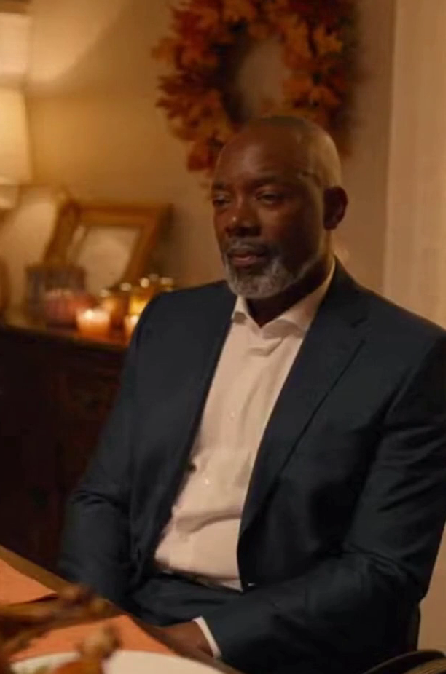
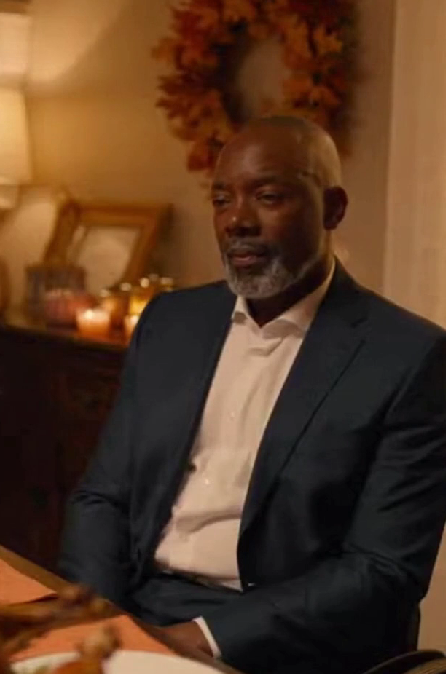
The man in the wheelchair – my coworker, Terrence – had nowhere to go for Thanksgiving. I’d invited him. He lost both legs in Fallujah. The prosthetics were new. He wasn’t comfortable walking in them yet.
Rodney’s wife, Pam, snickered behind her wine glass. My mother-in-law, Donna, didn’t even set him a proper place. She put a folding TV tray at the end of the table, separate from everyone else. Like he was an afterthought. Like he was less.
Terrence didn’t react. He just nodded, wheeled himself to the little tray, and said, “Thank you for having me.”
That made it worse, somehow. His grace made their cruelty louder.
My husband, Keith, sat there and said nothing. Not one word.
During dinner, Rodney started doing impressions. Rolling his eyes back, letting his arms go limp. “Look, I’m a wounded warrior.” He laughed so hard he choked on his cranberry sauce. Pam filmed it on her phone.
I was shaking. I looked at Terrence. He was still eating. Quiet.
Then Donna said the thing that broke me.
She leaned over to Keith and whispered – but I heard every word – “Next year, let’s keep the guest list to family. Real family. Not charity cases.”
I opened my mouth to speak, but Terrence beat me to it.
He set down his fork. Slowly. Deliberately.
Then he grabbed the arms of his wheelchair.
And he stood up.
The whole room went dead silent.
He reached into his back pocket and pulled out a folded piece of paper. He placed it on the center of the table, right next to the turkey.
“Before I was the guy in the wheelchair,” he said, his voice steady as stone, “I was Sergeant First Class Terrence Darnell Boykin, Third Infantry Division.”
Nobody moved.
“And before that,” he said, looking directly at Donna, “I was the son of a woman named Gloria Boykin.”
Donna’s face turned white. Her hands started trembling. Her wine glass tipped over. Red spread across the tablecloth like a wound.
Keith grabbed the paper. He unfolded it.
I watched my husband’s face collapse. He looked at his mother, then at Terrence, then back at the paper.
“Mom,” Keith whispered. “Mom, what is this?”
Donna stood up so fast her chair fell backward. “That’s a lie. That’s a damn lie.”
But Terrence was calm. He reached into his other pocket and pulled out a photograph – creased, faded, taped together.
He held it up.
It was a picture of Donna. Young. Maybe nineteen. Holding a baby boy in a hospital bed.
On the back, in her handwriting, it read: “My son. Born March 3rd, 1971. Given away. Forgive me.”
Rodney’s mouth was hanging open. Pam had stopped filming.
Keith looked at Terrence. Then at his mother. His voice cracked.
“Mom… is he…”
Donna grabbed the edge of the table. Her lips moved, but nothing came out.
Terrence sat back down in his wheelchair. He folded his hands. And he said five words that shattered that family into pieces.
“I didn’t come here for turkey.”
He looked at Donna, and then at Keith, and finished:
“I came because the DNA results confirmed what that photo already told me. And the person at this table who already knew — who’s known for thirty years — isn’t your mother.”
He turned and looked directly at my husband.
Keith’s face went gray.
“It’s you,” Terrence said. “You found me two years ago. And you buried it.”
I looked at Keith. He wouldn’t meet my eyes.
On the table, underneath the DNA report, was a second document. I pulled it out.
It was an email. Printed. From Keith’s work account. Sent to a private investigator. The subject line read:
“RE: Terrence Boykin — DO NOT let him find her. Bury everything. I’ll pay whatever it takes.”
The date on the email was the same week Keith told me his mother was “too fragile” for surprises.
I looked at my husband — the man I’d slept next to for twelve years — and realized I didn’t know him at all.
Terrence wheeled himself toward the front door. Before he left, he turned back one last time and said to Donna:
“I don’t need your table. I don’t need your food. I just needed to see your face when you realized the son you threw away came home.”
The door closed behind him.
Nobody spoke.
Then Donna collapsed.
And Keith — my Keith — looked at me with tears streaming down his face and said the one thing I never expected:
“There’s something else. Something worse. And it’s in the basement.”
I haven’t gone down there yet.
But I found the key in his coat pocket this morning.
And it doesn’t fit any lock in our house.
The silence that followed the click of the front door was heavier than any sound I had ever heard. It was thick with shame, with shock, with the wreckage of a family built on a lie.
Rodney was the first to move. He helped a sobbing Pam get Donna off the floor and onto the couch. Donna wasn’t unconscious, just broken. She was curled into a ball, her hands over her face, making these small, wounded animal sounds.
I didn’t go to her. I couldn’t. All I could see was Terrence’s TV tray, sitting alone and apart.
I stood frozen in the dining room, staring at my husband. His face was a mess of tears and snot, but it wasn’t grief I saw there. It was fear. Pure, selfish terror.
“How could you?” I whispered. My voice was hoarse.
“I did it for her,” he choked out, pointing a trembling finger at his mother on the couch. “The shock would have killed her! She’s not strong!”
“She wasn’t too strong to give away a baby,” I said, my voice cold. “And you weren’t protecting her. You were protecting yourself.”
His eyes darted around the room, looking for an escape.
The words about the basement hung in the air between us. “Something worse.”
That night, I didn’t sleep in our bed. I slept on the sofa in the living room, the strange, brass key clutched in my hand. It felt cold and heavy, a solid piece of an awful puzzle.
The next morning, Keith was gone. A note on the counter said he’d taken his mother to stay with Rodney and Pam for a few days. To “let things cool down.”
He didn’t mean the family drama. He meant me.
He was giving me space so I wouldn’t ask about the basement.
I walked down the wooden steps, my heart pounding with each creak. The air was damp and smelled of dust and old memories.
Our basement wasn’t a secret dungeon. It was just a basement. Holiday decorations in plastic tubs. Old furniture under white sheets.
But Keith had pointed me here.
In the far corner, behind a stack of paint cans, was a metal filing cabinet. It was old, gray, and utilitarian. It belonged in an office, not our basement. I’d never seen it before.
He must have brought it here recently.
There was no lock on it. I pulled open the top drawer.
It was filled with files. But they weren’t ours. They were Donna’s. Old tax returns, bank statements, her marriage certificate to Keith’s late father, Robert.
My stomach twisted. He had stolen his own mother’s personal files.
I sifted through them, my hands shaking. What was I even looking for?
Then I found a thick manila envelope tucked at the very back. It was sealed with old, yellowed tape.
Written on the front in a man’s handwriting were two words: “For Terrence.”
I tore it open.
Inside wasn’t just one letter. It was a lifetime of them. All from Robert, Keith’s father, who had died five years ago. They were addressed to “My First Son.”
I sat on the cold concrete floor and began to read.
The first letter was dated a week after Terrence was born. Robert wrote about holding him in the hospital. About his perfect, tiny fingers. About how Donna’s parents had forced the adoption, threatening to disown her, calling her a disgrace.
Robert had fought them. He had wanted to keep his son.
But he was young, poor, and Donna had buckled under the pressure from her family.
He never forgave them. And in a way, he never forgave her.
Letter after letter detailed a life of quiet regret. Robert had secretly hired a private investigator every few years, trying to find his lost son. He’d gotten close a few times, but the sealed adoption records were a brick wall.
The last letter was written a month before Robert died of a heart attack.
“If you are reading this,” it said, “it means I am gone, and your brother, Keith, has finally found you. I hope he did the right thing. I hope he gave you this.”
Then came the part that made my blood run cold.
“I have never trusted Donna’s family, nor did I trust that Keith would have my strength of character. So I set things right the only way I could. The bulk of my estate, the money I earned, not the money her family gave us, I have placed in a trust. It is your birthright. It is for you, my son.”
The letter went on to detail a private bank and an account number. It was a fortune. Everything Keith and his family flaunted — the expensive cars, the lavish vacations, Donna’s comfortable life — it was all built on money that belonged to Terrence.
Keith hadn’t just hidden a brother. He’d stolen his entire life. His inheritance. His father’s last wish.
That was the “something worse.”
And the key? The last page of the letter explained it. It was for a safe deposit box at that same private bank. Inside was the original trust document, the one thing that could legally transfer everything to Terrence.
I felt sick. The man I married, the man who preached about hard work and integrity, was a common thief hiding behind a mask of filial duty.
He didn’t want to protect his mother from the shock. He wanted to protect his wallet from the truth.
I put the letters back in the envelope. I took the key. I walked upstairs and packed a bag.
Finding Terrence wasn’t hard. He was listed in the phone book. He lived in a small, tidy apartment complex for veterans on the other side of town.
When he opened the door, he wasn’t in his wheelchair. He was standing on his prosthetics, leaning against the doorframe for support. He looked tired, but his eyes were clear.
“Ma’am,” he said, surprised to see me.
“Terrence,” I said, my voice trembling. “Can I come in? I have something for you. Something from your father.”
His composure cracked. For the first time, I saw the vulnerable man behind the soldier’s stony face. He stepped aside and let me in.
His apartment was sparse but immaculate. A folded American flag sat in a display case on a bookshelf.
I sat on his small sofa and I told him everything. I didn’t spare Keith, or Donna, or any of them. I laid the whole ugly truth out on his coffee table.
Then I gave him the envelope.
He read the letters, one by one. I watched as decades of questions were answered in his father’s handwriting. Tears streamed down his face, silent and steady. He wasn’t mourning a man he never knew; he was mourning the life, the love, he had been denied.
When he finished, he looked at me, his eyes filled with a deep, profound sadness.
“All I ever wanted,” he said, his voice thick with emotion, “was to know where I came from. I never imagined…” He trailed off, shaking his head.
“The money is yours, Terrence,” I said gently. “It’s what he wanted.”
“It’s not about the money,” he said, wiping his face with the back of his hand. “It’s about the truth. He looked for me. My father looked for me.”
That was everything.
The next day, Terrence and I walked into the bank together. I say “walked” because he refused to use his chair. He stood tall on his prosthetics, using a single cane for balance, his father’s letter and the key in his hand.
The contents of the safe deposit box were exactly as Robert’s letter described. The official trust documents, a few more photos of him as a baby, and a man’s gold watch with an inscription on the back: “For my son, T.D.B. May you always find your way home.”
The final confrontation didn’t happen at a holiday table. It happened in a lawyer’s office.
We had our lawyer contact Keith’s. When he walked in with his mother, he looked like a ghost. Donna looked even worse. She was shrunken, aged ten years in a few days.
Rodney and Pam were there too, smelling blood in the water, already trying to figure out their angle.
Terrence didn’t say a word. He simply had his lawyer present the trust documents. The evidence was irrefutable.
Keith’s face crumpled. He knew he was caught. He started babbling about misunderstandings, about protecting his mother, the same tired lies.
But then Donna spoke. Her voice was a fragile whisper, but it cut through the room.
“You knew,” she said, looking at Keith. “You knew Robert did this. And you let me think he forgot. You let me live in this house, spending money… his money.”
The betrayal wasn’t just about Terrence. It was about Robert, too. Keith had poisoned her memory of her husband.
Pam started yelling about how they would fight it, how it wasn’t fair.
But Terrence held up a hand.
“I don’t want to fight,” he said, his voice calm and full of authority. “The money is mine. The law is clear. But I’m not you people.”
He looked at Donna. “You can stay in the house. I’m not going to throw my mother out on the street.”
He then looked at Keith. “But you will pay back every penny you spent since the day you found me and decided to hide me. You will work for the rest of your life to restore what you stole from my father’s legacy.”
And finally, he looked at Rodney and Pam. “And you two? You get nothing. The gravy train is over.”
I had already filed for divorce. There was nothing left for me there.
In the end, that’s what happened. The family, built on a foundation of secrets and greed, crumbled into dust. Keith lost his wife, his comfortable life, and the respect of the one person he claimed to be protecting. He works two jobs now, his wages garnished to repay the trust he plundered.
Donna lives quietly in her house, a ghost haunted by the choices she made as a girl and the monster she raised as a woman. She and Terrence speak occasionally. It’s not a warm relationship, but it is a start. He sends her photos of his physical therapy, of his progress. Small olive branches.
And me? I found a new life. A quieter one. One based on honesty.
Sometimes, Terrence and I have dinner. He uses the money for what it was intended for: a good life. He has state-of-the-art prosthetics, a home adapted for his needs, and he started a foundation to help other veterans who come home to nothing.
He is not defined by what he lost in a war, or by the family that threw him away. He is defined by his strength, his grace, and his incredible capacity for forgiveness.
That Thanksgiving, a family was shattered by the truth. But the truth also set a good man free. It reminded me that real family isn’t about blood; it’s about who shows up, who stands up for you, and who tells you the truth, no matter how hard it is to hear. Secrets are a prison, and the truth, however painful, is always the key that sets you free.