A Room That Went Silent
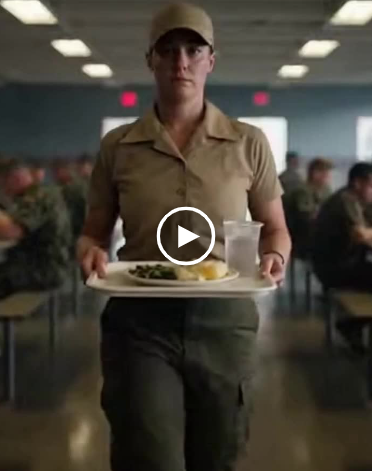
One chair scraped back. Then another. Then another. In the chow hall, the sound echoed like a warning bell. Thirty men stood up at once, not shouting, not charging, just rising to their feet with a quiet certainty that said more than any threat.
They never laid a hand on him. They didn’t have to. Their presence was the statement. In that stillness, a man named Keller felt his future slip away. Not because of a broken rule or a bruised face, but because he had crossed a line he didn’t even respect enough to see. In that moment, he realized there are rules here older than any manual—rules about honor, memory, and who we protect.
This isn’t a story about revenge. It’s about legacy. It’s about the people we’ve loved and lost, and how they still show up in the world through us. It’s about the day I learned I wasn’t abandoned by my mother. She chose a path that was bigger than herself. And in a way I didn’t understand until that day, she never stopped watching over me.
He Laughed, and the Laugh Died
The air in the hall grew heavy. Not angry exactly, but charged—like a storm you can feel in your bones. Keller had cracked a joke at my expense earlier, slapped me like I was a prop in his act, and tried to play it off. It didn’t land. It never should have. Now he tried to laugh again, thin and desperate, but the sound went nowhere. Thirty sets of eyes stayed on him, steady and unmoving.
He looked for an ally. There wasn’t one. Not a single man shifted or shrugged or stared at the floor. The room held its line, silent and certain. It wasn’t a mob. It was a wall of resolve. A quiet message: you just hit someone you didn’t bother to know.
Keller’s hands worked at his sides. His jaw twitched. He was calculating, trying to figure out how a dumb joke and a thoughtless slap had brought him to this place. He was thinking about what he had done. He was not yet thinking about who he had done it to.
The Bracelet That Spoke for Me
One of the SEALs stepped forward, not close enough to threaten, just enough to be seen. His finger pointed to my wrist. The simple silver bracelet caught the sharp overhead light. It wasn’t jewelry. It was a name.
Keller squinted, sounded it out, as if the letters might fix this. He read it low, uncertain. “L-T… Michelle Hayes?”
More chairs scraped across the floor—small movements, but they carried weight. That name meant something. It should. Lt. Commander Michelle Hayes was not a story you told. She was the kind of story you carried.
She had been the first female SEAL officer embedded in combat support. She had stood watch, planned missions, and when the worst day of her life arrived, she did what she always did—she protected her team. She died pulling two of them out of a kill zone, bleeding and unbending until they were safe. One of those two men was in that room, standing straight as a flagpole, not once looking away from Keller.
In that silence, Keller’s face changed. The joke was gone. So was the swagger. He swallowed hard. “I didn’t know,” he said, his voice thin.
From the back came a reply, quiet and sharp. “Exactly. You didn’t care to know.”
That is how you lose a room like this. Not by making a mistake, but by showing you never took the time to learn who you were sharing the room with. In this place, that’s not just a slip. That’s exile. Maybe not the kind you can see on paper. But the kind that leaves you out in the cold all the same.
Called Outside
The training officer, Master Chief Rowe, entered without hurry. Yet when he stepped inside, the hall felt smaller. His face was carved with lines that looked like experience had chiseled them there, and his eyes made you stand up straighter without a word.
“Trainee Keller. Outside. Now.”
The command was not loud. It didn’t need to be. Keller moved like a man who had just remembered how to run, and the door closed behind him with a finality that didn’t feel like a door at all. It felt like a chapter.
No one sat down.
Master Chief Rowe turned to me. He didn’t ask me anything. He raised his hand in a salute.
The room followed.
My chest tightened, and I could barely pull in breath. No one had ever saluted me before. I’m not a SEAL. I’m a logistics contractor, a support hand in a place that spins between life and death. But this wasn’t about titles. It was about lineage and memory. It was about the people who made these men who they are—and the people who keep them going.
A man stepped forward and rested a steady hand on my shoulder. Not heavy. Firm. “You ever need anything, you come to us,” he said. His voice was calm, the way a deep lake is calm, steady on top and miles profound beneath. I knew him now. I had seen him in a photograph on my mother’s last deployment.
“Thank you,” I said. The words still felt too small for what had moved between us.
What Happens When a Place Remembers
The next day, Keller was gone. No lesson plan. No long speech. Just a line on the roster: Trainee Keller – Dropped from Program. The message spread quickly. No one retold the slap. No one needed to. The story became something else—a line in the sand you were supposed to notice.
Something shifted. When I walked into the gym, a guy across the way lifted his chin in greeting. Another handed me a bottle of water with a wordless nod. At first I was awkward under the kindness. I’ve spent years being small, unnoticed, easier to ignore than to see. But this wasn’t about attention. It was about presence. It was about being part of a net sewn from experience and loss and love of country. It was about being among people who care enough to learn your name.
The Hall of Frames
Two weeks later, I was counting comms gear when Master Chief Rowe found me. His stare was as steady as ever, but the edge had softened around it.
“Got a minute?” he asked.
I set the crate down and followed. We turned down a corridor I’d never walked, passed doors I’d never had the clearance to enter. He scanned us through a secure doorway and led me into a room that felt like a chapel even without a single pew.
The walls were lined with framed photographs. Some faces were grinning, some solemn, some almost defiant. Each frame held a moment and a name. Some had black ribbons beside them. Fallen brothers and sisters, frozen in a single clear day.
In the center of the far wall was a new frame. The sight of it hit me before I could think the name.
My mother. Lt. Commander Michelle Hayes.
The photo came from the day she finished BUD/S. She was soaked through, hair plastered, bruised at the edges, and smiling the way you smile when the mountain is behind you and a bigger mountain is ahead. Below her picture, a simple plaque read: “She didn’t need to raise her voice to be heard.”
My knees eased toward the floor, and I caught myself on the edge of a display case. Somehow I managed to stay standing, but it was a close thing.
“She’s part of this place forever now,” Rowe said. “And so are you. If you want to be.”
I blinked away the blur. “Sir?”
“We’ve got openings in supply chain command. Civilian role. Internal. Permanent,” he said. He paused, letting the offer settle like a steady hand. “There’s also a fast-track contractor-to-reserve path. Only if you want it. Only if there’s fire in you.”
I stood in front of my mother’s picture and thought about drifting. About all the years I confused disappearing with survival. About the way I used to fold myself smaller so I wouldn’t be a target, or a burden, or even a memory.
Now I understood what legacy really was. It wasn’t pressure to be the same. It was the freedom to become who you are, knowing you belong to something good.
“I want it,” I said.
Rowe nodded once, crisp. “Then you’ll earn it. Just like she did.”
The Work of Belonging
The next weeks were long and honest. No shortcuts. No special treatment. They didn’t build a slide for me to coast down. They built stairs and expected me to climb. I worked overtime until the numbers on the wall clock felt like another language. I studied regulations line by line until the words stopped swimming. I ran. I lifted. I failed, then tried again. I went home sore, woke up stiff, and did it again anyway.
In the middle of all that, I heard her voice. Not out loud. But clear enough for me to recognize. Stand tall. Shoulders back. No one can erase where you came from.
I started to find a rhythm. I remembered that being part of a team isn’t about being the loudest voice. It’s about showing up for the small things so the big things can get done. It’s about packing a crate right so someone on the other side of the world can trust what’s inside when it matters most. It’s about a signature that means what it says. It’s about the comfort of knowing the person next to you will do what they promise, even when no one is watching.
A Conversation Under the Stars
One night after a late shift, the base was quiet, the kind of quiet you only get when the wind dies and the water beyond the fence seems to hold its breath. I saw a figure standing at the edge of the grinder—the training ground where pain and perseverance turn into something tougher than both.
It was the man who had first stepped forward for me in the chow hall. I had never learned his name. Some people you know by their weight in your life, not the words on their ID.
He walked over. “Hayes,” he said. He didn’t ask. He named.
“Yes, sir,” I said, straightening without thinking.
He looked up at the open sky. “You’re not her shadow,” he said. “You’re the echo. The proof she existed. The continuation. That matters more than you realize.”
“I’m trying to honor her,” I said.
“You already are,” he answered. He looked at me then, his gaze steady, kind without being soft. “You don’t have to carry her death like a shield. Carry her life. That’s the legacy.”
For the first time in years, I let the words land. I didn’t fend them off or twist them into a warning. I just received them. I nodded. The quiet between us said everything else.
The Day I Stood in Uniform
A month later, I stood at the edge of the same grinder. I wore a uniform with a civilian patch on my arm and paperwork in my pocket that said Navy Reserve was within reach if I kept moving forward. There was no grand announcement. No marching band. No bright spotlight. Just strong morning light, steady wind off the ocean, and the feel of ground under my boots that said: you belong here.
I used to think belonging had to be handed to you. Now I know it’s built. Daily. Brick by brick. Choice by choice. I wasn’t standing there because I lost someone—though I did. I was standing there because I chose to become someone. The difference is everything.
There are no medals for jobs done right in the background. There is a table where people make space for you. There is a wall where names are remembered. There is a future you never thought you could want because wanting felt risky. And then one day, it’s in your hands, steady and real.
What the Wind Reminds Me
Sometimes, when the sun lifts higher and throws lacework shadows across the chain-link fence, I feel something I can’t explain. Not a haunting. Not a chill. More like a pulse keeping time with my own. I think of my mother then—not as a ghost, but as a presence stitched into the fabric of this place and into me.
We don’t vanish. We continue. Not only in memorials and plaques, but in the way we show up. In the way we step in and stand up. In the way we learn names before we judge. In the way we say, “You’re not alone here.”
That day in the chow hall started with a careless laugh and a slap meant to turn a person into a punchline. It ended with a lesson that lasted. This community doesn’t run on fear. It runs on respect. It keeps its promises. It remembers who got us here and who is still carrying the load.
Keller hit a “nobody” for a cheap laugh. He learned there is no such thing as a nobody. Not here. Not in a room built on sacrifice and sweat, where every job connects to a life downrange, and every name on a bracelet is a story you’d better learn before you open your mouth.
I wear my mother’s name not as a weight I can’t carry, but as a steadying hand between my shoulder blades. She does not push. She encourages. And when the day is hard—as some days always are—I remember the photograph on the wall. Soaked. Bruised. Smiling like the mountain couldn’t keep her from the next climb.
I think about that, and I do the work in front of me. That is how we honor the people we love. Not by carving their names into stone and stopping there, but by carving their lessons into our lives and moving forward. By earning our place the way they earned theirs. By building something others can stand on after us.
I used to fear I would always be the kid in the corner, the one people looked past. Now, when someone catches my eye across the gym and nods, I nod back. Not because I need the attention, but because I recognize what the nod stands for. It’s a promise and a reminder. You matter here. We see you. We know your name.
That is legacy. Not a heavy crown, but a shared torch. You don’t hold it alone. You hold it with everyone who came before and everyone who will come after—and you hold it steady so others can see by it.
I used to think courage was only for people in the front line. Now I know it lives in supply rooms and chow halls, in late-night inventories and quiet conversations under the stars. It lives in the choice to lift your head and be counted. It lives in the discipline to do the right thing the right way, even when no one is clapping.
There’s a reason I can stand a little taller these days. It isn’t pride. It’s gratitude. Gratitude for a mother who gave her best every day, for a team that remembers, for a Master Chief who opened a door and then expected me to walk through it on my own two feet.
If you ask me what I learned, I’ll tell you this: respect is not a rule, it’s a way of life. Memory is not a burden, it’s a guide. And belonging is not given, it’s earned—and then shared. My mother’s voice still settles me when the day runs long. Stand tall. Shoulders back. No one can erase where you came from.
I listen. I go to work. I remember. And now, in this place that once felt far away, they remember me too.