
The Day the Toolbox Skidded Across the Deck
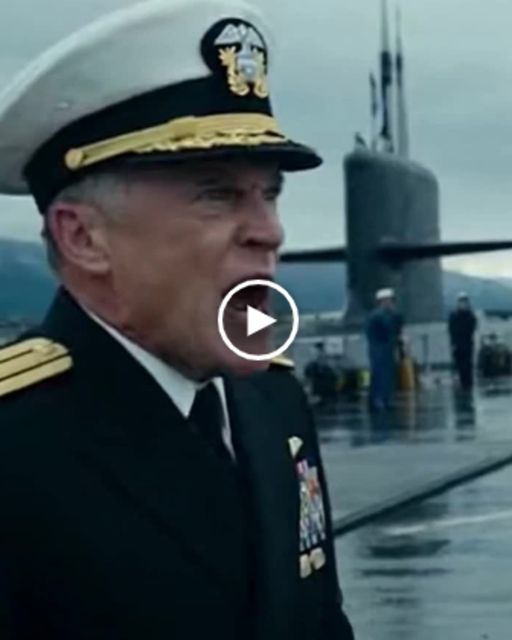
“Who is your commanding officer?” Admiral Vance shouted as he kicked my toolbox, the heavy case skittering across the deck with a screech that made every head on the bridge snap around. To him, I was just the grease-stained female mechanic he loved to belittle. It was a role I had worn like a second skin for weeks, and for the sake of the mission, I had let him believe it.
I touched the small insignia tucked against my chest and breathed out slowly. My voice didn’t need to be loud to be heard. It only needed to be steady. “You might want to start packing.”
He gaped, his mouth opening and closing like a fish fresh from the net. Color drained out of his face until he looked as if he’d seen a ghost. The people on the bridge—people who had learned to keep their heads down and their voices low—stared in place, waiting for the next thunderclap.
Something shifted. The fear in the room thinned, like fog under a rising sun. It was replaced by something I hadn’t seen here since the day I came aboard: hope.
“This is some sort of joke,” Vance stammered, his voice suddenly small. “You can’t be… Who are you?”
“I’m Rear Admiral Eleanor Hayes,” I said, letting the words land gently but unmistakably. “As of this moment, Admiral Vance, you are relieved of your command.”
I let the silence that followed do the work. Titles can be loud, but truth carries farther. Around us, instruments hummed, screens flickered, and trained professionals stood very still, weighing the moment.
“Marine detail will escort you to your quarters,” I said, nodding to the two Marines who had arrived with quiet purpose. “You are to have no contact with any member of this crew. Is that understood?”
He stared at me as if I had dismantled the engine of his entire life right in front of him. He had ruled here for years, temper raging like bad weather. He had mistaken fear for respect. He had built himself a small kingdom on steel and silence.
Now that kingdom was gone.
As the Marines took him by the arms, he twisted back, desperation briefly flaring. “You don’t understand what it takes to run a ship like this!”
“I do,” I answered, turning from him to face the crew he’d failed. “More than you know.”
Revealing the Truth Behind the Grease
“My name is Rear Admiral Hayes,” I repeated for the room. “I am with the Inspector General’s office. For the past several weeks, I’ve been serving with you in disguise as Petty Officer Hayes.”
I saw their faces clearly now that the shouting had ended. Exhaustion. Wariness. And underneath, that small bud of hope, not yet confident enough to bloom. I saw young Seaman Miller—barely old enough to rent a car—who had been berated for an hour over a simple error in a report. I saw Chief Petty Officer Rodriguez, a steady man who seemed to carry the whole ship’s spirit on his shoulders. I had watched him comfort younger sailors with a quiet word and a hand on the shoulder, as if he alone could shield them from the storm.
“I know it’s been hard,” I said, softening my tone. “It ends today. This is your ship. It belongs to you, to your work, to your pride. It’s time to bring that back.”
Someone let out a breath. Then another. In that small chorus of sighs, I heard knots untie and clenched jaws loosen. A little light returned to their eyes, cautious but real.
For me, the hard part was just starting. A man who kicks a toolbox is a symptom. The real sickness was somewhere deeper, hidden in the wiring and the paperwork.
Coffee, Plain Talk, and the First Real Clue
Later that day I sat with Chief Rodriguez in the quiet mess hall. He had two decades in uniform written in the lines around his eyes. He stirred his coffee slowly, thinking before he spoke, the way good chiefs do.
“He was always like that, ma’am,” the Chief said evenly. “But the last year got worse. Meaner. More… desperate.”
“Desperate?” I leaned in. That wasn’t the word I expected.
“Like he was hiding something,” Rodriguez said, lowering his voice out of habit. “We’ve had equipment failures across the ship. Systems that should be brand new are breaking. That valve you were working on today? Logged as replaced two months back with a top-tier part.”
My pulse ticked up. This was what I had suspected.
“I know,” I said. “The part I pulled out was cheap and refurbished. The serial number had been scrubbed.”
Rodriguez nodded grimly. “We’ve been filing requests for critical spares for months. The paperwork says they were ordered and installed. But we don’t get them. Or what shows up is wrong. Or it’s junk.”
That moved us from bad leadership to outright danger. The ship’s safety—and the people who slept and worked inside her steel walls—was being compromised. The pattern smelled like fraud. Systemic. Intentional.
“Who signs for the supply orders?” I asked.
“Mostly Vance. But his XO—Commander Davies—handles the details. He’s sharp. Everything’s clean on paper.”
I knew Davies. Smooth. Polished. Always concerned about the crew’s well-being, or so he said. While undercover, he’d hinted to me that he didn’t approve of Vance’s temper, trying to look like the reasonable man in a storm. Now that image felt like a set piece on a stage.
Stories From the Deck Plates
Over the next few days I talked to people everywhere—engine room, galley, berthing. The stories didn’t change. Fear. Intimidation. Corners being cut because everyone was afraid to be the nail that stuck up.
Then Seaman Miller came to my temporary office. He stood there twisting his cap in his hands, a nervous habit he probably picked up in boot camp. His voice was a whisper when it finally came out.
“Ma’am, Commander Davies told me to sign a maintenance log for the aft engine room fire suppression system,” he said. “A few weeks ago.”
“Did you do the work?” I asked, careful not to let judgment creep into my tone.
He shook his head, eyes filling. “No, ma’am. He just handed me the sheet and told me to sign. Said the Admiral wanted it handled before the quarterly report. I was scared. I signed it.”
There it was. A clean, hard crack in the dam. A direct order to falsify a safety record. Fire suppression isn’t a minor detail. It’s the line between a scare and a funeral.
The Paper Trail That Looked Too Perfect
That evening I sat in the captain’s office, now my working space, paging through the financial ledgers. They looked perfect—so perfect they felt artificial. Real life is messy. Real books always have a wrinkle or two. These looked like they’d been ironed flat.
A knock sounded. Commander Davies stepped inside with the easy smile of a man who trusts his own reflection.
“Admiral Hayes,” he said smoothly. “I hope the investigation is going well. The crew seems lighter already. You’ve done a great service.”
“Just doing my job,” I said, watching him closely.
“Of course,” he replied, laying a folder neatly on the desk. “I’ve been keeping notes on Admiral Vance’s behavior. Documented incidents. Might help your case.”
I didn’t open the folder. I didn’t need to. It would be thorough, painting Vance as a bully—and he was—but it would also be the perfect decoy.
“Thank you,” I said evenly. “You are very detail-oriented.”
“I try to be,” he said, modest on the surface and confident underneath.
“So detailed,” I continued, “that I’m sure you can explain why your signature appears on requisitions for over two million dollars’ worth of parts that never made it aboard.”
The smile froze on his face. It didn’t fall. It just stopped, as if someone had hit pause.
“I sign what Admiral Vance puts in front of me,” he said, his voice cooling.
“And I’m sure you have no connection to the Delaware shell company that received Navy payments for those parts,” I said, keeping my tone conversational. “Interesting coincidence, though—the sole director shares your last name and a home address with your mother.”
The color left him in a rush. The careful mask slipped. The helpful officer was gone; the cornered man remained.
“You can’t prove any of that,” he said quietly, anger and panic mixed in his eyes.
“Chief Rodriguez saw you in the supply office late at night on your personal laptop,” I replied. “And Seaman Miller is prepared to testify that you ordered him to sign a false safety log. We have a warrant. We’ll find what we need.”
He moved suddenly, not toward me but toward the small shredder beside the desk. In his hand I saw a glint of plastic—a tiny thumb drive he had slipped from his pocket.
I didn’t think; I reacted. Years ago I learned leverage in the engine room, not from a manual but from hauling heavy things in tight spaces. I stepped in, blocked his path, and he stumbled. The drive flew from his hand and skittered across the floor, coming to rest near the bulkhead.
The Marines outside were in the room before the echo faded. They had him face-down and cuffed with firm efficiency. One of them picked up the thumb drive and placed it in my palm.
What the Thumb Drive Revealed
That small piece of plastic told the whole story. Real ledgers. Off-shore account numbers. Email chains between Davies and Vance that mapped out their scheme line by line. For more than a year they had been siphoning money meant for the ship and its people. They pocketed the difference while cheap, unreliable parts went into critical systems.
Vance’s bullying had been more than a personality flaw. It was cover. Keep everyone scared, keep them scrambling, keep them quiet. If no one felt safe to ask questions, no one would notice why brand-new systems kept failing.
We processed the evidence, secured the chain of custody, and moved forward with charges. The Navy is many things, but at its best it is serious about accountability. This time, the system worked.
Address to a Crew That Deserved Better
Before I stepped off the ship for the last time, I stood on a platform in the hangar bay and looked out at the crew. A new captain—steady, respected, and fair—was already taking the helm. The air itself felt different. The edge was gone.
“A ship is more than steel,” I said to them. “It’s a community. It’s a promise you make to one another—to keep each other safe, to do the job right, no matter how small the task might seem.”
I scanned their faces. Some were still wary, but many were lifted by a calm pride I hadn’t seen the day I arrived. “Real leadership isn’t about the stars on your collar. It’s about service. It’s about making sure the person next to you has what they need to succeed. You were let down by your leadership. But you didn’t let each other down.”
“You,” I told them, “are the heart of this ship. Don’t forget it.”
Months Later, A Photo Worth a Thousand Salutes
Back in Washington, the days returned to their usual rhythm—briefings, interviews, the long paperwork trails that bring truth fully into the light. One afternoon an email popped up with a simple subject line: News from the Open Sea.
It was from Chief Rodriguez. The ship had just aced its readiness inspection, top marks in the fleet. The new captain ate with the enlisted crew once a week and kept his door open. The tone on board had changed in ways you can feel without seeing—laughter coming back to the mess, people lingering after duty to help each other out. And young Seaman Miller? Promoted to Petty Officer Third Class and now leading his own small maintenance team.
There was a photo attached: the whole crew, posed on deck under a sky so blue it looked painted. Sunlight on uniforms, smiles easy and unforced. People stood a little closer than they had in the past. They looked like a family again.
At the bottom of the message was a single line. “Thank you, Admiral. You gave us our ship back.”
I leaned back in my chair and looked at that photo for a long time. Not because it proved a case. Because it showed a community restored.
What Really Matters When the Noise Fades
We live in a world that often confuses volume for strength and rank for wisdom. But titles don’t keep a ship afloat. People do. The patient machinist who double-checks a fitting before securing it. The watchstander who notices a gauge flicker and speaks up. The young sailor who swallows his fear and tells the truth when it counts. The seasoned chief who quietly holds a team together through storm and calm.
That day on the bridge, when an admiral mocked “the mechanic,” he thought he was reminding everyone who held the power. In reality, he revealed something else: that true authority isn’t loud, and it isn’t cruel. It doesn’t kick toolboxes or break spirits. True authority builds trust. It gives others room to do their best work. It listens, it steadies, and it serves.
I’ve worn a lot of uniforms over the years, from coveralls to dress blues. Grease on your sleeves doesn’t make you less. Sometimes it means you’re the one keeping everything running. And sometimes the person with the most power is the one willing to roll up their sleeves and get their hands dirty—quietly, carefully, and with integrity.
That ship didn’t need a savior. It needed what every ship, every office, every family needs: honest leadership, fair rules, and people who look out for each other. Once those returned, everything else followed—safety, pride, and the simple joy of a good day’s work done right.
In the end, the strongest thing aboard wasn’t the hull or the engines. It was the character of the crew. They were always the heart of that ship. All they needed was a chance to beat together again.



