
A Quiet Question That Stopped Everything
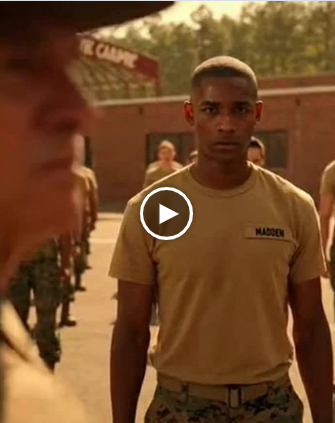
The training yard at Redstone was loud a moment before, a place of grunts, boots, and barked commands. Then the General whispered a question that emptied the air. He looked past me to the man standing a step behind my shoulder and asked, very softly, if I was his son. I felt the pause stretch. It was the kind of silence that sharpens faces and slows time. Eyes moved back and forth between us, not sure which way the story would go.
The General studied me like I was not just a recruit but a memory he had tried to bury. His jaw set hard. The lines in his weathered face deepened, as if they were being written from the inside out. Colonel Maddox took a step forward and tried to explain, but the General cut him off without even turning his head. His voice was calm and flat when he said I did not belong here.
I did not argue. I knew better than to take the first swing with words. Out in the open, in full view of Delta Squad and a dozen other onlookers, the General raised a hand and pointed at the ink on my forearm. It was not a new tattoo, and it was not a decorative one. The lines were harsh, the edges barbed. It was the mark of a unit that people did not discuss in daylight. Echo Team. A unit disbanded, its name wrapped in rumor and warning.
He asked me where I got it. I told him the truth, the only answer that fit the moment. I said I got it in the same place he did, and I added the one word that still mattered here. I said, Sir. The reaction moved through the crowd like a breeze that turns into a front. Colonel Maddox went pale. Delta Squad stared as if they had forgotten they were soldiers. The General’s eyes narrowed. He asked for my name.
I gave the one assigned to me when I signed enlistment forms. He did not accept it. He asked again. It was time to stop hiding from my own history. I stood a little taller, felt the weight of what I was about to say, and spoke my full name. Jordan Isaac Carter. I added the part that changed the air again. I was born on base. The General knew my mother. He knew her better than most.
Sent to the Office, and Back Into the Past
The General took a slow step back, then another. The scorched flag above us snapped in the dry wind, a reminder of heat and battles past. He told Maddox to get my file. He used one word, now, now, and the Colonel hurried off with the speed of a man who wanted to be anywhere else. The General told me I was dismissed from the drill and to report to his office in fifteen minutes. I nodded and left the circle, feeling the weight of a hundred questions I would not answer out there, in the sun, for an audience that had not earned them.
When I reached his office, I knocked once and stepped inside at his word. The room was almost what you would expect. Medals in neat rows. Maps you could study for days. A smell of cigar leaf and old paper. A decanter that was not for common use. He did not offer me a chair. He did not need to raise his voice. He simply asked if I thought this was a game, if I had come to Redstone with a familiar name and an old mark to play at revenge.
No, sir, I said, twice, because that much was true. Then he asked what I was doing here, in the single word way that means more. I answered the long way because there was no short version that would keep faith with the past. I told him the truth had not died with my mother. I told him people who buried Echo Team believed they were safe. I told him I came to finish what she started.
His tone changed as he spoke her name without speaking it. He said my mother was one of the best. He said she was smart and loyal and brave. Then he said something that almost broke the spell of his control. She got too close to things we were not meant to see. She died because of that. I said the word that still hurt to hear. Murdered. I told him he had let it be called a training accident. He did not argue. He did not have to. The silence agreed with both of us.
The Key I Came For
I reminded him of the chance he had once had to clear her name. He told me he had been under orders. So was I, I said, but mine came from a different place. The General let out a long breath and said I was opening a door that would not close. Good, I said, because I brought a key.
He watched me for a long moment with something in his eyes that was part regret, part pride, and part fear. Then he reached into a drawer, took out a small black case, and set it on the desk. I opened it. Inside was an old flash drive. Civilian grade, worn from being carried too long. He said she gave it to him the day before she died and told him to keep it off the grid. He said he had never looked at it. I asked him why. He said he already knew what he would find and, in words that were hard to hear from a man like him, he said he had been a coward.
I took the drive. Not anymore, I said. He nodded once and told me I would need help. Not everyone on this base was who they said they were. He had a name for me. Jenkins. A technician who once wore Echo’s mark before the unit went dark. He lived off base now, in a trailer wired within an inch of imagination. If anyone could read what was on that drive, Jenkins could. The General wrote down directions on an old piece of notepaper and told me to go before Colonel Maddox realized whose son I was. I told him he already knew who my mother had been to him. The General flinched at that truth. He said he knew she trusted him. He advised me not to make the same mistake with anyone else.
Through the Quiet to a Door That Opened
I left without another word and crossed the perimeter using a route I had found during night drills, a drainage tunnel the others had dismissed as a useless detail. I had always paid attention to small openings. The land beyond the fence was open and dry. The road to Jenkins’s place was a narrow thread through brush and silence. It took me three hours on foot. The trailer matched the description perfectly. Antennas like metal stems reaching for a sky that did not care. Solar panels. Cables. A lived-in caution.
I knocked once and then again. No answer. I spoke through the door, using the words I knew would matter. Echo Team. Katherine Carter’s son. A pause followed. Then metal slid back and the door opened. The man on the other side was bearded, older than he looked at first, with watchful eyes. He kept a pistol trained on me for a heartbeat longer than was friendly, measured my face, and then stepped back. You have her eyes, he said. I held up the flash drive. He let out a low whistle and asked if it was what he thought it was. Only one way to know, I said.
Inside, the place hummed with power. Three laptops glowed, screens hooked to other screens, lines of code running like a foreign language that still meant safety to him. He inserted the drive and began to work. His fingers moved fast, not frantic, practiced. About ten minutes later, he leaned back and let out a word that was half prayer and half warning. I asked what he had found. He turned one screen so I could see.
What Echo Discovered, and Why It Had to Be Hidden
Names. Dates. Operations that never saw the light of day. Black sites set up far from oversight. Records of experiments done on civilians without their consent. Money that moved in ways money should not move. Connections that climbed upward until they reached rooms with no windows and doors that locked on both sides. Jenkins clicked through file after file and the story became plain. Echo Team had not been broken apart because it failed at its work. It had been silenced because it succeeded at seeing too much.
And my mother? She was more than a good soldier with a strong conscience. She had been the one who gathered the proof. She had documented the wrongs. She had decided to speak. The flash drive held her work like a last will and a final warning. Someone inside Redstone had made sure her warning never reached the people who could act. Someone had called it an accident and marked the file closed.
Jenkins printed what he could and handed me a folder that felt heavy in my hands, not from the paper but from what it meant. He told me I would never make it out of Alabama with a folder like that, not with what was surely already moving in our direction. But he had a plan and a place. An old radio tower near a ridge the maps still called Black Ridge. The tower, he said, linked to a satellite network someone forgot to shut down. If we could get a connection and push the files up, someone would see them. He did not promise that the first people to see would be honest. He did promise it would make noise.
Running Toward the Signal
I asked if he was coming. He hesitated, then reached for a duffel that was clearly packed to be grabbed on a bad day. He said my mother had saved his life once. He said he owed her more than words. We moved fast and kept to the edges. We avoided the main roads. Night came down quick, and the woods at night have a way of making you believe in older stories. Twice, we heard the whir of engines and the sweep of floodlights. Unmarked vehicles searched the trees with a patience that meant they were not in a hurry to be seen.
By first light, the ridge rose ahead of us like a promise and a problem. The tower stood against a sky streaked red, a rusted skeleton built when the world thought signals were something you could aim and forget. Jenkins climbed with the steady focus of a man who had spent his life trusting his hands. I stood below and kept watch, listening for the sound of men who moved together.
I heard the boots before I saw them. More than a few. Coming from more than one direction. They had found us, or at least they had found a trail that led here. Jenkins called down that he needed a minute, then another. I did not have much to work with, and the rifle slung across my chest was older than most of the men who had mocked me on the yard that morning. It was mine and I knew its moods. I took cover behind a fallen trunk and fired when I saw movement. The men below scattered, then came back with gunfire of their own. A line of heat along my arm told me a bullet had found my skin but not my bone.
From above, Jenkins shouted that the upload was complete. He told me to run to the base of the tower. When I reached him, he dropped a small device, the link that had bridged old metal and a sky full of signals. I caught it and slammed it into my vest. Go, he yelled, because a signal like that could be traced. I wanted to argue, but he had already shifted position and was returning fire to keep me moving.
What Truth Sounds Like When It Finally Speaks
I ran through brush and low branches, through the ache in my legs and the burn in my lungs. I did not stop until the ground under my feet felt different and the trees looked like cousins instead of brothers. The state line is not a wall, but it felt like one that morning. When I did stop, the world had already started to change. News stories surfaced in places that had never heard of Redstone. Files and fragments appeared across screens, picked up by people who knew how to pass a spark along until it was a flame.
There were sudden whispers in offices built to swallow whispers. A name surfaced in briefings where the lights stayed bright and the pens never ran out. Project Revenant. The words meant different things in different mouths, but in public they meant one thing: questions that could not be closed with a stamp. And then another name rose, the one I had carried quietly for too long. Katherine Carter. My mother’s life and work were being spoken out loud again, not as rumor or warning, but as the center of a truth that refused to be hidden.
A week later, the Senate announced an investigation. Redstone locked down. The gates that had swung open to swallow secrets now swung shut to hold them in place while the light moved closer. Colonel Maddox did not retire by choice, but the word they used was retired all the same. The General resigned. He did not do it with a speech. He sent one final message before the door closed behind him.
The Last Message, and the First Quiet
His note was brief. He told me my mother was a hero. He told me I was her justice. He told me to stay quiet now and let the truth do the shouting. I read it once and burned it. I was not interested in being thanked. I was interested in seeing the record set straight and the harm stopped where we could stop it.
There are days now when I hear the old training yard the way you hear the sea long after you have left the shore. I hear the laughter that morning when I first stepped forward, and I hear the way it stopped. I think about the tattoo on my arm and the way the General’s eyes fixed there, not because of the ink but because of the history inside it. I think about the office that smelled of cigars and maps, and the old flash drive that had carried my mother’s courage through the years it took for me to arrive. I think about Jenkins, a man who had turned his home into a fortress, and about the way he did not hesitate when the past knocked on his door.
Most of all, I think about the promise I made to myself on the long walk out to his trailer. I told myself I would not let fear decide my choices, that I would not use silence as a shield when it should be used as a signal. My mother did not set out to be a symbol. She was a soldier who saw something wrong and decided to bring it into the light. She paid the highest price for that decision. The least I could do was carry her work the last mile.
What Comes After the Storm
Investigations move at their own speed. They are not as fast as a headline, and they are not as slow as people think. They grind steady. Files open. Witnesses talk. Others try not to. There will be arguments about what counts as proof and what does not. There will be people who try to cut the story into pieces small enough to swallow. None of that changes what the light reveals when it finally reaches a place that has lived too long in the dark.
I am still careful. I keep my steps measured and my circle small. Not everyone who claims to be an ally is one. Not everyone who wore Echo’s mark earned it the way my mother did. But I carry her name now without whispering it. I do not let other people choose what it means. I do not let them say accident when the true word is murder. I do not let them turn a good life into a side note because it makes the ending tidier.
The morning I arrived at Redstone, people laughed because a young recruit can look like a small problem in a big place. The day I left that tower at Black Ridge, they stopped laughing. Not because of me alone, but because of the voice that rose from the files, clear and steady, and refused to be misnamed again. My mother taught me many things without ever sitting me down to explain them. The best of those lessons was simple. The truth is heavy, but it is not fragile. If you carry it long enough, it starts to carry you.
I have my name back now, all three words of it. I have the work she began and the end she was denied. And I have one more thing, something quieter but just as firm. I know I was not invisible all those years I felt like I was moving at the edges. I was waiting, watching, and learning. Now the people who needed the shadows know I am out in the open. I do not shout. I do not need to. The truth we set free is loud enough.



