Coming Home After Eight Years
I was packing my duffel with the kind of care you bring to something you’ve waited on for far too long. Eight years of active duty. Eight years of deployments that swallowed up every Christmas, every birthday, every ordinary day that could have been spent around a familiar kitchen table. I folded my uniform slowly, heart light for the first time in a long time. Home was finally close enough to touch.
My phone buzzed on the cot beside me. I glanced down, expecting a quick check-in or a welcome message. The name on the screen pulled me up short. It was my father, Martin, the man who hadn’t called me in years.

Don’t bother coming home.
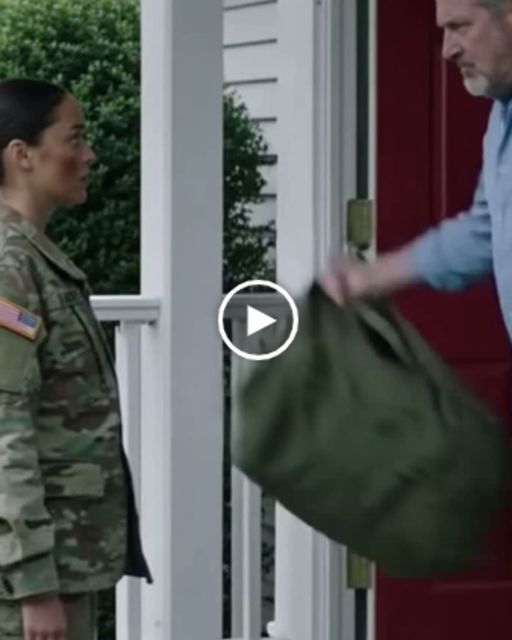
I stared until the words blurred. For a second, it felt like I was nineteen again, standing in our driveway with a single bag while my father’s hard voice made it clear I wasn’t welcome under his roof. Back then, I’d chosen the Army over joining my older brother Brian in the family’s thriving construction business, and that choice had carved a canyon between us. I left that day to start my life, not knowing it meant giving up any place inside the family I was born into.
Over the years, I tried to build a bridge back. When I was awarded the Silver Star, I clipped the newspaper article and mailed it to him with a note that said I hoped he was well. There was no reply. Not a call. Not a postcard. Nothing but silence and the long, steady hum of distance.
I thought time might soften people, especially once the storms of pride settled. I was wrong. That text told me everything I needed to know. I replied with one word—fine—and rerouted my plans. Instead of turning down the old road to the house where I grew up, I rented a small cabin by a quiet lake two towns away. I told myself I’d stay a month, cut wood, and remember how to breathe without looking over my shoulder for ghosts.
The Message That Stopped Me Cold
A week later, I woke to a phone blinking with 23 missed calls. Not from my father. Not from anyone I knew. The caller ID listed a corporate attorney. My gut tightened. In my world, calls like that never bring good news.
When I returned the call, the voice on the other end introduced himself as Robert Albright. His tone carried urgency, but not panic. He asked me to listen carefully, and then he said something I’ll never forget: what was happening wasn’t just a family argument. It was something much bigger—and it involved me in a way I couldn’t yet imagine.
He sent a secure file while we were on the phone and asked me to open it to page four. I did, hands a little shaky despite the training that usually steadied them. It was a federal defense contract worth more money than I’d ever seen lined up on official paper. At the bottom, next to the title CEO, was a signature that looked almost like mine. Almost.
My name—Chelsea Anne Miller—curved across the page in an imitation close enough to fool a stranger and brazen enough to enrage a daughter.
The Truth About My Name
Albright explained the story that had been built out of lies. My father and brother had created a company called Miller Valor Construction. On paper, the company was led and majority-owned by me. To the outside world, it looked like a classic American success: a construction firm helmed by a decorated veteran, a business that would be given priority for certain government contracts because of that veteran leadership. They had taken the very service my father once mocked and turned it into a golden ticket.
I felt the floor tilt. I had been cut off, written off, and now I was being used. Worse, they had banked on me never coming home to notice. The attorney’s words were plain. The plan depended on me staying far away—or not surviving.
I asked Albright how he knew. He told me he had been a junior partner helping with their incorporation. He had been told I was a silent partner, deployed and proud to be the face of the company, just unavailable to sign new documents on short notice. It seemed believable enough until, months later, he saw the Silver Star article I’d mailed to my father tossed aside like trash. Something about that bothered him. He looked deeper, found the forged signatures, understood the structure, and when he questioned it, he was shown the door and threatened with professional ruin.
I didn’t need him to be a saint. I just needed him to be telling the truth. And everything he said fit together too well to ignore.
When I asked what he wanted from me, he didn’t hesitate. He wanted to expose the scheme. He wanted to help me take back what, by the filings and the law, already belonged to me.
Gathering Proof
We met at a diner that sat, unremarkable and perfect, halfway between my cabin and the city. He was shorter than I expected and nervous in a way that spoke to high stakes and long nights. But his eyes were clear. He slid a stack of documents across the table, papers that made my hands ache to hold.
The company had spun an entire story around me. There was a polished biography describing a business career I’d never had. My real service record was carefully woven into that fiction, lending the shine of truth to a lie. They’d even posted a photo of “me” on the company website—my head pasted onto a woman in a crisp suit. Seeing that made my stomach turn. It felt like someone had walked off with my medals and pinned them to a puppet.
We had strong proof of fraud already, but Albright said we needed something undeniable from the inside—evidence that showed my father and brother orchestrated every part of it with intention. Emails, drafts, internal notes. Something that would stand up to the kind of scrutiny no family argument ever receives.
I knew how to slip into places unnoticed. Eight years of training leaves you with a certain set of skills. I told him I could get the proof. He told me this wasn’t a mission and that life wasn’t a movie. I told him, quietly and without heat, that my father had declared his war a long time ago. I was just finally answering it.
One Night, One Office, One Password
That Friday night, dressed in dark clothes that didn’t reflect the moonlight, I drove to a garage near Miller Construction headquarters. The building looked the way powerful people like their monuments—sleek, cold, and expensive. Our family name ran down the side in letters that once made me proud and now made my jaw clench.
I watched for hours, mapping movements the way I used to map patrols. Cleaning crews came and went. A guard made his loop every half hour. At two in the morning, the city felt like it was holding its breath. I moved.
The service entrance wasn’t complicated. Buildings like that are designed to be impressive for clients, not impregnable for a determined daughter. Inside, the air had that sharp tang of cleaner and climate control. Every step I took came with a memory of summers spent hauling blueprints and running copies, trying to be useful in a place where I never quite fit.
On the top floor, in the corner office, I sat at my father’s computer. I tried the obvious passwords first—his birthday, my mother’s, Brian’s. No luck. Without thinking too much, I tried my own. The screen opened as if it had been waiting for me all along.
For a heartbeat, I almost laughed. The symbolism was too on the nose. He had locked me out of our home but used my birthday to open up his empire.
I plugged in a small drive and started copying everything my instincts told me mattered. Emails between my father and Brian openly strategizing how to leverage “the Chelsea angle.” Spreadsheets with numbers that rose high on the hope of a hero’s image. A prewritten press release prepared in case of my death, full of noble words that rang hollow once you understood the truth beneath them.
My hands were steady. One tear slipped free, and I wiped it away fast. Feelings could wait. Evidence could not.
Then I heard the soft bell of the elevator.
The doors opened, and there they were—my father and Brian. Shock froze them in the doorway. For a long second, nobody moved.
Face To Face
Brian looked the way he always did when trouble went from rumor to reality—wide-eyed and unprepared. My father looked like he’d seen a ghost he didn’t believe in. I stood, the drive warm in my hand.
He found his voice first, trying for authority, as if volume alone could rewrite facts. He asked what I was doing there and told me, again, that I had no place in that office. I heard my voice come out calm and even, the kind of voice that kept people safe in strained moments. I told him the paperwork named me CEO and majority owner. I told him I was just stopping by my company.
I watched the color leave his face. He started talking fast, promising explanations, as if the right story might make me hand over the past eight years. I raised the drive and asked him what story could make forgery sound like love, or identity theft sound like legacy. I asked him how long he’d been betting on me not coming back.
He snapped then, the gentler act slipping away. He said he did it for the family, for a future I had refused by “playing soldier.” In that moment, all the competing feelings I’d carried for years settled into one clear truth. He hadn’t done it for family. He’d done it for control. For money. For a name that mattered more to him than the person who wore it.
He stepped forward, hand out, voice smoothing into something he thought might still work on me. Give me the drive, Chelsea. We’ll take care of this. We’re family. I heard myself laugh, not from humor but from the ache that finally found its edge. I told him family doesn’t build an inheritance on a daughter’s potential funeral.
I backed toward the doorway, never taking my eyes off them. He promised I would regret it. I told him, as gently as I could manage, that regret wasn’t coming for me. It was coming for him.
Choosing Law Over Revenge
The next morning, with the sun cold and bright over the city, Albright and I walked into the FBI field office and told the whole story, piece by piece. The agents didn’t need drama. They needed facts, and we had them. What followed happened faster than I expected and slower than it felt.
The news broke. The story of a veteran used as a front by her own family traveled quickly. The company’s stock dived. The big contract was revoked. Federal agents carried boxes out of the tower with our name on it. Cameras followed my father and brother in handcuffs. Watching him on that walk—suit rumpled, face thunderous—I felt something I didn’t expect. Not triumph. Not pity. Mostly emptiness, like a chapter had closed without the ending I once imagined it would have.
The court cases were long, but the outcome was never in much doubt. Fraud. Identity theft. Conspiracy. Counts stacked one on top of another. My father and brother were each sentenced to federal prison. The company was left bankrupt, radioactive in the industry, and, by the letter of the records they had forged, mine to inherit.
Left With The Wreckage
There are choices you think you will make easily until the moment you have to make them. I could have sold off what was left and disappeared into a quieter life. Nobody would have faulted me for it. But names on paper don’t swing hammers or pour concrete. Real people do. Electricians, project managers, engineers, apprentices—some of whom had worked for my grandfather and built their lives around paychecks the company provided. They hadn’t forged anything. They had just shown up every day and done their jobs.
That mattered to me. And somewhere beneath the anger and the legal filings, the idea the company pretended to represent still rang true. Miller Valor had been founded on a lie, but the concept behind it—a business that honored service and lifted up veterans—did not have to be false.
I called Albright, who by then was more than just a whistleblower; he was my attorney and, in many ways, my ally. I told him I had a plan that would be hard but honest. He didn’t blink. He said we’d find a way.
Over the next six months, we worked with the bankruptcy court to restructure instead of liquidate. We sold every extravagance that had been bought on the company’s back and my father’s taste: the jet, the penthouse, the parade of luxury cars that smelled like success and cost like waste. We rebranded under a simpler name and a clearer mission. We right-sized the staff to what we could responsibly sustain, and I promised those who stayed that they would always know where they stood with me.
On the first day I met the remaining crew, I didn’t wear a suit. I wore jeans and the same battered boots I’d worn through a handful of continents. I stood on a concrete floor under humming lights and told them the truth. The company had been built on a falsehood that hurt good people, but we would build forward on honesty and service. Then we got to work.
Building Something That Matters
We stepped away from skyscraper contracts and flashy public bids. Instead, we partnered with veteran organizations and nonprofits that had been quietly serving for years. We focused on affordable, sturdy, beautiful homes designed for those who had come back from war with new needs and different challenges. Ramps with the right pitch. Doorways wide enough for wheelchairs. Kitchens set at heights that gave back independence. Craftsmanship with dignity in every beam and nail.
I was not in a corner office very often. I learned how to estimate materials the hard way, from foremen who had more wisdom in a glance than most executives put in a memo. I showed up on sites with a thermos and a clipboard and, more often than not, a broom. Respect isn’t inherited. It’s earned, one early morning and one honest conversation at a time. The Army had trained me in logistics, in planning, in leading from the front. All of that translated beautifully to construction. People are people, whether they’re stacking sandbags or setting forms.
We made mistakes. We fixed them. We found better subcontractors who shared our values. Word spread, not through glossy ads but through families who moved into homes that worked for their lives. Slow and steady, our little company found its footing on the firm ground of purpose.
A New Kind of Home
One bright morning a year later, I stood with a pair of oversize scissors in hand at the ribbon of our first completed community: fifty homes for fifty veterans and the people who love them. There was a little crowd and a lot of smiles. I watched a young Marine, a double amputee, roll across a threshold without asking for help. His little girl giggled from his lap, proud to lead the way into rooms designed for them. I felt something in my chest ease, like a knot untangling after so many years.
My father had once told me I wasn’t welcome in his house. He had taken my name and tried to build an empire on it—even if that meant pretending I was gone for good. Yet standing there, I realized that the worst of what he did had delivered me to the best of what I could become. I wasn’t the family disappointment anymore. I wasn’t just a soldier anymore. I was a builder, in the truest sense of the word.
We can’t always choose our first home. We can choose the homes we build after. We can choose what our name stands for when we say it out loud. We can choose to make work about more than profit, to make legacy about more than a sign on a building. I chose to build places where men and women who had given so much could close a door, exhale, and simply be home.
What I Learned About Family And Legacy
Family, I’ve learned, isn’t a blood test or a shared last name printed twenty feet high. It’s the small acts of loyalty that hold under pressure and the quiet respect that doesn’t need to announce itself. It’s the way people show up for one another when there’s no camera and no credit. True family is chosen as much as it is inherited, and chosen again, day after ordinary day.
Some foundations have to be torn out before a structure can stand safe and strong. It’s noisy work and often painful. But if you’re brave enough to remove what’s cracked and rotten, you give yourself a real chance to build something honest, something that can weather the seasons ahead.
My father once barred me from returning to the house where I grew up. In the end, I found my way to a different kind of home—one made of dignity, purpose, and people worth standing beside. If there’s a gift inside what he did, it’s this: he showed me that I didn’t need his permission to come home. I only needed the courage to build one.
And so I did.