
( The Old Trick That Saves Money and Works Better Than Most Things on the Shelf )
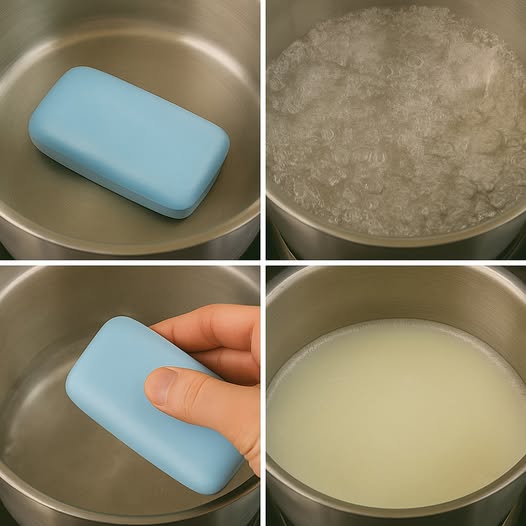
It started out of necessity. The cleaning products had run out, the shops were closed, and the kitchen needed attention. There was a bar of soap on the sink — plain, simple, nothing special about it. And a pot of hot water on the stove.
What happened next was one of those accidental discoveries that changes a habit permanently.
Because what came out of that pot was not just soapy water. It was something far more useful — a thick, versatile, deeply effective cleaning solution that worked on surfaces, fabrics, and grime in a way that most expensive products simply could not match.
The cleaning products never got restocked. There was no need.
Why a Simple Bar of Soap Is More Powerful Than You Think
Most liquid cleaning products sold in shops are made from one primary ingredient — soap — diluted with water, thickened with additives, fragranced with synthetic compounds, and packaged in a way that makes them feel premium and necessary.
They are not.
A plain bar of soap — especially a natural one — contains exactly the same core cleaning agent: a compound that attracts both water and grease simultaneously, latching onto dirt, oil, and grime particles and lifting them cleanly away from any surface they are clinging to.
When a bar of soap is dissolved in boiling water, something important happens. The heat breaks the soap down at a molecular level, dispersing it evenly and completely through the water in a way that cold water never achieves. The result is a concentrated, fully activated soap solution with a consistency and cleaning power that far exceeds anything you get from simply rubbing a bar against a surface or adding soap flakes to cold water.
This solution penetrates fabric fibres to lift stains that washing cycles miss. It cuts through the built-up grease on kitchen surfaces that spray cleaners sit on top of without truly dissolving. It removes soap scum and limescale from bathroom tiles with a fraction of the effort of commercial bathroom cleaners. It cleans floors, windows, and upholstery — all from one simple, inexpensive bar.
And the cost? A bar of plain soap is a fraction of the price of the specialised products it replaces. One bar, made into solution, can last a family an entire month of regular cleaning.
Still wondering exactly how to make it?
The Ingredient
One plain bar of soap.
Natural soap is best — look for bars made without synthetic dyes or heavy fragrances, as these clean just as effectively and are gentler on surfaces and on the hands. Marseille soap, castile soap, or any simple glycerin bar all work beautifully. Even a basic household soap bar will produce remarkable results.
What You Will Need
- 1 bar of plain natural soap ( approximately 100 to 150g )
- 1 litre of water
- A grater or sharp knife
- A medium saucepan
- Clean glass jars or spray bottles for storing the finished solution
- Optional: 10 drops of lavender or tea tree essential oil for fragrance and added antibacterial power
- Optional: 1 tablespoon of white vinegar stirred in after cooling for extra degreasing strength
How to Make It
Begin by grating the bar of soap using a standard kitchen grater — the fine side works best and produces flakes that dissolve most quickly and evenly. If you do not have a grater, use a sharp knife to shave the soap into the thinnest possible slices.
Bring one litre of water to a gentle boil in a medium saucepan. Reduce the heat to a low simmer and add the grated soap gradually, stirring continuously as you go. Do not rush this step — add the soap a little at a time and allow each addition to fully dissolve before adding more. This produces a smoother, more consistent solution without lumps.
Continue stirring over low heat for five to seven minutes until all the soap has completely dissolved and the liquid is smooth, slightly thickened, and uniform in colour. Remove from heat.
If you are adding essential oils or white vinegar, stir them in now while the solution is still warm. Allow the mixture to cool completely — it will thicken further as it cools, becoming a soft gel consistency perfect for storage.
Pour into clean glass jars for a thick gel cleaner, or dilute slightly with additional water and pour into spray bottles for an everyday surface spray. Label and store at room temperature for up to four weeks.
How to Use It Around the Home
For kitchen surfaces, apply a small amount on a damp cloth and wipe down worktops, hobs, and splashbacks. The grease lifts immediately and the surface is left genuinely clean rather than just smelling clean.
For laundry stains, rub a small amount of the gel directly onto the stain before washing. Leave for ten minutes then wash as normal — even old, set-in stains respond remarkably well.
For bathroom tiles and grout, apply with a sponge or old toothbrush, leave for five minutes, then scrub and rinse. Soap scum and limescale lift away cleanly.
For floors, add two tablespoons of the solution to a bucket of warm water and mop as normal. The floors come up clean, streak-free, and faintly fragrant.
What This One Habit Will Save You
Most households spend a surprising amount every month on cleaning products — different sprays for different surfaces, specialist formulas for bathrooms and kitchens, separate products for laundry and floors. One bar of soap, dissolved in water the right way, replaces almost all of them.
The discovery that started out of necessity turned into one of the most freeing and satisfying domestic habits imaginable. Less clutter under the sink. Less money spent at the supermarket. And a home that is just as clean — if not cleaner — than before.
One bar. One pot of boiling water. And a habit you will wonder how you ever lived without.



