A Morning at Eagle Creek
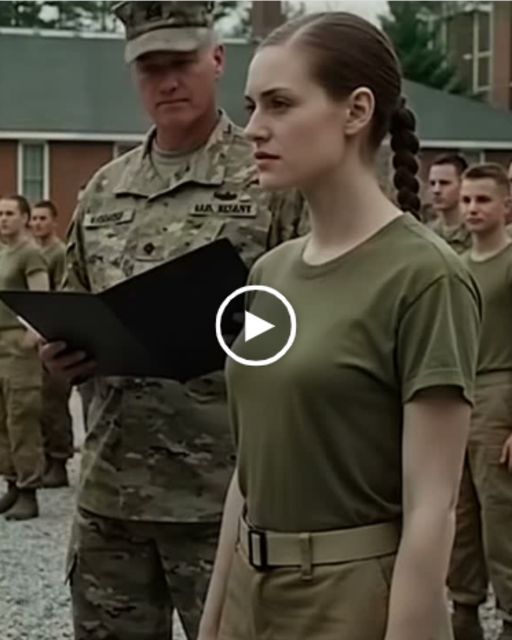
I stood at attention in the hard-packed dirt of Eagle Creek bootcamp, boots planted, eyes forward, trying to steady my breathing. The sky was clean and bright, the kind of day that shows you every flaw in your stance and every speck of dust on your uniform. I could hear the roster being read out name by name. The voice was one I knew all my life.
Colonel Warren Maddox was in charge of the line. He was also my father. His tone had the same clipped sharpness it carried around our dinner table when I was a kid. It could slice right through a person if you let it.

He reached my name and paused, letting the moment hang. Then, in a voice just loud enough for all the recruits to catch every word, he said, “Should’ve left this one at home.” The snickers rolled down the line like a ripple in a pond. I didn’t move. I didn’t blink. I had heard worse from him, and I had survived worse than words.
He stuck me with Bravo squad—known across the base as the dumping ground. The worst gear. Cracked helmets. A few rifles that jammed so often you learned to pray under your breath. The message was clear, and it wasn’t just about resources. It was about me. He wanted me to feel second-rate.
I kept quiet. I let him and everyone else think I was slow, sloppy, and timid. For nearly two weeks, I carried the label he gave me. I kept my head down and my secrets even lower.
The Split Second That Exposed Everything
On the twelfth day, we were sent to the gravel pit for hand-to-hand drills. The ground there eats your knees and chews up your palms. They paired me with Fisher, a loud talker who mistook noise for skill. He smirked when he faced me, as if I were a gift handed to him by the training gods.
He lunged first, wild and overconfident, swinging for my head with all the focus of a man trying to impress his buddies. I felt the old instincts wake up. I stepped in, trapped his arm, turned my hips, and put him flat on his back in less time than it takes to snap your fingers. It was clean and simple.
But as Fisher fell, his hand clawed at my collar and tore it. The sound was a ragged rip that bared more than cloth. The fabric fell open across my shoulder blade, and the gravel pit went quiet in a way I had not heard before. Wind came across the courtyard and hit the bare skin of my back. Sunlight warmed an old line of ink I had tried to keep hidden.
It was a tattoo. Not the kind you show off. Not the kind you brag about. The ink was faded and dark, placed high enough to be seen only by accident—by someone desperate, or by fate.
A clipboard hit the ground. One of the drill sergeants froze like a statue. No one said a word.
When the General Walked In
Boots approached through the silence. General Russell Foster, the base commander, pushed through the small crowd of instructors and recruits. His eyes found the ink on my back, and his face changed. Color drained away, leaving him pale and still.
He took off his cap, then turned his head toward my father. His voice was calm but deep enough to feel in your bones. “Warren,” he said, “what have you done?”
My father tried to stand taller. “Sir? It’s just a recruit getting out of line.”
“That’s not a recruit,” the General said. He did not look away from me. He took a step closer, and his eyes softened and darkened at the same time—a look I had only ever seen on people who had lost something they loved and were suddenly standing face-to-face with a piece of it.
“Dismiss the platoon,” the General ordered, still watching me. The command snapped through the air. Men moved. The pit cleared. In a minute, it was only the General, my father, me, and a handful of speechless instructors standing back in the shade.
“My office,” the General said. His tone left no room for debate. I pulled my torn uniform back together as best I could. As I walked past my father, I caught him actually looking at me—really looking—for what felt like the first time in years.
Inside the Office
We crossed the base without talking. The General’s office was clean and spare. A full desk. A flag. A few black-and-white photos on the wall. One picture held my attention. A younger General Foster with his arm around a man with kind eyes and a smile that reached the corners. I knew that face. My stomach tightened. Daniel.
The door shut behind us with a firm click. The General motioned for us to sit. I took the chair. My father stayed standing, shoulders stiff, jaw set like stone.
“What have you done to this man?” the General asked my father, voice cool and steady. The words landed like weights.
My father said, “Sir, with respect, he is my son, Alex. He washed out of his last assignment, and I brought him here to put some steel in his spine.”
The General’s laugh had no joy in it. “Washed out? Is that what you tell yourself?” He glanced at me, and for a heartbeat his face gentled. “Son, show me the tattoo again, please.”
I stood and turned, easing the torn collar aside. I felt my father’s stare on my back like heat from an open oven.
“The Northern Star,” the General said softly. “A single tear at the eastern point.” He pinched the bridge of his nose as if he were fighting off a headache, or a memory. “There were supposed to be only two of those, Warren.”
My father’s voice came out tight. “I don’t understand, sir.”
“One was my son,” the General said, looking to the photo on the wall. “Daniel.”
My father’s eyes darted to the picture, then back to the ink on my shoulder. I could hear the gears in his mind turning, and slipping.
“The other,” the General said, eyes meeting mine in the reflection from the picture frame’s glass, “was the man who was with Daniel at the end. The man my son gave his life to save.”
What the Star Meant
The room lost its air for a moment. My father sank back a fraction, his skin gone grey. He whispered, “No. Alex was a supply clerk. An analyst. He was…” His words fell apart.
“He was what his file said he was,” the General said, cutting in. “And his file said whatever it had to, because his real work never made it onto official records. He was in a unit so far off the books we never gave it a name. I oversaw it. I read every line. I remember every loss.”
The General turned to me. “Your file was flagged after Operation Nightfall. Non-deployment. Mandatory counseling. How did you end up here, in basic?”
My voice felt like it came from somewhere far away. “He pulled strings,” I said, nodding toward my father. “Told me I was a disgrace and needed to learn what a real soldier was. He never asked what happened. He assumed I failed.”
The quiet held heavy for a long stretch. I could feel my father watching me, trying to add up everything he had chosen not to know.
He said the mission’s name slowly, as if it hurt to say it. “Operation Nightfall. The leak in the Zabar Mountains. The one that cost—”
“It cost me my son,” the General said softly. He swallowed and steadied himself. “Daniel and Alex were the two on the ground. Their job was to pull a high-value asset out under cover. The intelligence was bad. They were led into a trap.”
He looked at me and I saw my own grief in him. “The final transmission I got from Daniel was short. ‘Polaris is safe. Tell my father I love him.’ Polaris was your call sign, wasn’t it?”
I nodded. The tattoo was ours. Two friends who didn’t want our fathers’ shadows to define us. The Northern Star, Polaris, marked the way. The tear was for the price we knew we might pay. Daniel got his ink first, days before we went in. I got mine after, in a tent that smelled like alcohol and dust, when the medic cleaned out shrapnel and asked if I wanted something to hold onto. I told him to make it match Daniel’s. It was our memorial. Quiet and hidden, because officially, we had never been there at all.
How the Breach Happened
My father folded back into the chair like a puppet with cut strings. The posture he wore like armor had nothing left to hold it up.
The General went to his desk and opened a thick folder with a red border. He didn’t raise his voice, but every word was clear. “I have been digging into that so-called bad intelligence for six months. It wasn’t bad. It was poisoned. The enemy was fed precise details from inside our own system.”
He let that truth settle. “The breach came from a communications hub you oversaw at Fort Bridger—before you transferred here.”
My father’s head snapped up. “That’s a monstrous claim, Russell. My hub was secure. I ran it by the book.”
“Do you remember Corporal Jennings?” the General asked. “A young analyst. He filed a report three days before Nightfall. He warned that our encryption was being bypassed. He flagged the exact door the enemy later walked through.”
My father’s face went blank. I watched him reach for the memory and come up empty.
“You dismissed him,” the General said quietly. “The official note says, ‘Unsubstantiated. Analyst requires further performance review.’ You didn’t listen because his rank was too low to challenge you.”
The room felt even smaller. A ghost of a recollection flickered in my father’s eyes: annoyance, a signature on a page he barely read, a problem kicked down the road. The pieces fell into a shape that made his hands tremble.
“That chink in the armor,” the General said, holding my father’s gaze, “is exactly what the enemy used. Your pride blinded you. That, Warren, is what killed my son.”
My father crumpled. A rough, dry sound came from deep in his chest. He didn’t look at the General. He looked at me, and the horror in his eyes was so pure I felt it hit me like a wave.
“Alex,” he said, voice ragged, “I am the reason…” He couldn’t finish. He didn’t need to. All three of us knew. The same arrogance he had used to measure me had left a door open in a place where doors must never be open. He had spent months calling me a failure for a mission his choices helped doom.
What Loss Teaches
We sat with the silence. I thought I might feel payback. A sense that the scales had finally balanced. But what I felt was simpler and heavier. It was grief. It was the ache of knowing none of this could bring Daniel back, and that my father was not a villain, only a man who had forgotten to be careful with other people’s warnings and with his own son’s heart.
When I finally spoke, my voice surprised me. “He pushed me out of the way,” I said. “The blast should have taken me. His last words weren’t about the mission. He said, ‘Live for both of us, Alex.’”
The tears I had locked down since the mountains finally came. I cried for Daniel, for the friend who told worse jokes under fire than at any quiet table. I cried for the boy I used to be, trying to earn a father’s approval with silence and hard work. And I cried for my father, who had built himself into someone so rigid he could not bend until he broke.
The General stood beside me and placed a hand on my shoulder—steady, human, kind. “There will be a full inquiry, Alex. Your father will answer for this.”
My father looked up. “I accept that,” he said, voice scraped thin. “Whatever comes, I accept it.” He turned to me. “Can you ever forgive me?”
I looked at him—really looked—not as the Colonel, not as the judge who had measured me and found me lacking, but as a man who had finally seen the damage he caused. Forgiveness felt like a mountain I wasn’t ready to climb. But anger felt like a chain I was tired of dragging.
“I don’t know,” I said. “But we can start here.”
Consequences and a Second Chance
The weeks that followed moved both fast and slow. My father was relieved of his command. He didn’t object. He showed up to every interview and every hearing. He took responsibility for each missed warning and each careless decision. He lost his rank and was forced into an early, dishonorable retirement. It was the end of the life he had built for himself, and in a small but important way, the beginning of another.
He came to my temporary barracks once, not in uniform, but in a plain polo and old jeans. He didn’t bring orders. He didn’t bring opinions. He brought two cups of coffee and the willingness to sit in silence until I was ready to speak. When we finally did, it was about Daniel first.
We talked about who Daniel was outside the wire. The way he made ridiculous puns under pressure. How he had a list of woodworking projects sketched in a notebook he planned to tackle after his service. How he could turn a tin cup and a cold ration into a moment that felt almost like home. I told my father what the mission really looked like on the ground, and what it cost all of us afterward.
My father listened. For once in his life, he didn’t try to fix the story or improve the outcome. He cried quietly. I did too.
A New Mission
General Foster called me in not long after. He said he had a place for me, if I wanted it. Not a combat post. A teaching role. A special training facility, tucked away, where they shape the ones who go where maps run out. He said they needed someone who could teach the lessons you carry in your bones—how to survive, how to read a room, how to trust the person next to you when trust is a gift you can’t afford to give lightly.
He told me Daniel would have wanted that for me. I believed him.
I accepted. It felt like stepping onto a path that went forward instead of in circles. It felt like a way to honor the promise I had made in the dark—to live for both of us, and to make sure someone else’s best friend came home.
True North
On my last day at Eagle Creek, my father came to see me off. Without the uniform, he looked smaller, yes, but he also looked more himself. He carried a small box wrapped in worn paper.
“I spent so much time trying to make you into my idea of a perfect soldier,” he said, “that I failed to see the man you already were.” He handed me the box.
Inside was an old silver compass. The glass was scratched in places, the metal warm from the years it had spent in another man’s pocket. “It was your grandfather’s,” he said. “So you don’t lose your way again. And so you know this: you have always been my true north. I was too blind to see it.”
I closed my hand around the compass. It felt solid. Real. Heavy in exactly the right way. “Thank you,” I said. I used a word I hadn’t used for him in a long time. “Dad.”
I walked away with the compass in my pocket and a different kind of weight on my shoulders. Not the burden of proving myself. Not the heaviness of grief alone. Something quieter. Something closer to peace.
What I Carry Forward
I have learned that strength is not the same as hardness. Hardness resists change and calls it weakness. Strength knows when to bend. Strength knows when to say, “I was wrong,” and mean it. My father’s career ended, but through that ending he found something he had misplaced a long time ago: his own humanity.
As for me, every time I meet a recruit who looks a little lost, I think of Daniel’s last words and the promise they left in me. I teach what I wish someone had taught me sooner. How to stay alert to the quiet voices, especially the ones with lower rank and high stakes. How to ask the second question. How to look again. How to choose humility over pride, because the cost of pride can be a life you love.
When my students ask about the small scar near my shoulder, I tell them the truth they need to hear. I say that symbols matter, but what matters more is the promise behind them. A star can guide you. A tear can remind you what it costs to follow it. And a compass—passed from a grandfather to a father to a son—can fit in a pocket and still carry a world of direction inside it.
If forgiveness is a road, I am still walking it. Some days the path is level. Some days it leans uphill. But I keep moving, one step at a time, with Daniel’s voice in my ear and that compass against my hip. I have learned to live for both of us. And I have learned, finally, to live for myself.