
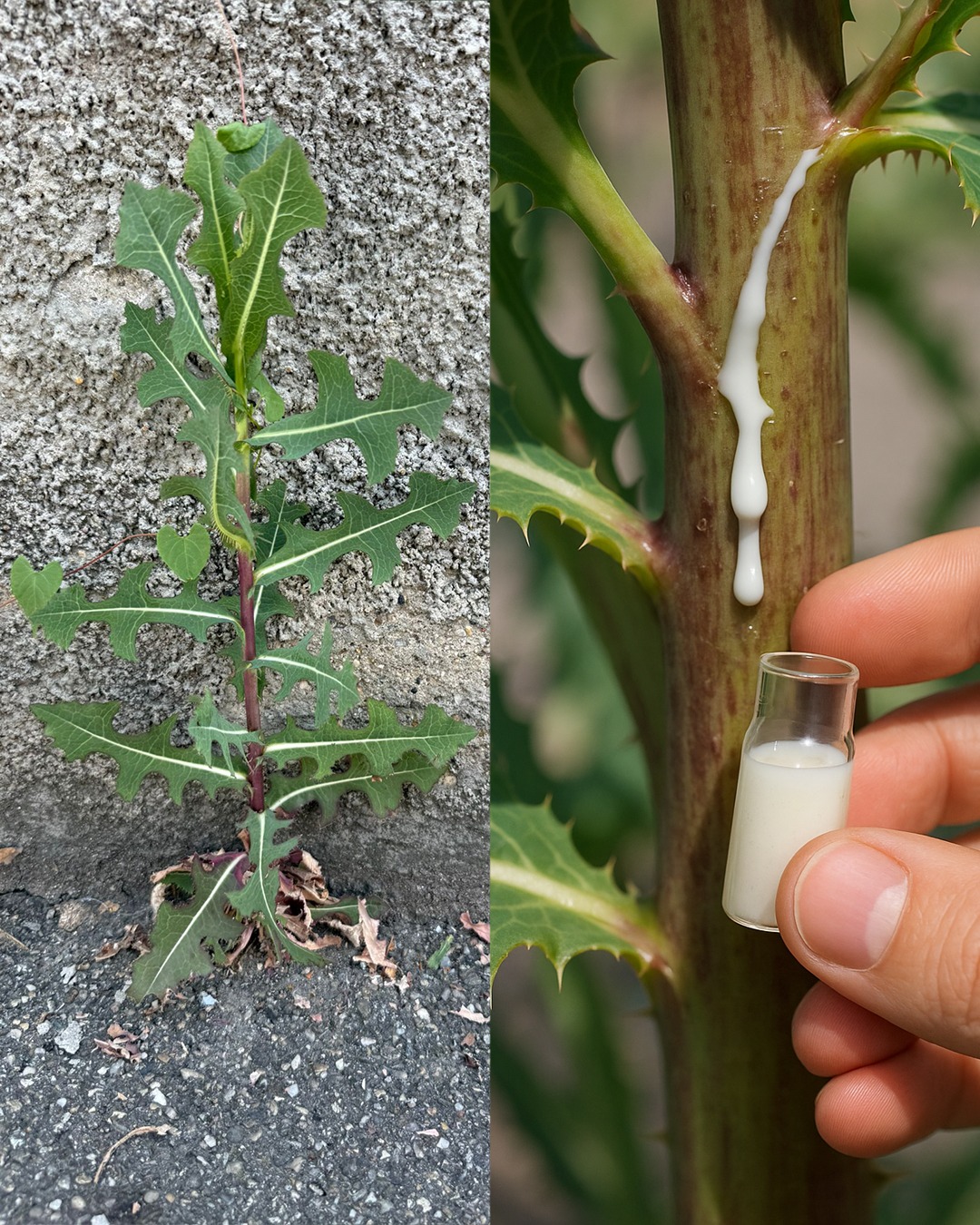
Picture yourself on a gentle afternoon walk. You pass a patch of green by the fence or along the edge of a quiet field. Most of it looks like the usual mix of grass and weeds. But among them stands a taller plant with a sturdy stem and leaves that look a bit like a thistle or a dandelion’s tougher cousin. Snap a leaf or nick the stem, and a milky sap begins to flow. For centuries, that humble white latex was considered a treasure worth saving—some even said it was as precious as silver. It is one of those everyday miracles hiding right under our noses, quietly waiting for someone to notice.
Today, let’s slow down and rediscover that small wonder together. If you grew up hearing stories from grandparents or elderly neighbors about home remedies and garden wisdom, this may feel like meeting an old friend for the very first time.
What Grandmothers Knew
The plant at the heart of this story is often known as Wild Lettuce, most commonly referring to species such as Lactuca virosa and sometimes related species like Lactuca serriola. In traditional European and North African herbal lore, its milky sap was collected and carefully dried into a substance called lactucarium. Generations past spoke of it in respectful tones, not because it was a cure-all, but because it represented the patient, careful way people once looked to nature for gentle support with sleep and calm.
If you had an aunt or a grandmother who kept a little drawer of dried herbs and old family notes, you might remember that same spirit of thoughtful resourcefulness. The value was never just in the plant; it was in the knowledge handed down—the stories of what to gather, when to gather it, and how to use it wisely. Wild Lettuce was one of those plants that lingered in the background, known mostly to those who paid close attention.
The Plant Behind the Secret
Despite its name, Wild Lettuce is not the lettuce you see in a salad bowl, though they are botanical relatives. Wild Lettuce tends to be tougher and taller, more rugged than anything you would chop into a salad. It often grows along paths, vacant lots, garden edges, and sunny, disturbed soils. It looks unremarkable—until you see that white latex appear from a nicked stem or leaf.
In older texts, the dried sap was sometimes nicknamed “lettuce opium.” This historical name can easily mislead. It does not mean that Wild Lettuce is opium or acts like it. Rather, the nickname came from an old comparison to the milky appearance of opium latex. Traditional users described the sap’s effects as mild and soothing, not dramatic or euphoric, and the plant does not belong to the poppy family. While the old phrase lingers in print, it is wise to keep the emphasis on what Wild Lettuce truly is: a modest plant with a long-standing—but gentle—place in folk traditions.
Why This Simple Sap Is So Special
That pale, bitter latex contains a variety of naturally occurring compounds found in many members of the lettuce family. In folk tradition, these bitter elements were believed to encourage relaxation and ease everyday tension. The dried sap, or lactucarium, was prized not because it worked quickly or forcefully, but because it offered a softer nudge toward calm. In an age before electric lights and constant noise, that kind of quieting support had real value.
What also made it special was how hard it was to gather. The plant does not produce its sap in great quantities. People who wished to collect enough for meaningful use had to be patient and meticulous, returning to the same stands of plants, allowing them to grow and mature, and slowly drawing off the latex over time. The result was a small amount of precious material, which partly explains why some once compared it to silver. It was the product of time, attention, and gratitude for the subtle gifts of the natural world.
Today, when everything arrives instantly and conveniently, it can be refreshing to remember a substance valued precisely because it required care and stewardship. The story of Wild Lettuce’s sap is as much about patience as it is about plants.
How to Recognize It
Wild Lettuce often appears as a tall, upright plant, especially noticeable by mid to late summer. Its leaves can be long and sometimes deeply lobed, with a look that ranges from softly wavy to spiky. Many species in this group have small prickles, especially along the underside of the central leaf vein, which you might feel if you run a fingertip carefully along the back of the leaf. The stems, especially as the plant matures, may develop a slight purplish tint or fine spotting. When cut or snapped, the plant typically releases a white, milky latex that slowly turns brown in the air.
From a distance, you might also see small yellowish flowers on some related species, somewhat reminiscent of dandelion blooms, though the overall plant is taller and stiffer. Because different species of wild lettuce and their look-alikes can be confusing, recognizing the plant confidently takes practice and, ideally, a trusted guide. If you are ever in doubt, it is best not to handle or taste any unfamiliar plant. Many people enjoy simply identifying and appreciating the plant’s presence without harvesting it, treating the learning process as a gentle form of nature study.
Remember that many plants share features, and even experienced gardeners can be unsure at times. Reliably identifying a plant involves seeing the whole picture—the leaves, the stem, the growth pattern, the habitat, and the latex behavior—rather than relying on a single feature.
A Stroll Through History
References to the calming qualities of lettuce relatives appear in European sources stretching back generations. In the 1800s, certain pharmacopoeias listed preparations made from dried Wild Lettuce sap, and apothecaries sometimes kept small amounts on hand for use in sleep-related and soothing syrups. It was never a star attraction in the way some other herbs were; instead, it occupied a quiet corner of the cabinet—something mild to consider when gentler support was desired.
Across North Africa and parts of the Mediterranean, remedy books and oral traditions also mentioned the plant, especially among those who worked closely with the land. Sailors, shepherds, and traveling traders shared knowledge like this along with seeds, spices, and stories. It is a reminder that the practical wisdom of the past crossed borders long before maps and markets looked the way they do today.
How It Was Traditionally Used (for educational purposes only)
In earlier times, the milky sap was carefully allowed to dry, forming a dark, resin-like material known as lactucarium. Apothecaries sometimes combined small amounts of this dried material into syrups or tinctures, and it was spoken of as a gentle aid for quieting the mind before rest or softening the edge of minor, everyday discomfort. Some traditional cough syrups also included it. The point, historically, was not to create a powerful effect, but to support calm in a mild, measured way.
Collecting the sap was an exercise in patience. Plants needed to be mature, the environment clean, and the gathering done slowly. The task required time and attentiveness—one reason the dried sap was so valued. Even then, results could vary and were never guaranteed. Like many practices of the past, this was as much about ritual and respect for nature as it was about results.
It is vital to remember that these descriptions reflect historical practices, and they are not recommendations. Plants can vary widely in their chemistry, and individual responses differ. If sleep or comfort is a concern for you, especially if you take medications or manage ongoing health conditions, speak with a qualified healthcare professional for safe, up-to-date guidance.
What Modern Science Says So Far
Contemporary research interest in Wild Lettuce exists, but the modern evidence remains limited and not definitive. Laboratory and animal studies have explored the plant’s bitter compounds and their possible calming or soothing roles. Some traditional observations seem to align with these early findings, but well-designed, large-scale human studies are still lacking. That means we do not have clear, consistent answers about effectiveness, optimal preparation, or safety profiles in people.
Even more importantly, wild plants are not standardized. Two plants that look the same can differ in their chemistry depending on soil, weather, age, and growing conditions. This variability makes it difficult to know exactly what you are getting when you gather something from the wild. For these reasons, medical professionals typically recommend proven approaches first, reserving traditional plants for discussion within a thoughtful, individualized care plan.
Sensible Cautions for Curious Gardeners
Wild plants can be wonderful to learn about, but a respectful, safety-first mindset is essential. Misidentification is a common risk, even for experienced foragers. No plant should be tasted or used medicinally unless a qualified expert has confirmed the identification in person. It is also wise to remember that roadside and vacant-lot plants may be exposed to pollution, pesticides, and other contaminants that you cannot see. Clean environments and careful stewardship matter, whether you are simply observing or considering cultivation on private land.
Some people are sensitive to the milky latex of plants in the aster family. Those with latex sensitivities or allergies should avoid handling the sap. People managing medical conditions or taking prescription medications—especially medicines that cause drowsiness, affect the liver, or interact with sedatives—should consult a healthcare professional before considering any herbal experiment. Pregnant and breastfeeding individuals, as well as children, should not use wild botanicals unless explicitly guided by a qualified clinician who knows their medical history.
These cautions are not meant to dampen curiosity. Rather, they are an invitation to enjoy the learning journey safely, with the same care and common sense our elders tried to pass down.
A Few Helpful Tips
If this plant has sparked your curiosity, there are simple, enjoyable ways to deepen your understanding without taking risks. One idea is to keep a small nature notebook. On your walks, jot down where you see tall, lettuce-like plants, how their leaves are shaped, whether you notice any prickles beneath the leaf, and the time of year. Over a season or two, you will build your own personal guide to the greens growing in your neighborhood, and you may begin to recognize patterns that make identification easier.
Another gentle approach is to learn from local experts. Many communities have gardening clubs, native plant societies, or extension programs that host talks and outdoor walks. Hearing from people who understand local ecosystems can be both reassuring and inspiring. If a trusted botanist or educator points out Wild Lettuce on a guided walk, you will remember the details more vividly than if you had only seen a picture in a book.
You might also choose to grow known, safe, and well-identified garden varieties from reputable nurseries, simply to observe how related plants develop from seedling to maturity. Watching the way stems strengthen, leaves change shape, and flowers set seed can teach you a great deal about plant families as a whole. This kind of slow, hands-on learning brings a peaceful satisfaction that feels right at home in midlife and beyond.
Bringing the Wonder Home Without Picking a Leaf
There is beauty in admiring a plant as it stands, without taking anything from it. A simple photograph can become a small treasure on your mantel or in a family album, a reminder of the quiet worlds thriving at the edge of our routines. Sharing these stories with children or grandchildren can also turn a walk into an adventure, giving them the same sense of curiosity that once guided their great-grandparents.
If sleep or daily calm is your goal, there are many gentle, time-tested routines to consider discussing with your clinician. Simple habits like a consistent bedtime, reduced evening screen time, and a relaxing wind-down ritual with a book or soft music often provide steady benefits. When your personal healthcare professional knows your history, they can help you sort through options, herbal or otherwise, that match your needs safely.
A Friendly Reminder
Everything you have read here is for educational and historical interest only. Plants are complex, people’s bodies are unique, and what was written in old remedy books does not replace modern medical knowledge. Do not ingest or apply any wild plant based on an article. If you are considering herbal approaches for sleep, relaxation, or comfort, seek guidance from a qualified healthcare professional who understands your medications, health conditions, and goals.
The quiet prestige Wild Lettuce once held came from careful, respectful use in a time when choices were fewer and life moved at a different pace. Today, we are fortunate to be able to blend that historical perspective with modern safety and science, especially with a clinician’s help.
A Little Wisdom Worth Sharing
There is something heartening about the idea that a plant many people overlook could carry a story of patience, gentleness, and care. Whether or not you ever see Wild Lettuce on your walks, remembering that treasures can hide in plain sight is a comforting thought. It encourages us to step outside, breathe a little deeper, and really notice the living world that accompanies us through the seasons.
So the next time you stroll past a roadside patch or pause by the back fence, take a second look. You may be sharing the afternoon with a plant that once held a place of honor in a healer’s cabinet—a plant that taught earlier generations the value of careful work and quiet help. You do not need to harvest it or make anything from it to appreciate the lesson it offers.
Nature is generous with its hints and wonders. Often, the most meaningful discoveries are the ones we make slowly, with patient curiosity and a respect for safety. In that spirit, Wild Lettuce stands like a gentle teacher in the background of our days, reminding us that even ordinary corners of our world can hold histories as rich as silver—and that wisdom, like the best gardens, grows quietly over time.



