
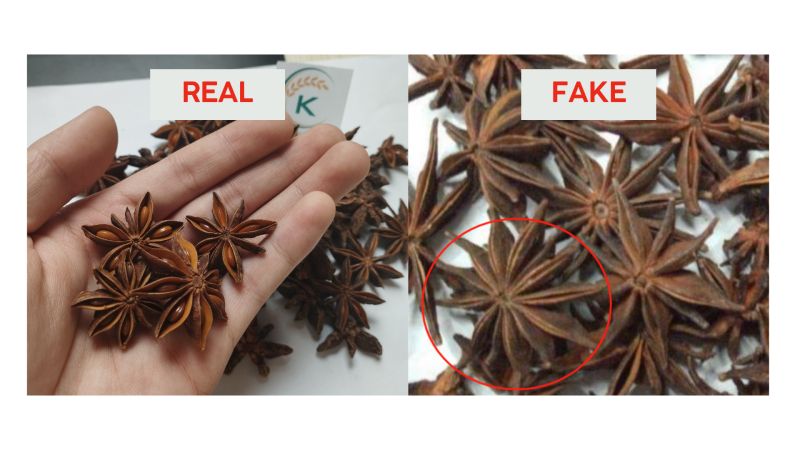
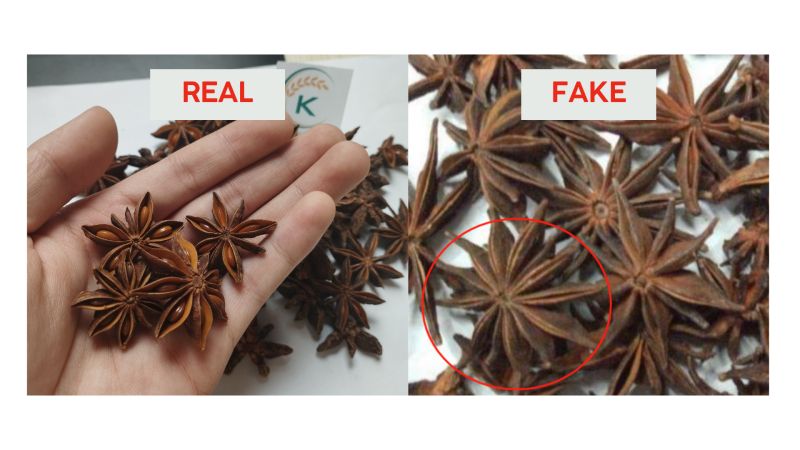
Detecting fake star anise from the real one is important because the counterfeit product may actually be “Japanese star anise,” a similar-looking spice that is toxic and not suitable for consumption. Here are some tips to help you distinguish genuine star anise (used commonly in cooking and traditional remedies) from its potentially harmful counterpart.
Visual Differences
- Shape and Structure:
- Genuine Star Anise: It typically has a more rounded, robust shape with fewer, larger points (usually eight). Each point contains a single seed that is neatly positioned in the center.
- Japanese Star Anise: Often has more points that are thinner and more elongated. The points may also curve upward, and the seeds are not as centrally aligned as in true star anise.
- Color and Texture:
- Genuine Star Anise: The color is a rust-like, dark brown. The surface is relatively smooth with a slight sheen.
- Japanese Star Anise: The color can be similar, but it may appear slightly more reddish or lighter, with a rougher texture.
Aromatic and Sensory Differences
- Smell:
- Genuine Star Anise: Has a sweet, licorice-like aroma that is strong and pleasant when the pods are intact or freshly broken.
- Japanese Star Anise: While it also has a strong smell, it’s often described as more harsh and medicinal, lacking the sweet depth of true star anise.
- Taste (Note: Tasting is not recommended due to the potential toxicity of Japanese star anise):
- Genuine Star Anise: Tastes sweet and licorice-like, similar to its aroma.
- Japanese Star Anise: Harsher and more bitter.
Additional Testing
- Water Test:
- Drop the star anise in a glass of water. Genuine star anise will usually float horizontally, while the counterfeit may float vertically or sink due to differences in composition and oil content.
- Purchase from Reputable Sources:
- One of the best ways to ensure you’re getting real star anise is to buy from reputable spice dealers or well-known grocery stores. If possible, opt for organic or well-branded products that provide better traceability and quality assurance.
Conclusion
It’s crucial to ensure that you’re using true star anise, especially when it’s intended for culinary or medicinal use, due to the potential toxicity of its counterfeit. Using these identification tips can help safeguard your health. If in doubt, it’s advisable to seek guidance from a spice expert or avoid using the spice until its authenticity can be confirmed.



