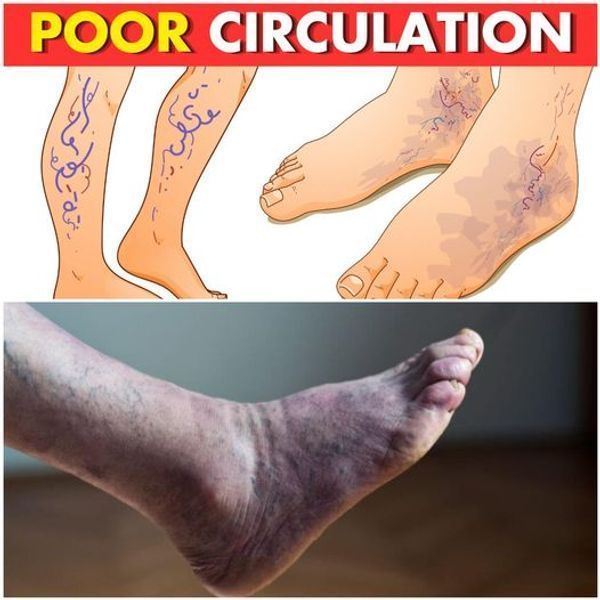
Ensuring that your body receives enough oxygen and nutrients through healthy circulation becomes increasingly important as we age. When circulation is not optimal, it can lead to discomfort and potential health issues. Recognizing the early warning signs of poor circulation and taking natural steps to enhance it are crucial. Here are 5 signs to be aware of and simple ways to boost your circulation.
Do you often notice that your hands or feet feel unusually cold, even when it’s warm outside? This sensation might indicate that your extremities are not receiving enough warm blood due to reduced blood flow.
How to Improve Circulation:
- Make it a habit to incorporate regular movement in your daily routine, like taking leisurely walks or engaging in gentle stretches.
- Experiment with alternating between hot and cold water in the shower to stimulate blood flow.
- Add warming ingredients such as ginger and cayenne pepper to your diet.
Experiencing frequent numbness, tingling, or a sensation of “pins and needles” in your arms or legs could be a sign of poor circulation.
How to Improve Circulation:
- Engage in activities like yoga or light cardio exercises daily to get your blood flowing.
- Massage the areas that feel numb or tingly to help promote better blood circulation.
- Remember to stay hydrated and avoid prolonged periods of sitting in one position.
Noticing swelling in your ankles, feet, or legs, especially after long periods of standing or sitting, could be due to fluid retention caused by poor circulation.
How to Improve Circulation:
- Elevate your legs while resting to encourage better blood flow.
- Incorporate magnesium-rich foods like leafy greens and nuts into your diet.
- Consider wearing compression socks for additional support in improving blood circulation.
Poor circulation may result in decreased oxygen reaching your muscles, leading to feelings of fatigue and low energy levels.
How to Improve Circulation:
- Keep yourself active, even short walks can significantly boost circulation.
- Include iron-rich foods such as spinach and lentils in your diet to support optimal blood oxygen levels.
- Quit smoking and reduce the intake of processed foods for better circulation.
Slow healing cuts or sores on your legs or feet could be a sign of inadequate blood circulation, which delays the delivery of essential nutrients to the affected tissues.
How to Improve Circulation:
- Integrate omega-3 fatty acids from sources like flaxseeds, walnuts, and fatty fish into your diet to promote vascular health.
- Practice relaxation techniques to manage stress, as stress can constrict blood vessels.
Putting It All Together:
By incorporating daily movement, following a balanced diet rich in circulation-boosting foods, and staying well-hydrated, you can maintain a healthy blood flow. Remember, if symptoms persist, seeking advice from a healthcare professional is crucial.
Making small changes to your daily routine can lead to substantial improvements in your circulation, helping you live a more vibrant and energetic life! 🩸✨