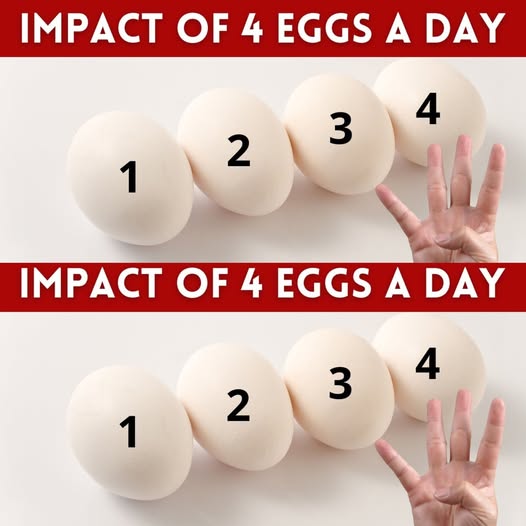
Eggs are among the most nutrient-dense foods you can eat, but what actually happens if you eat four whole eggs every single day? Here’s what many people experience when they include 4 eggs daily in their diet – the good, the bad, and what you should know!
✅ The Benefits
🥚 More Protein & Muscle Support
Four eggs pack around 24 grams of high-quality protein, providing essential amino acids for muscle repair, strength, and satiety.
🥚 Better Brain Function
Eggs are one of the richest sources of choline, a nutrient critical for memory, learning, and healthy brain development.
🥚 Stronger Eyes & Skin
Eggs deliver lutein and zeaxanthin, antioxidants that protect eyes from macular degeneration and keep skin healthy.
🥚 Improved Energy & Immunity
The B vitamins in eggs help turn food into energy and keep your nervous and immune systems strong.
🥚 Satiety & Weight Management
Eating eggs for breakfast can reduce calorie intake later in the day by keeping you full longer.
❗ Possible Downsides
⚠️ Increased Cholesterol Intake
Four eggs contain about 740 mg of cholesterol – over double the daily limit recommended in some guidelines. However, many recent studies show dietary cholesterol has minimal impact on most people’s blood cholesterol.
⚠️ Calories Add Up
Four large eggs have around 280 calories (without extras like butter or cheese), which can be significant depending on your total calorie needs.
⚠️ Sensitivity & Allergies
Some people experience digestive issues or allergic reactions to eggs – if you feel bloated, nauseous, or develop rashes, see your doctor.
What Really Happened
✅ Many report increased muscle mass and better recovery from workouts.
✅ Feeling fuller throughout the day, leading to less snacking.
✅ Improved hair, skin, and nails from the extra protein and nutrients.
✅ Some noticed a rise in LDL (bad cholesterol), but also HDL (good cholesterol) often increased, balancing out heart health risk factors.
Bottom Line
Eating four eggs daily can be safe and beneficial for many healthy people, offering a nutrient-dense source of protein, vitamins, and healthy fats – especially when balanced with a diet rich in vegetables, fruits, and whole grains. But if you have cholesterol concerns, pre-existing heart disease, or diabetes, talk to your doctor first to decide what’s right for you.
Moderation and variety are key to a healthy diet – even with superfoods like eggs!