
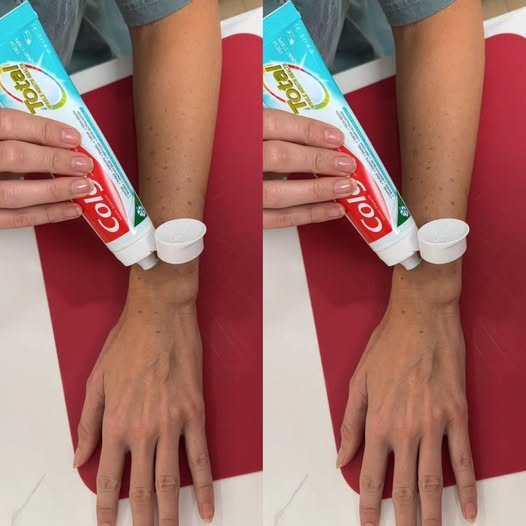
You may have seen viral claims or DIY videos about using Colgate toothpaste to lighten age spots, dark spots, or blemishes — but before trying it on your skin, here’s what you really need to know.
❓ Does Colgate Actually Work on Age Spots?
Colgate (or any standard toothpaste) is designed for teeth, not skin. Some people believe it works because it contains:
- Baking soda – a mild exfoliant
- Hydrogen peroxide – a light bleaching agent
- Menthol or triclosan – can dry out blemishes temporarily
However, toothpaste is not formulated for facial or body skin and can actually do more harm than good when used improperly.
⚠️ Risks of Using Toothpaste on Skin:
- Irritation and burning – especially on sensitive or dry skin
- Allergic reactions
- Increased pigmentation due to inflammation (can worsen age spots)
- Dryness, flaking, or peeling
✅ Safer Natural Alternatives to Lighten Age Spots:
🍋 1. Lemon Juice + Honey (used sparingly)
Lemon gently brightens, while honey soothes the skin.
Apply for 10–15 minutes, 2–3 times per week (avoid sun exposure after).
🥒 2. Aloe Vera Gel
Contains compounds that may help fade pigmentation over time. Apply daily to clean skin.
🧅 3. Red Onion Juice
Used in many spot-fading serums. Mix with a few drops of apple cider vinegar and apply to spots with a cotton swab.
🌿 4. Turmeric Paste
Mix turmeric with a few drops of milk or yogurt and apply to dark spots 2–3 times a week.
🩺 Or Try This:
Look for dermatologist-approved serums with ingredients like:
- Vitamin C
- Niacinamide
- Licorice extract
- Retinol (at night)
🧴 Final Word:
While some say they’ve lightened spots with Colgate, the risk of irritation and skin damage is real. It’s better to use safe, skin-friendly ingredients — or consult a dermatologist for stubborn spots.
In short: Colgate belongs on your toothbrush, not your skin! 🪥❌✨



