
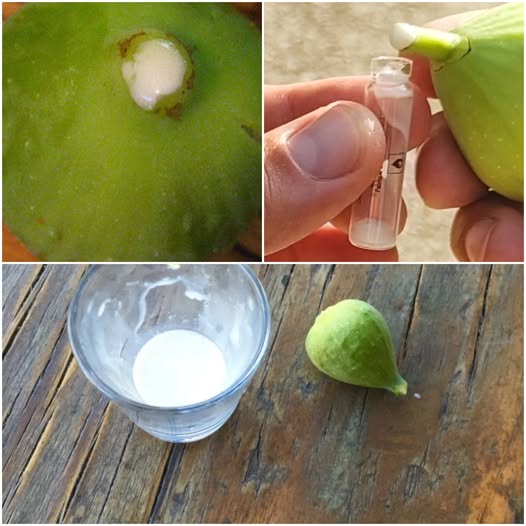
If you’ve ever broken a fresh fig leaf or stem, you’ve probably noticed the white milky sap that comes out. This sticky, slightly bitter liquid is often overlooked — but for generations, people have used it as a natural remedy for skin issues and more. That’s why I always keep a small bottle of it — and here’s why you might want to as well.
🌿 What Is Fig Milky Sap?
Fig sap, also called latex, is the white fluid that flows from the stem or leaf when cut. It’s packed with enzymes, natural acids, and antibacterial compounds, making it useful in traditional medicine — especially for topical use.
🧴 Why I Collect It:
1. Wart & Skin Tag Removal
This is the most well-known use. The enzymes in fig sap help dry out warts, skin tags, and corns when applied daily.
👉 How to use: Dab a tiny amount directly on the affected area once a day. Protect the surrounding skin with a little oil or cream to avoid irritation.
2. Natural Antifungal
The sap has antifungal properties that can help treat mild fungal skin infections like athlete’s foot or ringworm.
👉 How to use: Apply a drop to clean, dry skin and leave for 15–20 minutes before rinsing.
3. Acne Spot Treatment
Due to its antibacterial nature, fig sap can help dry out pimples and reduce inflammation.
👉 How to use: Dab a very small amount onto a blemish (avoid broken skin), leave for 10 minutes, then wash off.
4. Repels Insects from Small Cuts or Wounds
Traditionally, people used fig sap on small cuts to keep bugs away while the skin healed — though modern antiseptics are often safer.
⚠️ Important Warnings:
- Fig sap is very strong — it can cause irritation or burns if used in excess.
- Always do a patch test first on a small area of skin.
- Do not ingest the sap — it’s only for external use.
- Keep away from eyes and mucous membranes.
🫙 How I Store It:
- I collect a small amount of sap using a clean cotton swab when harvesting fig leaves or pruning.
- I store it in a tiny airtight glass dropper bottle in the fridge for short-term use (up to 1 week).
- For longer storage, I use olive oil to infuse a small amount of sap — it softens the effect and makes it gentler on skin.
Final Thought:
This sticky white sap from the fig plant may not look like much, but it carries powerful traditional uses. With care and respect for its strength, it can be a valuable natural tool for minor skin concerns — just like our ancestors used it.



