
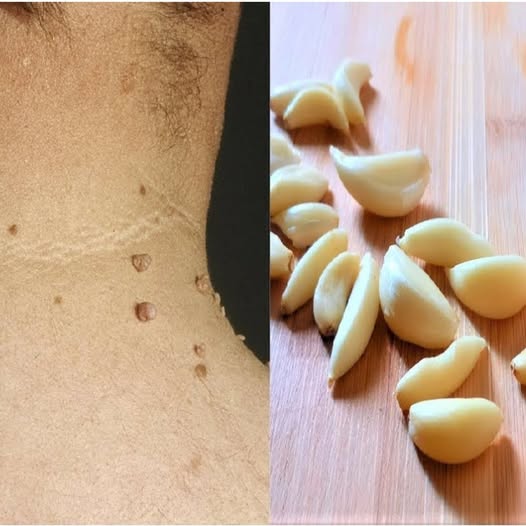
Skin tags, or acrochordons, are small, soft, flesh-colored growths that hang off the skin. They often appear on the neck, armpits, eyelids, under the breasts, or groin area, especially in places where skin rubs against skin or clothing.
Though completely harmless and non-cancerous, many people choose to remove them for cosmetic or comfort reasons.
✅ Why Do Skin Tags Appear?
- Friction between skin folds
- Hormonal changes (especially during pregnancy)
- Aging
- Genetics
- Obesity or insulin resistance
🏡 Natural Home Remedies (For Small, Non-Irritated Skin Tags)
⚠️ Always consult a healthcare provider before trying home remedies, especially near sensitive areas (eyes, genitals), or if you’re unsure if it’s a skin tag.
1. Apple Cider Vinegar
- Soak a cotton ball in raw apple cider vinegar
- Apply to the skin tag and secure with a bandage
- Leave on for 15–30 minutes daily until the tag darkens and falls off (usually 1–2 weeks)
2. Tea Tree Oil
- Apply a drop of tea tree oil using a cotton swab
- Cover with a bandage
- Repeat 1–2 times daily for 1–3 weeks
3. Banana Peel
- Cut a small piece of banana peel and place it inside-down on the skin tag
- Secure with tape overnight
- Natural enzymes may help dry out the tag over time
4. Garlic Paste
- Crush fresh garlic and apply directly to the tag
- Cover with a bandage overnight
- Wash off in the morning — garlic has strong enzymes that may help break down the tissue
❌ Do NOT Attempt:
- Cutting skin tags at home with scissors or blades
- Burning or freezing without medical supervision
- Using chemical treatments meant for warts
🧑⚕️ When to See a Doctor
- If the tag is bleeding, painful, or changing in shape/color
- If it’s in a sensitive or hard-to-reach location
- If you’re unsure it’s actually a skin tag
Final Thought:
Skin tags are very common and harmless, and if they bother you, there are gentle, natural ways to manage them at home — or safe, quick removal by a dermatologist. Always put safety first, and when in doubt, consult a professional!



