
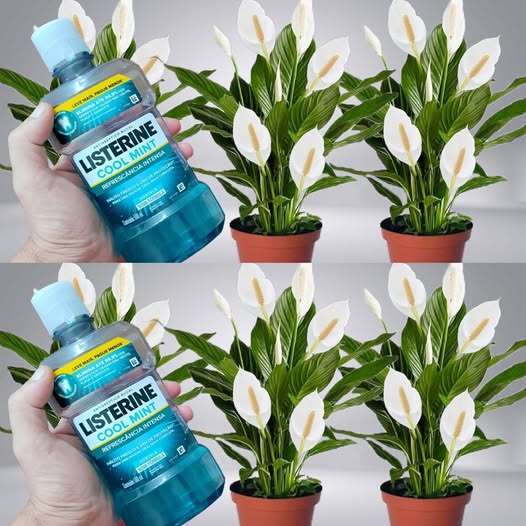
Believe it or not, mouthwash isn’t just for fresh breath—it can be a powerful tool in your garden! Thanks to its antibacterial, antifungal, and mild antiseptic properties, mouthwash (especially the original, alcohol-based kind) can help solve several common plant and soil problems naturally.
Here’s how this surprising trick works—and why gardeners are loving it.
🪴 Why Mouthwash Helps in the Garden:
Most mouthwashes contain menthol, thymol, and alcohol—ingredients that:
- Kill fungi and mold on leaves and soil
- Help prevent root rot and damping off in seedlings
- Act as a natural disinfectant for tools and pots
- Can even repel pests like aphids or gnats
🌱 How to Use Mouthwash in the Garden:
✅ 1. Anti-Fungal Leaf Spray
Use for: Powdery mildew, black spots, or moldy leaves
How to make:
- 1 part mouthwash (alcohol-based, no sugar)
- 3 parts water
- Optional: a few drops of mild dish soap (for better leaf adhesion)
Instructions:
- Mix and pour into a spray bottle
- Spray affected leaves once a week (avoid during peak sun hours)
- Always test on one leaf first to make sure it doesn’t cause burn
✅ 2. Soil Treatment Against Fungal Growth
Use for: Preventing fungus in pots and seed trays
How to make:
- ½ cup mouthwash
- 1 liter of water
Instructions:
- Water the soil lightly with the mixture—only every 2–3 weeks
- Do not overuse to avoid disturbing beneficial microbes
✅ 3. Disinfecting Garden Tools and Pots
Use for: Cleaning scissors, pruners, seed trays, and pots
How to do it:
- Soak or wipe down tools with undiluted mouthwash
- Let them air dry—no rinsing needed!
⚠️ Important Notes:
- Always use alcohol-based mouthwash (original blue or amber types work best)
- Never use mouthwash with sugar or whitening agents—these can harm plants
- Use sparingly—overuse can dry out soil or damage roots
🌼 Final Tip:
Try this on your indoor plants, vegetables, or flower beds, and you’ll be amazed at the results. Cleaner leaves, fewer pests, and healthier soil—all with a splash of mouthwash!



