
Cooking oils play a vital role in your daily meals — but not all of them are safe or healthy when exposed to high heat. Some oils that seem harmless can actually release toxic compounds or lose their nutritional value during cooking. Understanding which oils to avoid (and why) can help you protect your health and keep your meals nutritious and safe. 🌿
🌡️ The Key: Smoke Point & Oil Stability
The smoke point is the temperature at which an oil starts to burn and produce smoke. When an oil reaches or exceeds its smoke point, it breaks down into free radicals and harmful chemicals, such as acrolein — a compound that can irritate the lungs and damage cells.
Oils that are highly processed or rich in polyunsaturated fats tend to have low smoke points and become unstable when heated. These are the ones to use with caution or avoid for cooking altogether.
⚠️ Oils That Are Not Ideal for Cooking
1. Flaxseed Oil
- Smoke Point: ~225°F (107°C)
- Why to Avoid: Extremely sensitive to heat and light. High temperatures destroy its omega-3 fatty acids, turning this healthy oil rancid and unstable.
- Best Use: Drizzle over salads or add to smoothies after cooking.
2. Walnut Oil
- Smoke Point: ~320°F (160°C)
- Why to Avoid: Rich in polyunsaturated fats that oxidize quickly when heated. Cooking with it can produce harmful free radicals.
- Best Use: Cold dishes, salad dressings, or finishing oil for flavor.
3. Grapeseed Oil
- Smoke Point: ~420°F (216°C), but unstable at high heat due to oxidation.
- Why to Avoid: Though marketed as “healthy,” grapeseed oil is highly processed and contains excess omega-6 fatty acids, which can promote inflammation when overheated or consumed in large amounts.
- Best Use: Low-heat cooking or salad dressings.
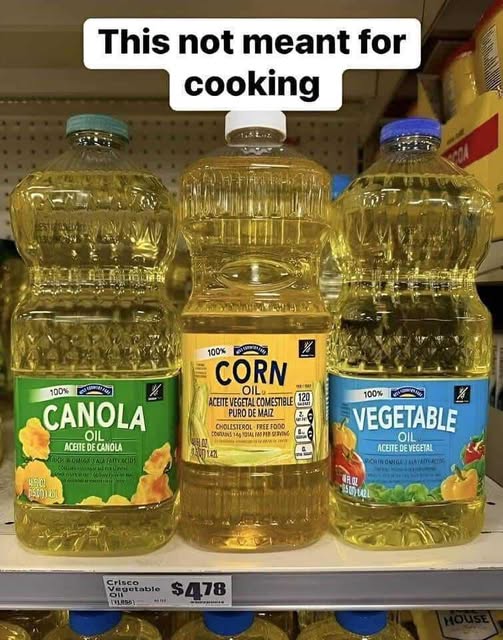
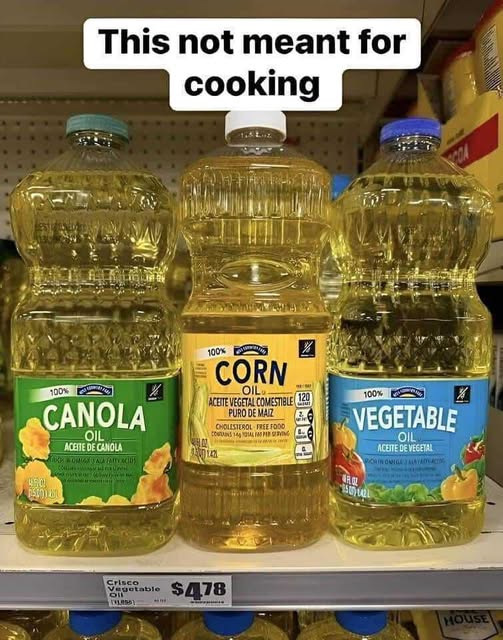
4. Corn Oil, Soybean Oil & Sunflower Oil (Refined)
- Smoke Points: Around 440°F (227°C), but high in unstable polyunsaturated fats.
- Why to Avoid: These oils are chemically extracted and often hydrogenated. When heated repeatedly (as in frying), they form trans fats and oxidized compounds linked to inflammation and heart disease.
- Best Use: Avoid for high-heat cooking; use minimally processed versions for light sautéing.
5. Vegetable Oil Blends
- Smoke Point: Varies (depends on mix).
- Why to Avoid: Most “vegetable oils” are refined blends of soybean, canola, and corn oils — stripped of nutrients and chemically treated. They degrade quickly under heat, producing unstable molecules.
- Best Use: Replace with natural oils like olive or avocado oil.
✅ Healthier Oils for Cooking
If you want stability, flavor, and health benefits — switch to these heat-friendly oils:
- Extra Virgin Olive Oil (EVOO): Stable up to 375°F (190°C), rich in antioxidants and heart-healthy fats.
- Coconut Oil: High in saturated fats, excellent for sautéing and baking.
- Avocado Oil: High smoke point (~520°F / 271°C) and rich in monounsaturated fats.
- Ghee (Clarified Butter): Perfect for frying or roasting due to its stability and flavor.
💡 Final Tips
✔ Avoid reusing oils for frying — reheated oil becomes toxic faster.
✔ Store oils in dark glass bottles, away from heat and light.
✔ Choose cold-pressed, unrefined oils whenever possible — they retain more nutrients and antioxidants.
🌸 The Bottom Line
The oil you choose for cooking can make or break your health. Refined, unstable oils may seem convenient, but they can oxidize and form harmful compounds at high heat.
Stick to natural, heat-stable oils like olive, avocado, coconut, or ghee — and use delicate oils like flaxseed or walnut only for cold dishes. 🌿✨
Cooking healthy starts with the right oil — small change, big difference. 💛



