
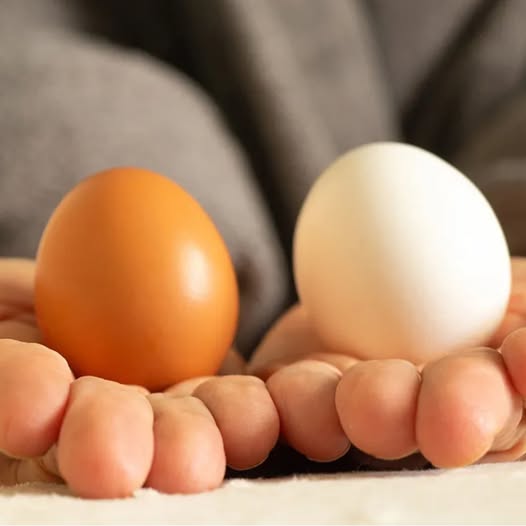

Many people believe that brown eggs are “healthier,” “more natural,” or even “organic” compared to white eggs. However, the “secret” behind the shell color is much simpler than that. The color of an egg is determined entirely by the breed of the hen. Generally, hens with white feathers and white earlobes lay white eggs, while hens with red or brown feathers and red earlobes lay brown eggs.+1
In terms of nutrition, there is no significant difference between a brown egg and a white egg. Both contain the same amount of protein, vitamins, and minerals. The reason brown eggs are often more expensive at the grocery store isn’t because they are better for you; it’s because the hens that lay them are usually larger and eat more food, making them more expensive for the farmer to raise.+1
What Really Determines an Egg’s Healthiness
If you want to choose the healthiest egg, you shouldn’t look at the color of the shell, but rather at how the hen lived.
- The Diet: A hen that eats grass and bugs produces eggs with more Omega-3 fatty acids and Vitamin A than a hen that only eats grain.
- The Sunlight: Hens that spend time outdoors in the sun produce eggs with significantly higher levels of Vitamin D.
- The Yolk Color: A deep orange yolk usually means the hen had a diet rich in carotenoids (from greens and flowers), which are excellent for your eye health.
- Freshness: The “healthiest” egg is often the freshest one. A fresh egg has a thick white and a yolk that stands up tall rather than flattening out.
Recipe for the “Perfect Health” Soft-Boiled Egg
To get the most nutrients out of your eggs, a soft boil is best because it keeps the delicate fats in the yolk from being overcooked or oxidized.
Ingredients:
- 2 Large Eggs (Brown or White, preferably “Pasture-Raised”)
- Water
- A pinch of Sea Salt and Black Pepper
Instructions:
- The Boil: Fill a small pot with enough water to cover the eggs by an inch. Bring the water to a rolling boil.
- The Lower: Use a slotted spoon to gently lower the cold eggs into the boiling water.
- The Timer: Set your timer for exactly 6 minutes and 30 seconds. This ensures a firm white and a “liquid gold” runny yolk.
- The Shock: While the eggs boil, prepare a bowl of ice water.
- The Cool: When the timer goes off, immediately move the eggs to the ice water for 2 minutes. This stops the cooking and makes them easy to peel.
- The Use: Peel gently, slice in half, and sprinkle with salt and pepper. The runny yolk acts as a natural “sauce” that is packed with brain-healthy choline.
Recipe for a Quick “Egg and Spinach” Morning Boost
This is a “treasure” of a breakfast for anyone wanting to improve their iron levels and energy.
Ingredients:
- 2 Eggs
- 1 cup of Fresh Spinach
- 1/2 teaspoon of Butter or Olive Oil
Instructions:
- The Sauté: Heat the butter in a pan and toss in the spinach until it wilts (about 30 seconds).
- The Eggs: Crack the eggs directly over the spinach.
- The Steam: Put a lid on the pan for 2 minutes on medium heat. This steams the eggs perfectly without flipping.
- The Result: You get a high-protein, high-fiber meal that keeps you full until lunch.
Three Tips for Buying the Best Eggs
- Ignore the Shell Color: Don’t pay extra for brown eggs unless the carton also says “Pasture-Raised.”
- Look for “Pasture-Raised”: This label is the “gold standard.” It means the hens actually spent their days outside in the grass, which creates the most nutrient-dense eggs.
- Check the “Pack Date”: On the side of the carton, there is a 3-digit number (001–365). This tells you what day of the year the eggs were put in the box. The closer to today’s date, the fresher the egg!
A Friendly Tip for Success
You’ll know you’ve found a high-quality egg when the shell is hard to crack and the yolk is a bright, sunset orange instead of pale yellow. Whether the shell is white, brown, or even blue, the magic is all on the inside!



