
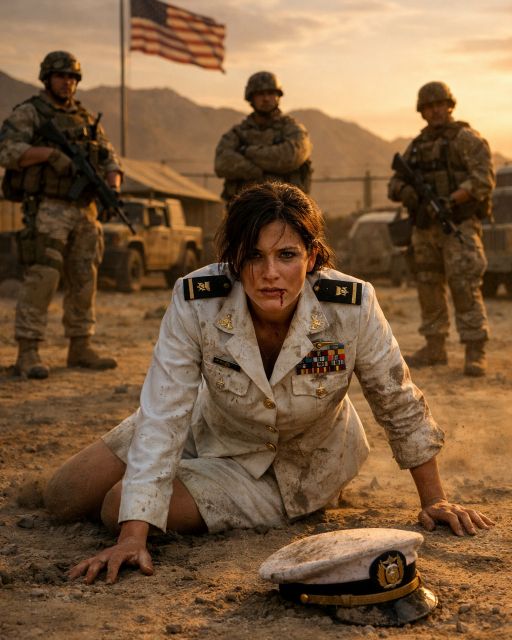
A Cold Welcome
He didn’t even look up. “Stay in your lane,” Colonel Todd Keller said, eyes locked on the operations map, his voice carrying across the room so everyone could hear it.
Heat rose in my cheeks, but I kept my expression calm. It was my first day at Fort Ashford, and already I’d been reduced to a label in whispers: the new Black woman, the temp, the support officer whose badge “opened the wrong doors.” I let the words roll past me. I was here to do a job.
Filed As Temporary Support
The paperwork listed me under temporary operations support. Admin. The kind of role people thank politely and ignore in a crisis. I arrived in a plain duty uniform with one duffel, one locked case, and no entourage. That suited me just fine. A quiet appearance was the best cover I could have asked for.
By lunchtime, the tone around me had settled into something unmistakable. My basic questions were redirected to empty mailboxes. My access badges were “pending.” The office I was shown didn’t even have a secure terminal. When I asked Major Craig Pruitt from logistics about visibility into routine movement, he gave me a small smirk and said, “You won’t need it.”
I smiled back. I wrote everything down.
When The Numbers Don’t Add Up
Quiet things started to feel out of place. Fuel that moved briskly on paper without ever moving on wheels. Manifests that balanced a little too perfectly, like someone had erased the smudges from a long day. Loading zones that were somehow “inconveniently unsupervised” at exactly the right moments. It didn’t look sloppy. It looked rehearsed.
They tested me early with what everyone at the base called the “humiliation drill.” Bad communications. Tight timelines. Plenty of chances for a new person to fumble in public. I took their broken script, rewired it within the hour, and slid two overlooked sergeants into the relay—men who had been doing quiet, careful work without any fanfare. The exercise ran clean. The smirks around me faded.
That’s when things turned from cold to mean.
Corrupted simulations arrived in my queue. Data packets went missing. I was summoned to Colonel Keller’s office for a formal warning. He wore a smooth smile that never reached his eyes. “Support doesn’t oversee command decisions,” he said. My stomach went cold, but my hands stayed steady.
In the hallway afterward, Captain Kara Patel from intelligence caught up to me just long enough to murmur, “Restricted logistics corridors.” She paused a breath. “They don’t exist on paper.” Then she was gone. I didn’t need more than that.
That night, Sergeant Corey Banks knocked once and stepped in. “Ma’am, if you’re seeing what I’m seeing, they’re pushing something through Hangar Nine just after midnight.” His jaw was tight. Mine was too.
I kept quiet. I wasn’t at Fort Ashford to be liked. I was here to see.
They Tried To Put Me On Trial
The next morning, they made it public. A full-base assembly. A microphone set center. A neat list of “incidents” pinned with my name. Colonel Keller’s voice boomed across the parade ground with practiced disappointment. “Failure to follow protocol. Unauthorized tasking. Misuse of resources.”
My pulse pounded in my ears, but my steps were even as I walked to the podium. I set my locked case on it and clicked it open.
“You want to talk about unauthorized?” I said, mild and steady. The room leaned in. Keller’s smile stayed fixed, but something in his gaze twitched.
I flipped open the first folder. His eyebrow ticked up—just a fraction.
Then the front gate sirens chirped once. Engines, heavy and sure, rolled onto the grounds. Every head turned toward a low line of black sedans that drove onto the parade field, the lead car glinting with a four-star plate that made Keller’s face drain to paper.
The first door opened. The driver stepped out, looked past Keller, found me, and said, “Major Harding, General Wallace is here for your briefing.”
Silence washed over the assembly. You could have heard a pin drop on the grass. “Major Harding.” The name didn’t just hang in the air—it landed. My real name. My real rank.
Colonel Keller’s jaw went slack. His eyes, moments ago brimming with authority, widened with the understanding that the ground had shifted beneath him. He glanced from the four-star plate to my face, then back again, and the picture forming in his mind was one he couldn’t afford to see.
Major Pruitt, standing just off Keller’s shoulder, lost his color. The smirk was gone. In its place was a tight, panicked look, like a man who hears the trap closing and realizes he’s standing in the middle of it.
I gave them the same small, careful smile I’d used all week. It felt different now. The room felt it, too.
A tall man with silver hair and a chest full of ribbons stepped from the lead car. General Wallace. His gaze scanned the formation, sharp and unblinking, before it settled on me. He gave one small nod.
Time To Lay Out The Truth
That was my cue. I turned back to the microphone. My voice was clear and carried cleanly to the back rows. “Colonel Keller says I misused resources. Let’s talk about that with the facts.”
I lifted the first file. “Exhibit A: Fuel requisitions. For the past six months, Fort Ashford has reported a twenty percent increase in fuel use for standard transport.” I paused just long enough to let the words sink in. “Yet our own maintenance logs and GPS trackers show those same transports driving twelve percent fewer miles.”
A ripple of low conversation ran through the formation. Most of the people standing there were honest professionals. They knew when numbers told a story that didn’t fit the day-to-day work.
“Where did fifty thousand gallons of fuel go, Colonel?” I asked, meeting his eyes. His mouth opened, but no words followed.
I set that file down and lifted the next. “Exhibit B: Manifests. Major Pruitt,” I said, turning to face the logistics officer. He flinched. “You are exceptional at paperwork. Your manifests are perfect. Not one missing crate. Not one discrepancy. It’s almost impossible to be that perfect in logistics, isn’t it?”
I opened the folder to a set of time-stamped satellite images. “These images show pallets being loaded at your ‘inconveniently unsupervised’ loading zones.” I slid a photo forward on the podium. “These pallets never appeared on any official manifest.”
Pruitt began to sweat. He glanced to Keller for help. The Colonel didn’t move. He looked carved from ice.
“By the way,” I continued, my tone level, “those corrupted simulations I was sent weren’t a harmless prank. They were a test—to see if I’d notice and whether I could be blocked. In trying to box me out, you accidentally drew me a map.”
I tapped another folder. “And that so-called humiliation drill? Thank you for that. In repairing your ‘broken’ communications exercise, I found the honest noncommissioned officers—Sergeants Miller and Rossi—who had already built workarounds to keep missions on track. All it took was someone to ask them the right questions.” I nodded toward them in the crowd. Surprise flashed across their faces.
I looked across the formation. “This command tried to make me invisible. But when you’re invisible, you can go anywhere. And you can listen.”
My gaze met Captain Patel’s—straight back, chin steady. “You hear whispers about restricted logistics corridors that don’t officially exist. Corridors that skip every checkpoint on this base. Captain Patel, thank you for your careful ears.” A flicker of relief passed through her eyes. She was covered now.
I found Sergeant Banks near the back. Solid as always. “And you get the courage of a good sergeant at your door at night, confirming those corridors feed one place: Hangar Nine.”
Now I had every eye. Keller stood inside a world that was unraveling strand by strand, right where his voice had boomed not ten minutes earlier.
“So what was moving, Colonel?” I asked. “First it was fuel. Then spare parts for armored vehicles. Then communications arrays and targeting systems.” I let the weight of that rest for a beat. “That isn’t just theft. That is cutting into the readiness of your own command.”
I lifted the final folder. It was thin—one page inside. “But that wasn’t the main course,” I said quietly. “That was just the appetizer.”
“You’ve been moving decommissioned, but still usable, M-27 infantry weapon components,” I said. The air around us seemed to still. Lines you never expect to see crossed had been crossed.
Keller finally found his voice. It broke coming out. “That’s a lie,” he rasped. “A slander from a disgruntled junior officer.”
“Am I a junior officer, Colonel,” I asked, steady, “or am I Major Harding, Inspector General’s Special Investigations Division?”
Whatever was left of his bravado collapsed. The look on his face was the look of a man who understood the size of the hole beneath his feet.
“Here’s the part even my team questioned,” I went on. “We followed the money. We traced the buyers. We assumed we’d find a foreign power or a large criminal syndicate.” I let the slightest pause hang in the air. “We were wrong.”
I turned and met Keller’s eyes. When you twist the knife, you have to be exact. “You weren’t selling to an enemy abroad, Colonel. You were selling to an enemy within.”
Silence stretched across the parade ground. It wasn’t empty. It was heavy.
“You have been arming a domestic extremist group,” I said, clear enough that the back row could hear every word. “A militia that believes it alone guards this country and that our own government is the enemy.”
A collective gasp rose and then stopped as quickly as it started. This was no longer about greed. This was betrayal.
Keller’s face twisted. “They are patriots,” he snapped. “Men willing to do what this weak, corrupted government won’t!”
He had just confessed—out loud, in front of his formation, and in front of a four-star general. There was nowhere to go from there.
General Wallace took a single step forward. He didn’t need to raise his voice. “Colonel Keller, you have betrayed your oath, your country, and every soldier standing here today. You are a disgrace to that uniform.”
Military Police who had been quietly positioned at the edges began to move.
Cracks Become Collapses
The next crack didn’t come from Keller. It came from Pruitt.
Major Pruitt, who had been silent and sweating, suddenly shouted, “It was him! It was all him!” He stabbed a trembling finger toward Keller. “I just moved boxes! I didn’t know what was in them—I swear! He said it was surplus. He said it was all above board!”
The words tumbled out in a panicked stream. The cool, smirking officer from earlier was gone. In his place stood a man clawing for a way out.
“I have records!” Pruitt cried as the MPs reached him. “He kept a private ledger—on a drive in his desk. I can show you!”
Keller looked at Pruitt with something close to pure hatred. That final, fatal betrayal. The man he trusted with the details was the same one trying to buy a lifeline with a ledger.
The MPs secured Keller first. He didn’t resist. He stood there, rage settling on his face like a mask. Then they cuffed Pruitt, who kept babbling about deals and testimony. A few other officers, implicated by Pruitt’s sudden honesty and my files, were quietly led away. That’s how this kind of collapse happens—loud at first, then quiet as the truth takes its place.
The parade ground fell still again. The air felt different, lighter but sobered.
Rebuilding Trust In The Open
General Wallace stepped to the podium and paused. He didn’t need the microphone for what came next. “What you witnessed today is a failure of leadership,” he said, his voice steady and full. “But it is also proof that integrity can and does hold.”
He turned to me. “Major Harding was sent here because whispers reached my office. She came alone, underestimated and dismissed, because that was the only way to see what needed to be seen.”
Then he looked toward Captain Patel and Sergeant Banks. “The truth depends on courage from every stripe and every sleeve. Captain Patel, Sergeant Banks—step forward.”
They moved through the ranks and stopped in front, standing tall. The general faced the formation. “These two upheld their oath when others abandoned it. They trusted the system when it was hardest to trust. Their service today will be formally and publicly commended.”
Applause began, cautious at first and then gathering strength. It wasn’t just for the captain and the sergeant. It was for the idea that order could be restored, that honor wasn’t just a word printed on a poster in a hallway.
What Came After
Later that afternoon, I stood beside General Wallace in what had been Keller’s office. The room already felt different—cleaner, as if a window had been opened to let the stale air out.
“You handled that perfectly, Major,” the general said, looking down at the base as routine slowly returned to the streets and motor pools.
“They made it easy, sir,” I answered. “Their prejudice was their blind spot. They saw a temporary, female, Black officer and decided she didn’t matter. They never once saw a threat.”
General Wallace turned from the window. “I didn’t choose you because you could be underestimated. I chose you because you wouldn’t let their prejudice define your work. They told you to stay in your lane,” he added with a faint smile. “You stayed in it—and built a new road while you were there.”
He was right. All week, they thought my lane was a narrow side street, a dead end. They never realized it was a highway, paved straight to their front door.
The Lesson That Stays With You
What happened at Fort Ashford wasn’t really about rank or salutes. Those matter, but they weren’t the center of this story. The heart of it was something simpler and far more familiar to anyone who has spent years building a life, a career, or a family: the danger of underestimating people—and the strength that comes from quiet integrity.
We all know what it feels like to be put in a box. Sometimes the label is your job title, sometimes it’s your age or background, sometimes it’s just the role other people have decided you play. The truth is, the box never holds. The quiet person in the back of the room, the one taking notes and asking the right questions—that person often sees what the loudest voices miss. That person connects the dots.
At Fort Ashford, the loudest voice told me to stay in my lane. But lanes aren’t cages; they’re paths. You can widen them. You can build them where they need to go. You can use them to get the right people to the right place at the right moment. That’s how good teams work. That’s how institutions heal after they’ve been wounded by ego and greed.
For the soldiers there that day, and for anyone who has ever been dismissed because of a label, the message is the same. Integrity does not need a spotlight to be powerful. It survives the smirks. It outlasts the whispers. It leans on evidence and on the courage of people who still believe that an oath means something.
Captain Patel didn’t need a stage to do the right thing; she needed to know she would be protected when she spoke up. Sergeant Banks didn’t need a grand speech; he needed a quiet knock on a door to say, “I’m seeing what you’re seeing.” Sergeants Miller and Rossi didn’t need medals to hold the line; they needed someone to notice the care they were already taking to keep missions moving despite broken channels. None of that is flashy. All of it is how real work gets done.
Colonel Keller thought perfection on paper would hide a mess beneath it. But perfect paperwork is its own kind of alarm when the real world never looks that neat. The fuel curves, the maintenance logs, the GPS trails—they don’t shout. They point. And when you follow them with patience and respect for the people doing the hard jobs, you arrive at the truth.
There’s another part of this that matters, too. Wrongdoing rarely stands alone. It collects people, excuses, and alibis, and it grows in the shadows. The best way to shut it down is the oldest way: bring it into the light, lay out the facts simply, and ask the questions anyone can understand. Where did the fuel go? Why are the manifests too perfect? Who is moving what through a hangar at midnight? Ordinary questions, asked clearly, are often the lockpicks that open complicated doors.
As for me, I don’t mind being underestimated. It buys me time. It opens space for a deep breath and a good look around. It lets me find the right allies—the ones who do their duty without fanfare—and bring them with me when the moment comes to step into the sun and tell the truth out loud. That’s what happened on that parade ground. That’s what will keep happening wherever people think they can trade their oath for a payday or a cause that twists patriotism into something cruel.
In the end, this was not a story about a base commander and a “temp support” officer. It was about the quiet power of people who still believe in honor as a practice, not a slogan. It was about what happens when you insist on seeing clearly, even when others try to fog the glass. And it was about how respect—for facts, for duty, for one another—remains the most reliable compass any of us can carry.
They told me to stay in my lane. I did. I followed it to the truth, widened it as I went, and made sure there was room for everyone who chose integrity over convenience to walk beside me.



