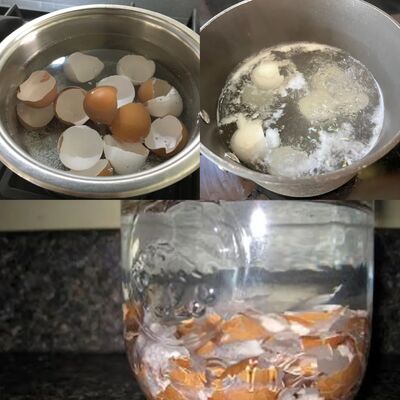
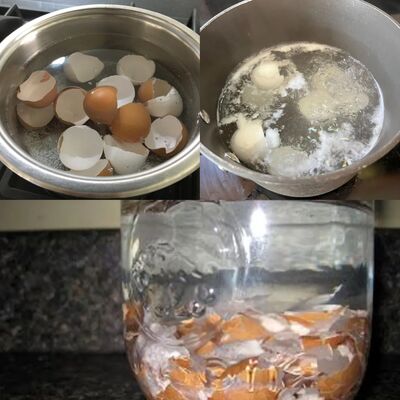
Most people throw away eggshells without realizing they’re packed with valuable minerals—especially calcium, magnesium, and potassium. Boiling them in water turns this everyday waste into a natural, zero-cost household helper with multiple uses. Once you try it, you’ll never toss your eggshells again!
1. How to Make Eggshell Water
You’ll need:
- Shells from 6 eggs (rinsed well to remove any egg residue)
- 1 liter of water
Steps:
- Place the clean eggshells in a saucepan.
- Add the water and bring it to a gentle boil.
- Let it simmer for 10–15 minutes.
- Turn off the heat, cool it down, and strain the water into a glass jar or bottle.
Now you have eggshell water, rich in minerals that can be used in clever, money-saving ways.
2. Feed Your Plants Naturally
Eggshell water makes an excellent natural fertilizer. Pour it around your plants once a week to give them a boost of calcium, which strengthens stems and helps prevent leaf yellowing. It’s especially beneficial for tomatoes, peppers, and houseplants.
3. Clean Without Chemicals
Mineral-rich eggshell water has mild cleaning power. Use it to wipe kitchen counters, sinks, or even watering cans to remove mineral buildup naturally—no need for harsh cleaners.
4. Strengthen Your Compost
If you compost, don’t throw away the boiled shells! Crush them after boiling and add them to your compost pile. They improve the soil structure and provide slow-release nutrients for future plant growth.
5. Bonus Tip: For Pets and Chickens
If you have pets or backyard chickens, you can dry and crush the boiled shells into a fine powder and mix a small amount into their food for an extra calcium boost.
The Bottom Line
Boiling eggshells might seem simple, but it’s a smart, sustainable, and cost-free way to reuse something you’d normally throw out. You’ll save money on fertilizers and cleaners—while helping your plants, home, and the planet thrive naturally.