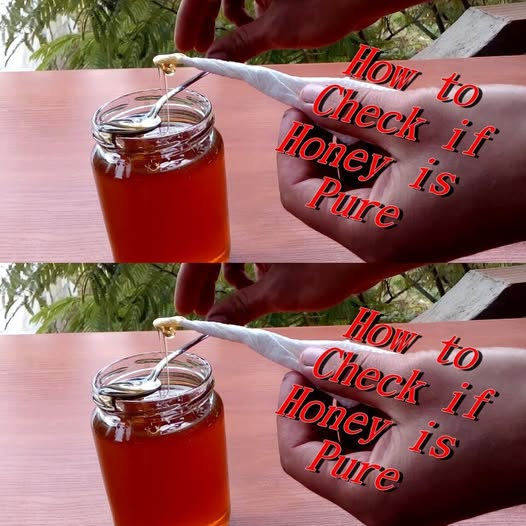
Knowing how to check if honey is pure is important because many bottles in the store are actually mixed with sugar syrup or corn syrup. Real honey is a “living” food full of enzymes and antioxidants, but “fake” honey is just liquid sugar that can cause inflammation. Pure honey has unique physical properties—it doesn’t like water, it is very thick, and it catches fire easily because it contains very little moisture.
By using these five simple home tests, you can make sure you are getting the true healing benefits of honey. Genuine honey should come from bees, not a factory, and these tests will help you tell the difference in just a few minutes.
5 Methods to Test for Pure Honey
1. The Water Test
Pure honey is “hydrophobic,” meaning it does not dissolve in water easily.
- The Test: Drop one teaspoon of honey into a glass of room-temperature water.
- The Result: If the honey is pure, it will sink to the bottom in a solid lump and stay there. If it is fake, it will start to dissolve and cloud the water immediately.
2. The Thumb Test
This tests the “viscosity” or thickness of the honey.
- The Test: Put a small drop of honey on your thumb.
- The Result: If the honey is pure, it will stay in a thick, rounded drop and won’t spread or run off. If it is fake, it will be thin and watery, spilling over the sides of your finger quickly.+1
3. The Flame Test
Because pure honey contains very little water, it is actually flammable.
- The Test: Dip the tip of a dry matchstick into the honey. Strike the match against the box to light it.
- The Result: If the honey is pure, the match will light easily and the honey will burn. If it is fake, the match will not light because the honey contains too much water or moisture from added syrups.
4. The Paper Towel Test
This checks for added water or diluted syrups.
- The Test: Place a drop of honey on a piece of paper towel or a napkin.
- The Result: If the honey is pure, it will stay on top of the paper and not soak through. If it is fake or diluted, it will be absorbed by the paper and leave a wet ring around the drop.+1
5. The Bread Test
Real honey will actually make bread “stale” or hard, while fake honey makes it soggy.
- The Test: Spread some honey on a slice of fresh bread. Wait about 5 to 10 minutes.
- The Result: If the honey is pure, the bread will become hard and crunchy where the honey is. If it is fake, the bread will become damp and soft because of the moisture in the syrup.
Why You Should Only Use Pure Honey
- Natural Antibiotic: Pure honey contains “hydrogen peroxide,” which helps heal wounds and kill bacteria in the throat.
- Better for Blood Sugar: Even though it is sweet, pure honey has a lower glycemic index than white sugar, meaning it doesn’t cause a massive energy crash.
- Allergy Relief: Local pure honey contains tiny bits of pollen that can help your body become “immune” to seasonal allergies.
Recipe: The Honey and Cinnamon Immunity Spoon
Once you know your honey is pure, you can use it to make this powerful daily medicine.
Ingredients:
- 1 tablespoon of Pure Honey
- 1/2 teaspoon of Ceylon Cinnamon
- A tiny pinch of Black Pepper
Instructions:
- The Mix: Simply stir the cinnamon and black pepper into the tablespoon of honey.
- The Timing: Take this spoon every morning on an empty stomach.
- The Benefit: This mixture helps lower cholesterol, cleans the arteries, and gives you a natural boost of energy that lasts all day.
A Friendly Tip for Success
If your honey turns “cloudy” or “hard” in the jar over time, don’t worry! This is called crystallization, and it is actually a sign that your honey is 100% pure. Fake honey often stays perfectly clear and liquid forever because of the chemicals inside. To make it liquid again, just place the jar in a bowl of warm water for a few minutes.