Homecoming to Silence
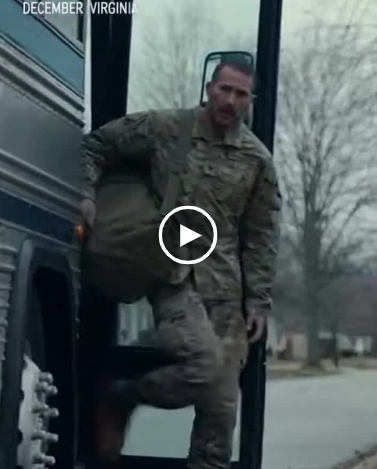
The bus gave a final sigh as it stopped along a quiet street in a Virginia suburb. Michael Turner, 37, stepped down with his duffel bag, shoulders squared the way years of service had taught him. Two long years in Afghanistan had taught him many things: how to keep moving when the body wants to quit, how to trust a teammate with your life, and how to push fear into the background so you can do the next right thing. What it had not prepared him for was the silence that waited at the end of Willow Creek Road.
His house—once neat and welcoming—looked tired. The lawn that he used to keep trimmed was tangled and high. The mailbox bulged with letters and bills, the kind that whisper trouble even before you open them. He felt his stomach tighten as he walked up the front steps. His wife, Clara, was supposed to be handling these everyday tasks while he was away. He reached for the doorknob, already bracing himself for whatever mess might be inside.
An Empty Chair and Two Little Faces
He didn’t even make it through the front door. On the porch, huddled on the worn mat, were his children—Sophie, nine, and Ethan, four—small, tired, and trying their best to be brave. Their clothes were wrinkled, their cheeks smudged, their little hands clutching each other for comfort. Beside them stood Rex, the family’s loyal German Shepherd, alert and rigid until he recognized the scent and sound of his person. The dog’s tense rumble turned to a soft whine of relief.
“Daddy?” Sophie’s voice came out thin and careful, the way a child talks when she is afraid of the answer. Michael’s bag slipped from his shoulder to the porch with a thud. The world narrowed to the two faces he loved more than anything. He knelt and pulled them in, feeling their ribs and their trembling, feeling the rise and fall of their breaths against his chest. For a moment, there was joy. And then—just as quickly—there was the question that wouldn’t wait.
“Where’s Mom?” he asked, his eyes scanning the driveway, the windows, the shadows inside the house. Sophie swallowed hard, her chin wobbling the way it had when she was a toddler.
“She’s gone,” Sophie whispered. “She left. With a man. She said she wasn’t coming back.”
The words landed with a force that no battlefield had ever delivered. Michael felt the air go thin. He looked at Ethan, whose thumb crept toward his mouth, a habit he’d just broken before Michael deployed. Michael drew them in tighter, the three of them a single knot of worry and love on a weary porch in the late afternoon light.
The First Night: A Promise
Inside, the house was still and stale. Dust hung in the air. The sink had a slow leak that left a dark ring under the cabinet. Michael moved through the rooms quickly, taking in small details the way a trained mind does—what was there, what was missing, what could not wait. There wasn’t much food, but he pieced together a simple meal. He coaxed laughter out of Ethan and put an extra pat of butter on Sophie’s toast, the way she’d always liked it.
When the dishes were done, he sat at the kitchen table in the quiet. The table had a slight wobble that he’d always meant to fix. The wobble, the leaky pipe, the stack of mail—each felt like a test laid at his feet. He stared at his hands, scarred and sure, and spoke softly, as if trying to make a pact with the night itself.
“No more,” he said. “They’ve had enough. This stops here.”
He didn’t sleep. He lay there, listening to the even breathing of his children in the next room. His daughter’s small whisper replayed in his head, again and again: She left. With a man. Each time it cut a little differently, but each time he came back to the same thought. Anger would not patch a roof. Heartbreak would not fill a lunchbox. He needed a plan.
Rolling Up Sleeves
At sunrise, he went to the shed and dragged out the old push mower. The handle was a little loose, the wheels squeaked, and the engine coughed out a protest. He kept moving. The rhythm of the work settled him. Grass fell in obedient lines. Rex followed him back and forth, tail swishing a steady approval. After the lawn, he tightened the wobbly table leg, patched a fenceboard, and wrestled the kitchen drain back into working order. He found a broom for Sophie and a dustpan for Ethan. They worked as a small team, each task another stitch holding the day together. By lunch, they were grimy and tired—and they were smiling.
The Countdown to Foreclosure
That afternoon, while sorting through the mountain of mail, he found a letter that stopped him cold. It was from the bank. A foreclosure notice. Sixty days. He read it once. Then again. Then a third time, so carefully that the words seemed etched inside his mind. He placed it flat on the table, smoothed the creases, and looked at the date. He did not panic. Panic would waste precious minutes. He folded the letter and put it in a drawer out of sight of little eyes. He would carry that deadline in his head and meet it with action.
Finding Work and a Rhythm
The next morning, and the one after that, he visited every place within a long drive that might offer a day’s pay. Construction sites. Hardware stores. Repair shops. Most said no—they wanted full-time, or they were already fully staffed. At a dusty yard belonging to a concrete company, a foreman with a sunburned neck and a careful stare asked him a simple question.
“You ever pour a sidewalk?”
“Not exactly,” Michael answered. “But I built bridges under fire in Kandahar.”
The foreman grunted, a sound that could mean many things. This time, it meant yes. “Tomorrow. Six a.m. Bring gloves.”
The work was heavy and honest. It demanded muscle in the morning and patience by noon. His back ached. His hands blistered. He learned to read the pour like a story, to smooth, to lift, to set the edges so the whole thing would last. He returned home each evening coated with dust and salt, but there was always time for dinner around the same worn table. He learned Sophie’s new spelling words. He read Ethan the same book three times. He taught both kids to give Rex his commands. The house did not feel abandoned anymore. It felt lived in.
Stretching Every Dollar
There was no room for extras. He sold the television and a few electronics that had lost their shine long ago. He found Clara’s old jewelry box at the back of a dresser drawer. He stared at it for a long moment, then opened it and sold what he could, turning old trinkets into bags of groceries and a balance on the power bill. He kept receipts in a neat stack and tracked every dollar the way he had tracked supplies on deployment. He spoke with the bank more than once. Most calls ended without much hope, but he kept trying.
One afternoon, a loan officer named Denise listened longer than the others. She asked steady questions. She didn’t rush him. She looked at the numbers, at what he’d already paid down, and then gave him a way forward. The plan was strict, the payments heavy, but it was a path. He thanked her and wrote the dates on a notepad by the phone. He would not miss one.
A Knock at the Door
Late one evening, after patching a small hole in the drywall that had been bothering him, he heard a knock. He wiped his hands on a rag and opened the door. Clara stood on the porch, shoulders hunched, mascara smudged. For a split second, he saw the woman he’d built a life with—the woman who had once laughed in this very doorway. Then he saw the empty spaces her leaving had carved.
“I made a mistake,” she said, voice barely above a whisper.
“You made several,” he answered, calm and even. His tone surprised even him. The anger that might have taken over had burned off in the swing of a hammer and the weight of a shovel. What was left was clear and simple.
She tried to explain. The pressure. The loneliness. A bad decision that turned into a worse one. The man she’d left with was gone. She wanted to come back, to “fix it.” She peered past him, toward the soft sound of Ethan’s giggle down the hall.
Michael stood so that the doorway stayed narrow. “You walked out on them,” he said. “Not for a day. Not for a trial run. You left them to wonder if you would ever come back.”
She began to cry. “I was lost,” she said. “I found my way back.”
“You found your way back when you were left,” he replied quietly. “Not when Ethan cried himself to sleep. Not when Sophie asked me if I would leave too.”
Clara’s shoulders shook. “Please. I have nothing.”
“We do,” he said, steady. “And we’re not giving it up.”
He closed the door gently. Not in anger. In certainty. Behind him, Rex barked once, as if to mark the moment. He went back to the wall and sanded the patch smooth, making something whole where there had been a puncture.
Choosing Stability
Later, Sophie asked the question they both knew was coming. “Was that Mommy?”
“Yes,” he said.
“Is she coming back?”
He met her eyes. “No.”
Sophie nodded carefully, then let out a tiny breath. “Good.”
He pulled her close, kissed the top of her head, and felt the steady courage growing in his daughter. He’d always known she was strong. Now she knew it, too.
Small Wins, Steady Steps
Days found a rhythm. The morning rush had its new order. Lunches were packed the night before. Socks found their matches. Homework went back into backpacks before bedtime. The kitchen grew warm and welcoming again. Sophie earned a certificate at school for kindness and hard work—two qualities her father made sure were noticed and celebrated. Ethan couldn’t keep his crayons on the paper to save his life, so Michael brought home a sketchbook and showed him how to make big circles and smiling faces, then how to draw Rex with ears that went all the way to the sky.
One weekend, Michael pulled together spare lumber from the shed and showed Sophie how to build a simple bench for the backyard. They measured twice, cut once, and learned the patient art of sanding. When the stain dried and they sat on it for the first time, watching the late-day sun slide behind the trees, Sophie leaned her head against his shoulder.
“Do you miss being a soldier?” she asked.
He thought about the men and women he’d served with, the trust that forms when times are hardest. “Sometimes,” he said. “But I’m fighting a better fight now.”
The Letter That Changed Everything
About a month later, an envelope came from the bank. He opened it with careful hands. The foreclosure was lifted. The house—this humble place where his children were learning to feel safe again—was no longer under threat. He exhaled a laugh that surprised him, a big sound that filled the kitchen and bounced off the cabinets. He held the letter up for the kids to see. They didn’t fully understand the language on the page, but they understood their father’s joy.
The story of the quiet veteran on Willow Creek Road made its way through the neighborhood. A reporter from a local paper stopped by to ask if he would talk about what he’d been through. He did not want pity, and he said so. But he agreed to share enough because he remembered the night he’d stared at the ceiling and promised to change the ending. Maybe his story would help someone else make the same promise.
A Second Knock, A Final Word
Soon after the article ran, a polished car turned into the driveway. Clara stepped out, composed but hesitant. Michael met her outside. He noticed small details—new shoes, tired eyes, hands that didn’t seem to know where to rest.
“I came to say I’m sorry,” she began.
He nodded once. “Okay.”
“I read the piece,” she said. “They called you a hero.”
He shook his head. “I’m just a father.”
She looked down at the gravel, then back up. “I hope, one day, you can forgive me.”
He took a slow breath. “Forgiveness doesn’t mean forgetting,” he said. “And it doesn’t mean going back.” His voice was even, his words chosen with care. There was no spite, only a boundary laid down for the sake of two children and a home that had worked hard to be steady again.
She nodded, tears bright at the edges of her lashes. “Goodbye, Michael.”
“Goodbye, Clara.”
She drove away. This time, the quiet she left behind was not heavy. It was restful.
A New Picture for the Fridge
Inside, the kids were bent over their crayons at the kitchen table. “Daddy, look at my drawing!” Sophie called. He sat and slid close, the way he always did when they had something to show. She held up a page with big, bright shapes. Four smiling stick figures. A happy dog. A house with wide windows and a crooked chimney. A sun in the corner that beamed down on all of it.
“Who’s this?” he asked, even though he already knew.
“It’s us,” she said. “You, me, Ethan, and Rex. And our house.”
He felt it then, the quiet settling of something that had been restless for a long time. Not the silence of an empty room, but the calm of a safe one. He taped the drawing to the fridge, right at eye level, so it would be the first thing they all saw every morning and the last thing they saw before turning out the lights.
What This Story Leaves With Us
There are moments in life when everything seems to happen at once—the kind of moments that can knock a person to their knees. Michael’s homecoming was one of those. He could not change the choices that had been made in his absence. He could only decide what to do next. He chose the hard, steady path of being present, of paying what needed paying, of fixing what needed fixing, and of loving his children in a way they could feel every single day. The tools he used were simple: a worn mower, a patch kit, a grocery list, a strict budget, a bedtime story. Piece by piece, those tools built something strong.
For anyone who has ever had to start again, his story carries a gentle reminder. Strength doesn’t always look like a raised voice or a grand gesture. Sometimes it looks like making breakfast, showing up to work on time, and saying no when no is the right word. Sometimes it looks like folding a scary letter and setting it aside while you make a plan. Sometimes it looks like closing a door softly instead of slamming it.
Michael once fought to protect a country far from home. He came back to fight for something smaller and, in many ways, more difficult: the everyday peace of a family. When the last piece of mail arrived with good news, when the porch held laughter instead of worry, and when a child’s drawing of a house felt true again, he knew the truth of it. The war that mattered most was over. Not the one across the ocean, but the one inside his own walls—and inside his heart. And he had won.