They’re taking my son, I said, voice shaking. That’s not my baby.
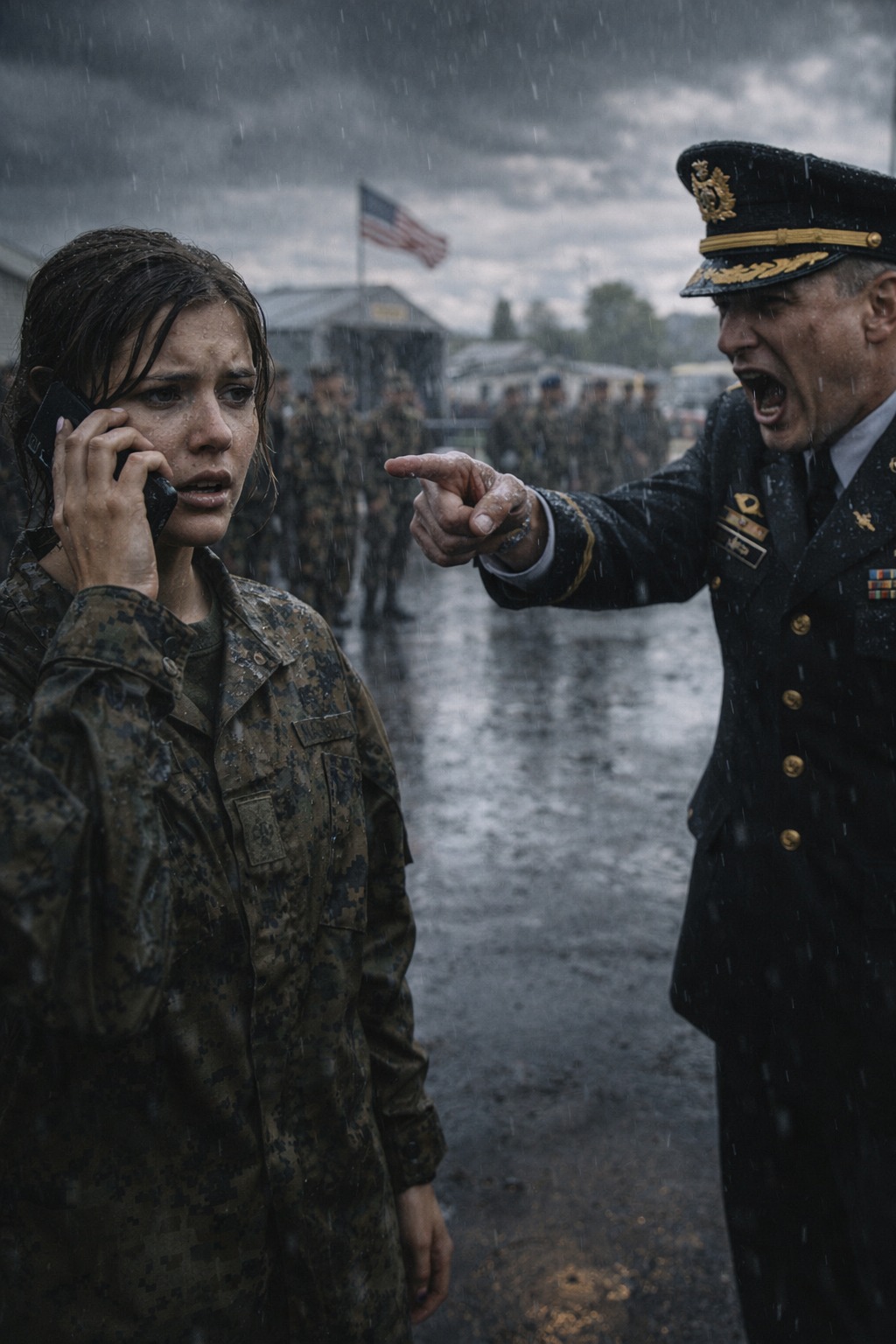
The head nurse didn’t even look at me. Ma’am, you need to calm down or you’ll be removed. He flicked his eyes at security. Escort her.
My stitches burned. My mouth went dry. They were wheeling a newborn past my bed, purple blanket and a tiny ankle tag that didn’t match my wristband. I’d noticed it at 3 a.m. – one digit off. Everyone said it was a printing error. First night jitters, they smiled.
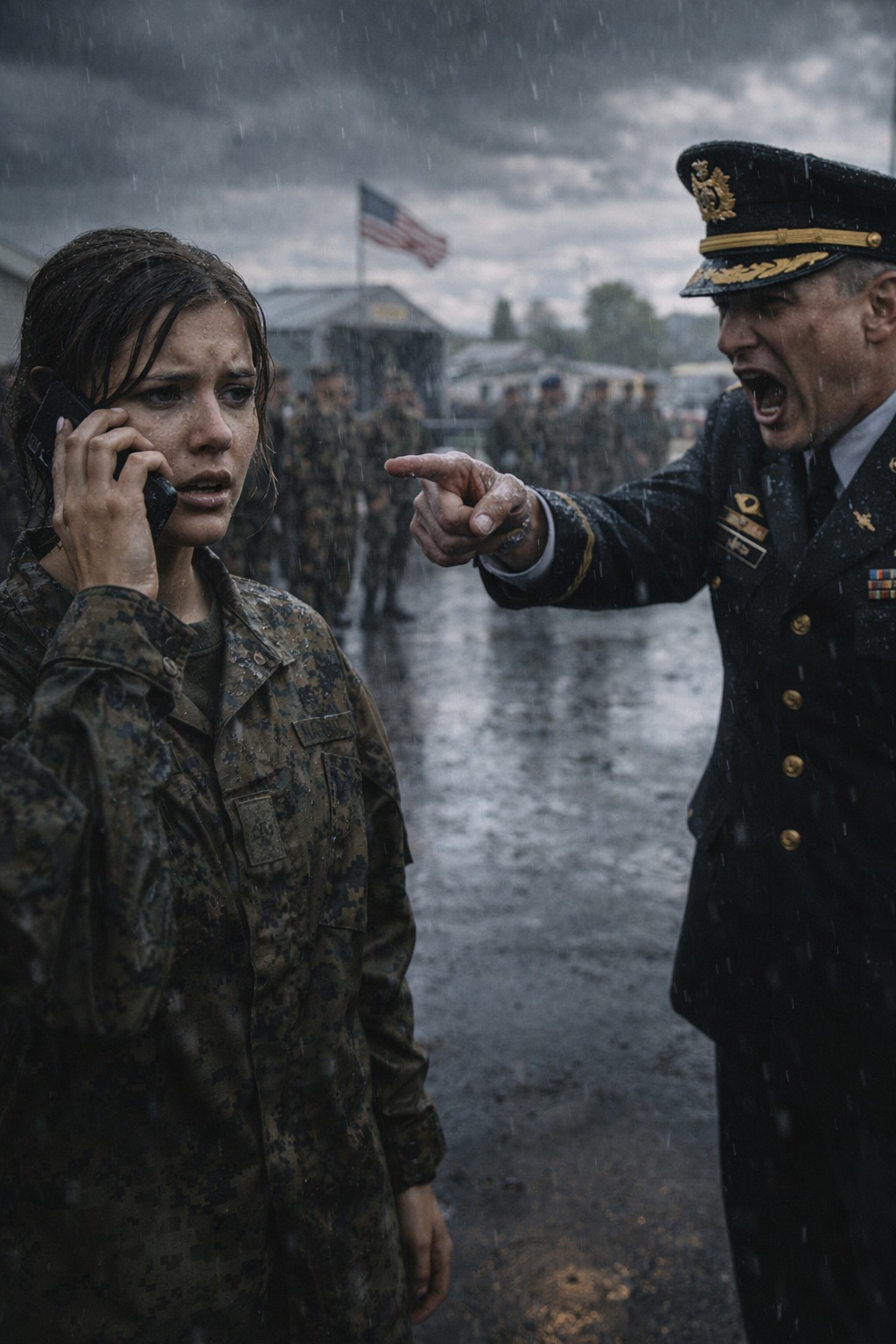
But I knew my baby. I’d felt him kick for nine months straight. The moment they placed him on my chest in the delivery room, something in his cry was unmistakable. Mine.
This wasn’t him.
Please, I grabbed the nurse’s sleeve. Just check the band. Mine is 4847. That baby’s is 4847. My voice cracked. The last number is different.
Mrs. Chen, we’ve verified everything. Your husband confirmed –
My husband is asleep! He wasn’t even in the room when they brought the baby back from the nursery! I was sitting up now, despite the burning pull of fresh stitches, despite the IV cord catching. Something is wrong.
The security guard approached, hand on his belt. He was tall. Professional. Apologetic about what he was about to do.
Don’t touch me, I whispered. Please don’t touch me.
But his fingers were already on my arm, firm and gentle at the same time. The nurse was explaining something to him quietly. Postpartum psychosis. Hormones. It happens sometimes.
I wasn’t crazy.
I knew the difference between my baby and a stranger’s baby.
The security guard stood me up. My legs shook. Blood pooled in the pad between my thighs. Everything hurt. I tried to look back at the purple blanket disappearing down the hallway, but the fluorescent lights blurred everything into streaks.
I want to see the administrator, I said. I want to see someone in charge right now.
After you’ve rested, the nurse said. We’ll have someone talk to you in the morning.
The security guard walked me to the exit. Other nurses watched. A doctor in the hallway pretended not to notice. One elderly woman in the waiting area made eye contact – the first person who really looked at me – and her hand went to her mouth.
I was still wearing the hospital gown. It was November. Cold.
The guard sat me on a bench outside the emergency entrance. Someone will bring you clothes, he said. Is there someone we should call?
My phone was inside. Everything was inside.
I don’t know how long I sat there. Maybe an hour. Maybe three. The cold made the pain worse. I kept seeing that ankle tag in my mind. 4847. The last number wasn’t the same. It wasn’t.
Then a black car pulled up to the curb.
A woman stepped out in a wool coat, her hair pulled back in a tight bun. She moved like someone used to being obeyed. She showed her ID to the security guard at the entrance, and he nodded immediately. She walked straight toward me.
Mrs. Chen? Her voice was low, controlled. I’m Dr. Patricia Okonkwo. I’m the president of this hospital. I need you to come with me.
I’m not crazy, I said. I know my baby.
She sat down next to me on the bench. She didn’t touch me. She didn’t smile.
Three months ago, she said quietly, we had a systems failure in our nursery. A contractor accidentally switched our ankle tag printers. We caught it, or we thought we did. But we audited the records yesterday. She paused. There were six babies born that night. Six ankle tags printed wrong.
My heart stopped.
We’ve been trying to contact parents all morning. The head nurse on duty – Mr. Patterson — he deleted the incident report. He told his staff it was a printing error, nothing serious. He was trying to avoid an investigation. She turned to look at me. He told you the same thing, didn’t he?
I couldn’t speak.
We found your baby two hours ago. He’s with your husband right now. A pediatrician is checking him over, but he’s perfect, Mrs. Chen. He’s perfect and he’s yours. She stood up. We need you to give a formal statement about what happened tonight. We need you to tell us exactly what the head nurse said to you.
The guard was already helping me up.
As we walked back into the hospital, I could hear Mr. Patterson’s voice from somewhere down the hallway. He was arguing with someone on the phone. His job was already gone. His license was next.
But I wasn’t thinking about him.
I was walking toward the NICU, toward the sound of my baby crying — that specific cry, the one I’d known since before he was born — and Dr. Okonkwo was already pulling out her phone to call security back upstairs.
Mr. Patterson is to be removed from the premises immediately, she said. And get me legal. We have a situation.
The walk back through the hospital doors was a blur. The same hallway that felt like a place of judgment and dismissal only moments ago now felt like a pathway home. The sympathetic glances were replaced with looks of urgency and respect.
Dr. Okonkwo led me past my old room, toward a private suite at the end of the maternity ward.
Through the window in the door, I saw him. My husband, Ken, was standing over a bassinet, his shoulders slumped. He looked exhausted and terrified.
When I opened the door, his head snapped up. His face was a mess of relief and gut-wrenching shame.
Mei, he whispered, rushing toward me. I’m so sorry. I am so, so sorry. I didn’t listen.
I just nodded, my eyes fixed on the bassinet.
He was there. Swaddled in a pale blue blanket this time. His little chest was rising and falling in a perfect rhythm. He had a tiny tuft of black hair, just like his father.
I walked to his side, my legs feeling like they belonged to someone else. I reached in and my finger found his tiny, grasping hand. It closed around mine with a strength that felt like an anchor.
His cry was soft now, a little whimper. The sound vibrated through my very soul. It was him.
This is Daniel, I said, the name we’d chosen months ago. It felt real for the first time.
Dr. Okonkwo stood quietly by the door. Mrs. Chen, we’ve already run a DNA confirmation. There is no doubt. This is your son, Daniel Chen.
Ken came and stood behind me, his hands on my shoulders. He was crying silently. I should have fought for you. I should have believed you.
You were tired, I said, not ready to absolve him, but too tired to be angry. We were all tired.
But you knew, he insisted. You just knew.
Yes, I did.
A pediatrician came in then, a kind-faced woman with warm eyes. She introduced herself as Dr. Sharma.
He’s perfectly healthy, Mrs. Chen. Strong lungs, as you’ve heard. She smiled gently. He was just with another family, the Davies, down the hall. They hadn’t noticed anything was wrong. We’re speaking with them now.
The thought of another mother holding my son, and me holding hers, sent a cold shiver through me. The other baby. The one in the purple blanket.
What about him? I asked. The other baby?
His name is Oliver. He’s with his parents now. They’re…processing, Dr. Sharma said carefully.
Dr. Okonkwo stepped forward. That’s our next conversation. We need your statement, Mei. I can call you Mei, can’t I? We need to understand every interaction you had with Mr. Patterson and his staff.
I nodded, cradling Daniel in my arms. The weight of him was right. The smell of him was right. Everything was finally right.
An hour later, I was sitting in a comfortable chair in the suite, Daniel asleep on my chest. Ken sat beside me, holding my free hand, while I recounted everything to a woman from the hospital’s legal department.
I told her about the 3 a.m. check. The condescending smiles. The phrase “first night jitters.”
I explained how Mr. Patterson refused to even look at the ankle tags, how he waved his hand dismissively and spoke about me as if I weren’t there.
When I got to the part about being escorted out in a hospital gown, the lawyer stopped writing and looked up at Dr. Okonkwo. Her expression was grim.
The hospital president’s jaw was tight. His actions were not just negligent. They were cruel. They were a complete violation of our duty of care.
The hospital will be taking full financial responsibility for this, the lawyer assured me. Therapy, any related medical costs, and a significant settlement for the distress caused.
I wasn’t thinking about money. I just wanted to know it would never happen to anyone else.
What about the other families? I asked. Dr. Okonkwo had said there were six.
We’ve located and confirmed four of the six babies so far, she explained. The last two were discharged this morning. We are trying to reach them now. It’s a logistical nightmare.
She looked tired, but determined. Mr. Patterson’s attempt to hide one error created a cascade of catastrophic failures.
Later that afternoon, there was a soft knock on our door. It was Dr. Sharma again.
The Davies family would like to see you, she said. Only if you feel up to it. The mother, Sarah, she asked specifically.
I looked at Ken. He nodded, giving my hand a squeeze of support.
Yes, I said. I think I need to.
They came into our room a few minutes later. A man and a woman, both looking as shell-shocked as we felt. The woman, Sarah, was holding a baby in a purple blanket. Oliver.
Her eyes met mine across the room. They were red-rimmed from crying.
I can’t believe I didn’t know, she whispered, her voice hoarse. I feel like a terrible mother.
No, I said immediately, standing up slowly. You’re not. They told me I was crazy. They probably told you the same thing.
She nodded, a fresh tear rolling down her cheek. They said it was just baby blues. My own mother told me to stop fussing and just be grateful he was healthy.
She took a hesitant step closer. He’s beautiful, she said, looking at Daniel asleep in my arms.
So is he, I replied, looking at the little boy she held. For a few hours, I had thought he was mine. I’d worried about him, fed him, hummed to him. A strange, phantom bond had formed.
I just…I wanted to thank you, Sarah said. If you hadn’t fought them, if you hadn’t made them listen… we would have gone home with the wrong baby. I would have never known.
The thought was so horrifying it left us all in silence for a moment.
Her husband, Mark, spoke up. He looked at Ken. I’m just as bad. I told her she was overthinking it. I said all newborns look a bit like potatoes.
Ken managed a weak smile. I think I used the exact same word.
We stood there, four parents and two babies, bound together by a mistake that could have defined the rest of our lives. We weren’t strangers; we were the only other people in the world who could possibly understand.
Before they left, Sarah looked at her son, Oliver, with a deep, furrowed brow.
There is one thing, she said. He’s been so fussy. He hardly wants to eat. The nurses said it was normal, but it just feels…off.
Dr. Sharma, who had been standing by, perked up. Off how?
He seems to have trouble breathing when he’s feeding, Sarah explained. Almost like he gets tired out.
My baby, Daniel, had been eating like a champ. He latched on immediately.
Dr. Sharma moved closer to examine Oliver. She placed her stethoscope on his tiny chest and listened for a long time, her expression growing more and more serious.
I’m going to take him for a few tests, she said, her voice calm but firm. Just as a precaution. There’s a faint murmur there I’d like our pediatric cardiologist to look at. It’s probably nothing.
But we all knew it wasn’t nothing. The air in the room grew heavy again.
Two hours later, Dr. Okonkwo and Dr. Sharma came back into our room. Dr. Okonkwo closed the door behind them.
They found something, she said, wasting no time. Oliver has a condition called coarctation of the aorta. It’s a narrowing of the main artery that carries blood to the body.
My hand flew to my mouth.
It’s treatable with surgery, she continued quickly. And he’s a good candidate. But it’s a condition that often goes undiagnosed in the first few days. The symptoms are subtle — poor feeding, lethargy, respiratory distress.
Like what Sarah described, I whispered.
Exactly. Dr. Sharma looked at me directly. It was noted in his file that he was at higher risk due to a small abnormality seen on the prenatal ultrasound. He was scheduled for an echocardiogram this afternoon as a precaution.
A cold dread washed over me. But he wasn’t with his parents this afternoon.
No, he wasn’t, Dr. Okonkwo confirmed, understanding my unspoken question. He was with you. And your son, Daniel, who is perfectly healthy, was scheduled for that test. The nurses would have taken Daniel, seen he was fine, and checked the box. Oliver would have been discharged tomorrow with his parents, who were told his symptoms were normal.
Dr. Sharma finished the thought. The condition usually becomes critical once a vessel called the ductus arteriosus closes, which happens a few days after birth. He would have gone home, and then he would have gone into cardiac arrest.
The room was utterly silent. Ken squeezed my hand so hard I thought the bones would crack.
Your instincts, Mei, Dr. Okonkwo said, her professional tone softening into something like awe. You felt something was wrong with your baby. You fought for him. But what you did… you didn’t just save your son.
You saved Sarah and Mark’s son too.
The weight of her words settled on me. The fight on the cold bench, the humiliation, the pain—it all clicked into place in a way that was bigger than just my own family. It was a chain of events, a series of instincts and mistakes, that had led to a life being saved.
The next year was a whirlwind. Mr. Patterson lost his nursing license and faced a lawsuit from all six families. The hospital, under Dr. Okonkwo’s leadership, completely overhauled its infant security protocols. They implemented a new system with three-factor authentication: matching codes on the mother’s, father’s, and baby’s wristbands that had to be scanned before any transfer.
They called it the C.D.S. Protocol. Chen. Davies. Sharma.
Our two families became inextricably linked. We spent Oliver’s surgery in the waiting room together, Ken and I holding Sarah and Mark’s hands. When the surgeon came out and said the procedure was a complete success, we all wept with relief.
We celebrated holidays together. We became “Aunt Mei” and “Uncle Ken.” Our boys, Daniel and Oliver, grew up like cousins, their origin story a modern-day fairytale we knew we would one day have to tell them.
Three years later, we were at a local park for the boys’ joint birthday party. Daniel was chasing a soccer ball with a wild, joyful laugh, while Oliver, his chest bearing a faint, silvery scar, was carefully stacking blocks with his dad. Both were happy, healthy, and full of life.
Sarah came and sat next to me on the picnic blanket. She passed me a cup of juice.
Do you ever think about that day? she asked quietly.
Every single day, I admitted.
I still have nightmares, she confessed. But then I look at him, and I see you. I see you on that cold bench outside the hospital, fighting for all of us when you didn’t even know it.
I watched our sons play. I thought about the thousands of tiny decisions and random chances that shape a life. A malfunctioning printer. A negligent nurse. A mother who refused to be silent.
My struggle that night felt like the loneliest moment of my life. But it wasn’t just my story. It was Oliver’s too. It was a story about how a mother’s love for her child can send ripples out into the world, touching and saving lives in ways we can never predict.
The world tells you to be quiet, to not make a fuss, to trust the experts. But sometimes, the only expert you need is the voice inside your own heart. Listening to it didn’t just bring my son back to me; it delivered another mother’s son back to her, safe and sound, against all odds. That was a reward greater than any settlement, a lesson etched forever onto the heart of our strange, beautiful, blended family.