The regulars at Murphy’s Coffee House had stopped noticing Frank. He’d been sitting on the same milk crate outside the shop for three years, wearing the same faded Army jacket, nodding politely at customers who rarely nodded back.
Sarah Murphy, the owner, brought him coffee every morning at 6 AM. Black, no sugar. He never asked for more. Never begged. Just sat there with his cardboard sign that read “Veteran. Anything helps. God bless.”
That Tuesday morning, Sarah was running late. Her 16-year-old daughter Emma had left for school early, saying she had volleyball practice. Sarah didn’t think twice about it.
At 6:15, Frank wasn’t on his crate. Sarah frowned. In three years, he’d never missed a morning.
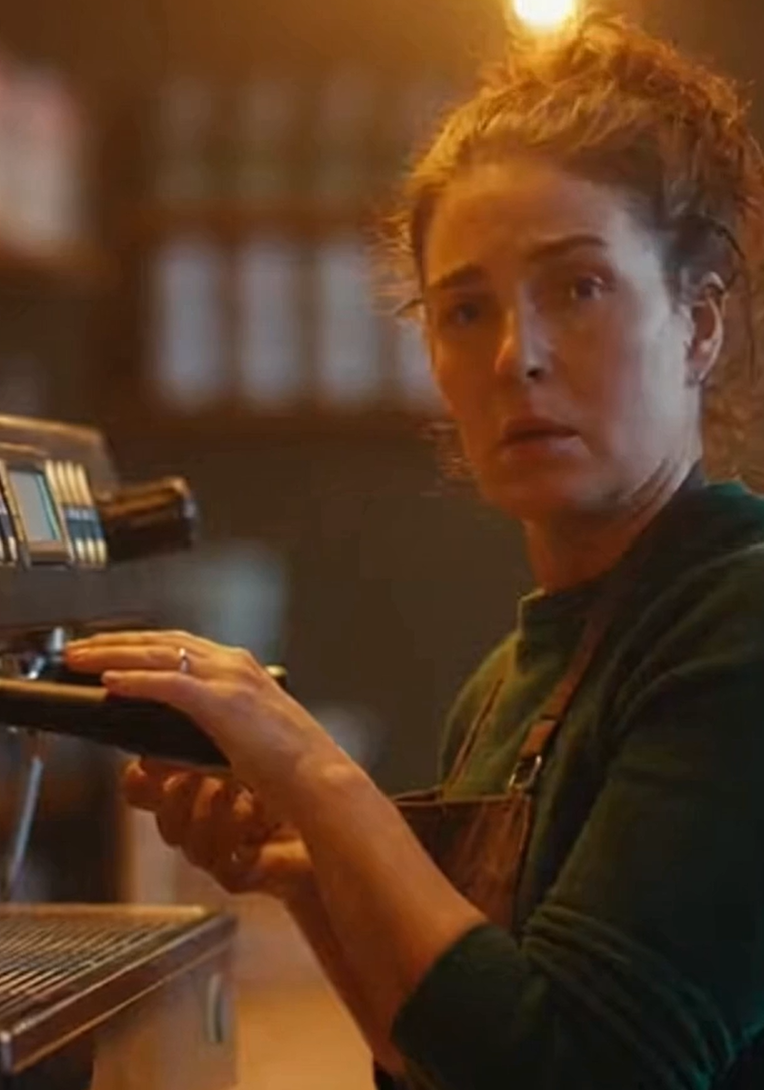
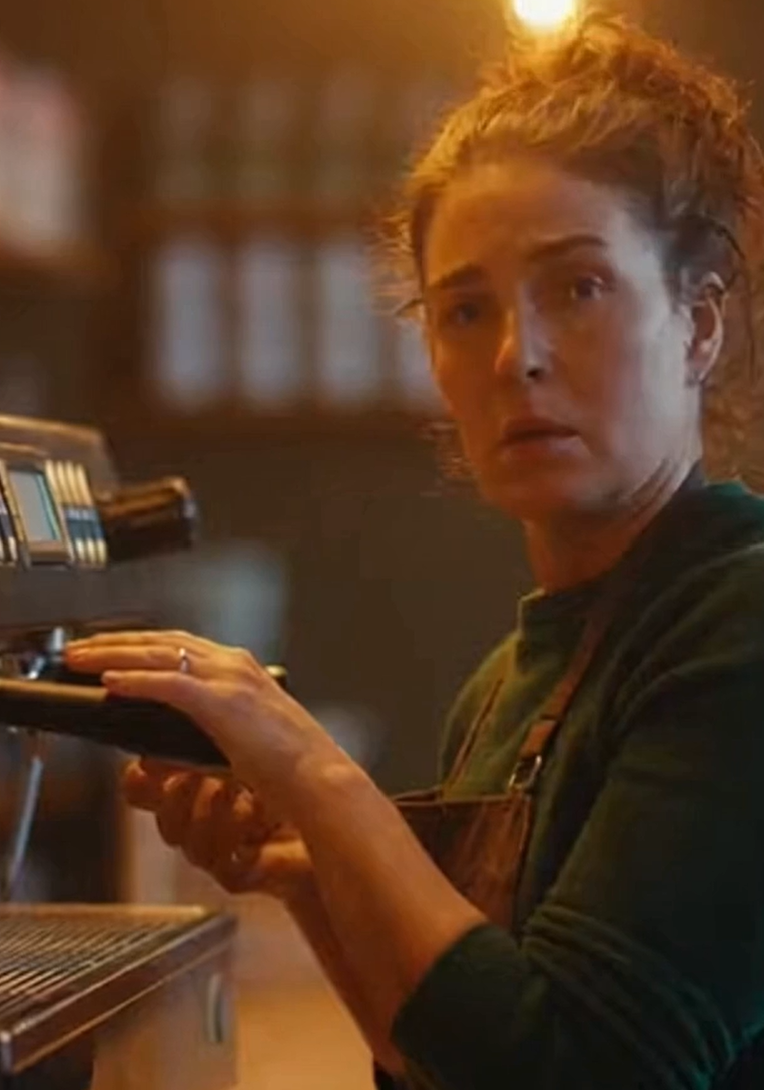
She unlocked the shop, started the espresso machine, and tried to shake the odd feeling in her stomach.
At 6:42, her phone buzzed. A text from an unknown number.
“Mrs. Murphy. This is Frank. I’m using a stranger’s phone. I’m at Riverside Bridge with Emma. Please come now. She’s safe. But please come.”
Sarah’s hands went cold.
She drove seven miles in six minutes, her mind racing through every conversation she’d missed, every sign she hadn’t seen.
When she reached the bridge, she saw Frank’s faded jacket first. He was sitting on the concrete barrier, his feet dangling over the river forty feet below. Next to him sat Emma, her volleyball bag beside her, mascara streaked down her cheeks.
They were just talking.
Frank’s voice was low, steady. “…and I sat on a bridge just like this one in 2009. After my third tour. I was sure nobody would even notice I was gone.”
Emma wiped her eyes. “What stopped you?”
“A stranger sat down next to me. Didn’t try to grab me. Didn’t lecture me. Just sat there and said, ‘I got nowhere to be. Mind if I stay?’”
Sarah’s throat tightened. She forced herself to stay back, to wait.
“He stayed four hours,” Frank continued. “Told me about his dog. His ex-wife. His favorite baseball team. Stupid stuff. But somewhere in hour three, I realized I wanted to know how the baseball season ended.”
Emma let out a sound between a laugh and a sob.
“That’s all it takes sometimes,” Frank said. “One stupid small thing to be curious about. One reason to see tomorrow.”
Emma was quiet for a long moment. Then, slowly, she swung her legs back over the barrier, onto the safe side of the bridge.
Frank helped her down.
When Sarah finally approached, Emma collapsed into her arms, sobbing. Sarah held her daughter so tight she thought she might break.
Over Emma’s shoulder, she looked at Frank. He was already walking away, back toward town, back toward his milk crate.
“Frank,” Sarah called out, her voice cracking.
He turned.
“How did you know? How did you know she’d be here?”
Frank’s weathered face softened. “I’ve watched her walk to school every morning for three years, Mrs. Murphy. I noticed when her smile started disappearing six weeks ago. And this morning, when she walked past without her volleyball gear but carrying that bag…” He paused. “I recognized the look. I’ve worn it.”
Sarah couldn’t speak.
“She’s going to be okay,” Frank said quietly. “But she needs to talk to someone better than me. A professional. She’s got things she’s carrying that are too heavy for a kid.”
He started to turn again.
“Frank, wait. Please. I don’t even know your last name. I don’t know anything about you. Three years and I never – “
“Delgado,” he said. “Staff Sergeant Frank Delgado. Second Battalion, Fifth Marines.”
Sarah’s daughter lifted her head from her mother’s shoulder. “Mom?”
“Yeah, baby?”
“He sat with me for two hours before he texted you. He missed his spot at the shelter. The one he waits for every morning. The only bed he gets all week.” Emma’s voice broke. “He gave it up for me.”
Sarah looked back toward Frank, but he was already fifty yards down the road.
She pulled out her phone and dialed her brother, the one who owned the apartment building on Fifth Street. The one who always said he’d help if she ever found someone who deserved a second chance.
When he answered, she said three words that would change everything: “I found someone.”
But when she looked up to call Frank back, to tell him, she saw something that made her phone slip from her hand.
Walking toward Frank from the opposite direction was a woman in a tailored suit, flanked by two men with cameras. The woman was crying. She was holding a photograph.
And even from a hundred yards away, Sarah could see it was a military portrait of a much younger Frank Delgado – and the woman holding it looked exactly like an older, more elegant version of the woman standing next to him.
Sarah’s mind reeled. The woman was holding a photo of Frank, but she looked like she could be his sister, his cousin. Who was she?
Frank saw them coming. His body tensed, a lifetime of caution hardening his posture. He stopped walking, planting his feet on the pavement as if preparing for a fight.
The woman in the suit picked up her pace, leaving the camera crew behind. Her steps were urgent, but not aggressive. They were filled with a desperate hope.
“Staff Sergeant Delgado?” she called out, her voice carrying on the morning air.
Frank didn’t answer. He just watched her, his eyes narrowed.
She stopped about ten feet from him, holding up the framed photograph. It was a formal military portrait, two young men in their dress blues, smiling, impossibly young. One was Frank.
“My name is Clara Vance,” the woman said, her voice thick with emotion. “I’ve been looking for you for a very long time.”
From her car, Sarah watched, her heart pounding. Emma was quiet beside her, gripping her arm.
Frank glanced at the photo, then back at the woman. “I don’t know you.”
“No, you don’t,” Clara agreed, taking another careful step closer. “But you knew my father. His name was Arthur.”
The name didn’t seem to register on Frank’s face. He just maintained his guarded stance.
Clara’s composure began to crack. Tears welled in her eyes as she pointed to the picture. “You met him in 2009. On a bridge not very different from this one.”
Frank’s entire demeanor shifted. The hardness in his eyes dissolved, replaced by a flicker of disbelief, of a memory buried so deep he thought it was a dream.
“He was an old man,” Frank whispered, the words barely audible. “He talked about baseball.”
“The Red Sox,” Clara said, a watery smile breaking through her tears. “He said he told you he wanted to see how the season ended.”
Frank staggered back a step, leaning against the guardrail for support. It was real. That man was real.
“My father passed away six months ago,” Clara continued, her voice trembling. “He never forgot you. He spoke of you often. The soldier on the bridge.”
She explained that her father, Arthur, had carried a heavy guilt for years. He felt he should have done more, should have gotten a name, offered more than just a few hours of his time.
“Before he died, he made me promise I would find you,” she said. “He left this for you.”
She gestured to one of the men who had been with her. He wasn’t a cameraman. He was a lawyer. He stepped forward holding a briefcase.
Sarah felt like she was watching a movie. She and Emma got out of the car, drawn by the invisible pull of the moment, and walked slowly toward the small group.
Frank was just staring at Clara, at the lawyer, at the briefcase. He looked completely lost. “I don’t understand.”
“My father was a history teacher,” Clara explained. “He didn’t have a lot of money, but he invested wisely. He set up a trust. For you.”
The lawyer, a kind-faced man named Mr. Harris, stepped forward. “Mr. Delgado, Arthur Vance left you the entirety of his retirement fund. It’s substantial. It was his last wish that the man who he believed just needed one more season of baseball would be taken care of.”
Frank shook his head, looking from the briefcase to the bridge where he had just saved Emma. The symmetry of it all was too much. “No. I can’t. That’s not me. I’m not that kid anymore.”
“I think you are,” a small voice said.
Everyone turned. Emma had stepped forward, her face pale but her eyes clear.
She looked directly at Frank. “An hour ago, you told me all it takes is one small thing to be curious about. One reason to see tomorrow.”
She took a shaky breath. “You were my reason today, Frank. You did for me exactly what her dad did for you.”
The words hung in the air. The perfect, unbroken circle of it. An act of kindness from a stranger a decade ago had just saved her daughter’s life.
Sarah felt tears streaming down her own face. She walked to Frank’s side and gently put a hand on his arm. His faded jacket was coarse beneath her fingers.
“She’s right, Frank,” Sarah said softly. “You are that man. You never stopped being him.”
Frank looked down at his worn boots, at the cracked pavement, overwhelmed by a tidal wave of grace he felt he didn’t deserve. After years of being invisible, he was suddenly the center of a world he didn’t recognize.
Clara gestured toward Sarah’s coffee shop, visible in the distance. “Is there somewhere we can go? To talk this through?”
“My shop,” Sarah said immediately. “Please. Everyone.”
The next hour was a blur. They sat at a large table in the back of the empty coffee shop. Sarah made coffee for everyone while Mr. Harris explained the details of the trust.
It wasn’t just a check. Arthur had been thoughtful. The trust was designed to provide housing, medical care, counseling for his PTSD, and a living stipend. It was a comprehensive plan for a new life.
Frank just listened, his hands wrapped around the warm mug, his gaze distant. He was processing a decade of pain and a moment of impossible kindness.
Clara explained why the news crew was there. She ran a charitable foundation in her father’s name, and finding Frank was a personal mission that had become a public story of hope. She had hoped it would inspire others.
“We can send them away,” she said quickly, seeing the look on Frank’s face. “This is about you, not them.”
Frank shook his head slowly. “No. Let them tell it. People should know about your dad. They should know what he did.”
It was the first moment of acceptance. The first sign that he was willing to step out of the shadows.
Sarah spoke up then, her voice firm. “The trust can handle the future. But you need a place to stay tonight, Frank. My brother owns an apartment building. There’s a one-bedroom unit, fully furnished, waiting for you. The first six months of rent are on me.”
Frank finally looked at her, truly looked at her, and for the first time in three years, Sarah saw the man behind the hardship. She saw the Staff Sergeant. “I can’t accept all this.”
“You already have,” Sarah replied. “You accepted it when you decided to follow my daughter this morning. You earned it every cold morning you sat on that crate and still managed a polite nod. This isn’t charity, Frank. This is a debt being repaid by a world that should have done better by you.”
The next few months were a quiet transformation. Frank moved into the apartment. The first week, he barely left, just sleeping in a real bed, taking hot showers, and eating meals that didn’t come from a shelter.
Clara and Sarah became his anchors. Clara handled the trust, setting up his appointments with doctors and therapists at the VA. Sarah provided the simple, daily constants: a morning coffee, a quiet conversation, a place that felt like home.
Emma was his staunchest ally. She was in therapy herself now, talking through the pressures that had pushed her to that bridge. She and Frank would sometimes just sit in the coffee shop, not saying much, but sharing a quiet understanding. She was his living proof that he was a man who saved things, not a man who was broken.
He began to change physically. With regular meals and a safe place to sleep, the gaunt, haunted look in his eyes began to recede. He got a haircut. Clara took him to buy new clothes, and he traded the faded Army jacket for a simple, warm coat.
The hardest part was the therapy. He had to unpack years of trauma, the things he’d seen and done, the friends he’d lost. But for the first time, he wasn’t doing it alone. He had a support system. He had a reason to see tomorrow.
One year later, Murphy’s Coffee House was bustling. By the door was a new corkboard with a sign that read, “The Arthur Vance Pay-It-Forward Board.” It was covered in suspended coffee orders, paid for by customers for anyone who needed one.
Emma, now a confident 17-year-old, was behind the counter, laughing with a customer. She had started a mental health awareness club at her school, using her story to help others.
A man sat at a table by the window, sipping a black coffee and reading a book. He was neatly dressed, his hair graying slightly at the temples. He looked up as the bell on the door chimed.
A teenager, looking lost and carrying the weight of the world on his shoulders, had just walked in and was staring at the menu with empty pockets.
The man at the table closed his book and stood up. It was Frank Delgado.
He walked over to the young man. “Tough day?” he asked gently.
The kid just nodded, not meeting his eyes.
“I get it,” Frank said. “Let me buy you a coffee. And if you’ve got a minute, I can tell you a story about a man who liked baseball.”
From behind the counter, Sarah watched, a familiar, happy warmth spreading through her chest. She saw the full circle, the beautiful, incredible, life-affirming ripple that had started with one stranger sitting down on a bridge and saying four simple words.
Kindness is never wasted. It can lie dormant for years, a seed buried in the dark, but it never dies. It waits for the right moment to grow, to reach for the sun, and to shelter someone else when they need it most. It is the most powerful currency we have, and the only one that multiplies every single time you give it away.