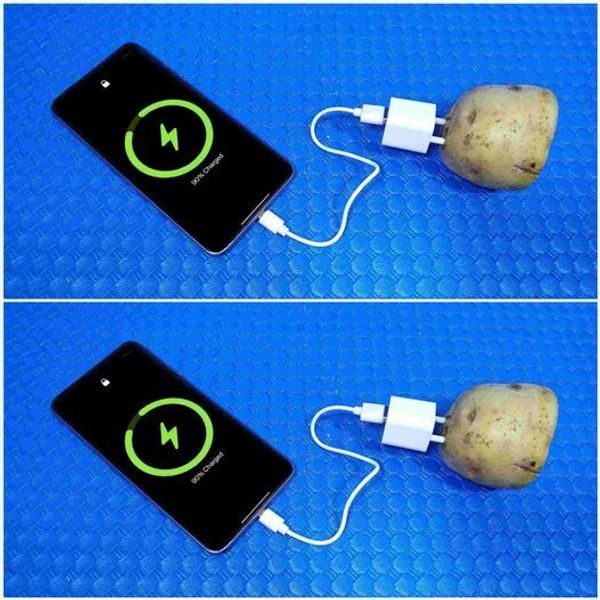
It might sound like something out of a science experiment, but did you know you can actually use a potato to generate electricity? While a single potato won’t fully charge your phone, it can definitely produce enough voltage to power small devices or demonstrate how natural energy works — all for free!
How Does a Potato Generate Electricity?
Potatoes contain phosphoric acid, which acts as an electrolyte. When you insert two different metals into the potato (like copper and zinc), a chemical reaction occurs, creating a small electric current. Think of it as a natural battery!
What You’ll Need:
- 1 large potato (boiled briefly for better conductivity, optional)
- 1 copper strip or copper coin
- 1 zinc strip or galvanized nail (zinc-coated)
- 2 wires with alligator clips
- USB charger cable
- A small LED light or low-voltage device (for testing first)
Steps:
- Insert the Metals:
- Push the copper strip into one side of the potato.
- Push the zinc nail into the other side, making sure they don’t touch inside.
- Connect the Wires:
- Attach one wire to the copper strip and the other wire to the zinc nail.
- Test Voltage:
- First, connect the wires to a small LED light. If it lights up, your potato battery is working!
Connecting to Your Phone:
Important: A single potato doesn’t produce enough voltage to fully charge a phone. However, you can link multiple potatoes (4-6 in series) by connecting copper from one to zinc of the next. This increases the total voltage.
- Attach the wires to a USB adapter and connect to your phone. You’ll notice the phone may start charging slowly.
Final Thought:
While it’s not the most practical way to charge your phone daily, generating electricity with a potato is a fun, eco-friendly experiment that shows how natural energy sources can be used creatively. Try it out and impress your friends with your “potato power”! 🌱🔋📱