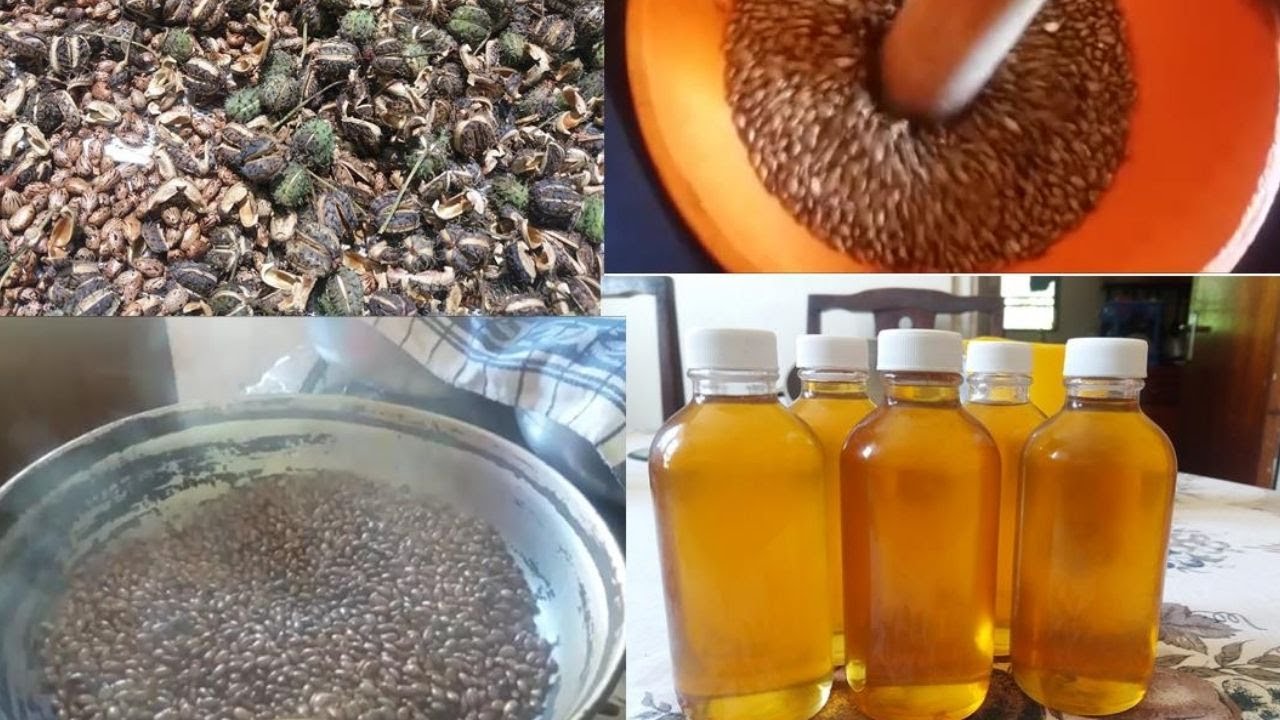
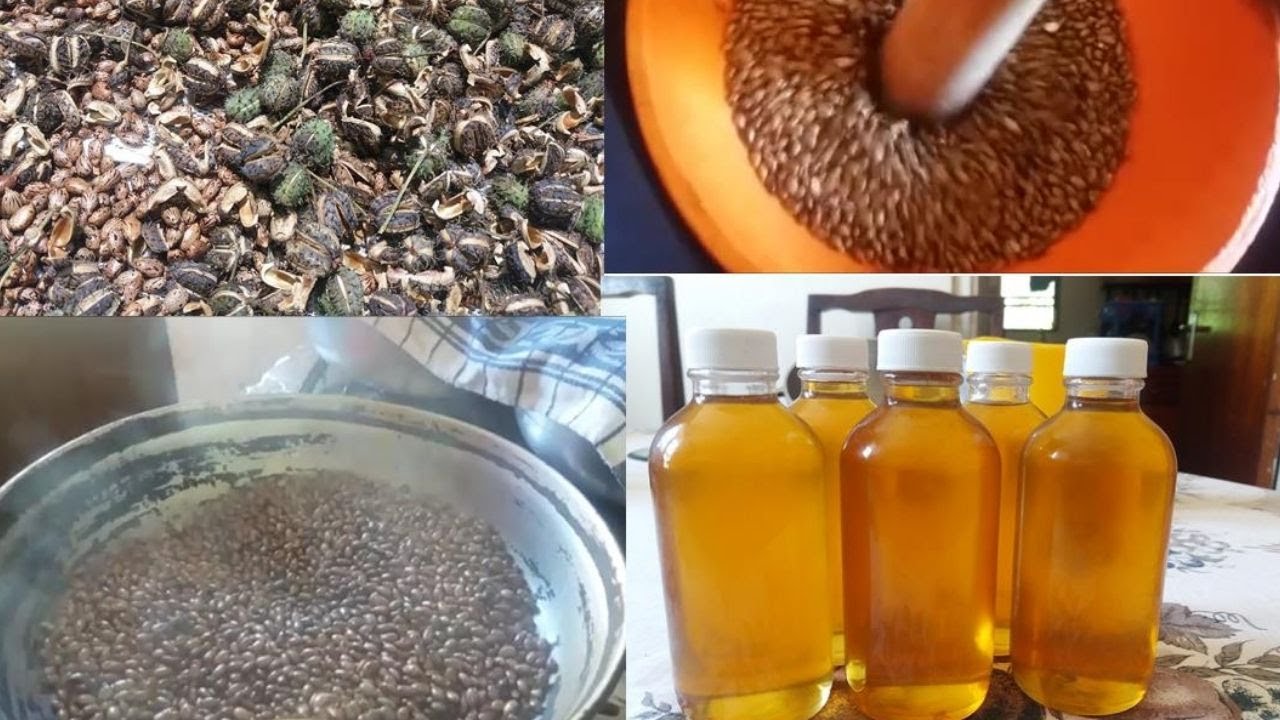
Making castor oil at home is a natural and cost-effective way to ensure you get pure, unadulterated oil for your personal use. The process involves extracting oil from castor seeds (from the castor plant, Ricinus communis). Here’s how you can make castor oil at home with basic tools:
What You’ll Need:
- Castor seeds: Freshly harvested or dried castor seeds (available at gardening stores or online).
- Grinder or mortar and pestle: For crushing the seeds.
- Water: To aid in the oil extraction process.
- A large pot: For boiling or steaming.
- Cheesecloth or fine strainer: For filtering the oil.
- Container: For storing the extracted oil.
Step-by-Step Process:
1. Prepare the Seeds
- Collect fresh castor seeds and remove the outer shell carefully using your hands or a small tool.
- Ensure you only work with the inner kernel of the seed, as the outer shell is not needed for oil extraction.
2. Crush the Seeds
- Using a grinder or mortar and pestle, crush the seeds into a coarse paste. The crushed seeds will make it easier to release the oil during the boiling process.
3. Boil the Crushed Seeds
- Add the crushed seeds to a large pot and pour in water. The amount of water should be sufficient to submerge the seed paste completely.
- Bring the mixture to a boil and then reduce the heat to a simmer. Stir occasionally to prevent the paste from sticking to the bottom.
- Continue simmering for 1-2 hours. During this time, the heat will cause the oil to separate from the seed paste and float to the surface of the water.
4. Extract the Oil
- Once the oil has separated and is visible on the surface, turn off the heat and let the mixture cool.
- Using a fine strainer or cheesecloth, carefully filter the mixture to separate the oil from the seed residue and water.
- Squeeze the cheesecloth to extract as much oil as possible.
5. Store the Oil
- Pour the filtered oil into a clean, airtight glass bottle or jar.
- Store it in a cool, dark place to preserve its quality and extend its shelf life.
Important Notes:
- Safety First: Handle castor seeds carefully, as they contain ricin, a toxic compound. The oil extraction process neutralizes the toxin, but the raw seeds must not be ingested.
- Pure Oil: Homemade castor oil will be unrefined and natural, so its color and scent may differ from commercially processed versions.
- Efficiency: The yield of castor oil may be relatively low compared to store-bought options, but the purity and quality are worth the effort.
Uses for Homemade Castor Oil:
- Skin: Apply as a moisturizer or for treating dry patches.
- Hair: Use for scalp massages to promote hair growth and improve hair strength.
- Health: Use for massage to relieve joint pain or muscle aches.
- Laxative (with caution): Use small amounts as a natural remedy for constipation (consult a healthcare provider first).
By following this process, you can make your own pure castor oil at home, ensuring a chemical-free product tailored to your needs. Enjoy the benefits of this versatile oil!