A knock on the life I thought I knew
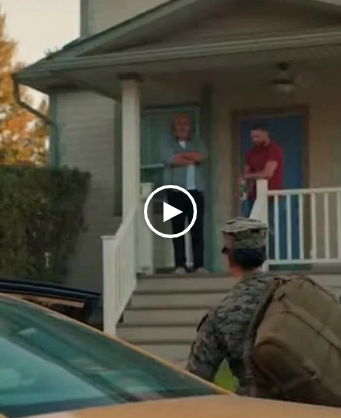
I was still in uniform, the Okinawa dust ground into my boots like a memory that didn’t want to let go, when I saw him. A man in a dark suit, arms folded, leaning against a government sedan parked by the curb. I recognized the face from months earlier, from the sterile room where I’d sat through my security clearance interview. He wasn’t smiling now. He tipped his chin toward the car and said, calm as a judge, that we needed to talk. About Okinawa. And about why someone had just tried to buy my house using a shell company registered in the Cayman Islands.
My breath stalled. The seabag on my shoulder suddenly felt weightless compared to the pressure pinning my chest. I said I thought this was about the property sale, that it sounded like a civilian issue. He stepped forward, flipped open a badge, and introduced himself as Special Agent Caldwell with the Office of Naval Intelligence. His voice was measured and firm, the kind of tone that doesn’t waste time. He nodded toward the back seat and told me to get in. It wasn’t a request.
The man from the clearance interview returns
I hesitated for a heartbeat, then opened the door. Inside the car, the air had the smell of vinyl and something I can only call secrets. The windows were tinted so dark the neighborhood felt like a different world. Caldwell climbed in beside me, tapped the glass that separated us from the driver, and the silence thickened. Soundproof.
He opened a manila envelope and got right to the point. He knew my assignment in Okinawa: logistics for joint training with our allies in the Japan Maritime Self-Defense Force. He knew my clearance level. None of that, he said, was classified. The thing that was? The shipment that vanished from Naha Port on March 18.
I felt the date like a stone dropping into deep water. I remembered that morning. An early alert. A container that moved when it shouldn’t have, flagged for a moment and then, almost magically, un-flagged. I remembered asking questions and being told to let it go. Move on. Keep my lane clear.
A car that smells like vinyl and secrets
He continued, unblinking. I had been the last person to log into the system before the manifest was wiped. The breach had been traced to my credentials. He said they believed the same people who spoofed my access were behind the attempt to buy my house. They wanted to tie me up and shut me down—keep me busy, keep me quiet, keep me from noticing what mattered.
I asked the only question that mattered in that moment. What was in the container?
He leaned in and kept his voice low. Non-weaponized uranium, he said. Disguised as scrap metal. It was supposed to be headed to a civilian research facility in South Korea. It never arrived.
So someone used my name to steal nuclear material. Saying it out loud didn’t make it more believable. But the look in his eye told me it didn’t have to be. It only had to be true.
What went missing in Okinawa
He explained the rest with careful, simple words. The house sale was meant to distract me. Civil disputes take time. They eat your hours and your energy. They create noise—exactly what you want if your goal is to keep a potential witness chasing paperwork while the real story slips away.
Pieces started sliding into place in my head. The sudden tension at home, the raised voices, the way my dad and my brother kept circling the same argument about money I supposedly owed them. The way the sale got pushed and pushed, as if time itself were squeezing them from the outside. Greed doesn’t usually move like that. Pressure does.
What if they weren’t just being selfish? What if they were being steered?
He nodded, like he had walked down the same mental hallway and opened the same door. The woman behind the online messages—the one who signed her posts as “MAMA NEEDS COFFEE”—was real. But her identity had been borrowed. The shell company in the Cayman Islands belonged to someone else entirely.
When home becomes leverage
Then he slid a photo across the seat. I knew the face. William Hayes. A civilian contractor I met once in Okinawa, part of a group of so-called observers from a private defense firm. Hayes had a limp, a pale scar across his throat, and an iron habit of not touching any drink offered to him. He’d kept his distance, even in a crowd. Now, Agent Caldwell told me, Hayes was missing. And his signature appeared on the fake power of attorney my father had used to push the house sale.
I asked where my dad was now. Caldwell said he was still on my porch, and that their people were already watching him. But he hadn’t said much yet. Maybe he didn’t know much. Maybe he was waiting to be told what to say. Or maybe he was simply scared.
Fear makes people do things that don’t feel like them. I’ve seen it a hundred different ways in a hundred different places. I knew this was another version of the same old story, just with sharper edges.
The name behind the mask
I told Caldwell I would cooperate. I’d go back over my schedule from Okinawa, step by step. Every odd conversation. Every name that appeared out of nowhere and left just as quickly. Every movement on the calendar that didn’t make sense at the time. But I asked for something in return. I wanted conditional immunity for my father and my brother if they testified and told the truth.
Caldwell studied me, weighing my words as if they were evidence. Then he nodded once. Get them to talk, Sergeant, he said. We’ll keep you in the loop.
When I stepped out of the car and watched it roll away, the street felt normal again for exactly two seconds. Then I heard shouting from the porch. My brother was still loud and red-faced, accusing the woman who had come to see the house of being a scammer. My father stared at the ground like it might tell him what to do next.
A deal for the truth
I walked up to my father and spoke plainly. They’re watching you, I said. And they’re listening. He didn’t flinch. He said he didn’t know what any of this was really about, that he hadn’t understood what he was stepping into. Prove it, I told him. The people you dealt with don’t just make containers disappear. They make people disappear.
My brother opened his mouth to argue, but I stopped him with a look I learned in places where arguments don’t help. I told them I could get them protection if they cooperated. Immunity, if the prosecutors agreed and if the truth backed them up. Names. Timelines. Phone calls. Payments. Everything.
My father met my eyes for the first time that day. He said they told him it was a one-time favor, that I’d never find out. You’re lucky I did, I answered. Because luck runs out, and facts don’t.
I handed him my phone, already open to the voice recorder. Start talking.
Confessions on a courthouse bench
An hour later, my lawyer called. She sounded almost breathless. My father had just walked into the county courthouse with a notarized confession. He was naming names. He provided wire transfer details. He handed over a burner phone. Five minutes after that, my brother cut a deal and stepped into protective custody. They were scared, my lawyer said.
Good, I thought. Scared people tend to stop pretending. They tend to tell the truth because lies require more energy than fear allows.
The next forty-eight hours moved faster than any training cycle I’d ever been through. The Office of Naval Intelligence placed me in a secure hotel a city away. I got a two-person detail—plainclothes, quiet, always nearby but never in the way. I met with Caldwell in a windowless room where the lights were bright and the furniture was meant to be forgotten. He placed a thick file on the table, the size and weight of a doorstop. Inside, he said, was the part of the story I hadn’t seen.
The file no one would want to read
There were encrypted messages and the keys that unlocked them. Transfer logs that traced money where it didn’t belong. Fake shipping manifests that buried my ID like a note in a haystack. Surveillance photos of Hayes shaking hands with men I recognized from base and one I didn’t. The stranger had the posture of someone trained to notice exits. The caption under his picture said only what mattered: Russian.
That was when all the clutter in my head fell into a pattern I couldn’t ignore. This wasn’t just a theft. It wasn’t even just a cover-up. It was espionage, patient and methodical. Someone had threaded a needle through my life, through my family, through Okinawa, and then tried to stitch the whole thing closed before I saw the seam.
Caldwell filled in the blanks. Hayes hadn’t been a harmless observer. He’d been moving stolen military-related materials through a maze of shell companies, a maze designed to be complicated enough to discourage anyone from trying to follow. He sold to whoever paid the most. The non-weaponized uranium was never headed to South Korea. It was bound for a private lab in Belarus. The good news came like a flood I didn’t know I’d been holding back: ONI had intercepted the shipment the day before.
From theft to espionage
I asked if it was over. He shook his head. Not quite. They needed someone to go back to Okinawa. Discreetly. Someone who knew the system well enough to move inside it without drawing attention. Someone who could sit in plain sight while the right people said the wrong thing.
I knew before he asked. He slid a single-page document across the table. A redeployment order. Voluntary. Immediate. I looked down at the destination line, read it once, and felt something in me steady. For the first time in days, I smiled. I wasn’t just going back. I was going to finish what had been started in the dark, and I was going to end it in the light.
Two weeks later, the humid air in Okinawa felt as familiar as a voice I hadn’t heard since childhood. I laced up the same boots, walked the same path across base, and cataloged what had changed. Some faces were new. Some buildings had fresh paint. But the terrain of my purpose was entirely different. The first time, I had been another cog in a large machine. This time, I was the pressure gauge. I was the tripwire no one saw coming.
One more trip to Okinawa
Returning under the radar required the kind of quiet that takes effort. I learned to be seen without being noticed. To nod and say good morning and be forgettable in all the right ways. Meanwhile, Caldwell and his team followed the paper and the pixels. They mapped the shell companies to real people, and those people to real places. Every conversation I had, every recollection I shared from my last rotation, added another stitch to a very different kind of seam—one that held the truth together.
I thought a lot, in those slow, careful days, about how easily decent people get turned. It isn’t always greed. Sometimes it’s a favor owed, an emergency bill, a door that looks like the only way out. The men who set this up understood that. They made sure the door looked harmless. They made sure the hallway felt short. That’s how you pull off a complicated theft without calling it theft. You make it look like a form to sign, a meeting to attend, a shipment to log.
What they misjudged was simpler than all their planning. They didn’t expect someone like me to come home in uniform and insist on the truth. They didn’t expect a daughter to look her father in the eye and say, Tell me everything. They didn’t expect their shell companies to crack under the weight of ordinary fear and ordinary guilt. They forgot that conspiracies don’t survive very long when sunlight hits them.
Coming back as the trap
When the final piece clicked, it didn’t feel cinematic. It felt like showing up for work and doing the right thing a thousand small times in a row. A text sent at the right minute. A meeting that seemed casual but wasn’t. A quiet confirmation of a name that appeared on the wrong manifest, approved on the wrong day. None of it dramatic. All of it essential.
In the end, what we built was simple. Not a sting so much as a mirror. We held it steady, and we let the culprits walk right into their own reflection. Hayes had vanished, but the network he had fed was still hungry, still reaching. They reached for what they thought was another easy grab. Instead, they reached into a place we had already secured.
I remember the moment I realized the war had become personal for me. It wasn’t when Caldwell first said “uranium.” It wasn’t even when I saw my own credentials tied to a theft I didn’t commit. It was on my porch, when my father said he didn’t know. He was wrong, and he was right. He didn’t know what he had nearly helped happen. But he knew enough to be afraid. And he chose to tell the truth in time for that truth to matter. There’s a kind of courage in that, too, the quiet kind that doesn’t make headlines.
So yes, I came back to Okinawa wearing the same boots and the same rank. But I wasn’t the same Marine. I was the sum of every lesson the last weeks had hammered into me: trust your instincts, ask the extra question, and when someone tells you to let it go, ask why, and then ask again. I was the trap they never saw coming, not because I was clever, but because I was patient, and careful, and willing to keep going when it would have been easier to sit down.
And I was ready. Ready to map the last mile. Ready to help close the loop so tight that the people who built this mess couldn’t wriggle free. Ready to make sure there weren’t any pieces left for them to pick up when we were done. The story that started at my curb ended half a world away where it began, in a place that had taught me to respect small details and steady work. Okinawa had followed me home. And then I followed it right back.
Espionage sounds like a distant word on television until it opens your front gate. But even then, the path forward isn’t magic. It’s a sequence of clear choices: tell the truth, protect the innocent, and pull on the right thread until the whole knot loosens. That’s all we did. That’s all I did. And that was enough.