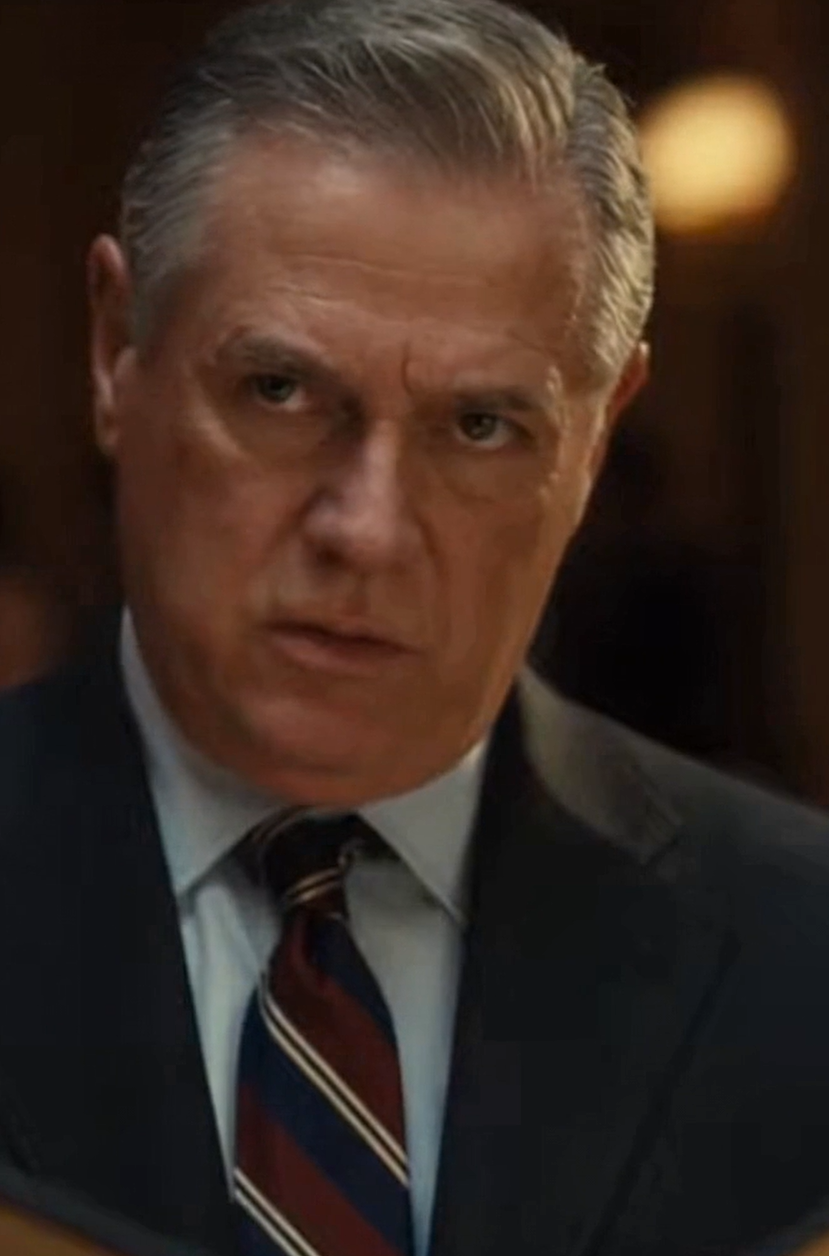
The country club dining room smelled like old money and roasted lamb. Crystal chandeliers cast soft light over tables draped in white linen, and the quiet clink of silverware was the only sound most guests made.
I sat across from my father, wearing the one suit I owned. It still had the Goodwill tag tucked inside the collar.
“I don’t understand why you insisted on coming,” he said, not looking up from his menu. “This is a family event, and you’ve made it clear you’re not interested in being part of this family.”
“You invited me, Dad.”
“Your mother invited you.” He finally met my eyes. “I told her it was a mistake. People like you don’t belong here.”
People like me. I knew what he meant. The daughter who refused law school. Who enlisted instead. Who came home with a limp and nightmares and no interest in the family firm.
The waiter approached, and my father ordered for the table without asking what I wanted. Filet mignon, medium rare. I hadn’t eaten red meat in three years.
“The Hendersons are here,” my father continued, nodding toward a silver-haired couple near the window. “Their son just made partner. Georgetown Law.” He let that hang in the air.
My mother reached under the table and squeezed my hand.
“Richard, please,” she whispered.
“What? I’m stating facts. Some children honor their families. Others…” He gestured vaguely at me.
The dining room had grown quieter. I could feel eyes on us. The Caldwell family drama, playing out in public again. I imagined the whispers later. Did you see? The disappointing daughter showed up.
I stared at my water glass. Counted the ice cubes. Four. Focused on my breathing like the VA therapist taught me.
Then the main doors opened.
A man in full military dress uniform walked in. Stars on his shoulders. Ribbons across his chest. The room went completely silent.
General Morrison. I recognized him immediately. Everyone did.
He scanned the room slowly. His eyes landed on our table.
My father straightened in his chair, already composing his face into the expression he used for important people. He started to rise, extending his hand.
But General Morrison walked right past him.
He stopped in front of me.
“Sergeant Caldwell,” he said.
The entire dining room was watching now. Forks frozen mid-air. Conversations dead.
“I’ve been trying to reach you for six weeks,” he continued. “You don’t return calls from the Pentagon, apparently.”
My father’s face had gone pale.
“Sir, I – ” I started.
“At ease.” His voice softened. “I came to deliver this personally. After what you did in Kandahar, it shouldn’t come through the mail.”
He reached into his jacket and pulled out a small velvet box.
“For extraordinary heroism in action against an enemy of the United States…”
My mother’s hand flew to her mouth.
My father stood frozen, his extended hand still hanging in the air, forgotten.
General Morrison opened the box. Inside, against black velvet, lay a silver star.
He saluted me.
Then he said, “The twelve soldiers you saved that night want you to know – “
His voice was clear and steady, cutting through the stunned silence of the room. “They want you to know that they call themselves the ‘Lucky Dozen’.”
I could feel every eye in that dining room on me. I felt exposed, more vulnerable than I ever did overseas.
“Corporal Davies is home with his wife and the baby girl he thought he’d never meet,” the General said. “He asked me to tell you he named her Sarah.”
My breath hitched in my throat. Sarah. My name.
“Specialist Grant started a non-profit for wounded vets. He said you taught him what real strength looks like, and he’s paying it forward.”
He continued, listing names, listing futures that almost didn’t happen. A wedding attended. A degree finished. A father who got to walk his daughter down the aisle. Each one was a punch to my gut, a beautiful, painful reminder of that day.
I had tried so hard to forget the specifics. The smoke, the noise, the feeling of absolute certainty that none of us were making it out.
The General finished and looked at me, his eyes holding a deep, profound understanding. “They wanted you to know that their lives are their thank you.”
He carefully closed the velvet box and placed it in my hand. The weight of it felt impossible.
“The country is proud of you, Sergeant. I am proud of you.”
He held his salute for a moment longer. I tried to stand, to return it, but my leg seized up, the old injury protesting the sudden movement. I settled for a sharp, respectful nod.
He gave a small, knowing smile, then turned. He surveyed the room once more, his gaze lingering for a fraction of a second on my father’s ashen face, before he walked out as decisively as he had entered.
The silence he left behind was heavier than the one he had walked into.
My mother was openly weeping now, quiet sobs shaking her shoulders.
My father slowly, mechanically, lowered himself back into his chair. He stared at the empty space where the General had stood, looking like a man who had just seen a ghost.
Mr. Henderson, the man whose son had just made partner, stood up from his table. He raised his wine glass. “To Sergeant Caldwell,” he said, his voice ringing with genuine respect.
Others followed. A murmur of “To the Sergeant” and “Hear, hear” rippled through the room. Glasses were raised. People I’d never met, people who had probably gossiped about me minutes before, were toasting me.
My father didn’t move. He just stared at the white tablecloth.
The ride home was suffocating. I sat in the back of the black sedan, the velvet box clutched in my hand. My mother sat beside me, occasionally dabbing her eyes with a handkerchief. My father drove, his hands locked on the wheel at ten and two, his knuckles white.
No one said a word. The silence was a living thing, filling the car, pressing in on us. It was a silence made of everything that hadn’t been said for years.
When we pulled into the long, manicured driveway of my childhood home, my father shut off the engine but made no move to get out.
“Give it to me,” he said, his voice flat and hard.
I looked at him in the rearview mirror. “What?”
“The medal. Let me see it.”
I hesitated, then leaned forward and passed the box to him. He didn’t open it. He just held it in his palm, staring at it as if it were a venomous snake.
“All this time,” he finally whispered, his voice cracking. “All this time, you let me believe…” He couldn’t finish the sentence.
“Believe what, Richard?” my mother asked, her voice uncharacteristically firm. “That she was a failure? You didn’t ‘believe’ that. You decided it.”
He ignored her. He turned in his seat, his eyes finally meeting mine. They weren’t angry anymore. They were filled with something I had never seen before. A hollow, desolate fear.
“You have no idea what you’ve done,” he said, and then he got out of the car and walked into the house, leaving the door ajar.
We followed him inside. He went straight to his study, a room I hadn’t been in since I was a teenager. It was a shrine to his success, lined with leather-bound law books and framed accolades.
He stood by his mahogany desk and finally opened the box. He looked down at the Silver Star, and a sound escaped him, a pained, guttural noise.
“How could you?” he asked the medal. “How could you let this happen in front of them? In front of everyone?”
“Dad, what are you talking about?” I asked, my own anger finally bubbling to the surface. “You’re not embarrassed, are you? Are you actually upset that your daughter is a hero?”
“Hero?” He laughed, a bitter, ugly sound. “You don’t know the first thing about it. This…” He gestured wildly with the box. “This isn’t an honor. It’s a brand. It’s a target on your back for the rest of your life.”
“Richard, stop it,” my mother warned. “You have to tell her.”
“Tell me what?” I demanded, my voice rising. “Tell me why you’ve treated me like garbage since the day I enlisted? Why nothing I ever did was good enough? Why you looked at me tonight with disgust instead of pride?”
He sank into his leather chair, the fight draining out of him. He looked old. Older than I had ever seen him.
“Because I didn’t want you to be me,” he said, his voice barely a whisper.
I just stared at him, confused. “I’m nothing like you.”
“No, you’re not,” he agreed. “You’re better. And I hate you for it.”
My mother walked over to a locked cabinet in the corner of the room. She pulled a small key from her purse and opened it. Inside was a single, dusty wooden box. She brought it over and set it on the desk next to the velvet box containing my medal.
“Your father enlisted, too,” she said softly. “When he was nineteen. He never told you.”
I looked from her to my father, stunned. My father, the corporate lawyer, the man who preached about legacies and corner offices, had been a soldier? It didn’t make any sense.
He opened the wooden box. Inside, there was no medal. There was just a black-and-white photograph of four young men in ill-fitting uniforms, grinning at the camera. And behind it, a single, folded American flag.
“Vietnam,” he said, his voice thick with unshed tears. “I was a corporal. Just a kid. Thought I was invincible, just like you.”
He picked up the photograph. “That’s Miller. And that’s Garcia. And this was my best friend, David.” He pointed to a lanky boy with a wide smile.
“We were on patrol,” he continued, his eyes distant, seeing a jungle instead of his polished study. “Deep in the bush. We walked into an ambush.”
He paused, taking a shaky breath. “It was chaos. Noise and light and screaming. I… I froze. Just for a second. But a second is a lifetime over there.”
He looked at me, his eyes pleading for an understanding he didn’t deserve. “David was right next to me. He yelled my name. He needed cover. And I was on the ground, pretending to be a rock. I was so scared I couldn’t move, couldn’t breathe.”
“Richard…” my mother whispered, placing a hand on his shoulder.
“He went down,” my father said, his voice breaking completely. “He went down, and Miller and Garcia went after him. They didn’t make it either. All three of them. Because I was a coward.”
The room was silent save for his ragged breathing. The man I had known my whole life, the pillar of strength and judgment, was a fraud. His entire life, his entire personality, was a fortress built around one moment of gut-wrenching shame.
“They sent me home,” he said. “Gave me an honorable discharge. Said I had shell shock. But I knew the truth. I came home and I built this life. The law firm, the country club, all of it… I thought if I built a big enough monument to success, no one would ever see the coward hiding inside.”
He looked at my Silver Star, glinting under the lamplight. “And then you enlisted. My daughter. You went to war, and I was terrified. Not just that you’d get hurt. I was terrified you’d be tested like I was.”
His gaze met mine. “I prayed you would fail. I prayed you’d wash out or get a desk job. Because if you were a hero… if you faced what I faced and did what I couldn’t… what would that make me?”
It all clicked into place. The constant criticism. The belittling comments about my service. Pushing me toward law, toward his world, a world where he was in control, where he was the success. It wasn’t hatred. It was a desperate, twisted, and selfish fear. He was trying to protect himself, not me.
“So when I came home with this limp,” I said, my voice quiet, “you saw it as a failure. It fit your story.”
He nodded, shamefaced. “It was easier than the alternative.”
I looked at the strong, intimidating man who had dominated my life, and for the first time, I just saw a scared nineteen-year-old boy who never came home from the jungle. The anger I had held onto for years began to dissolve, replaced by a profound and aching sadness.
I picked up my Silver Star. Then I reached into his box and took out the folded flag. I placed my medal gently on top of it. The silver gleamed against the dark blue.
“You weren’t a coward, Dad,” I said, my voice steady. “You were a terrified kid in an impossible situation. I was terrified, too. Every single day.”
I told him about the day in Kandahar. About the ringing in my ears, the taste of dust and blood. I told him about the moment I thought I was going to die, and the only thing that made me move was the sound of Corporal Davies crying out for his wife. It wasn’t a lack of fear that made me a hero. It was just… one foot in front of the other.
“The difference between you and me,” I said, looking at our two boxes, “is about thirty seconds of luck. That’s all.”
He looked up at me, tears streaming down his face, and for the first time in my life, I saw my father. Not the judge, not the lawyer, not the disappointment. Just my father.
He reached out and wrapped his hand around mine, his fingers clutching mine tightly. “I’m so sorry, Sarah,” he sobbed. “I am so, so sorry.”
We didn’t fix everything that night. Decades of pain and misunderstanding don’t vanish with a single conversation. But it was a start. It was a foundation.
My father began seeing a therapist at the VA, the same one I did. He started talking about David, saying his name for the first time in fifty years. He sold his membership at the country club, saying he was tired of pretending.
The real honor, I learned, isn’t the medal in the box. It’s not the salute from a General or the toast from a room full of strangers. True honor is found in the quiet moments. It’s facing the truth you’ve been running from your whole life. It’s the courage to admit you were scared, to ask for forgiveness, and to see the people you love for who they truly are, scars and all. It’s the strength to put one foot in front of the other, not just in a firefight, but on the long, quiet walk back home.