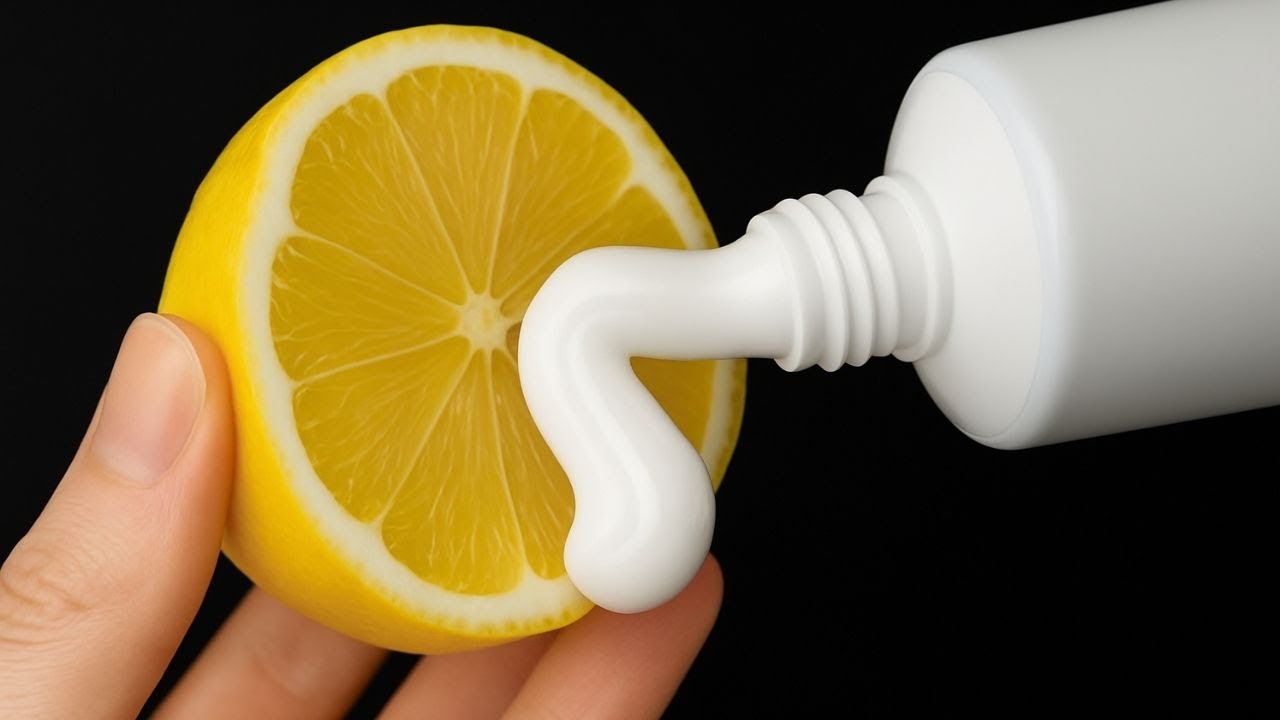
It might look like a strange science experiment, but rubbing toothpaste onto a lemon is a secret weapon used by professional cleaners to solve one of the most frustrating household problems: stubborn hard water stains and oxidation. Toothpaste contains very fine abrasives (designed to polish teeth without scratching enamel), while lemons are packed with citric acid, a natural solvent that dissolves mineral buildup. When you combine them, you create a “polishing paste” that can make old, cloudy surfaces look brand new. From foggy faucets to yellowed headlights, this duo acts like a “magic eraser” for the toughest grime!
The Problem This Solves: “Cloudy” Surfaces and Stubborn Rust
The “problem” you’ll never face again is the embarrassment of cloudy bathroom fixtures or rusted kitchen tools. Hard water contains calcium and magnesium that “bond” to metal and glass, creating those white, crusty spots that regular soap won’t touch. The lemon’s acid breaks the bond of the minerals, while the toothpaste gently “sands” away the residue without damaging the finish. This trick is also incredible for cleaning the soles of your sneakers or removing scuff marks from white furniture. It’s a cheap, natural way to restore a “mirror-like” shine to your home!
Recipe: The “Deep-Shine” Toothpaste & Lemon Polish
This simple mixture is perfect for faucets, showerheads, silverware, or even car headlights.
Ingredients:
- 1/2 of a Fresh Lemon.
- 1 tablespoon of White Toothpaste (make sure it’s a paste, not a gel—white pastes have more abrasives).
- 1 teaspoon of Baking Soda (optional, for extra “scrubbing” power).
- A Microfiber Cloth.
Instructions:
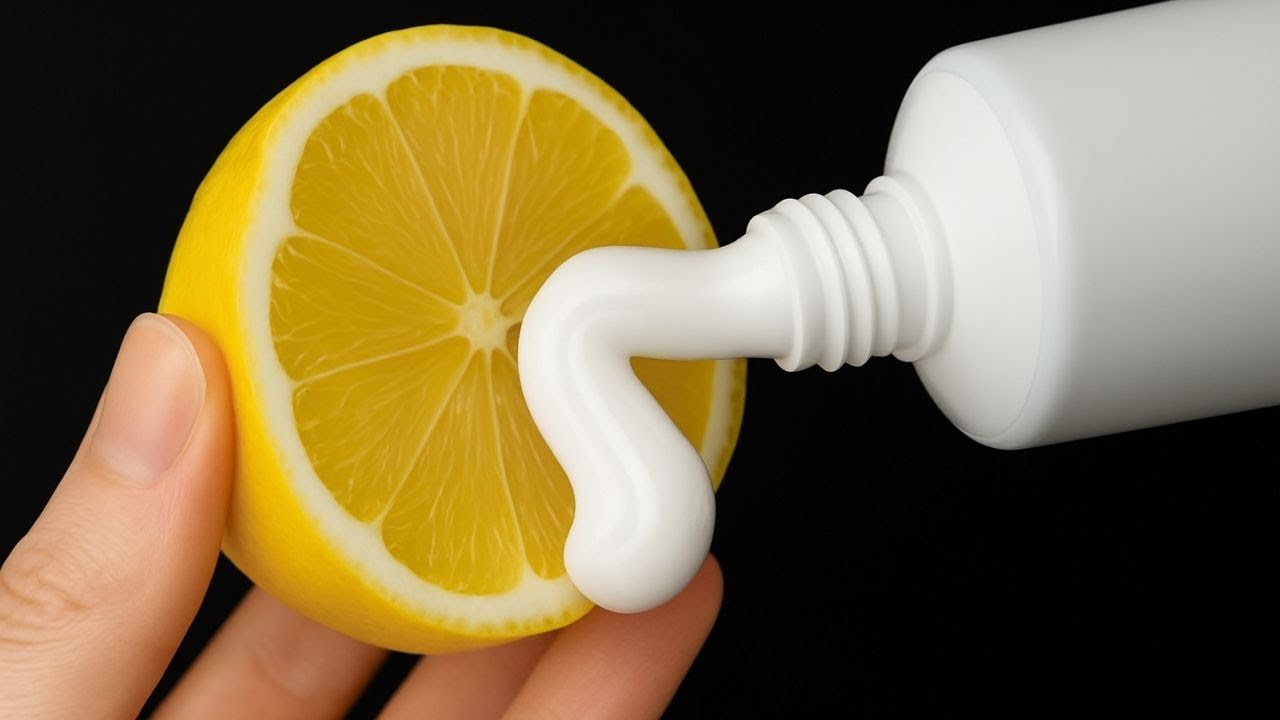
- The Application: Squeeze a generous amount of toothpaste directly onto the cut side of the lemon. If using baking soda, sprinkle it on top of the toothpaste.
- The Scrub: Use the lemon as a “scrubbing sponge.” Rub it in firm, circular motions over the stained or cloudy surface. Squeeze the lemon slightly as you work to release the juice.
- The Reaction: You will see the mixture start to foam slightly—that’s the citric acid and toothpaste working together to lift the grime.
- The Wait: Let the mixture sit on the surface for 5 to 10 minutes. This allows the acid to fully dissolve the mineral deposits.
- The Polish: Use a damp microfiber cloth to wipe the paste away.
- The Rinse: Rinse with clean water and buff the surface dry with a clean towel. The result will be a streak-free, brilliant shine!
Three Reasons This Trick is a Game-Changer
- Removes Oxidation: It’s the best way to clean “yellowed” plastic (like old electronics or car headlights), returning them to their original clear state.
- Neutralizes Odors: While it cleans, the lemon and minty toothpaste leave behind a fresh, sanitized scent that lasts much longer than chemical sprays.
- Saves Money: You don’t need five different “specialty” cleaners for your bathroom and kitchen; this one recipe handles metal, glass, and plastic perfectly.
A Friendly Tip for Success
This trick is particularly “magic” for stainless steel sinks. If your sink looks dull and scratched, rubbing it with the lemon-toothpaste combo will fill in the tiny micro-scratches and leave a protective layer that makes water “bead up” and roll away. Just remember to use a white, non-gel toothpaste for the best abrasive action!