
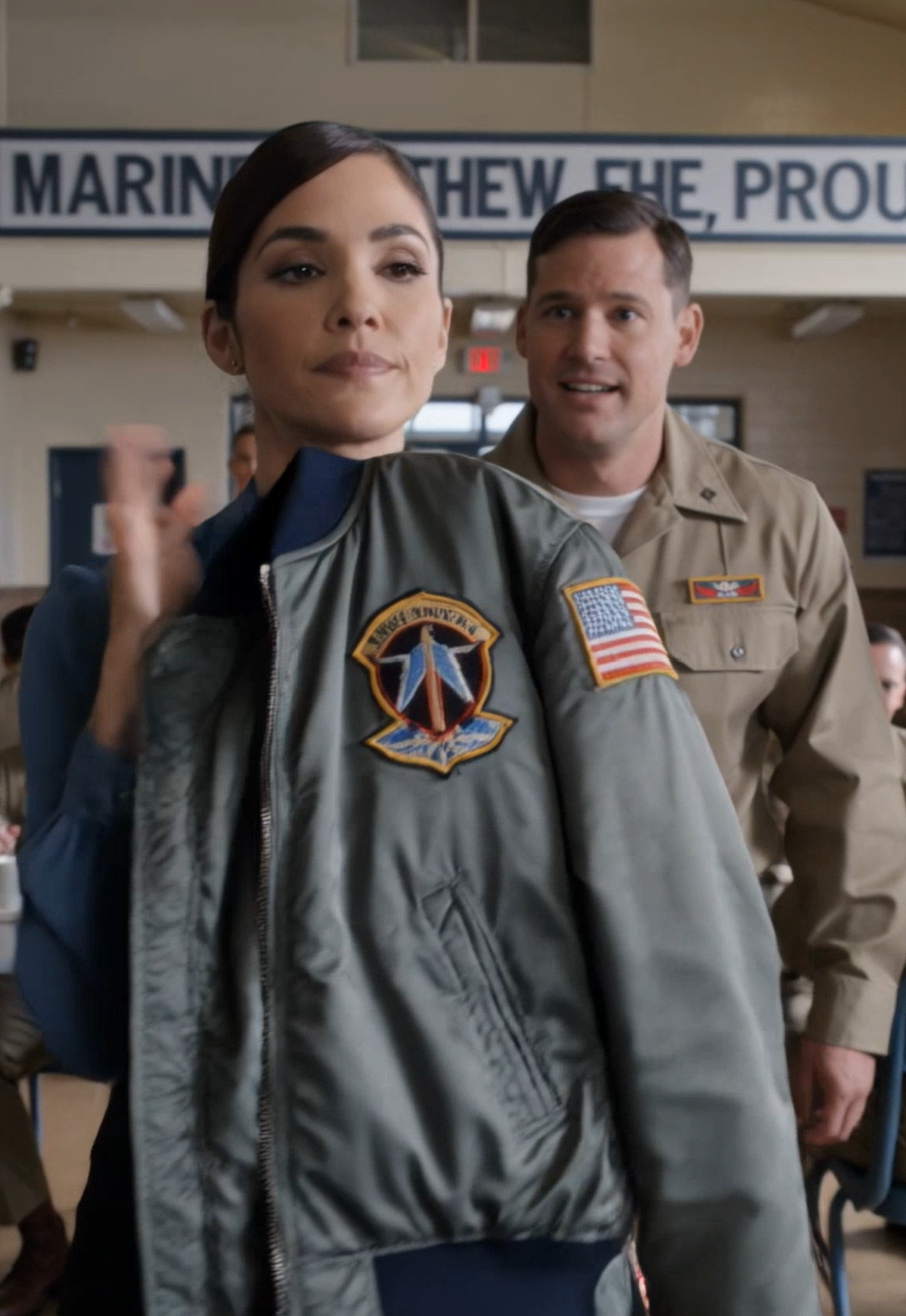
A Question Meant to Humiliate
“Ma’am, with all due respect, what’s your call sign?”
The words drifted across the busy mess hall like a line cast on calm water, more show than substance. Captain Mark Hendriks reclined in his chair with a grin meant for an audience, the tan of the desert still on his rolled sleeves. He wasn’t asking for information. He was putting on a performance for the two young lieutenants flanking him, the way some folks tell a joke once the room is primed for laughter.
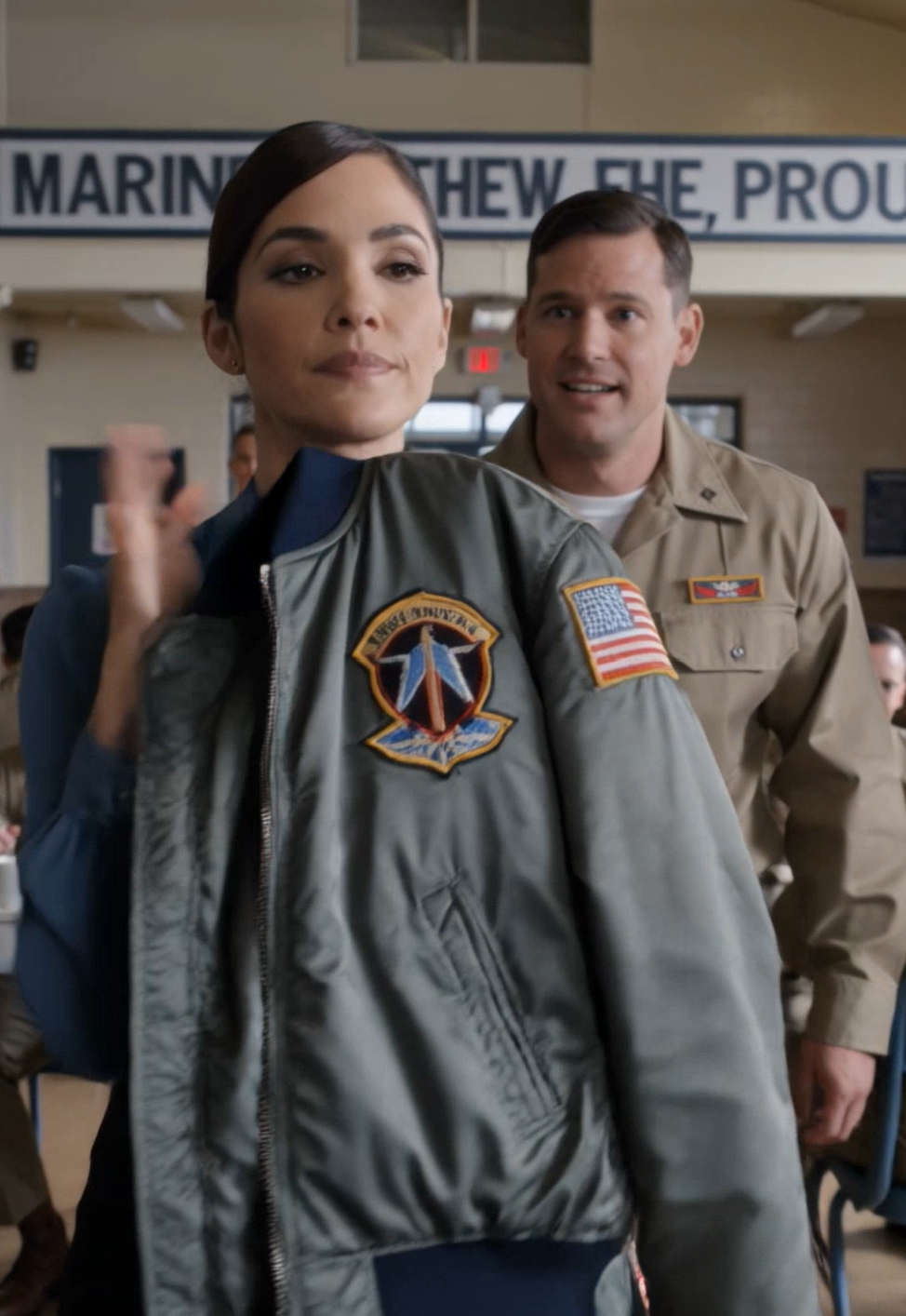
I didn’t look up. I kept eating my grilled chicken, steady and unhurried. I knew exactly how I looked in that sea of green and tan—civilian slacks and a royal blue blouse, a color that didn’t blend in with anything in that building. To a man like Hendriks, that made me an outsider. Maybe a contractor, maybe an aide who’d wandered into the wrong chow line. In his mind, I was someone to brush aside, not someone to heed.

Someone to be managed. Not respected.
“I asked you a question, ma’am,” Hendriks said, a shade louder, angling for more eyes and ears. “Or do they not hand out call signs to… whoever you are?” One of the lieutenants hid a laugh in his coffee.
I set down my fork. From my pocket, I drew a small, weathered leather patch. The edges were darkened and brittle, the stitching hanging on by a few threads. Without a word, I slid it across the table to him.
He caught it, still wearing that smile—until he turned it over and saw the name sewn into the back. The color left his face in one flush. His fingers began to shake so hard the patch slipped and fell to the floor.
“Where…” His voice splintered. “Where did you get this?”
All conversation in the mess came to a halt. The lieutenants’ smirks had vanished. Both stared at their captain as if the pillars of their world had suddenly shifted.
Every Marine on that base knew the name on that patch. It belonged to the pilot they’d been told was lost in the Hindu Kush back in 2011. The man whose service Hendriks had eulogized.
I finally looked up and met his eyes.
“I pulled him out of the wreckage,” I said quietly. “And he asked me to give this to the man who left him behind.”
Hendriks’s knees gave a tremble, and he clutched the table to keep himself upright. He was about to hear what truly happened in those mountains. And he was about to learn, at last, who I was.
What no one in that mess hall knew was that I hadn’t come there for lunch. I had arrived on orders. And the first name written at the top was Captain Mark Hendriks.
Out of the Mess and Into the Light
“Captain,” I said, my voice steady. “You and I need to speak. Not here.”
He stared at me, the swagger gone from his posture and his eyes. The predator from moments before had been replaced by a man cornered by his own history.
“My office,” I said, tipping my head toward the administrative wing. It wasn’t a suggestion.
I rose, the scrape of my chair the only sound in the still room. I didn’t bother to pick up the patch. I knew he would. Behind me, Hendriks stumbled to his feet, knocking over his chair. The younger lieutenant, barely old enough to rent a car, rushed to set it right, pale and rattled by the crack that had just appeared in the version of the world he trusted.
I led the way, our steps echoing down the corridor. His breathing quickened. He sounded like a man walking toward a cliff he hadn’t realized was under his boots until now.
In a small, spare office—one desk, two chairs, a barred window—I took my seat and gestured for him to sit. He collapsed into the chair across from me, his large frame suddenly diminished. He set the burned leather patch down between us like an artifact he was not ready to touch.
The name on it read: Major David “Ghost” Callahan.
“Who are you?” Hendriks whispered.
“Sierra Knox,” I said. “In 2011, Senior Airman Knox. Pararescue.”
He blinked hard. He knew the reputation. Pararescue Jumpers—PJs—are the people you send when no one else can do the job. In those days, it wasn’t a position women were assigned to on paper, but some of us found our way onto special teams because the work needed doing, and we could do it.
What Really Happened in the Valley
“Let’s go back,” I said, calm but firm. “Operation Mountain Serpent. You were the ground commander. Major Callahan was in the air in his Super Cobra.”
Hendriks nodded once. He looked years older than he had in the mess hall.
“Things unraveled fast,” I continued. “An ambush. A wave of RPGs. You saw Major Callahan’s bird get hit. You saw the fire in the Tangi Valley.”
“It was an inferno,” he said, the words tumbling out, trembling at the edges. “No one could have survived. The place was crawling with fighters. We were outgunned. It was impossible.”
“And you made the call,” I said. “Bird down. No survivors. Pull back.”
“I saved my men,” he said, a flicker of the old pride returning. “If we’d tried to get to that crash, we would’ve died, all of us. I made the right tactical decision.”
“Tactics,” I said softly, letting the word sit. “Is that what you call it?”
I leaned in. “Here’s what happened after your decision. My team was on standby for SAR—Search and Rescue. We heard your call. But our sensors also picked up an energy pulse from the crash site. A faint distress beacon. It told us something, or someone, was still alive.”
He shook his head. “Comms were out. No way.”
“Not his. Not his personal locator beacon—the small, stubborn piece of gear he wore for a moment like this. You didn’t check. You declared him KIA before the smoke cleared and you walked away.”
I watched the memory cross his face—the exact second he made a choice he could never unmake.
“Your command told you to hold,” I said. “They told you to set a perimeter so my team could move. You broke that order. You filed a report that the area was overrun and your only option was to bug out.”
I don’t raise my voice, not for this kind of truth. I let it land on its own weight.
“We went anyway,” I said. “Despite your report. We roped in under fire. It was every bit as hot as you said, but we were trained for that. The Cobra was a wreck, but in the cockpit—his leg shattered, metal in his side—Major Callahan was still alive.”
Hendriks stared at me as if I were a ghost myself.
“He was calling your name,” I said. “He believed you were coming.”
I took a breath. Even after all these years, I could smell the fuel and hear the popping of metal cooling in the night. “It took twenty minutes to cut him free. Twenty minutes of fighting off whoever tried to close in. Through the pain, he talked about you. ‘Tell Hendriks…’ he kept starting to say.”
I tapped the patch on the desk. “When he realized you weren’t coming, he tore this from his flight suit. ‘Give it to the man who left me behind,’ he said. ‘So he remembers.’”
Hendriks put his head in his hands. His shoulders shook in silence. The room filled with a heavy stillness that had nothing to do with air and everything to do with conscience.
“Where is he?” he choked out at last. “Did he make it?”
“We got him out,” I said. “Bagram. Landstuhl. Walter Reed. Two years of surgeries. He lost a leg below the knee. He suffered a brain injury. But he lived.”
Relief and horror warred in his expression. The man he’d left behind had refused to die. Sometimes survival is its own indictment.
“He lived,” I repeated gently. “Because we didn’t listen to you.”
The Pattern That Couldn’t Stay Hidden
He lifted his head, eyes wet. “I’m sorry,” he said. “I think about it every day.”
“Do you?” I asked. “You delivered his eulogy. You praised his bravery. You accepted a commendation for your ‘leadership under fire’ on that operation. You walked forward in your career on the back of a grave that wasn’t a grave at all.”
He flinched like he’d been struck. “Do you want my resignation? I’ll sign it.”
I let out a humorless breath. “Captain, this isn’t about getting an apology from you. It’s bigger than that.”
“I retired from the Air Force five years ago,” I said. “I’m a civilian now. But I work with a quiet team inside the Department of Defense—a special projects group. We look into what falls through the cracks.”
“Major Callahan’s case didn’t add up. A decorated pilot declared dead based on a single field report made under questionable conditions, from an officer who ignored a direct order to hold. Then we noticed how smoothly your career sailed after that.”
“It wasn’t a good look,” I said. “So we dug deeper. We found more than a bad night in a bad valley. We found a pattern. Taking credit for work done below you. Assigning blame sideways when equipment failed. Choosing your path forward over your people’s well-being.”
“Major Callahan wasn’t just a casualty of war,” I said, steady. “He was the first casualty of your ambition.”
He opened his mouth, but no defense came out. There are rooms where the truth leaves no space for excuses.
A Different Kind of Justice
“Yes, I have orders,” I said. “Your name is at the top. But this isn’t going to be a court-martial. That would be loud. Messy. It would splash onto the Corps and stain more than your record.”
“Then… what happens to me?” he asked.
“You’re being retired,” I said. “Effective today. You’ll submit papers this afternoon, ‘personal reasons.’ Your command already knows. You’ll pack. You’ll be off base before sunset. Your pension will stand. And you will fade into the background.”
For a man like Hendriks, quiet exile can sting more than public punishment. No stage. No spotlight. Just silence.
“And if I refuse?” he asked, reaching for a last scrap of defiance.
“Then the full report on Operation Mountain Serpent goes to every newsroom in the country,” I said. “All of it. Your disobedience. The PJ rescue. Proof that Major Callahan was alive. Your commendation will be pulled. Your name will be spelled the same way in every headline—cowardice. Is that the legacy you want?”
He sagged into the chair, emptied out. Slowly, he shook his head.
“A car will be at your quarters at 1700,” I said, rising. I picked up the patch and turned to the door.
“Does… does he hate me?” he asked, voice worn thin.
I paused with my hand on the knob. “Ask him yourself,” I said.
A Ghost Walks In
I opened the door.
In the hallway, a man in a neat civilian suit leaned against the opposite wall. The limp was slight. A thin, silvery scar traced a line from temple to jaw. But his eyes were clear, and they fixed on the man at the desk with a gaze that was steady, and very much alive.
Captain Mark Hendriks looked up at the face he had last seen framed by firelight in an Afghan valley. A ghost, returned.
Major David “Ghost” Callahan, retired, straightened and stepped into the room. He didn’t look angry. He looked like a man who had carried a heavy pack for far too long, and was ready to set it down.
“Hello, Mark,” Callahan said, his voice soft but sure. In those few words was the weight of years that neither man could pretend away.
Hendriks made a sound that was half a gasp and half a sob. He tried to stand and found he couldn’t. He could only look at the living answer to his most painful question.
“You gave a fine eulogy,” Callahan said. “A friend read it to me at the hospital. You always were good with words.”
He glanced at me, and across the space we shared more than history—we shared the quiet understanding of people who have been in the same storms. Then he looked back at his old friend. “Sierra laid out the deal. It’s the best you’ll get. It’s more than I got.”
I gave Callahan a small nod and stepped into the hallway. I closed the door and left them there—two men and a single past that needed tending. Not all justice rings with a gavel. Sometimes it speaks in a small office, where the truth has the floor and a long-deferred reckoning is finally allowed to happen.
The Lesson We Carry Forward
I walked back into the sunlight and felt something lift. A promise I’d been carrying since the smell of smoke in that valley finally had a place to rest. Mark Hendriks wasn’t a monster. He was a man who made a terrible decision when fear and ambition shouted louder than duty. But our choices leave ripples. They reach farther than we imagine, and they travel longer than we think.
For those of us who have worn a uniform—or loved someone who has—what matters in the end isn’t a call sign or the volume of your voice in a crowded hall. It’s the choices you make when the radios crackle and the plan goes sideways, when no one is keeping score but your own conscience. It’s whether you remember the oldest promise we teach our youngest: you do not leave your people behind. Not for a ribbon. Not for a line on a report. Not to save your reputation for a day at the cost of your spirit for a lifetime.
Major Callahan walked again. He rebuilt a life from pieces most of us pray we never have to pick up. He learned to live with a different stride and a different reflection in the mirror. But what he never lost was the clarity in his eyes—the kind that comes from surviving the worst night of your life and choosing, every day after, to be better than it.
There’s a reason stories like this land the way they do with those of us old enough to have buried friends and changed careers and seen the tides of our own choices. We know the truth of it. It’s easy to posture in public. It’s hard to do right when the dark closes in. Calling yourself a leader is simple. Earning it happens when the lights are off and you think no one will ever know what you decided.
In that mess hall, a room full of Marines saw a mask fall away. In that office, a man came face to face with the cost of his silence and the mercy he didn’t deserve but still received. And in the bright afternoon, a PJ who once slipped through the cracks of officialdom put down a burden she had carried across years and miles. Not with a speech. Not with a parade. With a simple act—a quiet meeting, a retirement order, and a patch returned to the man for whom it still meant everything.
We tell ourselves we will know what we’ll do when the moment comes. The truth is, we don’t—until it stands in front of us. So we prepare our hearts and our habits. We practice integrity long before we need it. We honor the people who showed up for us by showing up for the next person. That’s how we keep faith in one another. That’s how we keep our promises, even in the valleys where the radios fail and the night is full of doubt.
Some ghosts do learn to walk again. And when they do, they remind us of what endures beyond rank and ribbon. Courage. Duty. And the quiet, stubborn kind of love that makes you go back into the fire because someone out there is counting on you to keep your word.
That’s the lesson Mark Hendriks took with him when he left that base before sunset. It’s the one Major David Callahan had been living for years. And it’s the one I carry still, stitched into memory as surely as a name on a frayed leather patch.



