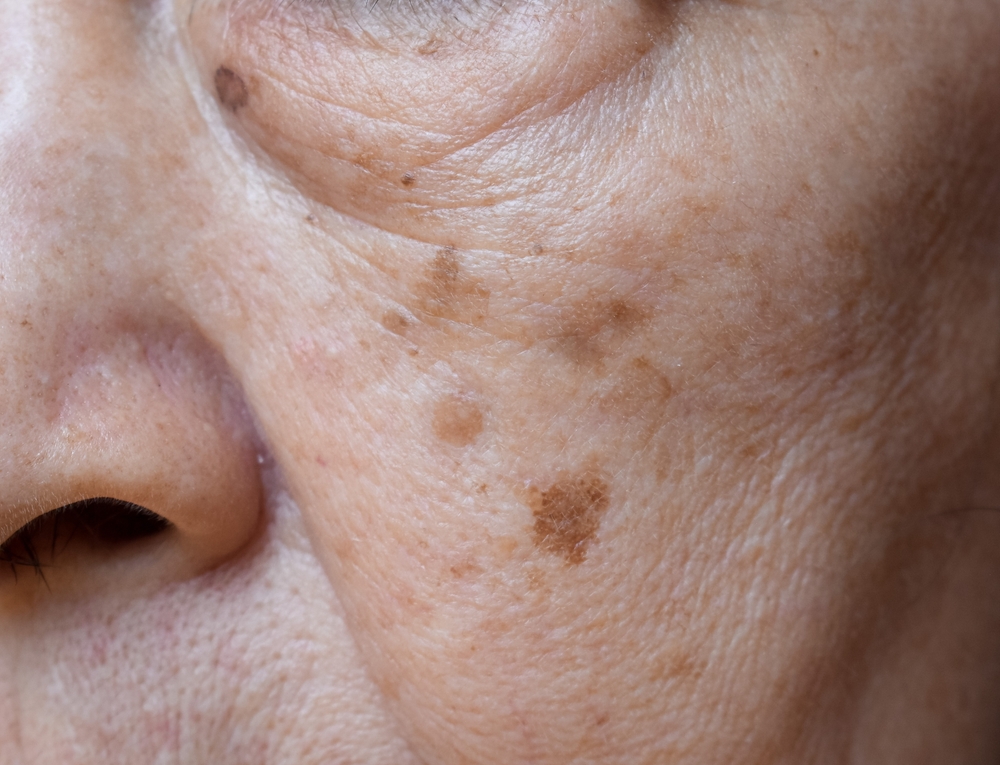
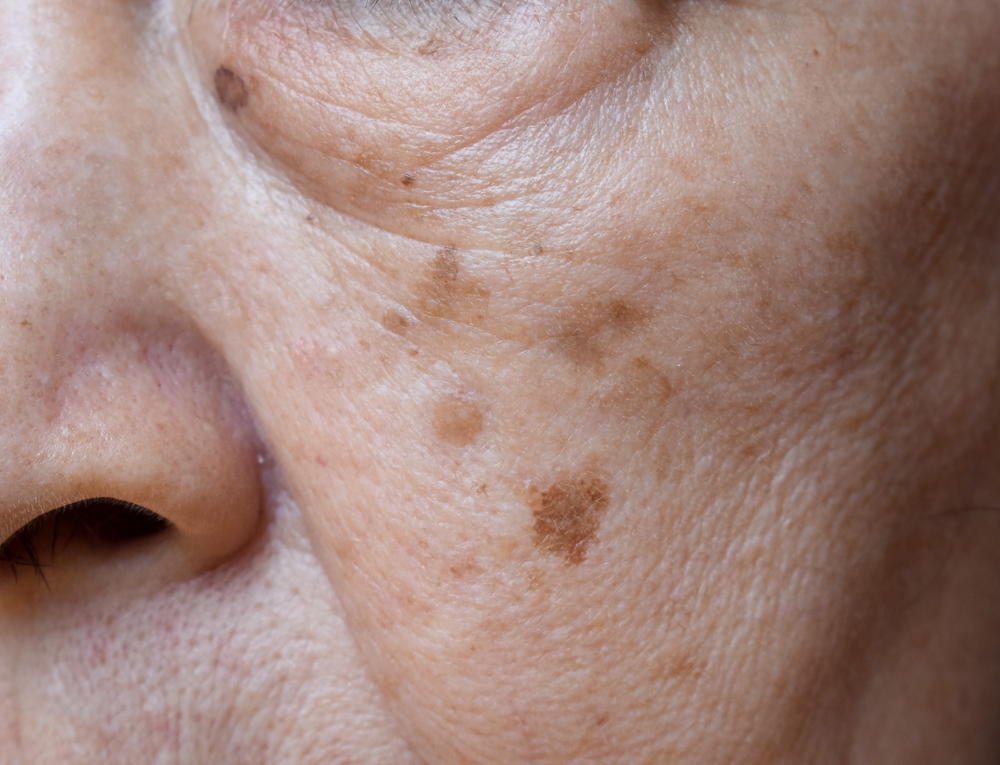
Vitamin C is renowned for its skin-brightening and antioxidant properties, making it a popular ingredient in skincare routines aimed at reducing the appearance of age spots and hyperpigmentation. This essential vitamin consistently delivers results, thanks to its ability to inhibit melanin production, which in turn helps lighten dark spots.
How Vitamin C Works on Age Spots
- Inhibits Melanin Production: Vitamin C interferes with melanin production, helping to prevent new dark spots from forming while also fading existing ones.
- Antioxidant Protection: It fights free radicals and oxidative stress that can lead to premature aging and darkening of the skin.
- Collagen Production: Beyond just lightening dark spots, vitamin C also promotes collagen production, which can improve skin texture and firmness.
Using Vitamin C for Best Results
- Choose the Right Formulation:
- Serums and Creams: Look for serums or creams with a high concentration of vitamin C. These are typically more effective than lotions or washes that are rinsed off.
- Stability and Packaging: Vitamin C is prone to oxidation. Products that are packaged in air-tight and opaque bottles tend to maintain their potency longer.
- Form of Vitamin C: L-ascorbic acid is the most potent form of vitamin C used in skincare, but other derivatives like magnesium ascorbyl phosphate or ascorbyl palmitate are also effective and may be less irritating for sensitive skin.
- Incorporate Into Your Routine:
- Apply vitamin C serum or cream to clean skin, ideally in the morning to take advantage of its antioxidant properties against sun damage throughout the day.
- Always follow up with sunscreen, as vitamin C can make your skin more sensitive to the sun.
- Consistency Is Key:
- Results from using vitamin C can typically be seen in a few weeks, but consistent long-term use is necessary for the most dramatic and enduring improvements.
Precautions:
- Skin Sensitivity: Some people might find vitamin C irritating, especially at higher concentrations. It’s a good idea to patch-test any new product before applying it to your entire face.
- Sun Sensitivity: While vitamin C helps protect against sun damage, it also makes the skin more sensitive to the sun. Always use a broad-spectrum sunscreen when using vitamin C in your skincare routine.
By faithfully incorporating vitamin C into your skincare routine, you can significantly reduce the visibility of age spots and improve your skin’s overall appearance. It’s not just about fading spots but also enhancing skin health for a more radiant and even complexion.