The Day the File Opened
He reached the last page of the personnel folder and paused, the air leaving his lungs like he had been punched. There was a photograph of her standing next to the Director of the Central Intelligence Agency. Under the picture, a simple code name was printed in black ink. He read it once, then again, and his knees almost gave out. He looked up at her, hands shaking. “You’re not supposed to exist,” he whispered. “You’re Whisper Nine.”
Dana glanced down at the folder and then back up, calm as still water. She didn’t answer. She didn’t need to. The room felt tight, like the walls had moved in around us. Even the air seemed to wait. Down the hall, boots scuffed to a stop as the other Rangers drifted closer, listening without even pretending not to. No one spoke. No one cleared a throat. It was the kind of silence where you can hear a pin drop, or a body.
Grant, our commander and the man who had carried us through three tours, tried to put words together and failed. “Whisper Nine was a rumor,” he managed at last. “A black-ops ghost. No face. No name. They said she once took down a warlord with a pencil.”
“It was a pen,” Dana said, almost apologetically, as if correcting a small error on a supply list. Then she turned back to her computer and resumed typing, clicking through screens like she was just another analyst tracking spare parts. But the look on Grant’s face made it clear she had pulled the ground out from under him. He nodded once, stunned, and left the room without another word.
By nightfall the entire base was humming with whispers. People drifted in and out of the chow tent, voices low, trying to fit what they had seen into stories that made sense. No one slept much. A supposed logistics analyst planted among combat veterans? Why? Why now? And what else had she not told us?
The Ambush That Changed Everything
We did not have to wait long to find out. Two days later, a joint mission with local forces unraveled in an instant. We were funneled into a narrow canyon with high stone walls, the worst kind of place to be. The first rocket-propelled grenade slammed into the lead truck, the next tore into the last. Gunfire crackled from above. Our radios hissed with static. The signal was jammed. Smoke rolled in thick curtains. The lieutenant—our LT—was on the ground, bleeding. The medic caught a round and went down. Both Humvees belched smoke, one already a blackened shell.
Then Dana stepped out of the last vehicle. No rifle. Only a sidearm and a small black pouch no bigger than a paperback. She scanned the canyon, taking it all in, and before any of us could ask what she was doing, she was already moving, climbing the cliffside like the rock was a staircase made just for her. In the chaos, she simply disappeared.
Ten minutes dragged by. Then fifteen. We told ourselves she had run, or been hit. We told ourselves it didn’t matter. We told ourselves anything to keep moving.
And then the jamming died. Our radios cleared. The gunfire faded and stopped altogether. We lifted our heads, not trusting it, unsure if we were hearing quiet or only the ringing in our ears.
On the far ridge, a handful of small flashes winked in sequence, like distant matches striking in the dark. A minute later, we heard steps crunching grit on the canyon floor. Dana appeared, dusty and steady, dragging a field radio by its cord in one hand and a scarf streaked with blood in the other. She dropped the scarf at our feet. “That was their spotter,” she said, voice even. “He’s not spotting anymore.”
She crouched beside the LT and tightened a tourniquet with quick, practiced hands. Then she keyed the radio and called base with grid coordinates so precise you would have thought she had mapped them into her bones. The medevac spun up almost immediately. We stared, humbled and silent. No one argued. No one doubted.
Except me.
The Truth Behind the Calm
In the days after the ambush, I started keeping an eye out for something most people miss. It was in the quiet moments when she thought no one was watching. The slightest flinch when a door slammed. The tremor in her fingers when she smoked behind the communications trailer, the ember glowing like a signal in the dusk. I had seen men carry more than their share before. I knew the look. Whisper Nine was not some untouchable legend. She was a person carrying a heavy load.
One evening, I finally sat down across from her by the burn barrels. The flames licked the rim of the rusty steel, the desert wind sending heat against our faces. “You saved us,” I said softly. “Twice. You didn’t have to.”
She exhaled slow, the smoke drawing a thin line into the night. “That’s not why I came here,” she said.
I waited. She kept her gaze on the fire, and I could feel her measuring every word.
“They’re after something,” she said at last. “Something bigger than a weapons cache or a hostage rescue. This entire base is a chessboard, and someone placed a queen where the rest of the pieces can’t see it move.”
“You think command is hiding something?” I asked.
She didn’t hesitate. “I know they are.”
From the inside of her jacket, she pulled a tiny encrypted drive, no bigger than a thumb. “This is why I broke cover on the radio. I needed access. I needed a team I could trust who weren’t wearing suits and carrying briefcases. I needed soldiers who did the right thing when no one was watching.”
“You trust us?” I asked, surprised by the warmth in her voice.
She looked at me, eyes clear and steady. “I trust what I saw you do when there was nothing in it for you.”
The Visit We Weren’t Supposed to See
At 0500 the next morning, a helicopter that did not belong to anyone we recognized dropped onto the tarmac. No unit markings. Blackbird silhouette. Two men in suits stepped out, not CIA, not military police, not anyone we could place. One flashed a badge from an agency whose name rolled off the tongue like a code. They asked for Dana by name. She didn’t argue. She didn’t fight.
But just before she boarded, she pressed something into my palm. The drive. “Don’t trust anyone,” she said, barely louder than the beating blades. “If I don’t come back, plug this in somewhere safe. Not here. Somewhere clean.”
The helicopter lifted away. Three hours later, command told us Dana never existed. Her bunk stood empty, stripped. Her footlocker was gone. Her name was erased from the roster as if a careful hand had rubbed it off with a white eraser. Grant raged up and down the hall, demanding answers. The rest of us kept our eyes open and our mouths shut, uneasy in a way that felt like sickness. The woman who had saved our lives had been turned into a ghost again, this time by people who wore our uniforms.
I still had the drive.
I made a choice.
The File That Changed Everything
I found a quiet room with a locked door and an outlet that worked. I turned off every light. My sidearm sat on the table within reach. When the laptop booted, the drive did not ask for a password. It simply opened.
What spilled onto the screen looked like the world drawn with a hard pencil. Satellite passes. Cargo manifests. Personnel rosters full of redactions that swallowed names, except one: Dana’s. At the center of everything sat a single label, underlined and stamped across multiple documents.
Project Red Vale.
The pieces assembled into a map I wanted to unsee. A biological facility buried beneath a decommissioned base in Eastern Europe. Funding moved off the official ledgers and into shadow accounts. Security handled by contractors with no stated affiliation to anyone. The work described in language that made my skin tighten. Recombinant sequencing. Cognitive weaponization. Live trials.
Then I opened one last file. A list of names. Twelve entries. A kill list. Ten had hard lines drawn through them. Number eleven read: Dana. Number twelve was my name.
That was when the knock came.
Back From Nowhere
I cut the lights and moved to the door, heartbeat steadying into a metronome because it had to. The knock sounded again. A voice followed, low and certain. “It’s me.”
I opened the door to Dana. Her face was pale beneath grit and blood. She slid inside, shut the door, and locked it in one motion, then sank onto the bed like the springs might hold her together. “They found out I gave you the drive,” she said, each breath ragged but controlled. “They’re cleaning house.”
I did what I could with the first-aid kit. She winced, nodded thanks, and kept her focus. “You have the files?” she asked.
I pointed to the laptop. “All of them.”
She reached inside her jacket and pulled out another drive. “This one has everything. Raw video. Lab notes. Names. Faces. Enough that they can’t say it’s a misunderstanding.”
She looked me straight in the eye. “But if we drop this, there’s no going back.”
I thought about the men we had buried under flags, the missions we had run believing we were saving lives when we were being moved like pawns. I thought about the families who deserved the truth, and the way Dana had walked into a canyon for us without a second thought.
I nodded. “Then we don’t go back.”
She almost smiled. “Good. Let’s burn it down.”
The Choice and the Flame
We slipped into town and found a crowded public library with a row of computers that still smelled like plastic. We kept our heads down. Gloves on. Two drives, two sets of files, uploaded in pieces to places that would scatter them wide and fast. We moved carefully, each keystroke deliberate, each minute a lifetime. When it was done, we walked out without looking over our shoulders. We vanished into the kind of spaces you use when you don’t want to be seen.
For a while, nothing happened. Days ticked past. Then the dam broke. A trickle of leaks grew into a flood. A whistleblower on the other side of the world sent copies to a journalist who knew how to check her facts. News anchors tried to pronounce phrases like “unauthorized biological weapons research” and “human experimentation” without their voices shaking. Red Vale turned into a phrase regular people said at their kitchen tables. The agency in the suits denied everything, of course. But the videos and lab logs spoke for themselves. The truth had too many angles to be hidden under a simple statement.
There were hearings. There were arrests that looked like housekeeping and others that looked like actual justice. Some people we had never heard of resigned. Others we knew by sight were moved to quiet rooms where the doors lock from the outside. The story kept unfolding, pulling a long thread loose. And through it all, Dana disappeared again—this time because she chose to.
Six Months of Quiet
I did not hear from her for half a year. I kept moving, changed cities, changed names, changed habits, the way you do when you know the last two names on a list included yours. Nights stretched long. I learned to sleep with one foot out of the covers, ready to move. I learned which bars had back exits and how to sit where I could see the door.
Then, in a small place in Prague where the walls were marked with the memories of a hundred nights just like ours, a folded napkin landed beside my glass. I could feel the weight of the attention that placed it there. I opened it. Inside was a short sentence in handwriting I would have recognized in the dark.
“Sector clear. You’re welcome.”
I did not turn around. I didn’t need to. I smiled into my drink and raised a hand for two more, leaving one untouched on the far side of the table for whoever might come back to claim it.
What We Learned, and What We Kept
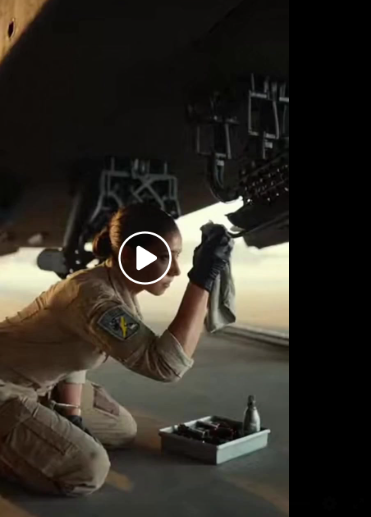
Looking back, the part that stays with me is not the files or the hearings or even the way the world bent around the story once it came into the light. It is the moment a room full of hardened soldiers realized the “office girl” with a neat ponytail and quiet shoes had been standing between us and the worst of it all along. We had mocked her at first without malice, the way people joke about anything they don’t understand. We used the word analyst like it meant soft. We used the word office like it meant safe.
She let it go. She did her work. When it mattered, she climbed a canyon wall without a rope and shut down a fight none of us were winning. When it mattered more, she told the truth even though it put her squarely in the sights of the kind of people who rewrite the world when it does not suit them.
There are parts of the story that will never be tidy. There are nights when sleep comes late and leaves early. There are faces I carry with me, and there always will be. But in the end, the thing we chose—the only thing we could choose—was daylight. Not because daylight guarantees safety, but because it gives ordinary people a chance to see the board for what it is and decide what to do about it.
If you are wondering whether Dana came back to the unit after everything, the answer is no. You do not come back from being the person who lifted the curtain. But you carry on. You adapt. You live in a way that would make the people you lost nod and say, “That’ll do.” And sometimes, when the room is crowded and the music is loud and the door swings open, you look up and half expect to see a familiar face with a small smile that says the sector is clear, and you are welcome.
After the Fire
In quieter moments now, I think about the hard edges of the words we learned to say in calm voices. Recombinant sequencing. Cognitive weaponization. Live trials. They sound like they belong in a lab, far from the dust and diesel of a base camp. But the truth is this: decisions made in rooms with clean floors have a way of finding their mark out where the ground is uneven and the wind smells like metal. We followed orders because that is how the job works. We believed because you have to believe in something to keep moving forward. And when belief cracks, you decide whether you will fill the break with anger, or with action.
We chose action. We chose to believe that people, when shown the truth, will do more good than harm with it. Some days I am sure of that. Other days I hold the memory like a worry stone and breathe until the doubt passes. Through it all, that napkin sits folded in my pocket, the ink a little smudged now, the message still clear as a sunrise.
Sector clear. You’re welcome.
It is not a promise that life will be simple. It is not a guarantee that the next knock at the door will be a friend. It is a reminder. Stand up. Tell the truth. Protect the ones who cannot protect themselves. And when the world pretends you never existed, hold your ground anyway. Sometimes, that is enough to tilt the board back toward even.
If you ever find yourself wondering what became of Whisper Nine, know this: legends have a way of stepping back into the crowd when the job is done. The rest of us keep watch. We learn from the quiet people with sharp eyes. And we try, each in our way, to leave a place safer than we found it, even if no one ever prints our names beside a director on a page we weren’t meant to see.