A Plain Flight Suit, A Lot of Assumptions
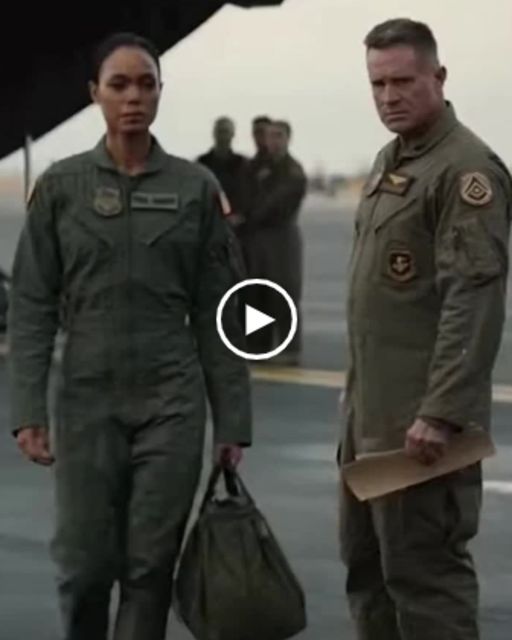
They noticed the new pilot the moment she stepped onto the flight line. She carried a helmet bag and wore a flight suit as plain as a sheet of paper—no unit patch, no squadron badge, nothing to show where she belonged. To the young Marines watching, it looked like a filing mistake had wandered onto the tarmac.
One of the sergeants joked that she was a paperwork problem waiting for a pen. He wasn’t quiet about it either. He pointed, chuckled, and made sure everyone nearby heard him. I didn’t stop him. I didn’t correct him. I simply watched the newcomer stand there in the open light of day, calm as a stone in a river.
On paper, she was Captain Vaughn. In person, she seemed almost invisible. No swagger. No story. Nothing that usually follows a pilot into a new duty station. Her file was sealed. Around a base, that can mean anything from an admin glitch to a higher-up who likes secrets. Most of us assumed the first, because the second felt like a fairy tale.
I decided to cut through the questions the way Marines do—straight and plain. I told her to report to the range. My tone was sharp, not friendly. I admit it now because it matters: I was ready to see her prove us right, not prove us wrong.
She didn’t argue. She didn’t even shrug. She just turned and walked where I pointed.
A Shot That Silenced the Flight Line
We set up moving targets, the kind that don’t make it easy. I stood behind her with my arms folded, expecting excuses and wide misses. Instead, she raised her weapon without a tremor, drew a steady breath, and fired like she had measured time itself. In less than two seconds, three targets snapped back, each one struck perfectly in the center.
The noise around us died. Laughter stopped mid-breath. The air itself seemed to pause. I have seen good shooting. I have taught good shooting. What I saw that morning belonged to a different world entirely.
My heart thudded like a drum. That wasn’t ordinary training. That wasn’t lucky. That was the cold, practiced skill of someone who had done harder things, in darker places, more times than she could count.
I walked straight up to her, trying to keep my voice level and failing. I asked who she was. Not her name—her call sign. I needed to hear the piece that matters to fliers, the name they become when the world goes loud and their work begins.
She met my eyes with an expression as calm as the sky before dawn. Then she said two words that made my blood run cold.
Specter Seven.
Two Words That Changed Everything
The call sign hit me like a punch. Specter Seven was a legend wrapped in a tragedy. Official reports said that pilot went down over the Zagros Mountains five years back. No chute. No beacon. Killed in action. End of story.
Only, it wasn’t the end. Not for me. And not for my brother.
I told her it couldn’t be true. I told her Specter Seven was dead. Captain Vaughn didn’t blink. She said reports can be wrong, and I knew I had no ground left to stand on.
Before I could stumble for another word, Colonel Davies walked in, voice steady as a landing light. He told me to stand down and turned to face the new pilot—not with suspicion, but with something I had never seen in a commander’s eyes: relief. Respect. The kind you don’t fake.
He welcomed her back. Just like that. Captain Vaughn answered with a small nod and a tone that matched his, two professionals speaking a language most of us only ever overhear.
Then the Colonel told the rest of us what mattered. She was under his direct command. Her duties were classified. She would receive every courtesy and every ounce of respect due her rank and more. No one argued. The range answered with one voice. Yes, sir.
The Mission I Couldn’t Forget
I walked away with my insides twisting. I remembered the night five years earlier when I sat in a room stateside, listening on a secure channel I shouldn’t have had, because brothers do what they have to when fear gnaws at their bones.
My brother, Mark, was boxed in on a lonely ridge with his Force Recon team. The enemy had them by the throat. A rescue had been called too risky. Politics and fear had sealed their fate. Over the radio, I heard men I didn’t know saying goodbyes that sat like stones in my chest.
Then I heard a new voice. Calm. Female. Steady like a hand on your shoulder. She identified herself as Specter Seven and said she was on station.
Her aircraft didn’t show up friendly. She was a ghost on the net. But for the men on that ridge, she was a lifeline. She moved like nothing I’d ever seen or imagined, slipping through enemy fire as if the sky itself bent to let her through. Missiles missed. Tracers found only night air. She guided the extraction birds into a pocket of safety that should not have existed, while taking apart enemy positions one by one with a surgeon’s patience.
Before she cleared the mountains, her voice came one last time, calm as it had been from the first second: Reaper Six is away. Specter Seven signing off.
The report said she was hit on the way out. A noble end. A story that fits neatly between the lines. But my brother never believed it. He told me her voice that night didn’t sound like a woman falling out of the sky. It sounded like someone who knew when to go dark.
Standing on that flight line, looking at the pilot we had laughed at, I knew in my bones he had been right.
A Debt I Didn’t Know I Owed
I called Mark that evening. He runs a small woodworking shop now, trading gun oil and grit for sawdust and quiet. When I told him what I’d seen and what I’d heard, the line went silent. Then he whispered that he had always known she made it.
He told me what he remembered most: her voice, talking them through the worst minutes of their lives like an older sister with a steady hand. Hold tight, almost there, painting the house for you. Plain words. Gentle humor. A promise tucked inside every instruction. He asked me to find her. He asked me to thank her.
The next morning, I found Captain Vaughn in a quiet hangar, standing beside an aircraft under canvas. Even hidden, it looked like a predator waiting with its eyes closed. I told her my brother’s name and where he had been five years ago. I saw something pass through her eyes then—not pride, not pity, but recognition, as if she could still see the lines of that mountain ridge on a map no one else kept.
She said he fought well. I told her I was sorry for the way I had treated her. She accepted the apology with the same evenness she did everything else. We all make assumptions, she said. That was the first time I realized how carefully she measured her words, and how gently she used them.
A New Crisis Demands an Old Ghost
Colonel Davies arrived with urgency written across his face. A briefing was called. We filed in as the room tightened around a new set of facts. A civilian cryptologist, Dr. Alistair Finch, had been grabbed across a border no one was supposed to cross. He held the keys to locks the world could not afford to lose. If those keys turned, an awful lot of doors would open for the wrong hands.
A normal rescue would risk a war. The area bristled with anti-air systems and unfriendly eyes. The room smelled of bad options and worse consequences. That was when the Colonel said it: This is a Specter mission.
Most of the staff looked up as if they had heard a ghost story step into the daylight. He explained anyway. Captain Vaughn would go alone. She would get in, find Finch, and fly them both out before anyone fully understood what had happened. It sounded impossible because, for almost everyone else, it would be.
As plans formed around a narrow thread of possibility, I noticed Sergeant Miller, the same man who cracked wise about her blank uniform, asking too many questions and all of them too sharp. Fuel margins. Ingress altitudes. Where jammers thin out. To anyone else, he was just being thorough. To a man whose gut had started to listen, it felt wrong.
A Good Man, a Terrible Choice
That night I watched Miller slip behind the motor pool and take a call on a satellite phone. He spoke too fast and looked over his shoulder like a man who wants to run but can’t decide where. I didn’t hear his words, but I recognized fear when I saw it.
I confronted him on his way back, in the dark little alley between two supply sheds where truths often come due. At first he lied. Then his eyes did what his mouth couldn’t. He broke and told me the worst of it. His wife and daughter had been taken. The people holding them belonged to the same network that had tried to bury my brother and his team on that ridge five years before.
They told him to share Captain Vaughn’s flight plan if he ever wanted to see his family again. He was a father who saw only one choice left, and it was a bad one. He handed me his shame like a man offering proof he still had a heart.
There wasn’t a second to waste. We went straight to the Colonel. Captain Vaughn stood with him when we walked in, sliding through the last checks before a mission built to thread a needle in the dark. When we laid it out—the leak, the blackmail, the trap—the room went silent except for the hum of equipment and the beat of a plan changing shape.
A Different Way In
Captain Vaughn didn’t flare, didn’t rage, didn’t even lift her voice. She looked at the map as if it were a living thing and traced the planned route with her finger. Then she showed us where the ambush would wait and where their attention would fix like a searchlight.
Her finger moved to a set of canyons no one liked to talk about flying. The walls there close in hard. Air currents do tricks you don’t appreciate until you’re upside down. We called it the Needle’s Eye because that’s what it felt like—a place for thread, not for wings.
They won’t expect me there, she said, simple as a weather report. Then she turned to me and said she needed a second set of eyes and a steady hand on the guns. My brother had told her I could shoot. She asked me to come along.
I had never heard of an enlisted Marine riding shotgun on a Specter run. The Colonel looked at her, then at me, and nodded. Twenty minutes later, I was hauling gear I had never meant to carry into a cockpit I had only ever imagined.
Into the Needle’s Eye
The Specter’s cockpit didn’t feel like a normal jet. It felt like a mind and a muscle, built together and tuned for silence. I strapped in and listened to Captain Vaughn, her voice even and crisp, telling me what I needed to know and nothing I didn’t.
Our path through the canyons was a line drawn across an old scar. Rock faces rose hard on either side, and the sky above narrowed to a ribbon. I called out shifts in the wind, stones skittering off ledges, temperature changes that hint at turbulence. She flew as if each wall had given her permission to pass.
We came out of the last cut not in front of the enemy’s teeth, but behind them, quiet and unseen. The compound lay below, still waiting on the far side for a ghost who wasn’t coming.
In and Out, Like a Shadow
She set the aircraft down so gently it felt like landing on breath. We moved fast. She handed me a rifle and told me to hold the exit. No speeches. No drama. Just the right words for the moment.
I watched her vanish into the dark like a question mark swallowed by ink. If you’ve ever seen someone who knows the layout of a building by the way the shadows fall, you understand what I saw. Minutes later—so few I counted them on one hand—she returned with Dr. Finch, eyes wide behind his glasses, feet trying to keep up with a woman who does not waste motion.
We had them aboard when the alarm finally caught up. The night exploded into sirens and tracers. The air filled with the bad kind of light.
Fire, Steel, and a Way Home
We took off into a sky stitched with angry lines. Captain Vaughn flew the way she had promised—threads through needles, rivers between stones. She told me to clear her a path. The weapon systems came alive in my helmet like a second sight. I did the work I was there to do, and I did not miss.
We bled their defenses until our route began to open, and then a heavy gun found us with a lucky claw across our port engine. Warnings flashed red like someone else’s heartbeat, and the aircraft shuddered under my boots. I reported what I saw and braced for a fall that never came.
She coaxed that wounded bird over ridge after ridge, quiet in her breathing and relentless in her hands. We landed hard but whole at a friendly forward base, the kind of landing that rattles your bones into gratitude. Dr. Finch was safe. The mission was done. The risk we took had met the skill it demanded.
Consequences—and Mercy
What Dr. Finch knew paid out quickly. Within days, a Special Forces team tracked down the place where Sergeant Miller’s family had been held. They were rescued alive. No victory parade. Just the kind of phone call that brings air back into lungs and light back into rooms.
Miller faced the consequences, as he had to. But the truth mattered: he had been forced, not bought. With everything on record—the threat, the confession, the way he ran to the Colonel with us—mercy found a place beside justice. It didn’t erase the mistake, but it recognized the person drowning inside it.
Back at base, the wind shifted. No more jokes about blank uniforms. No more sideways glances. People moved around Captain Vaughn with a quiet that wasn’t fear. It was respect, the steady kind that doesn’t make noise because it doesn’t have to.
What the Blank Uniform Meant
I found her again in the hangar, standing near the aircraft that had brought us all home in one piece. I thanked her for saving my brother and for bringing Dr. Finch back. She looked at me with that same measure she gives the world—patient, even, unadorned—and told me to call her by her first name. Anna.
Then she reached into a pocket and pulled out a small, folded patch. She stitched it slowly onto the shoulder of her flight suit where all that plain fabric had been. It wasn’t a squadron emblem or a chest full of shiny things. It showed a gray specter with its arms outstretched, sheltering smaller figures below.
As I watched the thread run through cloth, something unlocked in my mind. The blank flight suit had never been a mistake. It was a choice as deliberate as a steady trigger squeeze. Her work lived in the shadows on purpose. Her victories were meant to disappear into the dark so that other people could live their ordinary days in the light.
Some heroes carry their stories where everyone can see them. Their ribbons catch the sun on parade days, and they deserve every beam that strikes. Others carry their stories in silence, held between their ribs and the places they have been, known only to a handful of people who heard a voice in the night and felt hope return to their hands.
I had spent a morning laughing at a blank space on a uniform. By sunset, I understood it better than I understood half the things I’d learned in twenty years. That blank space was not empty. It was full—of missions where no medals could follow, of lives pulled back from the edge without witnesses, of promises kept with no spotlight waiting.
When I think back on those two words—Specter Seven—I hear not just the calm voice that saved my brother or the skill that flew us through a place no aircraft had any business going. I hear the steady truth beneath both: real strength does not need applause. Real service is not a contest of patches and pins. You can do extraordinary things without telling the world you did them.
I once thought bravery looked like the loudest person in the room. Now I know better. Sometimes it looks like a woman who wears a plain flight suit, offers a quiet nod, and goes where others cannot. Sometimes it looks like a man who owns his mistake and fights to make it right. Sometimes it looks like a team that trusts a steady voice and follows it through the dark.
That day on the flight line began with a laugh at something we didn’t understand. It ended with a lesson I’ll carry as long as I wear this uniform and long after I hang it up. I was lucky enough to fly with a ghost. And I will never forget that the blank spaces we see on other people are often where the truest parts of them live.