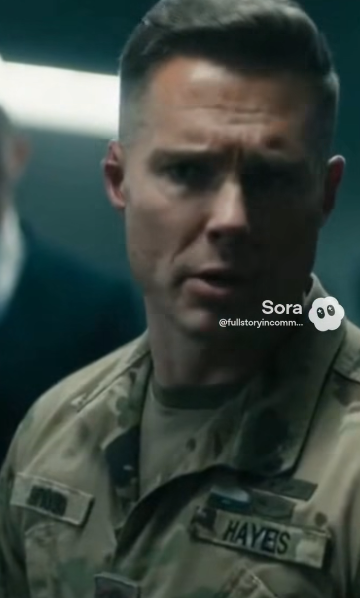
“Careful, sweetheart. That rifle costs more than your car.”
Greg leaned against the workbench, smirking at his buddies. “Just stick to cleaning the grease, okay? Leave the shooting to the men.”
I didn’t look up. I kept scrubbing the carbon off the bolt carrier, my fingers stained black.
Three years at this armory. Three years of Greg and his crew treating me like I wandered in by accident. Like the only reason a woman would be elbow-deep in a weapons system was because she got lost on her way to admin.
“Hey, Maya.” Specialist Donovan tossed a rag at my head. “Greg says you’ve never even fired a round downrange. That true?”
I caught the rag without looking. “I’ve fired a few.”
They laughed. The kind of laugh men do when they’ve already decided what you are.
The thing is, I never corrected them. Not once in three years. I showed up early. Stayed late. Stripped and rebuilt every platform in the inventory – the M4s, the M240Bs, the Mark 19s. I could reassemble an M110 sniper system blindfolded, and I had, twice, on a bet with Sergeant Aldrin that nobody else saw.
But Greg had seniority. Greg had volume. Greg had a way of filling a room so there wasn’t space left for anyone quiet.
Monday morning, our battalion commander announced a live-fire evaluation. Some visiting general wanted to inspect readiness across the brigade. Every section had to demonstrate proficiency. Weapons maintenance. Marksmanship. Systems knowledge.
Greg puffed up like a rooster. “Don’t worry, boys. I’ll handle the shooting demo. Maya can set up the ammo cans.”
Sergeant Aldrin looked at me. Just a flicker. I gave the smallest shake of my head.
Not yet.
The day came cold and grey. Wind cutting sideways across the range at fifteen miles per hour. The kind of wind that turns a good shooter average and an average shooter embarrassing.
The general arrived in a black SUV with two aides and a stone expression. Three stars on his collar. He didn’t smile. He didn’t small talk. He walked the line, stopped at each station, asked questions that had no room for bluffing.
Greg went first on the rifle demo. He talked loud, gestured big, called the general “sir” fourteen times in two minutes. Then he stepped to the firing line with the M110.
His first group spread wide. Second group worse. The wind was eating him alive and he didn’t know how to read it. I watched his shoulders tighten. Watched him jerk the trigger on the fifth round.
The general said nothing. Wrote something on his clipboard.
“Next shooter,” he said.
Sergeant Aldrin stepped forward. “General, Specialist Reyes will demonstrate.”
Greg’s head snapped around. “She’s maintenance. She doesn’t – “
“Specialist Reyes,” Aldrin repeated.
I stood. Walked to the line. Picked up the M110 Greg had just set down. The barrel was warm. I checked the chamber, loaded a fresh magazine, and settled into position on the ground.
I didn’t adjust the scope. I’d built this rifle. I knew its zero better than I knew my own handwriting.
The wind pushed left to right at what I estimated twelve to fifteen. I held two clicks left and let my breathing slow.
Five rounds. Five seconds between each.
When I was done, the range officer walked the target back. The group was tight enough to cover with a quarter. Center mass. Every one.
The range went quiet. Not dramatic quiet. Just the wind and the flag snapping and nobody knowing what to say.
I stood, cleared the weapon, and set it on the bench.
The general walked toward me. He stopped close enough that I could see the name tape on his chest clearly for the first time.
REYES.
“How’s the M110 treating you these days?” he asked. His voice was low enough that only I could hear.
“Better since I re-bedded the stock and replaced the gas rings, Dad.”
His expression didn’t change. Not for the audience. But his eyes – the same dark brown eyes I’d inherited – softened for exactly one second.
Then he turned to face the entire section, clipboard under his arm, and said loud enough for Greg and Donovan and every single person on that range to hear:
“Who’s your section leader for weapons maintenance?”
Sergeant Aldrin answered. “Specialist Reyes handles all primary systems, sir.”
The general nodded. Looked down at his clipboard. Then looked directly at Greg.
“I’m restructuring the brigade marksmanship program starting next month. I need the best shooter on this installation to run the instructor cadre.” He paused. “Specialist Reyes, I’ll have the orders drawn up by Friday.”
Greg opened his mouth. Nothing came out.
The general turned back to me, and just before he moved to the next station, he said something only I caught – five words, barely a whisper, in the same voice he used when I was nine years old and he first put a rifle in my hands at the farm back in Tucson.
“That’s my girl. Five for five.”
Then he walked away, and I felt every set of eyes on that range shift — not to him, but to me. And for the first time in three years, the silence in that armory wasn’t because nobody noticed me.
It was because nobody could look away.
The ride back from the range was in a silent Humvee. Greg stared out his window, his face the color of wet cement. Donovan kept looking at me in the rearview mirror, then quickly looking away, like I might spontaneously combust.
Sergeant Aldrin drove. He didn’t say a word until we pulled into the motor pool.
“Reyes,” he said, cutting the engine. “My office. Ten minutes.”
I nodded.
The armory felt different when I walked in. The usual clatter and crude jokes were gone. It was replaced by a thick, humming quiet. The kind of quiet that follows a lightning strike.
People made way for me. They didn’t speak, just moved aside as I walked to my workbench. It was unnerving.
In Aldrin’s cramped office, he closed the door and gestured to a chair.
“You knew he was coming,” I said. It wasn’t a question.
He nodded, leaning back in his squeaky chair. “Your father and I served together a long time ago. He called me last month.”
“He asked you to watch out for me?” My voice was tight. I hated that idea.
“No,” Aldrin said, surprising me. “He asked me to do the opposite. He asked me to let you sink or swim. He said the only way you’d earn real respect was if you did it without his name hanging over you.”
That sounded exactly like my dad. Tough love served on a steel plate.
“He also said,” Aldrin continued, “that you were the best natural shooter he’d ever seen. And that you knew more about the guts of a rifle than anyone in his command.”
He leaned forward, his expression serious. “I didn’t believe him at first. So I watched you. That bet we made? The blindfolded reassembly? That wasn’t for me. That was for my report back to him.”
I felt a strange mix of betrayal and understanding. I’d been under a microscope.
“So this whole thing,” I said, gesturing vaguely toward the range, “was a setup.”
“It was an opportunity,” he corrected gently. “One you earned, Maya. Not one that was given. The shots were yours. The skill is yours. The job is yours.”
He paused. “Greg won’t make it easy.”
I thought of Greg’s pale, shocked face. “I know.”
“He’s all noise and ego,” Aldrin said. “But don’t mistake that for incompetence. He’s a good soldier, just a lousy leader. His problem isn’t you. It’s the pressure.”
That was the last thing I expected to hear. Greg, the man who lived for an audience, was bad under pressure?
“You saw him on the line today,” Aldrin explained. “As soon as the General was watching, his fundamentals fell apart. He rushes. He overthinks. He can hit a target all day when no one’s looking. Put a single star on his shoulder, and he folds.”
My first day as the new head of marksmanship training was awkward. I walked into the classroom, and the dozen soldiers assembled, including Greg and Donovan, went stiff.
I didn’t start with a big speech. I didn’t mention what happened at the range.
I walked to the front of the room and picked up a stripped-down M4 lower receiver.
“Everything starts here,” I said, my voice feeling too loud in the silent room. “Before you can master the shot, you have to master the tool. We’re going to spend the next week not on the range, but at the bench.”
A groan went through the room. Greg rolled his eyes so hard I thought they might fall out.
“You’re going to teach us how to clean our weapons?” he sneered. “I learned that in basic, sweetheart.”
The old name. He said it to test me. To see if I’d flinch.
I didn’t. I just looked at him.
“No, Specialist,” I said calmly. “I’m going to teach you how to understand them. To feel when a trigger assembly has too much creep, to know by sound if a bolt is seating correctly, to understand why a one-degree cant in your gas block can throw your shot off by six inches at 300 meters.”
I paused, letting my words sink in. “We’re going to learn the ‘why’ behind the ‘what.’ And you will all be field-stripping and reassembling your rifles blindfolded by Friday. Timed.”
The grumbling stopped. This was new. This wasn’t about ego or showing off. It was about mechanics. It was my world.
For a week, we didn’t fire a single shot. I made them work until their hands were sore and their minds were tired. I taught them about harmonics in the barrel, about the precise lockup of the bolt lugs, about the subtle differences in gas pressure from different ammunition lots.
Most of them started to get it. They saw I wasn’t just some general’s daughter. I knew my stuff, cold.
Donovan even came up to me after a session. “Hey, uh, Reyes,” he stammered. “That thing you showed us with the trigger spring? I’ve been having an issue with that for months. Nobody could figure it out.”
“It’s a common wear point,” I said simply. “Glad it helped.”
But Greg resisted. He did everything I asked, but with a simmering resentment. He was faster than anyone at the blindfolded reassembly, and he made sure everyone knew it, slamming his rifle down on the table when he was done.
The second week, we went to the range.
I didn’t have them shoot at distant targets. I had them shoot at blank paper from twenty-five meters.
“No aiming,” I told them. “I want you to focus on one thing and one thing only: your trigger pull. Surprise yourself with every shot. Feel the break. That’s it.”
Greg scoffed. “This is basic training stuff.”
“Then you should be an expert at it,” I shot back, my patience wearing thin.
We spent an hour on it. Just the mechanics of a perfect trigger squeeze. Then we moved on to breathing. Another hour. Just breathing. In, out, the natural pause.
I could see Greg getting more and more frustrated. He wanted to hit targets. He wanted to prove he was better than me.
At the end of the day, I finally let them shoot for groups.
Greg stepped up to the line, full of swagger. He shot fast. His group was decent, but not great. Spread out over four inches.
“Not bad,” he said, trying to own it.
I walked over and looked at his target. “You’re anticipating the recoil,” I said. “You’re flinching before the shot even breaks. That’s why your rounds are going low and left.”
“I’m not flinching,” he snapped, his face turning red.
“Yes, you are,” I said, my voice even. “Your pride just won’t let you admit it.”
The entire line went silent. Nobody had ever called out Greg like that.
“I can shoot circles around you,” he snarled.
“I know,” I said. “On a good day, when nobody is watching. But that’s not what this is about. This is about being perfect every single time. Under any condition. Because one day, that one shot might be the only one that matters.”
I could see something flicker in his eyes. A flash of something that wasn’t anger. It looked like fear. Or maybe shame.
The next few weeks were a battle of wills. He fought me on every drill, questioned every technique. But slowly, something started to change. His groups got tighter. He stopped rushing his shots. He started listening more than he talked.
The real test came a month later. Another brigade-level evaluation, this time a complex team-based event. A timed stress shoot. Each team had to move through a course, engaging targets under physical and mental pressure.
I wasn’t shooting. I was an evaluator. Greg was the team leader for our section.
The course was brutal. A half-mile run, a wall climb, and then a series of difficult shots from awkward positions. All with instructors yelling and smoke grenades going off.
Greg’s team was doing well until the final stage. It was a hostage scenario. One target, partially obscured, at 400 meters. One shot. Miss, and the team failed.
I watched Greg get into position. His breathing was ragged from the run. I saw his knuckles go white as he gripped the rifle. It was the same tension I saw on the day my father visited.
He was going to jerk the trigger. I knew it.
Then, he stopped. He closed his eyes. I could see his chest rise and fall slowly. He was doing the breathing exercises I taught. He was letting the tension go.
He opened his eyes, settled the crosshairs, and let out half a breath.
The rifle cracked. A second later, the steel target rang out. A perfect shot.
His team erupted in cheers. Greg just lay there for a second, looking through his scope. When he stood up, he looked over at me. He didn’t smile. He just gave a single, sharp nod.
Later that day, he found me by the armory cleaning benches.
“Reyes,” he started, his voice low. He wouldn’t meet my eyes.
“You made the shot, Greg,” I said.
“Yeah.” He finally looked at me. “Three years ago, in Afghanistan, I was in the same situation. Not a drill. A real one. My team leader was pinned down. I had the shot.”
He swallowed hard. “I choked. Just like I did with your dad watching. I jerked the trigger and missed. My TL got hit in the leg. He made it, but he lost the leg. It was my fault.”
The pieces clicked into place. The ego. The loudness. The desperate need to be seen as the best. It was all a mask for that one moment of failure.
“I’ve been terrified ever since,” he admitted, his voice cracking. “Every time the pressure is on, I see that moment. I see him go down. When you got the instructor job, I figured it was just some general’s kid getting a free ride. I was angry. I was jealous.”
He took a deep breath. “But you didn’t teach me how to shoot, Maya. I already knew how. You taught me how to breathe. You taught me how to get out of my own head. Today… that was the first time since that day that I wasn’t afraid to pull the trigger.”
He stuck out his hand. “I’m sorry. For everything.”
I took his hand and shook it. It was a firm, honest grip. “Just keep breathing, Greg.”
A few months later, the program was a massive success. Readiness scores across the brigade were the highest they’d been in a decade. I was promoted. So was Greg, to Sergeant, on my recommendation. He became my best assistant instructor.
One evening, my phone rang. It was my dad.
“Heard you’re turning my brigade into a bunch of snipers,” he said, his voice warm with pride.
“Just teaching them the fundamentals, Dad,” I replied, smiling.
“I also heard you recommended Greg for promotion,” he said. “The loud one. I’m surprised.”
“He earned it,” I said. “Turns out he just needed to learn that the hardest target to hit is usually your own ego.”
My dad was quiet for a moment. “That’s a lesson a lot of people never learn. You’re a better leader than I was at your age.”
Coming from him, that meant more than any medal.
“I learned from the best,” I said.
We talked for a while longer, not as a general and a specialist, but as a father and a daughter. When we hung up, I sat there in the quiet of my office, the smell of gun oil and steel in the air.
For years, I thought being quiet was a weakness. I let the noise of others define my space. But I was wrong. Silence isn’t empty space. It’s the space where you listen, where you learn, and where you build a foundation so strong that when you finally decide to speak, your voice is the only one that matters. True strength isn’t about being the loudest in the room; it’s about being the one who makes the room go quiet.