A Room Full of Doubt
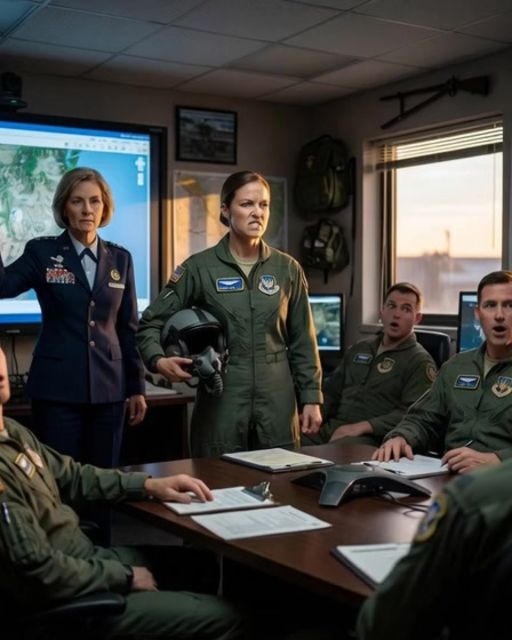
“Real pilots only,” a man named Kyle said as I stepped into the briefing room. He nudged a chair away with his boot so I couldn’t sit, and a ripple of laughter passed through the squadron. To them, I was a stranger in a slightly too-big flight suit, and that was enough to decide who I was. They figured I was a feel-good hire, a story for the cameras, not a pilot who could fly with them in the dark where it mattered.
I didn’t argue. I stood at the back with my hands clasped behind me, as quiet as the far wall. I had learned long ago that silence holds more power than a raised voice ever could.
General Vance came in and the noise vanished like someone had cut the cord. He wasn’t a man who wasted words. He tapped the screen behind him, pulling up a 3D image of a jagged, black-cut canyon. The map labeled it in stark letters: The Throat. It was as narrow and treacherous as its name suggested.
“We need a single-ship insertion,” Vance said, his voice a gravel road. “Low altitude. Sub-sonic. Night operations only.”
Kyle let out a quick breath, half laugh, half disbelief. “That’s a suicide run, Sir. With respect. The turbulence shreds wings in there. No one makes it through The Throat.”
“She did,” the General said, pointing not at the screen, but at me.
You could feel the air thin in that room, like a storm had passed through and taken the oxygen with it. The laughter died. Heads turned. Everything changed in a heartbeat.
“Gentlemen,” Vance continued, “you’re looking at Falcon One.”
Faces shifted as if a curtain had lifted. Falcon One was a pilot people whispered about. The one who flew a burning jet out of enemy territory and disappeared from every roster and registry five years ago. A myth, they thought. A name shared in late-night hangars where stories grow teeth.
Kyle’s bravado slid off his face, leaving worry and something like respect underneath. “I thought you were dead,” he said, his voice small now.
“I was supposed to be,” I answered, plain and simple.
The Mission That Changed Everything
General Vance slid a sealed black envelope across the table. “You’re the only one who knows that route, Captain. But that’s not the only reason we called you back.”
I picked up the envelope. “Is the target moving?”
His tone softened just enough to make the words land harder. “No. The target isn’t a what. It’s a who.”
I broke the seal and pulled out a single photo taken by a drone the day before. The world tilted under my feet. Staring up at me from the print was the face I had mourned five years ago. Thinner, worn by time, but unmistakable.
My brother. Mikhail.
Noise faded to a dull, distant ocean. They had told me he died. They folded a flag and handed it to me with the gravity of ceremony. We buried an empty casket with his favorite book tucked inside, because that was all we had left. All the years between then and now, I had carried the weight of that loss with a steady back and a quiet heart.
And now here he was, alive in a cold mountain pass halfway around the world.
“How?” I managed.
Vance’s eyes flicked to the photo, then to me. “He’s been a prisoner, kept for his mind. He’s gifted, Captain. They’ve used his skills to help with their advanced systems. He found a way to send out a coded signal. It was hidden in a power fluctuation pattern. A sequence only you would catch.”
I understood immediately. It was a childhood cipher we made up while lying on the grass, tracing Orion in the night sky. It was our quiet language, the one adults were never supposed to hear.
“He’s asking for you,” Vance added. “No one else.”
The room felt different now. The men who had laughed sat straighter, not out of fear, but because they finally understood I wasn’t part of a story. I was the one who could write the ending.
“Mission?” I asked, feeling my voice steady like a pilot’s hand on the throttle.
“Extraction. Land, load, and leave. Two minutes on the ground, no more. Patrols will swarm if you’re late.”
“And if I can’t reach him?”
“That is not an option, Captain Petrova.” His voice was iron, but there was the slightest human flicker in his eyes. He had said my name, the one I’d nearly forgotten under all the call signs and rumors. Anna Petrova. It landed like an anchor. It reminded me why I flew and who I flew for.
I slid the photo back and pushed it across the table. “I won’t need this. His face won’t fade.”
“I’ll need my bird,” I said.
Vance gave the smallest smile. “She’s been waiting.”
The Hangar and the Wingman
The walk to the hangar felt like stepping back into a life I thought I’d shed. The same faces who had mocked me now cleared a path without a word. Some looked curious, others solemn, a few guilty. Awe does that to people; it cleans their lenses.
Kyle jogged up beside me just outside the doors. “Captain… Captain Petrova.” He was almost out of breath, the bravado gone.
I turned and waited.
“I was wrong,” he stammered. “About… everything. I’m sorry.”
He was young and proud and still learning the difference between what you think you know and what the world teaches you in harder ways. But he meant it.
“Don’t be sorry,” I said gently. “Be ready. If this goes loud, I’ll need cover on the way out. I’ll be Falcon One. You’ll be Falcon Two.”
His eyes flashed with surprise and resolve. That call sign isn’t a trophy; it’s a trust.
“Yes, ma’am,” he said. “We’ll have your back.”
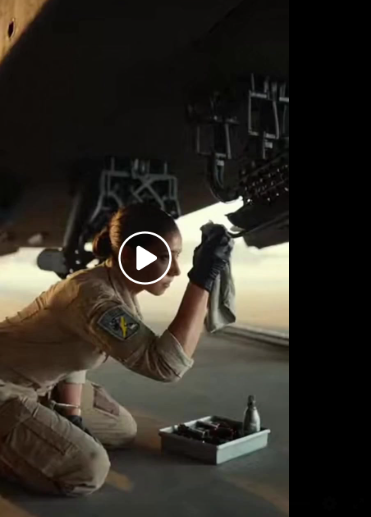
Inside the hangar, she waited for me. My jet—sleek, dark, and hungry for sky. A modified F-22, matte black, built to bend light and swallow it whole. Time had not laid a hand on her. The crew had kept her as sharp as a blade.
Marcus, my crew chief and the last face I saw before the worst flight of my life five years back, met me at the ladder. He had the look of a man who had seen too much and still showed up anyway.
“Good to see you, Falcon One,” he said, his voice thick with something deeper than pride.
“Good to be back, Marcus.” I clapped his shoulder. “She ready to go through the fire again?”
“Born for it,” he said, smiling in that weathered way. “Just like you.”
Into The Throat
An hour later, the canopy sealed over me with a sound I felt in my bones. The cockpit came alive in a glow of quiet lights and familiar hum. I moved through the preflight checklist the way a pianist moves through a favorite piece, muscle memory taking the lead.
“Falcon One to Tower, ready for departure.”
“Tower to Falcon One, cleared and Godspeed.”
I eased the throttle forward. The jet answered like an old friend who knows your stride. The Gs pressed me back, the runway blurred, and the night opened to take us in.
The flight to the border was uneventful, which is another way of saying it was perfect. I stayed low, a shadow hugging the earth, the sky ink-black and restful. My thoughts weren’t. Memories arrived uninvited, filling the quiet with pictures of Mikhail helping me fix a bike chain, laughing as grease smeared our hands, working problems at the kitchen table, leaving for an overseas conference with a promise to call as soon as he landed. All the simple ordinary moments that suddenly feel like treasures when you realize they could be the last ones you ever got.
“Falcon One, you’re approaching The Throat,” Vance said in my ear. “Radio silence from here.”
“Copy.”
I tipped the nose down. The canyon rose up like a living thing and grabbed hold of us. Wind shear slammed the fuselage. Red warnings flashed. The proximity alarm wailed in a steady shriek. None of that mattered. I flew by feel, by the way the air moved around metal and the way the canyon’s shape wrote its own language through the controls.
This was why they had brought me back, not because I had survived, but because I could do this—thread a needle in the dark while the earth tried to shake me clean from the sky.
The walls fell back at last, the canyon opening into a small, hard valley scratched into the mountains. A short strip of dirt waited where my HUD said it would. I set down light and quick. The engines whined to silence, leaving only my heartbeat and the thin cold air.
The Man I Came For
I popped the canopy and climbed out with a rifle resting where it needed to be. The cold cut straight through the flight suit. I saw him near a jag of rock, just where the intel had promised.
“Mikhail!” I called.
He turned. It was him, and for a second time slowed. He moved toward me. I ran to him. When I reached him, I wrapped him in my arms, and I forgot the cold and the clock and the rifle. He was too thin and too light, and still he felt like home.
“Anna,” he managed, his voice roughened by years. “I knew you would come.”
“They told me you were gone,” I said, pulling back to take in his face. “I buried you.”
“I almost was,” he said, and there were shadows in his eyes I didn’t recognize.
A low rumble slipped through the valley, the kind of sound you feel first. A vehicle. Maybe more than one.
“We have to go,” I said, taking his arm to lead him toward the jet. “Now.”
He resisted, gentle but firm. “Anna, wait.”
“We don’t have time.”
“I’m not going back,” he said. Each word was steady. He wasn’t confused. He wasn’t scared. He was certain.
I felt the heat drain from my face. “What are you talking about? I came to get you out.”
“You don’t understand,” he said, and the pain in his voice made it worse, not better. “The people here aren’t who you think. They aren’t the enemy.”
“They held you for five years,” I shot back. “They made you build weapons.”
“They saved me,” he said. “From our side. There was a cover-up. Friendly fire. They left us. These people found me. They kept me alive.”
My world tilted again. That story is too heavy to pick up quickly. “Saving you looks a lot like locking you up,” I said, trying to hold on to something solid.
“They needed my help,” he said. “I’m working on a defensive shield. If it works, no missile gets through. It could end the need for war. If the wrong hands get it, it becomes the perfect first-strike tool. They’ve been hiding it to keep it safe.”
Headlights spilled weak light into the far end of the valley. The rumble grew teeth. I felt the window closing around us.
“You’re being used,” I said, reaching for him again. “Vance sent me. Our people sent me.”
“Vance signed the op that got me captured,” he snapped, and there was the old steel in his voice, the stubborn brother I knew. “He’s part of the reason you almost died. I can’t let that technology go back to men like that.”
Doubt pricked at me like sleet. Vance had been too calm, too practiced. Pieces didn’t quite fit. But I did not have time to solve a puzzle on a runway of packed dirt while spotlights crawled up the rock.
“I’m not leaving you here again,” I said. “Once was enough. I’m getting you out.”
He fought me as I pulled him toward the cockpit. “Anna, please. Trust me.”
“No,” I said, shoving him into the second seat as the valley exploded with light. “Trust me.”
Ropes snaked down the cliffs. Boots hit rock. The transport truck barreled closer. Bullets sparked against the jet’s skin. I fired the engines and pushed the throttle as far as it would go. The dirt strip rushed under us, and we lifted off just as the truck fishtailed to a stop where we had been a second before.
Fire in the Rearview
“You’ve ruined everything,” Mikhail shouted over the roar. He pulled against his harness, every bit the man who hated being trapped.
“I’m saving your life,” I said, banking hard to slip back into The Throat from the far side. The jet shuddered under the strain, but she held like she always did.
My comms sparked to life. “Falcon One, Falcon Two. We’ve got fast movers on your six. Orders?” It was Kyle, solid and clear.
“Falcon Two, engage at will. Keep them off me.”
“Copy. Unleashing the hounds.”
Missiles flared behind us, bright needles in the dark. Explosions rolled in delayed thunder. Kyle and the squadron carved space open where I needed it. I kept my focus forward, hands light and firm, dancing the jet through the canyon’s twists as if I’d never stopped flying them in my sleep.
When we finally broke free of the stone jaws, the sky felt open again. Calm returned in a rush that almost made me dizzy. “Tail is clear,” Kyle said. “Welcome home, Falcon One.”
“Thank you, Falcon Two,” I said, and the gratitude came out raw. “I owe you.”
“Buy me a drink,” he said, and then he was gone from the line, back to work.
The rest of the flight stretched quiet and heavy. Mikhail slumped, his anger cooling into something that looked like doubt. I stayed on course, the horizon steady and true. I wanted to say a hundred things and none at all. I had saved my brother. I might have broken his belief. Both truths sat together, uneasy companions.
Answers on the Tarmac
We landed to an empty apron and a single figure waiting by himself. General Vance. He looked older than he had an hour before.
I helped Mikhail out of the cockpit and down the ladder. My legs felt steady, but inside everything was shifting again.
“Is it true?” I asked, careful and controlled. “Did you leave him for dead five years ago?”
Vance met my eyes, then looked at Mikhail. “Yes,” he said. The word fell hard. “We had bad intel. The mission was flawed from the start. When it went wrong, the decision was made to bury it. Everyone was listed as lost. You. Your brother’s team. It wasn’t justice. It was politics.”
“You let me mourn him,” I said. The accusation lived in the space between us like a live wire.
“I did,” he said, the regret clear but controlled. “If they knew your tie to him, they would have cut you loose. You would never have flown again. When we finally caught a whisper that he might still be alive, I needed someone who could make it through that canyon. I needed the one pilot I trusted to do the impossible. I needed his sister.”
He had kept me in the shadows for a day like this, turning a myth into a contingency plan. It made a cold sense I didn’t like.
“What about what he told me?” I asked, pressing for all of it. “About the group that held him. About the shield.”
“There’s truth in it,” Vance said. “They’re not our main adversary. They’re a splinter group. Idealists. In their hands, the shield is a promise. But the regime hunting them would turn it into the worst kind of weapon the moment they got it. Your brother’s brilliance makes both futures possible.”
He turned to Mikhail, speaking not as a general now, but as someone trying to hold two truths at once. “They used your hope. They showed you a narrow truth and hid the broader one. We can’t let that technology slip where it will be twisted.”
Mikhail looked at him, then at me. Certainty cracked and fell away in quiet pieces. “I don’t know what to believe,” he said.
“Believe her,” Vance said, nodding to me. “She flew into hell and back for you—twice.”
What Came After
The weeks that followed were a kind of careful untying. Mikhail was debriefed by people who knew how to ask hard questions gently. The story that emerged wasn’t a simple one. The people who had kept him weren’t monsters. They were believers who thought they were doing the right thing. But what he had built could upend the world depending on who held it, and no belief is strong enough to guarantee clean hands once power changes owners.
With his help, a special team moved to secure the technology. I watched from a command room, guiding where I could. Nobody fired a shot. Not one life was lost. That mattered. It meant there were still ways to walk through fire without burning everything down.
Kyle became my permanent wingman. The squadron that first laughed now watched and learned, not out of fear, but out of a quiet respect that didn’t need to be spoken. The call sign Falcon One stopped being a ghost story. It became a job again, and a responsibility.
Mikhail started to look like himself. He slept. He ate meals that didn’t come from a can. The hollows in his cheeks softened. The far-away stare eased. We talked late into the night sometimes, swapping pieces of the years we’d lost, setting them side by side like old family photos you finally find in a dusty box.
Home, In the Ways That Count
One evening, months later, we stood together on a low hill above the base. The sun dropped behind the horizon in long strokes of orange and purple until the sky looked painted. For a while, we didn’t say anything. The quiet was a companion, not an absence.
“For five years,” he said at last, “what kept me going was the memory of us on the lawn, looking at the stars. I told myself, if I could slip a message out that only you would see, you’d come. You’d understand.”
“I didn’t understand,” I said, honest and soft. “I just knew I couldn’t lose you again.”
He smiled then, the old smile I had carried like a lucky coin. “That was enough. You didn’t just pull me out of a valley. You brought me home.”
The truth of it settled over me like a warm coat. Titles come and go. Legends fade into the next story. What stays is simpler. It’s the steady hand that reaches for you in the dark and doesn’t let go, even when the ground shakes and the lights go out.
In the end, it wasn’t the call sign that mattered. It wasn’t the canyon or the jet or the mission patch. It wasn’t whether people laughed at the rookie or saluted Falcon One. It was the promise that began long before any of that, the one we made as children under a blanket of stars we didn’t yet know by name.
Never leave family behind. Not in a briefing room full of doubt. Not in a valley crowded with spotlights. Not in the hard weeks after, when the world is still untangling itself. You fly through the narrow places, you brave the downdrafts, you keep your eyes on the line of sky ahead, and you bring them home.
That is the work that lasts. That is the story worth telling. And that is how the laughter in one room became quiet, not because of fear, but because people saw that some missions begin far away from maps and orders. They begin in shared history, in trust hard-won, in a sister’s steady hands on a stick and throttle, guiding both of them out of the dark and into morning.