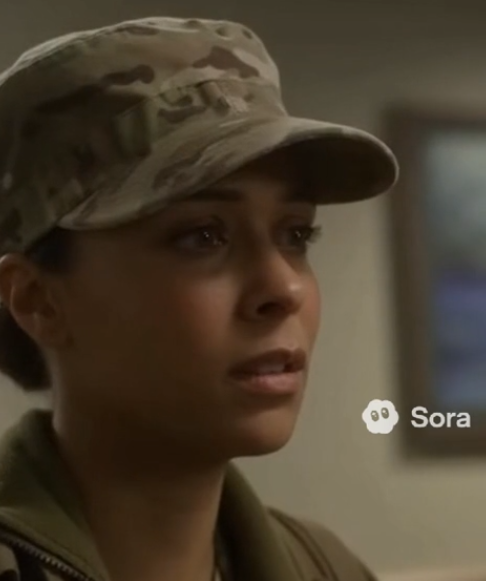
A Call Before Dawn
The call came before sunrise, the kind that makes your heart drop before your mind is fully awake. I was thousands of miles away, still in uniform, already at my post. My aunt’s voice, worn thin and raw, told me what I feared most: my grandfather had suffered a stroke, and it wasn’t looking good.
Within hours, clearance was granted. I boarded a military transport and landed in Dallas, my thoughts racing faster than the plane had flown. Every memory of my grandfather’s steady hands and kind eyes carried me through that long walk to the hospital doors. He’d raised me after I lost my parents. He’d been the one steady light when life went dark. If there was ever a time to be by someone’s side, this was it.
Walking Into Old Wounds
I stepped into the waiting room, the kind painted in quiet colors to make bad news feel softer. My aunt and uncles were already gathered. Their faces were tight. Their eyes didn’t warm. It was a scene I knew well—family by blood, cool by choice.
One uncle barely glanced up from his phone to make a cutting remark about finally showing up. My aunt, brisk and sharp, said it was family only, as if that door closed on me when I joined the military. I was used to the sting, but that morning it burned in a different way.
To them, I’d always been the orphan they’d tolerated and the niece who had disappeared into some distant war zone. I had missed birthdays and funerals. I had missed holidays. They took it as proof I didn’t care. They called me a charity case and, when they were truly unkind, said I wasn’t real family. They never asked what I did or why I was gone so much. They didn’t know I carried secrets heavier than any suitcase.
The Call That Changed the Room
I could have argued. I could have pleaded. Instead, I did what my training taught me—stay calm, act clearly, and take the step you know is right.
I pulled out my phone and placed a single call that had to pass through layers of clearance before anyone would answer. I stated my name, rank, and unit. I identified my status and requested emergency leave in place, along with standard flag-officer protection under a specific authorization. It was the kind of request you only make when your record can carry it—and when your reasons are beyond question.
Silence followed. Not from the person on the other end, but in the waiting room around me. The whispers stopped. Screens went dark. Faces lifted. I ended the call and took a slow breath.
Twenty minutes later, the elevator doors opened. A naval aide stepped out, accompanied by federal security. The aide greeted me by rank and name and asked how I wished to proceed. No one else spoke. You could feel the shock settle into the tile floor.
It wasn’t a moment I enjoyed. It was simply the truth stepping into the light. The niece they’d teased for playing soldier wasn’t playing at anything. I’d been serving. Quietly. Deeply. Unseen by them, seen by those who needed me.
By His Bedside
My grandfather lay still in ICU, machines humming like distant bees. I stood at the foot of the bed for a moment, steadying myself, then moved to his side. His hand felt cool, light as a leaf resting in my palm. I told him I was there. I told him I wouldn’t leave.
Sometimes, when love is strong, the heart recognizes a voice even when the mind can’t. His fingers twitched. It might have been a reflex. I took it as a promise.
Out in the hallway, I heard the rattle of voices. My aunt pressed the naval aide with tight, impatient questions. He answered with calm professionalism, explaining that my access was authorized at the highest level and that any attempt to obstruct it would be handled through proper channels. That ended the argument, at least for the afternoon.
What They Never Knew
I had chosen silence for years, not because I didn’t care, but because my work demanded it. My role wasn’t in front of cameras or parade lines. It was behind closed doors and in shadowed rooms, analyzing threats, tracking danger, and helping prevent nightmares from spilling into daylight. That kind of service asks for your time, your distance, and sometimes your presence at the very moments you’d rather be home.
I had missed candles on cakes and hands to hold at gravesides. Each absence became an accusation, and since I couldn’t defend myself without breaking the oath I signed, I let the words pass through me like wind through wire. It cut every time. I pretended it didn’t.
The Envelope
Late that day, a nurse came in with a small envelope. It had my name written on it in a shaky hand that still held its dignity. They’d found it tucked into my grandfather’s coat pocket. I opened it slowly. The paper smelled faintly like cedar and engine oil—the scent of his workshop.
His message was simple and clear. He had updated his will. The ranch, the house, and his savings would be left to me. Not because I needed it, he wrote, and certainly not out of pity. He said he had seen my sacrifices, even when others hadn’t, and he wanted to make sure I was protected. He said he was proud of me. He said it without fuss, the way he always did things—quiet, firm, and final.
I pressed the letter to my chest. I didn’t want his money. I wanted more time. But I also knew that letter would bring a storm as surely as thunder follows lightning.
The Reading
That evening, a lawyer arrived—a man with careful eyes and a cautious voice. He explained that my grandfather had instructed him to read the updated documents if he became incapacitated. My aunt and uncles filed into the room, their faces drawn tight with doubt.
The lawyer read the terms, steady and plain. The estate would transfer to me upon my grandfather’s passing or inability to manage it. The paperwork was signed, notarized, and recent. There was also a statement included, outlining my grandfather’s reasons in his own words. He had watched patterns repeat, he said. He had seen who reached out when it mattered and who reached for what they could take. He wanted peace, now and later.
The shock rippled over their faces as if someone had opened a window in winter. It turned quickly to anger. I stood still, letting the outrage pass. I wasn’t there to win an argument. I was there for a man who had earned the right to choose what happened to everything he had built.
They left in a flurry of muttered disbelief. The waiting room quieted again, and the hallway lights glowed warm against the linoleum, as if nothing had happened at all, as if entire worlds hadn’t shifted in the space of a few paragraphs read aloud.
Two Days Later
Two days is a lifetime in an ICU. I counted it in coffee cups and prayers you speak without words. And then, when the morning was still, my grandfather’s eyes opened.
He looked at me, not through me. His voice was small but steady. He asked if the commotion he had expected had arrived. I told him it had. He squeezed my hand, and the strength of his grip was worth more than anything listed in a will. He said I was the one who had always shown up, even when it didn’t look that way from the outside. I told him the truth—I had come for him, not for a penny more or less.
That afternoon, he rested with an ease I hadn’t seen since I was a kid. I sat by the window, watching the sun crawl over the hospital parking lot, and let myself breathe.
Back at the Ranch
Recovery is slow work. So is forgiveness. When he was strong enough, I got permission to take him home. The ranch had kept its bones—solid fence lines, a porch that creaked, a kitchen that always felt like Sunday morning. We brought the place back to life bit by bit. I oiled squeaky hinges, patched boards on the steps, and coaxed the old truck into rumbling the way he liked it. Flowers perked up along the walkway as if they knew a good man had returned.
Neighbors came by, one pie and two stories at a time. Mrs. Callahan from next door told me she had prayed for us every night while I was gone. She said my grandfather talked about me often, calling me his hero. I didn’t know where to put that word. It landed in my chest and sat there like a candle flickering to life.
We held a small gathering a week later for the veterans in the area. Some had served with my grandfather, others just wanted to shake his hand. People swapped stories over the grill and paper plates. A retired Marine pulled me aside and told me, quiet as a secret, that my grandfather had slipped money to widows during the Vietnam years. It had kept lights on in kitchens and food on tables. He’d never asked for thanks. He’d just taken off his hat, nodded, and moved on.
I looked over at my grandfather then, laughing gently with an old friend on the porch, and realized I was seeing the source of so many of my own choices. We had both spent long stretches doing the right thing out of the spotlight, not because it paid, but because it mattered.
When the Phone Lit Up
Time has a way of softening tempers when money’s involved, or at least of trying to. My uncle texted a short note asking if we could talk. A birthday card came in the mail from my aunt with no signature, as if the silence itself were safer than a name. I read the words and waited for any spark of anger. It didn’t come.
I wasn’t looking for a fight, and I wasn’t looking for an apology that would never arrive. I simply chose not to respond. I had learned that forgiveness doesn’t require you to put yourself back in harm’s way. You can set down the bitterness, wish people well from a distance, and go on with your life. That kind of peace is a practice, not a moment. Every day you choose it again.
What Service Really Means
People think service always looks like uniforms and medals. Sometimes it does. But often, service looks like quiet decisions you make when no one is watching. It looks like turning your back on applause so you can stand face-to-face with duty. It looks like all the moments you miss because you’re making sure someone else doesn’t lose everything.
For years I kept my head down, shouldered the weight, and accepted being misunderstood. Not because I enjoyed it, but because I believed the work mattered more than my comfort. If you’ve ever been there—if you’ve ever done the right thing and taken heat for it—you know how lonely it can feel. You also know how steady it makes your spine.
What He Gave Me That Money Never Could
As my grandfather’s strength returned, our evenings settled into a rhythm. We sat on the porch with the day cooling down around us, listening to crickets and the wind running its fingers through the trees. Sometimes we talked. Sometimes we didn’t. He told me pieces of his life I hadn’t heard before, and I told him what I could about mine, careful not to cross lines I had sworn to keep.
One night he said that being proud of someone is different from being impressed. He said impressed fades, but proud sticks around because it’s about character, not headlines. That sank deep. The next morning, I caught him humming while he fed the dog scraps from his plate, and I realized I’d gotten back something I thought I’d lost forever—a place to belong that didn’t ask me to shrink to fit.
Stepping Into a Quieter Future
There are still hospital checkups and days when his hands shake more than either of us like. There are forms to fill out and repairs I have to learn on the fly. But there’s also the sound of coffee percolating in the kitchen at dawn and his old boots by the door where they’ve always belonged. The ranch has become a place where my service and my home life meet in the middle. I can be both the soldier who keeps her word and the granddaughter who shows up with soup and a steady arm.
Every so often, news from my extended family drifts in through neighbors or an old acquaintance. It arrives thin and far away, like a radio station you can only half pick up. I wish them well. I keep the porch light on for the people who add peace to our lives. For the rest, I let the night keep its distance.
For Anyone Who’s Ever Felt Pushed Aside
If you’ve been told you aren’t real family, or you don’t count, or you haven’t done enough, I hope you’ll hear this the way I mean it. Your worth isn’t measured by people who never bothered to understand you. It isn’t measured by your attendance at every holiday or how many times you said the thing they wanted to hear. Sometimes, the deepest loyalty is quiet. Sometimes, the truest love is given just out of sight.
My path led me to a uniform and to rooms where I couldn’t speak about what I did. Yours might look completely different. Either way, the heart of it is the same—do the work you’re called to do, keep faith with the people who keep faith with you, and let the rest fall away.
When I walked into that hospital waiting room, I carried years of their doubts on my back. When I left, I didn’t need to prove a thing. The truth had already been living in me the whole time. One call didn’t make me someone. It simply allowed the person I already was to be seen.
Grandpa saw me long before anyone else did. In the end, that was enough. It was more than enough. It was the compass I needed to come home, set down the weight, and build a life that fits—steady, honest, and full of the kind of peace that doesn’t make a sound.