A Quiet Voice That Changed Everything
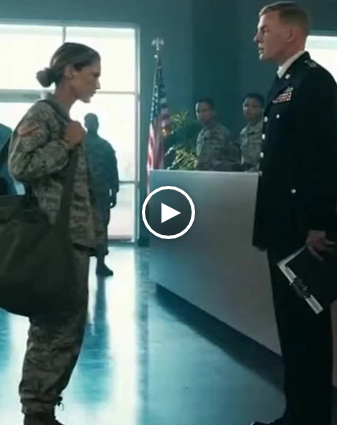
The Colonel did not raise his voice. He did not need to. He simply pointed to the office that the young lieutenant, Tyler, had been using for the past three months and spoke as if he were reading a simple fact off a page. His calm words cut deeper than a shout ever could. The room fell silent as dust hung in the sunlight.
He asked Tyler if he knew why I was standing there. Tyler’s hands trembled. He shook his head. I could see fear doing its slow work across his face. The Colonel gave him a small, dangerous smile and told him the truth in a whisper that carried to every corner of the room. The desk Tyler was sitting at was mine. It had always been mine.
The stillness that followed had a weight to it. People stopped moving. The hum of distant air conditioning became the only sound. I stood there, dusty from the road, still breathing, still present. Some had heard the rumors. A few had read the sealed reports. Black Ridge. The inferno. The bodies that were counted and the ones that were never found. And then there was me—someone they thought had been lost for good, now standing in the doorway like a shadow made flesh.
The Desk I Did Not Want
Tyler tried to apologize, his words tripping over one another, but the Colonel stopped him with a raised hand. There was no anger in the Colonel’s voice, only a lesson learned long ago. He told Tyler that history matters, especially in our line of work. And then he turned toward me and softened in a way that only those who have carried heavy burdens can. He called me by rank: Captain West. He said they had never stopped hoping. He asked for a simple status report.
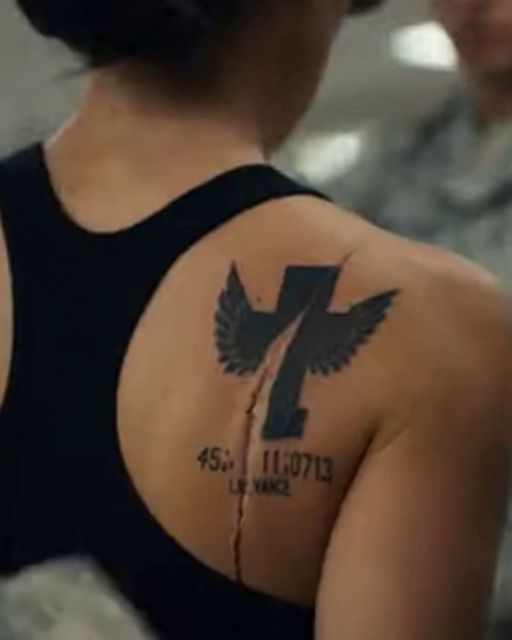
Recovered, I told him. Mostly. It was the truth. My body had knit itself back together in time. My mind had followed more slowly. The tattoo on my arm, a winged cross, had outlasted every scar. I was here because hope alone never finishes the job. I had come back for a reason that went far beyond a chair and a door with my name on it.
The Colonel gestured at the office as if he were returning something important to its rightful place. It is yours if you want it, he said. But a polished cherry-wood desk felt like a museum piece to me now—too clean, too smooth, too still. I had not returned to sit down.
I told him I was here for a file. Operation Silent Prophet. I asked where it was.
The File That Never Officially Existed
The Colonel’s face tightened, and the room did the same. People who did not know the name looked confused. People who did went very quiet. The Colonel said he had expected this moment. He turned and disappeared into his office, then returned with a black briefcase. He placed it on the table as gently as one would place a live charge. He said that what was inside had never existed. And that I had not come back to retrieve it.
I told him I understood. He keyed in a long code and leaned to the biometric scanner. The locks clicked open. Inside were photos, maps, short and long reports, a record of movements and money, some in the open, most buried deep. And there was a patch.
It was the wrong patch.
Blood-red thread. Careful embroidery. Not ours. Not anyone’s you could brief a Senate committee about. This was private. Dirty. Old ghosts with new tricks. I lifted it out and felt a familiar cold creep along my spine. The Colonel watched my face. He did not have to ask.
They are still active, I said quietly. The Colonel looked down at the table and admitted they had thought the group was long gone, buried for good. I told him they were never gone. Only quiet. Only patient. He asked if I believed they were coming back. I said the thing I knew was true. They had never left.
I closed the case. I told him I would take it from here. Tyler tried to protest. He stammered about procedure and proper lines of authority. I told him, with more edge than I meant to, that I was the protocol. It came out harder than I intended, but it also came out honest. Some things you cannot wait for permission to do. Some things you must pick up and carry yourself.
Back Into The Light
The Arizona sun greeted me like an old challenge. The desert did not care who I had been or what I had survived. The grit in the wind still tasted the same. I slid the case under a torn tarp in the back of an old Jeep and sat in the driver’s seat for a long breath. My hands held the wheel like it was the only solid thing left in the world.
Could I do this again? Could I start from almost nothing—no official support, no cleared channels, no certainty—and move back into the shadows? The answer came the way answers often do: not with thunder, but with a steady, quiet yes. The mark on my arm was not simply a reminder of pain. It was a promise I had made when everything was on fire and there was no one left to make it but me.
The engine coughed, then settled into a dependable rumble. I headed east along a cracked ribbon of road that ran through silent land and endless sky.
An Old Partner With A Long Memory
Three hours later, I reached a gas station the map did not acknowledge. The place had the look of somewhere time had tried to forget—a flickering sign, a stubborn soda machine, a wind that pushed sand across the concrete in thin sheets. He was already there. An older man in a weathered cowboy hat with a toothpick he might have been working on since the late nineties. Jack Morris. Former sniper. My recon partner in the days when we went where we were told and asked no questions until it was over. He had vanished after the mission that went wrong. I had a better idea now why.
Jack did not get up. He did not need to. He just said he had thought I was dead. I told him I heard that a lot. We sat like that for a minute, letting the cicadas make the noise for us. Then I opened the briefcase and showed him the patch.
He spat out his toothpick and called the group by a name I had heard in whispers. The Harrow. Mercenaries. Men who worked off the books, owned by whoever could pay them and protect them. He said the red on the patch was new. That meant someone had come along with more money or more reach—or both—and told them to change their skin.
I told him I planned to find out who it was. He said I would not be doing it alone. He knew me well enough to say it as a statement, not a question. He tossed a duffel into the back of the Jeep with a kind of relief I recognized. Some people never truly retire. They wait.
What We Kept, Just In Case
We drove at an easy pace, watching fences pass by in long, slow lines. Night fell, and with it came the quiet that older airstrips seem to keep for themselves. The storage unit was not on any list you could request, and that was on purpose. Inside were tools we had told ourselves we would never need again. Life has a way of testing that sort of promise.
Jack found an old crate and an old friend inside it: a suppressed M4 that fit his hands as if no time had passed at all. He asked whether I remembered how to shoot. I told him my method had not changed—point and click, do not overthink. We smiled at the small things that still felt simple.
Then I saw it. A thin folder tucked beneath a fan of paper maps. My name on the outside in block letters. It was a dossier—the kind built quietly by someone who believed they would need it one day. Satellite photos with dates. Times. One shot from two weeks ago that struck me hard enough that I forgot to breathe for a second. A man stepping down from a helicopter onto open earth, surrounded by a handful of unmarked guards.
Commander Strayhorn. I spoke his name out loud so that I could accept it. The man we were told had been lost in the explosion. The man many of us trusted because we had been taught to. He was not dead. He had not even tried very hard to hide.
The photo included coordinates. Not far. A depot that did not belong to any official list. We did not waste words. We geared up and drove.
A Quiet Watch And An Ugly Truth
From the rocks above the site, night vision painted the world in shades of ghostly green. Men moved with competent calm. Too smooth to be a simple militia. Too sure to be amateurs. Their sleeves were clean of any patches, but one man rolled up his arm and, for a second, I saw the ink. A winged cross. Our symbol, in a time I did not like to revisit. Only now it was red.
He stole our symbol, I said. Jack corrected me with a steady voice. He had not stolen it. He had spoiled it. Corrupted it. Taken something that had once meant duty and turned it into a banner for hire.
A truck rolled in. Strayhorn stepped out like a man surveying land he owned. He had that same smile, the one that said he was always a step ahead because he had already written the rules of the game. My stomach went tight. I remembered the cost of trusting him. Faces. Names. Too many of both now etched into memory.
Inside The Compound
We moved low and quiet, and old muscle memory returned like a song you think you have forgotten until the first notes tell you everything you need to know. We took down two guards on the outer edge with minimal noise and slipped through a cut in the wire. Inside, the air smelled like oil, metal, and something stale that warned of closed places kept too neat to be honest.
Crates marked with a biohazard symbol sat under hard lights. I felt a heaviness I could not pass off as nerves. This was not just weapons. This was a plan to use fear the way some people use fire—fast, hot, and without caring who else gets burned. Biowarfare prepared in a place that had no sign and no record. Jack looked at the crates with a way of seeing that also felt like remembering. He said we would end it here. I told him that was the only plan that made sense.
We moved through the building at a steady pace, planting small squares of C4 at the right points, the kind of work you do in a whisper even when no one is near. We do not teach this part of the job in a comfortable classroom. We learn it after the quiet has told us where the weak spots are.
Then came the sound of footsteps. Many. Coming toward us. Voices followed—confident, alert, unhurried. We slid behind a stack of crates that rose higher than our heads. There was nowhere else to go. We steadied our breathing and readied our rifles. The door opened, and the world narrowed to a single line.
Face To Face
Strayhorn walked in alone as if we had made an appointment. He looked straight at me and smiled like a teacher greeting a former student. He said he had wondered how long it would take me to find him. I stepped out from behind the crates and asked him, plain and simple, why. Why any of it.
He told me peace makes money, but fear makes more. He said it as if he were explaining taxes to a neighbor. I told him he had killed our team. He laughed without heat and told me we had been tools, useful until the moment we were not. I lifted my rifle and settled it on his chest. He did not flinch. He said I could shoot him if I liked, but it would not change what was already moving.
I pulled the trigger. The rifle clicked and did nothing.
Jack’s voice came through my earpiece, urgent and low. They had jammed us. He told me to fall back. Before I could move, every light snapped on at once. The room filled with men and rifles and commands barked in short orders. Strayhorn stepped sideways and out of the line of fire with the casual air of a man leaving through a door he had walked through a hundred times.
He told me I would not die today. He said I was too valuable. I lifted my hands, buying seconds with calm. Jack’s voice sounded one more time. Plan B. Now.
Fire In The Desert Night
I dropped flat, and a heartbeat later a blast rolled through the building from the north wing. Jack had set extra charges and kept his thumb on a manual trigger. Fire, smoke, and alarm swept into the room in a single wave. I rolled behind a crate, pulled a sidearm off a fallen guard, and returned fire in controlled bursts. Jack came through the haze with blood on his sleeve and a grin that said he was angry and alive and useful, all at once. He told me to remind him never to retire again.
We moved without hurry and without mercy. This was not a moment for speeches. We put down what stood in our way and aimed for the path we had already mapped in our heads. When the flames reached the biohazard crates, the heat and the pressure did the rest. By the time the fire learned how to eat a building, we were out the back and into the open night, running low toward the Jeep.
The blast that finished the depot filled the horizon with a second sunrise. The ground shook beneath our feet, and the air carried the taste of metal and burned dust. We did not slow until the world behind us had become a smear of heat in the rearview.
The Road Ahead
Dawn found us at another gas station on the edge of nowhere. Jack tore a strip from his shirt and tied it around his arm, as calm as if he were fixing a loose strap. I stared at the side mirror and then at the tattoo on my arm—the winged cross I had hated for what it reminded me of and loved for what it still asked of me.
Maybe it was not a curse after all. Maybe it was a call. A reminder that some vows last beyond the fire, beyond the lost names and the missing paperwork. Some promises live in the steady beat of the people who keep them.
Jack asked if I thought Strayhorn had made it out. I told him it did not matter in this moment. If he had, then he was running. That put him in a different kind of trouble. He grinned. He asked me what came next.
I looked down the long road and felt the weight of a clear answer settle in my chest. We went after the rest of The Harrow. We took apart what they had built and we made sure nothing like it took its place. We did it not because we were hungry for payback, but because quiet, ordinary mornings at small gas stations mean something, and people out there deserve to keep them.
We drove on with the sun at our backs and the case locked again beneath the tarp, lighter now by a few pounds and heavier by what it meant. The mark on my arm was not there to scare me or to shame me. It was there to warn those who thought they could buy the world and sell it back to us at a higher price. The warning was simple, and it had always been true.
You can bury us. But we do not stay buried. You can silence us. But we do not stay quiet. And when we come back, we come back with a clear purpose and a steady hand.
The wheels hummed against the road. The day warmed around us. Ahead lay work that would be hard and careful and long. That was fine. We knew the path. We had walked it before. We would walk it again, this time until the last red-threaded patch had burned down to nothing and the people who hid behind it had learned they could not outlast us.
That is what the uniform means. Not cloth. Not ceremony. Not a nameplate on a clean desk. It means getting up, going out, and holding the line. It means doing the job when the paperwork says it never happened. And it means returning, when you must, to finish what others could not or would not face.
We kept driving. The horizon did what it always does—it stayed out ahead, asking us to follow. We did, with the sun higher now and the road smoothing out under the tires. There was no drumroll to it, no grand speech. Just the steady push of purpose and the knowledge that some fights are worth the miles.
This time, we were not coming back for a desk. We were coming back for the truth. For the people who were used up and left behind. For the teams who had no graves and the names that had no proper place to rest. And for the simple promise the desert teaches over and over again: you endure by moving forward.
Ahead, a new stretch of open land waited for us. Behind, a plume of smoke thinned into the morning sky. Between the two, we chose our next turn and then the next, certain of only this: we would not stop until The Harrow was finished, and the red in their emblem meant nothing again.