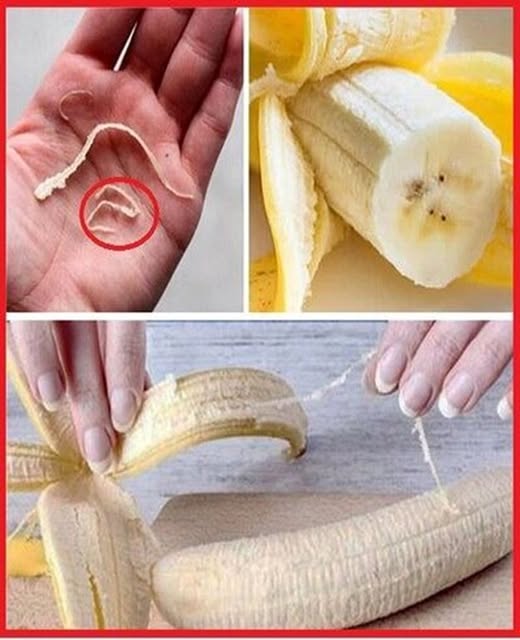
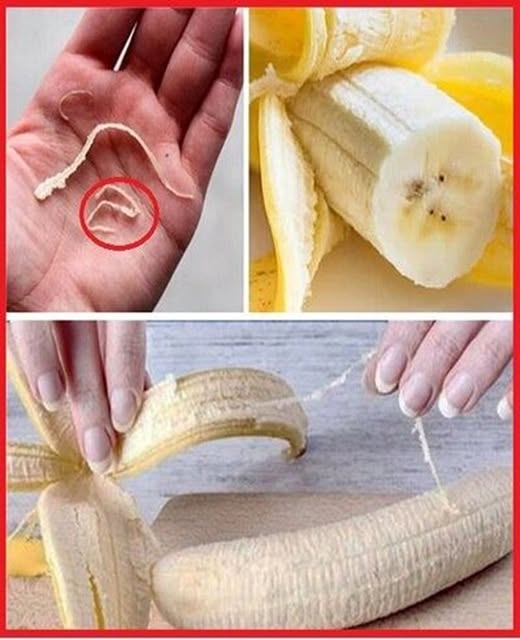
Ever noticed those little strings that cling stubbornly to your banana when you peel it? They run vertically along the fruit and can seem annoying when you’re eager to take a bite. But did you know these strings, called phloem bundles, actually play an important role in the life of a banana — and they’re completely safe (and even healthy) to eat?
What Are Banana Strings?
Those thin, fibrous strands are part of the banana’s vascular system. Known scientifically as phloem bundles, they transport nutrients up and down the fruit as it grows on the plant. They’re essentially like the banana’s “veins,” ensuring it gets the sugars, water, and minerals it needs to ripen properly.
Why Are They There?
✅ Nutrient Distribution – Phloem bundles deliver nutrients throughout the banana, helping it develop sweetness and maintain even ripening.
✅ Structural Support – These strings give the banana a bit of internal structure, preventing it from becoming too mushy as it grows.
Are They Safe to Eat?
Absolutely! Phloem bundles are made of dietary fiber and contain similar nutrients to the rest of the banana — like potassium, vitamin B6, and vitamin C. While they might feel a bit firmer or stringier than the smooth flesh of the fruit, they’re perfectly edible and contribute to the banana’s fiber content.
Should You Remove Them?
It’s completely up to you! Some people prefer peeling them off for a smoother texture, especially if adding bananas to smoothies or baking. Others eat them along with the fruit, which can boost your fiber intake.
How to Remove Them More Easily:
- Gently pinch and lift each string starting near the stem end as you peel the banana.
- Use the edge of the peel to swipe them away in one smooth motion.
So next time you see those tiny strings, remember: they’re not just harmless — they’re part of what makes bananas the nutritious, energy-boosting snack we love!
Ask ChatGPT