The Old Soldier Sat In The Back Row, Uniform Pressed, Medals Pinned, Tears Streaming Down His Face – But Nobody There Knew Who He Really Was
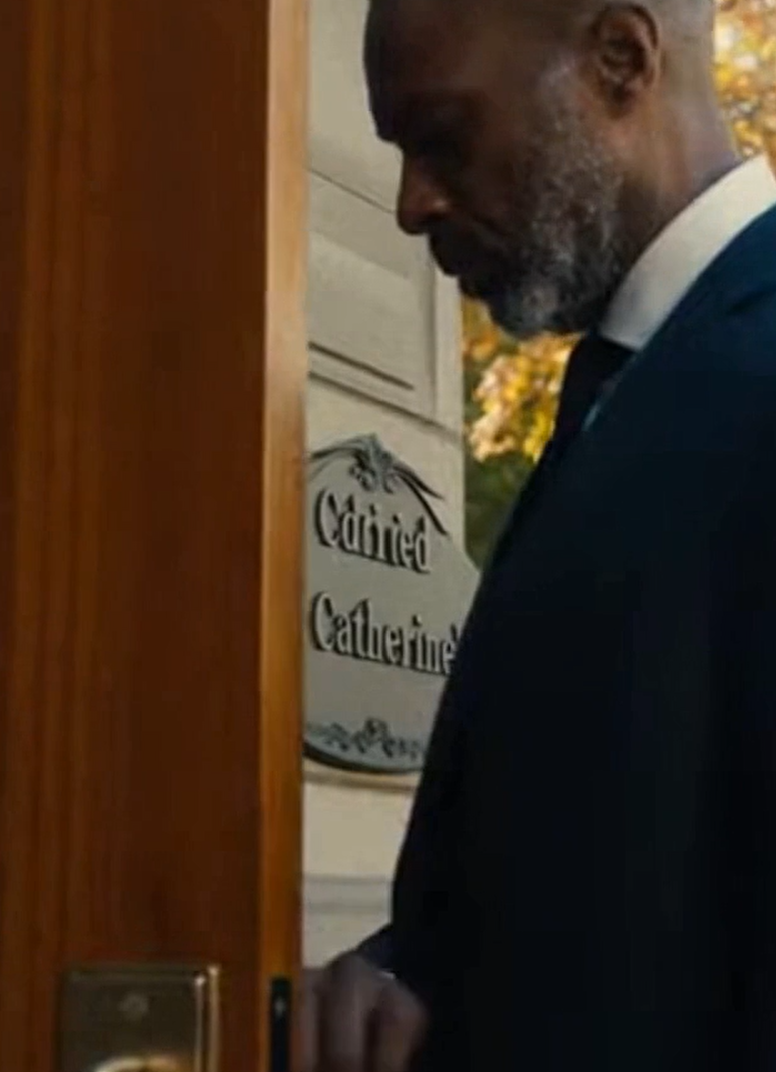
Marcus hadn’t been to a funeral in thirty-seven years. He stood outside St. Catherine’s for ten minutes, hand on the door handle, before he went in. The September sun felt too warm on his shoulders. Everything felt wrong.
He chose a pew in the back, away from the family clustered in front. There had to be two hundred people there. He recognized some from the news coverage – the mayor, three city council members, the police commissioner. They were all here because of what happened on I-95 three days ago.
Officer David Chen had pulled a family from a burning car, then went back for an elderly woman trapped in the passenger seat. He didn’t make it out.
Marcus watched the closed casket. Twenty-nine years old. Twenty-eight of those years knowing David Chen. The other year of his life – Marcus had missed entirely.
The lieutenant gave the eulogy. “Officer Chen embodied the finest values of our department. His courage, his selflessness, his unwavering commitment to protecting others.” The commissioner nodded solemnly. The camera crew in the back panned across grieving faces.
They didn’t mention anything about the scholarship. They didn’t mention the mentor who’d changed everything.
David’s mother stood, clutching tissues, and spoke about her son’s childhood. “He always wanted to help people,” she said, her voice breaking. “Even as a little boy, he knew. I don’t know where that came from. We weren’t like that. But David… David was different.”
Marcus felt his throat tighten.
The service ended. People filed past the casket – handshakes, hugs, the practiced condolences of a community honoring one of its own. Marcus stayed seated. He watched David’s widow accept folded flags and embraces. He watched the mayor shake the commissioner’s hand on the steps. He watched the news crews pack up their equipment.
A young woman approached his pew. David’s sister, Sarah. He recognized her from the photos David kept in his locker.
“Thank you for coming,” she said quietly, touching his arm. “It means a lot that his friends are here.”
Marcus looked up at her. He opened his mouth. Closed it.
“I’m sorry,” he finally said. “I shouldn’t have come. I… I didn’t belong here.”
Sarah’s forehead creased. “What do you mean? How did you know David?”
He stood slowly. His knees ached. His chest felt hollow.
“He was a good man,” Marcus said. “Better than most. Better than…” He trailed off, unable to finish the sentence he’d been rehearsing for twenty-eight years.
“Sir, I’m sorry, but—who are you?”
Marcus looked at her directly for the first time. Her eyes were red, confused, searching his face for recognition that would never come.
“My name is Marcus Webb. I’m… I was David’s Big Brother. His mentor. From the program.” His voice had gone hoarse. “When he was twelve. Before you knew him. Before any of this.”
Sarah’s face went very still.
“He came into my office at the community center,” Marcus continued, the words tumbling out now. “He was angry then. Small. Had a cut over his eye that he wouldn’t explain. I was just a volunteer, just some old veteran with time on his hands.” He paused. “He asked me why I cared. Why I showed up. And I didn’t have a good answer then.”
“I don’t understand,” Sarah whispered. “David never mentioned—”
“Because I left,” Marcus said. “When he turned thirteen, I transferred out of state. Bad circumstances. My fault. And David… he moved on. Got himself straight. Found people who actually stayed.” He gestured vaguely at the church. “People like your family. The police force. Everyone who was supposed to be here for him.”
Sarah reached for his hand. “But you were. You were there first. Mom told me once that David had a mentor when he was young. He never talked about it, but she said it changed him. She said an older man showed him what discipline looked like. What showing up meant.”
Marcus felt something crack inside his chest.
“I read about him in the paper,” Sarah continued, tears spilling fresh. “When he graduated police academy. When he got his first commendation. And I wondered if you ever saw it. If you knew what he became.”
“I did see it,” Marcus said quietly. “Every article. Every promotion. I kept them all in a box at home.”
Sarah’s grip on his hand tightened. “He kept your address. Did you know that? Mom found it in his wallet just now. A business card from 1998. Your name was written on the back with a date: the day you met him.”
Marcus looked down at their joined hands—hers smooth and young, his weathered and shaking.
“He wrote that date?” Marcus asked.
“Three times,” Sarah said. “Over and over, like he was trying to remember exactly when everything changed.”
The funeral director appeared in the doorway, waiting to close the chapel. The autumn light was fading outside, the September sun sinking faster than it should.
Marcus thought about all the years between that day in 1998 and this one. He thought about the twelve-year-old boy with the cut eye. He thought about David choosing to run toward fire instead of away from it, choosing to save people he didn’t know, choosing to be the kind of man who showed up.
“I was afraid,” Marcus said, and his voice broke completely, “that I hadn’t mattered. That I’d left too soon. That I’d wasted what little time we had.”
Sarah pulled him into an embrace. “He kept your address for thirty-one years, sir. Don’t you understand? You mattered. You were the first person who taught him that he mattered.”
The funeral director gently closed the chapel doors.
They stood in the empty hall for a moment, the scent of lilies hanging heavy in the air. Marcus felt like a ghost, caught between a past he couldn’t fix and a present he had no right to.
“We’re going back to my mother’s house,” Sarah said, her voice soft but firm. “You should come.”
Marcus shook his head instantly. “No, I couldn’t. I’d be intruding.”
“Intruding?” She pulled back, looking at him with an intensity that reminded him so much of David. “You have a box of his newspaper clippings. He had your business card in his wallet for three decades. I don’t think that counts as intruding.”
He had a thousand reasons to say no. Each one felt like a heavy stone in his gut.
But her eyes held him there. “Please,” she said. “For him. For us. I think… I think we need to understand.”
The drive was quiet. Marcus sat in the passenger seat of Sarah’s car, watching the familiar streets of his old neighborhood blur past. He hadn’t been in this part of town since he’d packed his single suitcase all those years ago.
Every corner held a memory he’d tried to bury. There was the park where he’d taught David to throw a baseball, the ball always too big for the boy’s small, determined hands. There was the library where they’d spent rainy afternoons, David devouring books about heroes and adventurers.
“He loved this neighborhood,” Sarah said, as if reading his mind. “Never wanted to leave.”
“It’s a good place,” Marcus mumbled, his gaze fixed on a crack in the windshield.
Sarah parked in front of a modest, two-story house with a carefully tended garden. People were spilling out onto the lawn, holding paper plates and speaking in hushed tones. The sight of it made Marcus’s heart pound. These were David’s people. His real life.
“Just stay with me,” Sarah said, sensing his hesitation. She took his arm, her touch a small anchor in a sea of his own making.
Inside, the house was full of life, a strange contrast to the reason they were all there. The air smelled of coffee and baked ham. A photo montage played on a television in the corner, showing David at every stage: a gap-toothed kid, a lanky teenager, a proud groom, a tired but smiling new father.
Marcus saw the whole life he’d missed in a thirty-second loop. The guilt was a physical thing, a pressure in his chest that made it hard to breathe.
David’s mother, Eleanor, stood near the kitchen, talking to a police officer. She looked older, worn down by a grief so profound it seemed to have settled into her bones. Her eyes, the same warm brown as David’s, were empty.
Sarah led him over. “Mom,” she said gently. “There’s someone I want you to meet.”
Eleanor turned, her gaze falling on Marcus. She offered a weak, polite smile that didn’t reach her eyes.
“This is Marcus Webb,” Sarah said. “He… he was David’s mentor. From the Big Brothers program.”
The name hung in the air. Eleanor’s expression flickered. It wasn’t recognition, not exactly. It was something deeper, a shadow of a memory from a time she had probably tried to forget.
“Mr. Webb,” she said, her voice a little distant. “Thank you for coming.”
“I’m so sorry for your loss,” Marcus said. The words felt like pebbles in his mouth, small and useless.
“You knew him when he was just a boy,” Eleanor stated, more than asked.
“For about a year,” Marcus confirmed, his eyes darting to the floor. “He was a great kid.”
“He was a handful,” Eleanor corrected, a faint, sad smile touching her lips. “Angry. Always getting into fights at school.” Her eyes met his. “Then he met you. And for a little while, the anger went away.”
The unspoken question was there: So why did you leave?
Before he could find an answer, a young woman holding a small boy’s hand walked over. She had the same exhausted, hollowed-out look as Eleanor. David’s widow, Grace. The little boy, no more than four, hid behind her legs, clutching a small toy police car.
“Grace, this is Marcus Webb,” Sarah said, making the introduction. “He was an old friend of David’s.”
Grace nodded, her eyes red-rimmed. “Thank you for being here.” The little boy peeked out, his dark eyes wide and curious. He looked exactly like David in the first photo of the slideshow.
Seeing him was like a punch to the gut. This was David’s son. A boy who would grow up with only stories of his heroic father.
Marcus couldn’t speak. He just knelt down slowly, his old knees protesting. “That’s a nice car,” he said, his voice thick.
The boy, whose name he learned was Sam, held it out. “My Daddy gave it to me.”
“He had good taste,” Marcus said, managing a small smile.
He spent the next hour in a corner, nursing a cup of coffee he never drank. He watched the family he could have known. He listened to stories he had no part in. He was an island, and the tide of their shared grief washed around him, leaving him untouched and utterly alone.
Eventually, Sarah found him again. “I’m driving you home,” she said. It wasn’t a question.
The ride to his small, tidy apartment was just as quiet as the one before. He lived on the other side of the city, in a place with no memories.
“Wait here,” he told her when she pulled up to the curb. He went inside and came back a minute later with a dusty cardboard box. He placed it on her lap.
“You said you wondered if I saw,” he said. “I saw.”
She opened the lid. Inside, neatly organized, were dozens of newspaper clippings. ‘Local Teen Wins Scholarship.’ ‘Police Academy Welcomes New Class.’ ‘Officer Chen Honored for Bravery.’ Below them were report cards he must have gotten from the school, and a few faded photographs of a twelve-year-old David, grinning proudly next to a model rocket they had built together.
Sarah traced the edge of a photograph with her finger. “He was so happy.”
“That was a good day,” Marcus said, lost in the memory.
Then she saw them. Tucked in a manila envelope at the bottom of the box was a stack of letters. They were sealed, stamped, and addressed to David at his mother’s house. But they had never been sent. The postmark dates on the stamps were from years ago.
“What are these?” she asked, her voice barely a whisper.
Marcus looked away, toward the dark windows of his apartment building. “I wrote to him,” he admitted, the shame burning his cheeks. “Every year. On his birthday. I just… I never felt I had the right to send them. After leaving like I did.”
Sarah carefully picked up the top one. “Dear David,” she read from the outside. “Happy fourteenth birthday, son.”
Her breath hitched. She looked from the unsent letter to the stoic, broken man sitting beside her. This wasn’t a man who had forgotten. This was a man who had been punishing himself for almost thirty years.
“My mother needs to see these,” she said. “We’re going back.”
When they returned, the crowd had thinned. Eleanor was sitting alone on the porch swing, a crocheted blanket over her lap despite the mild evening.
Sarah sat beside her, placing the box on the cushion between them. “Mom, look.”
Eleanor peered into the box. She saw the articles, the photos. Her hand trembled as she picked up a picture of David holding a fishing rod, Marcus’s arm around his shoulder.
“I remember that day,” she said softly. “He came home and he wouldn’t stop talking about it. He said you taught him how to be patient.” She looked up at Marcus, who stood awkwardly on the steps. “He said you were teaching him how to be a man.”
Her gaze was heavy with an old, deep sorrow. “And then you were gone. No phone call. No letter. He waited for you, you know. Every Saturday for three months, he sat on these steps, thinking you would come back.”
The words were like knives. Marcus finally crumbled. “I know,” he said, his voice cracking. “And I’m so sorry. The circumstances… it was my fault. I was a mess back then. Fresh out of the service, carrying things I didn’t know how to put down. I thought I was doing more harm than good. I thought he’d be better off without me.”
It was the story he had told himself for so long that he almost believed it was the whole truth. But it wasn’t.
Eleanor shook her head slowly, her eyes distant. “It wasn’t just you, Mr. Webb. It was my husband.”
Marcus froze. He hadn’t heard David’s father mentioned once all day.
“David’s father… he was not a good man,” Eleanor said, her voice dropping so low it was almost lost to the chirping of the crickets. “He was a loud, angry drunk. He saw the change in David. He saw you.”
She looked directly at Marcus now, and he saw a flicker of the fear she must have lived with for years. “He saw David looking up to another man, and he couldn’t stand it. He was jealous. He was the one who gave David that cut over his eye.”
The memory hit Marcus like a freight train. A dark garage. The reek of whiskey. A large, furious man backing him against a wall.
“My husband told me he ‘ran you off’,” Eleanor continued. “He said you were no good and that he told you to stay away from his son. I never knew what he said to you. I was too afraid to ask. But I knew it was his doing.”
“He told me,” Marcus said, the words feeling like they were being pulled from his throat, “that if I ever came near David again, he would make sure the boy regretted it for the rest of his life. He said he would hurt him in ways a stranger never could.”
He looked at Eleanor, his own eyes pleading for her to understand. “I didn’t leave David. I left his father. I thought it was the only way to keep him safe.”
Sarah was crying silently beside her mother. The pieces of their family’s past were rearranging themselves, forming a new, tragic, but complete picture. Marcus wasn’t the man who had abandoned David. He was the man who had sacrificed his own connection to protect him.
Eleanor reached out and took his hand. Her touch was frail but firm. “You gave him one year of safety, Mr. Webb. One year of knowing what a good man looked like. And that one year was enough to build a lifetime on.”
Later that night, long after everyone else had gone, Sarah found a box in David’s old closet. It was his ‘important stuff’ box. Inside, beneath his wedding album and Sam’s first pair of shoes, was a folded, worn piece of paper. It was his application essay for the police academy.
She brought it downstairs and, under the dim light of a single lamp, read it aloud.
“Courage is not about being fearless,” David had written. “It’s about showing up when you’re scared. I learned this when I was twelve from an old soldier. He never talked about the medals on his chest, but he showed me what they meant. He showed me that one person could stand between a kid and the darkness. He was only in my life for a year, but he taught me that it’s not how long you stay that matters. It’s that you were there at all. I want to be the kind of man who shows up.”
Marcus sat in an armchair, listening to the words of the boy he thought he had failed. The tears he’d shed at the funeral were born of guilt and regret. The tears that fell now were of a different kind altogether. They were tears of relief. Of release.
In the quiet of the grieving house, a new kind of family was being formed. Over the next few months, Marcus became a fixture. He helped Eleanor in her garden. He sat with Grace when the silence was too much.
Most importantly, he showed up for Sam. He took him to the park and taught him how to throw a baseball. He sat with him on the library floor, reading books about heroes and adventurers. One afternoon, as they worked on a model airplane at the kitchen table, Sam looked up at him with David’s eyes.
“Are you my grandpa?” he asked.
Marcus felt his heart, which had been a hollow thing for so long, feel suddenly and completely full.
“Yes,” he said, his voice steady for the first time in a long time. “I am.”
Our impact is not always measured in years. Sometimes, the most profound influence we have on another person’s life happens in a single season, a single conversation, or a single act of showing up. We may never see the seeds we plant grow, but their roots can anchor a life, creating a strength that ripples out long after we are gone. It is a quiet legacy, but it is the one that matters most.