“You can’t park here, old man! Are you blind?” The sharp words interrupted the tranquil evening. The speaker, a young man dressed in a sharp suit, was no older than thirty, pointing accusingly at an elderly gentleman leaning on a cane.
We were all gathered outside a posh steakhouse, waiting for the valet service. The young man, Spencer, was annoyed to see the old veteran, Walter, occupying the premium parking spot with a small “Reserved” sign.
Incensed, Spencer turned to the manager who appeared quickly. “Tow this car at once. This is my company’s reserved spot, and this person needs to leave,” he demanded. He proudly added, “I am the CEO of Sterling Corp.”
The manager barely acknowledged him. Instead, she approached Walter with deep respect before turning to the agitated CEO.
“Sir, you’re correct, it is a reserved spot for Sterling Corp’s guest,” her tone suddenly frigid. “It’s permanently reserved by your company’s directive.”
Spencer’s confident demeanor wavered.
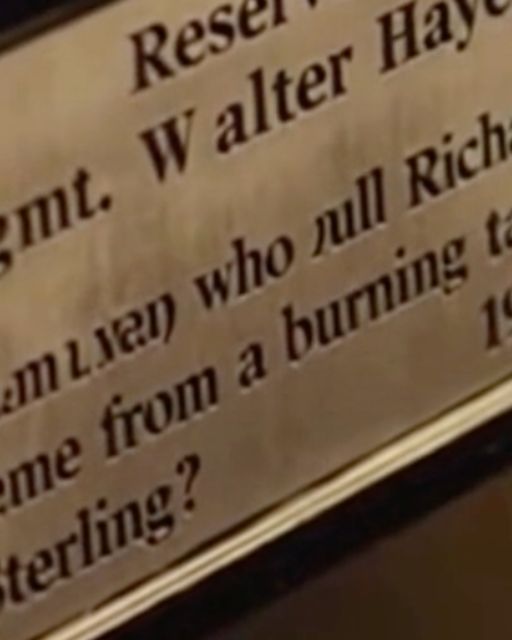
The manager pointed to the brass plaque below the sign, one everyone overlooked. “Reserved for Walter Hayes. By the standing order of Arthur Sterling.”
Spencer’s complexion turned ghostly. Stumbling forward, he read the plaque. Arthur Sterling, his grandfather, had arranged this.

The noise of city traffic faded into a distant drone. All Spencer could hear was his heartbeat echoing in his ears.
Looking back and forth from the plaque to Walter, Spencer noticed the worn military jacket, the dignified posture, and the history etched into Walter’s face, stories Spencer had never cared to know.
Walter looked at him—not with anger but with deep, weary sadness. Silence spoke volumes more than words could.
The manager, Sarah, broke the silence. “Mr. Hayes, your table is ready.”
Offering her arm, Walter took it graciously. “Thank you, Sarah. The air is getting brisk.”

As they moved past Spencer without a glance, the valet absorbed himself in his tasks, pretending not to notice.
A wave of humiliation swept over Spencer. He realized his mistake wasn’t just an error; it was reprehensible. He had almost vandalized his own family’s legacy, unaware.
He reminisced about Arthur, his grandfather. The founder of Sterling Corp, a true giant Spencer strove to emulate or even surpass all his life.
Arthur’s war stories had always seemed mere tales—dinner table anecdotes from a different era, unrelated to the harsh realities of today’s business world.
Yet here stood a testament to those stories, alive before him, embodied in steadfast dignity.
His instinct was to flee in his luxurious car, leaving behind his shame on the sidewalk.

But something restrained him. The inner voice, reminiscent of his grandfather, murmured that running was for the cowardly.
Adjusting his tie—a reflex since his internship days—he inhaled deeply and entered the restaurant.
The hostess, impeccably composed, masked her disdain well. “Do you have a reservation, sir?”
“I… I’m with Mr. Hayes and Mr. Sterling,” he managed, though the words felt foreign.
She merely nodded, guiding him to a secluded booth overlooking the cityscape.
There was Walter. Opposite him, diminutive and frailer than ever, sat Arthur Sterling with an oxygen tube for breath.
Spencer’s heart sank. Absorbed in a takeover bid, he hadn’t seen Arthur in a month and hadn’t noticed his decline.
Arthur, raising his eyes, displayed immense quiet disappointment, far worse than anger.
“Spencer,” he whispered, frail yet clear. “You’ve met my friend Walter.”
Spencer clung awkwardly to the table, his expensive suit feeling like a fraud. “Grandfather. Mr. Hayes. I…”
Apologies felt trivial. “I’m sorry” was minuscule in the enormity of his error.
Walter gestured to the vacant seat. “Join us. This steak is unrivaled, on your grandfather’s word.”
Spencer slipped into the booth, awkward.

The unspoken words hung heavy until Arthur spoke once more. “Sarah, the manager, called me as the situation erupted. Her father was in our platoon.”
Another link. Yet another thread in the intricate tapestry Spencer had ignored.
“She asked if security intervention was required,” Arthur continued. “I said no. I wanted you to see the sign, hoping you’d understand.”
Spencer’s shame deepened—a deliberate test he obliviously failed.
“I didn’t know,” Spencer admitted, his voice a mere whisper.
“That’s just it, isn’t it?” Arthur’s sigh carried the weight of decades. “You’re so consumed with building a future ignored the foundation supporting you.”
His gaze fled to Walter, warmth replacing harshness. “Walter is that foundation, Spencer. Of me. Our business. Everything you stand for.”
Spencer turned to the old soldier. Imagining him as a young, uniformed fighter in wars felt difficult.
“I don’t grasp it,” he confessed.
Walter sipped his ice water, meeting Spencer’s gaze.
“It’s no epic tale,” Walter reassured, voice gentle. “We were kids. Twenty-somethings, feeling invincible in hostile territories.

“We crossed enemy grounds when a mine blasted beneath our tank. The world was aflame, shrouded in chaos.”
Walter’s eyes clouded over, traveling back over fifty years.
“I was thrown clear. Disoriented, ears ringing, yet largely unscathed. The tank, a burning mass. Crew lost…”
“But Arthur, pinned inside, yelled for us to save ourselves. Always selfless.”

“I returned,” Walter stated. An automatic decision—brotherhood prevailed.
“In the inferno, metal blazed, branding my hands. But urgency numbed pain.”
“Into the tank, extinguished by smoke. I reached Arthur, his leg ensnared. Fire threatened the munitions.”
He hesitated, breathing deeply.
“Seconds left,” Walter murmured. “I leveraged fiercely until something snapped—Arthur’s leg—freeing him.”
“Hoisting him over my shoulder, unconscious by then, I fled as explosions ensued.”
“We were safe, hidden behind rocks as ammunition erupted—a pyre in the night.”
Dropping his gaze to his scarred hands, Walter resumed, “I remained until medics came. That’s all there was.”
“That’s it?” Spencer reiterated, choking on emotion. “You saved his life.”
“Anyone would have,” Walter insisted, conviction unwavering.
A singular tear traced Arthur’s cheek, quivering lips parting.
“He saved my life, Spencer. My future. This family. Your existence.”
The enormity crushed Spencer. His legacy, his success, his identity—all owed to the humble man he so wrongly judged.
“Afterward,” confessed Arthur, “broken leg, haunted sleep. I barely functioned.”
“Yet Walter anchored me. Visited daily, lifted my spirits, denied despair’s victory.”
“When released from the hospital, destitute, Walter’s job offer rescued me.”
“His couch was my home for a year, his savings my business venture seed—two thousand dollars.”
Stunned, Spencer witnessed Walter, who stirred sugar into his iced tea, unassuming as ever.
Not just a war hero, but the co-pioneer of Spencer’s legacy.
“Repayment was easy,” Arthur reflected. “But such loyalty defies monetary worth.”
“I owed him tenfold, but honor transcends currency.”
“His comfort remained paramount—a pension, this reservation. Tokens for a titan.”

Spencer faced Walter, eyes earnest. “Mr. Hayes—Walter. Profound apologies for my atrocious actions.”
Walter assessed him, then smiled gently.
“Like your grandfather—a tempest in youth.”
He patted Spencer’s arm. “No harm done. Apology received. Let’s attend to this delightful steak.”
The forgiveness nearly brought Spencer to his knees.
Dinner proceeded, the atmosphere changed. Spencer forsook business talk for genuine curiosity.
He absorbed Walter’s tales of love, family, pastimes.
A newfound respect blossomed—a lesson on life’s true value.
As night waned, Arthur disclosed one final truth.
“This meal, Walter and I shared for decades. But tonight is our last.”
Spencer paled. “Why?”
“Weeks left,” Arthur confessed. “Prepared for peace. One final meal with a cherished friend.”
Another discovery; Spencer, the arrogant youth, had almost marred a sacred farewell.

The journey home was silent introspection. Spencer sat with thoughts replaying.
Arthur’s peaceful passing came three weeks later.
At the funeral, Spencer chose to stand beside Walter, forsaking business peers.

Walter acknowledged, “Good man. Unparalleled.”
“Indeed,” whispered Spencer, new resolve coursing through.
A purpose extending beyond corporate ambitions now drove him.
The third Thursday of every month saw Spencer, driving a modest SUV, not a luxury car, to a humble house.
He approached, knocking.
Walter opened the door, surprised. “Spencer, why here?”
“It’s the third Thursday, Walter,” Spencer smiled warmly. “We have a standing engagement.”
Walter was moved, nodding as tears of emotion filled his eyes.
Spencer helped him get into the car, heading to the steakhouse.

The valet greeted them, a familiar face now wide-eyed.
“Good evening, Mr. Sterling,” he said.
Spencer handed him the keys. “Park it anywhere. We’re taking the front spot.”
They walked to the reservation: a spot marked by a plaque now further inscribed.
“The standing order of Arthur Sterling continued by his grandson. Forever.”
Seated in their booth once more, the bonds of friendship and family intertwined timeless traditions.

Such became a cherished custom. Spencer initiated a veterans support foundation in Arthur and Walter’s names, upholding new values of loyalty and gratitude over profits.
The arrogance was replaced by humility. He stood as CEO, yet also as Arthur Sterling’s grandson and Walter Hayes’s friend.
True richness isn’t measured in wealth or position, but is engraved in loyalty, honor, and remembrance. It’s forged by venerating the giants whose shoulders we stand upon, never forgetting their legacy.