
A quiet job, a loud night
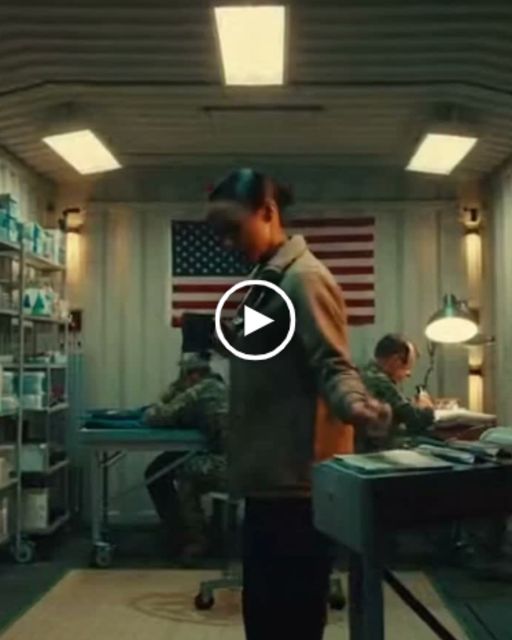
Most days, I was simply the person who kept the coffee fresh and the bandages where they belonged. Around our forward base, they called me the container nurse, because my little clinic sat inside a shipping container dressed up as a medical tent. It suited me. I liked quiet work and steady hands, the kind that helped calm a patient and stitched up a cut.
The SEALs on the base treated me kindly, if a little gently. They figured I was a civilian who’d found her way to the edges of their world. Chief Evans, who led the team, liked to tease. Yesterday, with a grin, he told me that if trouble ever started, I should find a desk and stay under it. I smiled, poured his coffee, and said nothing about the life I had once lived and walked away from.
That evening, the radios went silent without warning. One second I could hear the easy chatter of routine calls; the next, nothing but dead air. Then the perimeter alarm howled across the base, and everyone within earshot felt the change. This was no drill.
Todd, my young medical assistant, jumped at the sudden noise. He dropped a metal tray, and the tools rattled across the floor, a metallic thunder that made the moment feel even more real. Outside our thin canvas wall, heavy footsteps pounded the dirt. The shadows moving across the tent were wrong—too smooth, too quiet, and carrying the wrong kind of weapons.
Chief Evans pushed through the back entrance, one shoulder slick with blood, his rifle jammed and useless. “Under the desk, Brooke!” he shouted, fear and urgency mixing in his voice.
I did not hide.
I stepped forward, took the rifle out of his hands, cleared the malfunction without thinking, and shouldered the weapon with the kind of posture you never forget once you’ve learned it. My aim rested squarely on the tent’s entrance. The entire medical tent fell silent except for the alarm outside.
Evans stopped cold, not because of my stance or the weapon, but because my rolled sleeve had slid back enough to uncover the faded ink I usually hid beneath my watch. He stared at it, and the change in his face was immediate.
“The Unit,” he murmured, the words gravelly and stunned.
The design was simple and brutal: a dagger through a skull, edged in lightning. It belonged to a life I had tried to bury under uniforms and new names. Before I could process the past grasping at me, the tent flap tore open.
Two figures in matte-black gear rushed in, silent and fast. They wore no insignia. They weren’t here to posture. They were here to finish something. My hesitation would have cost people their lives, so I didn’t hesitate. I fired—twice, quick and steady. One fell. The second tried to level his weapon, but my follow-up shot ended that thought.
In the ringing quiet that followed, Todd fought to breathe, and Evans just stared. The easy bravado he wore like a comfortable jacket was gone. In its place was a man piecing together a puzzle he didn’t know sat right beside him.
“Pressure bandage and a trauma kit,” I said calmly. The room heard a tone from me they’d never heard before. Evans moved automatically, and I kept my eyes and rifle on the doorway. The sounds beyond the tent were tight and controlled. Whoever was out there, they were disciplined. This wasn’t a noisy, unfocused skirmish. This was a professional strike.
“Not insurgents,” Evans muttered as I packed the wound in his shoulder, fast and firm. “Too clean.”
“Their gear is first-rate,” I answered. I didn’t need to explain how I knew. He glanced at my arm again and didn’t ask.
From the corner, Todd whispered, “What’s happening? Who are they?”
“Hunters,” I said, checking a sidearm from one of the men on the floor and handing Evans an extra magazine. “We’re just between them and what they want.”
The shift from quiet to command
I peered through a slit in the canvas and saw movement with purpose. They weren’t wasting time on random targets. They were avoiding certain areas, cutting around others, all for something specific. Not destruction—retrieval.
“We have to move,” I told Evans. “This tent is a paper shield. The comms bunker is our only shot.”
“It’s across the tarmac,” he said, jaw tight. “Open ground.”
“Staying here is a sure end,” I replied. “Crossing gives us a chance.”
He looked at me for a long breath and nodded. In that moment the balance between us settled into its true form. I was no longer just the quiet nurse who made good coffee.
“What’s the plan, Sergeant?” he asked at last.
“Stay breathing,” I said. “Todd, with me. Do exactly as I say.”
We slipped out the back into thick smoke and a wind that smelled like cordite and diesel. We crawled through pools of shadow, staying low between stacked crates and idling vehicles. The motions came back to me like an old song: foot placement, breath control, where to look, what to ignore.
Evans moved beside me, the pain in his shoulder barely showing. He was a SEAL through and through. Our hand signals were an easy language for both of us.
We found Marcus, one of Evans’ men, pinned behind a concrete barrier. He was bleeding from the leg but steady, scanning, returning fire in controlled bursts. “Chief! Who are these guys?” he shouted.
“Ask her,” Evans said, tipping his head toward me.
Marcus looked at the way I held the rifle, the way I scanned arcs and angles. His face changed, too.
“They’re carving out the command and medical spots,” I said. “They’re moving us like chess pieces. This is a snatch-and-grab for a high-value target.”
He frowned. There were no VIPs on our base. It was a staging point, not a headquarters. But the pattern outside didn’t lie.
Gunfire chewed the concrete above us, dusting us with grit. “They’re trying to flank,” Marcus yelled.
“Not flank,” I answered, eyes on their angles. “Herd.”
I tracked their pressure points and realized where they were pushing us—away from weapons storage, away from barracks, and toward a smaller cluster of admin buildings. My gaze slid toward Todd. He was folded in on himself behind sandbags, shaking hard and staring at something only he could see.
I crawled to him and kept my voice gentle. “Todd, look at me. What haven’t you told us?”
His eyes filled. “Nothing. I swear.”
“You know why they’re here,” I said, steady. “It’s not random. It’s you.”
He broke—one sharp sob, then words tumbled out. “I saw something I shouldn’t have.”
Evans and Marcus listened while still guarding our angle. Todd spoke in short bursts, trying to get air between each sentence. “I was helping Major Davenport with files. His personal laptop lit up with a call—I thought it was his wife. It wasn’t. The caller didn’t use a name. Just a symbol, like a bird of prey.”
He swallowed. “They talked about a shipment. Not guns. Chemicals. Enough to poison a city’s water back home. They even said a date and named a city. It was all there.”
Pieces locked into place. The idea was simple and evil: make an attack look foreign, stoke fear, start a conflict, and someone in the shadows makes money. Todd kept going. “The man saw me in the screen’s reflection. He saw my face.”
I felt a chill I didn’t show. Major Davenport had been pulled from base two days earlier for an ‘emergency leave.’ That wasn’t a coincidence. Whoever ran this had fingers in our house.
“I told the base commander,” Todd said. “He said they’d protect me and moved me to medical, that it was low-profile. I thought I was safe.”
It had put him squarely in the open. Maybe the commander was fooled. Maybe he wasn’t.
“There’s your high-value target,” Marcus said quietly.
“The kid is the mission,” Evans agreed.
A plan made from fuel and light
The pressure around us tightened. Their net was closing. “New plan,” I said. “Skip the comms bunker—they’ll expect that. We head for the maintenance bay.”
“The motor pool?” Evans asked. “Thin walls, big doors.”
“And fuel, oil, and pressurized tanks,” I said. “All the ingredients for a welcome they won’t forget.”
We punched out, laying down careful, controlled fire and moving in a formation with Todd at the center. The maintenance bay’s metal door groaned as we shoved it shut behind us. Grease, rubber, and diesel hung in the air. The dark was deep until our flashlights lit cutout shapes of tools and parts.
“Barricade,” I said. We scraped tool chests and tires to block the entry. Then I turned to Todd. “Show me your hands.” He lifted them, still trembling. I checked his fingers and smiled. “You’re a tech kid. Good. I need this radio to talk on a channel they’re not watching. Civilian if you have to. Can you crack it?”
For the first time all night, he straightened. “I can try.” His fingers flew, careful and fast.
Outside, boots thudded and an amplified voice rolled through the metal walls, calm and cold. “You are surrounded. Hand over the boy and walk away alive. Two minutes.”
“Empty talk,” Evans said under his breath. “They’ll finish us anyway.”
“True,” I said. “But we can use those two minutes.”
I pointed Marcus to the acetylene tanks and hoses and had him snake the lines to the front. I sent Evans for oil and brake fluid. If they came in confident and sighted, I wanted them blind and slipping before they knew which way was forward.
We worked quickly. Oil glistened across the concrete like a black pond. The hoses lay just so. I sent the three of them down into the inspection pit that ran like a trench beneath the center bay. “Flashlights,” I said, and angled them up toward the main door to create a wall of glare no night-vision could handle.
The charge at the door blew. The hinges screamed and failed. Silhouettes rushed the opening—and stopped short, stunned by the harsh light. They were sighted for darkness. Now they were blind.
“Now,” I called.
Evans didn’t aim at a person. He aimed at hardware. One shot into the tank valve. The acetylene vented and ignited into a roaring spear of flame that filled the doorway. The first wave faltered and fell back, while the second wave slipped and crashed on the oil-slick floor. From the shelter of the pit, we returned fire in clean arcs.
It ended quickly. Thirty seconds, maybe. Enough time to hear the difference when the assault’s rhythm breaks—less push, more confusion. But I knew the voice on the megaphone had not been in that first rush. Whoever planned this would be smart enough to stand back.
A metallic scrape from above sliced through the quiet. Roof access. I handed my rifle to Evans. “Hold this door if they try again. I’m going up.”
Before anyone could argue, I climbed the heavy shelving, shoved the roof hatch, and slipped into the cold night air. The flat gravel roof stretched dark and wide. Near the edge stood a tall, lean figure. He’d set down a long rifle. He held a pistol with relaxed confidence, not pointed at me. He watched.
His presence rang a bell from a long-ago briefing room. The bird of prey insignia. Kestrel.
“The quiet nurse,” he said in a measured voice. “Your file said you washed out. It did not say you were one of them.” He nodded toward my arm.
“Files miss things,” I said.
“They do,” he agreed with a small smile. “This job has grown expensive. Still, a professional closes the loop. The boy cannot be allowed to live.”
“Not happening,” I answered.
He took a slow step. “We do the hard things so others can sleep. That boy’s fear versus the stability my employers build? You understand the scale.”
“There’s a line between duty and harm,” I said. “You stepped over it and kept going.”
His smile thinned. Then he moved. Fast. His pistol came up. I already had my sight line set—not on him, but on the HVAC unit behind him. One shot snapped a coolant line. White vapor hissed into a thick cloud, erasing edges and depth. His shot cracked wide.
I drove forward through the freezing mist. We collided, a quick, hard tangle of hands, elbows, weight, and leverage. He was very good. I had been very good for a very long time. I used his motion against him and stripped the pistol away. A pivot, a shove, and he pinwheeled toward the roof’s edge. For a heartbeat he balanced on the brink, eyes surprised by gravity’s sure hand.
He didn’t recover. He went over. The night swallowed the sound quickly. I stood, breathing in the cold, and listened to the base find its noise again—the distant chop of incoming support, the first wail of sirens, the clatter of boots that meant friendly help.
When the dust settles
The hours after were all forms and facts. People in crisp uniforms asked measured questions and wrote in neat, tiny script. Commander Wallace, our base CO, was escorted away in restraints. Major Davenport didn’t make it far; they picked him up at an airport in Germany. Todd’s memory, and the notes he had managed to save, unraveled a plot that reached straight into a private military company’s upper floors. A planned chemical attack was stopped before it started, and a city’s water supply remained what it should always be: clean and ordinary.
In a week, crews patched holes and fixed doors. We honored the fallen. The base felt almost normal again—familiar hammering in the distance, the slow grind of vehicles, and morning air that smelled like dust and coffee instead of smoke.
Evans found me by the coffee machine, the same place where we’d laughed and traded small talk so many mornings. This time there were no jokes. He handed me a mug and looked at the floor a beat. “I’m sorry, Brooke,” he said. “We treated you like glass. We had a legend next to us and didn’t know it.”
“I’m not a legend,” I said softly. “I’m a nurse who got tired of noise. I wanted quiet.”
He nodded, a small, respectful smile easing into place. “Thank you for getting loud when it mattered.”
That afternoon, Todd came by the tent to say goodbye. He was heading home under protection until the trials. He didn’t look like the boy who had shaken in the corner that night. His shoulders were straighter, his eyes clearer. He carried himself like someone who had learned that courage is a habit, not a feeling.
“They told me what you were,” he said. “A hero.”
“I’m a nurse,” I said gently. “That’s all I want to be.”
He shook his head, not in argument but in quiet certainty. “You showed me that being brave doesn’t mean you aren’t scared. It means you choose what to do while you are.” He hugged me quickly, with honest gratitude, and then he was gone.
The quiet we choose to protect
I stood outside and watched his transport fade into the pale afternoon sky. I had come to this base to disappear into routine, to pour coffee, stock shelves, and measure my days by heartbeats and bandage counts. I learned something truer instead. You don’t erase the person you were by changing a job title or two. The skills that kept me alive and the scars I carried weren’t curses. They were tools and reminders. They belonged to me as surely as my steady hands and my need for a calm room.
The SEALs hadn’t misjudged me as much as I had misjudged myself. I had told myself that quiet meant small. That staying unseen meant I had to pretend I had never been larger than my shadow. That night showed me a better lesson. Quiet isn’t the absence of strength. It is what strength protects.
Not every battle wears a uniform. Sometimes the bravest act is to make a safe space where people can heal or tell the truth. Sometimes it’s to keep a young man alive long enough to speak. Sometimes it’s to pour a cup of coffee, smile, and be ready for what the day brings.
I’m still the nurse who keeps track of bandages and reminds tough men to breathe while I stitch up their scrapes. I still like the gentle rhythms of a clinic morning. And if the world insists on sending loudness to my door, I’ll meet it with whatever the moment requires—steady hands, a clear voice, and the sure knowledge that quiet is worth guarding.
That’s the life I chose. It’s not a retreat. It’s a promise. And I intend to keep it.



