
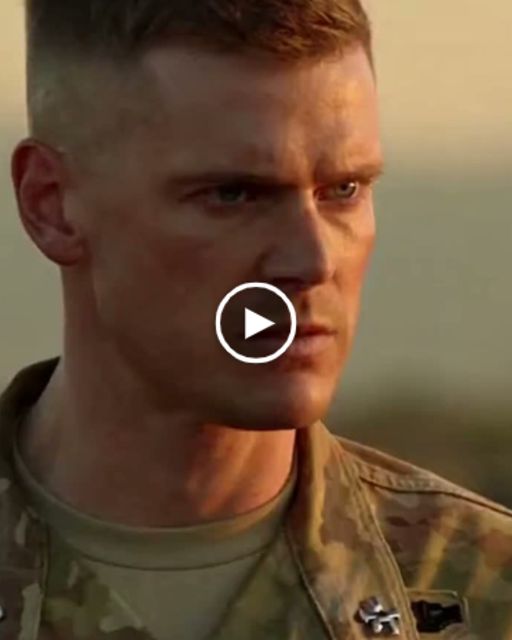
A Hot Morning, A Hard Lesson
I first read Specialist Tara as pride wrapped in a pressed uniform. For five long weeks of training in punishing heat, she never seemed to waver. While the rest of the platoon gulped at the air and let sweat soak through their shirts, she stood perfectly still, jacket buttoned all the way to her chin as if the sun did not touch her. She never broke formation. She never bent.
Sergeant Brenda did not buy it. She leaned toward me during morning formation, her voice a taut whisper. “She’s cheating,” she said. “Has to be. Probably wearing an unauthorized cooling vest. Make her take it off. Let everyone see.” Her eyes had that sharp glitter that shows up when competition turns into cruelty.
Maybe I should have ignored the whisper and kept the focus on training. But part of me wanted to crack Tara’s perfect shell, to press until something gave, to see if there was a human truth under all that control. I walked the line of three hundred soldiers, boots biting down into the dry ground, and stopped so close to Tara that I could see a delicate pulse at her throat.
“Remove your jacket, Specialist,” I said, voice crisp enough to cut.
For the first time since she set foot in our unit, something shifted in her. Fear flashed in her eyes, real and raw. “Sir, with respect,” she answered, steady but tight, “I am requesting to keep my uniform secured.”
“Take it off right now, or you’re packing your bags,” I said. My tone left no room for a middle road.
Silence rolled over the parade ground. Tara’s fingers shook as she undid each button. The jacket slid from her shoulders and fell to the dirt with a heavy, final sound.
I expected contraband. Some slick, cooling device. Proof that she had gamed the system and all but smiled behind it. Instead, heat fell out of the sky and my blood went cold. Sergeant Brenda stumbled back, the color draining from her face. Around us, I felt the platoon’s attention sharpen, curiosity curling into shock.
Covering the left side of Tara’s neck and spreading over her collarbone was not a vest. It was a burn. Not a patchwork of random scars, but a perfect, terrible brand. I knew the shape at once: the swirling cross and two small angel wings—the emblem of St. Augustine Children’s Hospital. Not the new building. The old wing. The one that burned to the ground fifteen years ago.
I saw the reactions move along the row of soldiers like a wind changing direction. Curious faces fell into silence, then softened into pity, then into the respectful stillness that comes only when people understand they are in the presence of a story bigger than themselves. It struck me all at once why Tara had fought to keep that jacket closed. She was not hiding a cheat. She was hiding a past that had too often been dragged into the daylight and turned into gossip or sympathy.
My command voice shrank down to a whisper. “Formation, dismissed.”
Boots scuffed, and the platoon dispersed, whispers trailing off like smoke. Only Brenda, Tara, and I stayed put on the empty ground.
Tara’s arms folded across her chest as if she could pull the uniform back up with willpower alone. She stared at her boots, face set, not a flicker of emotion allowed to show.
I turned to Brenda. “Back to the barracks,” I said, even and quiet. “We’ll talk later.” She nodded, a swallow of pride and shame at war in her expression, and left at a near jog.
I bent to pick up the jacket. When I held it out, Tara flinched before she could stop herself. I softened my voice. “Put this on, Specialist.”
She slipped the heavy fabric around her shoulders with hands that trembled in spite of her effort to be steady. The buttons clicked back into place, and the past went from public to private again.
“My office. Five minutes.” I walked away with the image of that scar flaming in my mind: the old hospital’s emblem stamped into skin by heat and chaos. I knew that mark because it belonged to a place I still visited in my sleep.
A Shared Fire No One Could See
Fifteen years earlier, I had been a teenage boy who made a terrible decision in the casual, thoughtless way teenagers do. My little sister, Sarah, was at St. Augustine for a routine procedure. I promised my mother I would stay. Then I slipped out to meet friends, just for an hour.
That was the hour when something sparked in that old building. By the time I got back, flames hammered the windows and thick smoke poured up the stairwells. The old wing looked like a mouth full of screaming orange light. I never found Sarah in the confusion. I never said goodbye. The guilt of that hour settled in my gut and never really left.
I waited at my desk, the institutional metal cold under my palms. Tara knocked and stepped in, standing at attention without looking up. Tension gathered in her posture like a coiled spring.
“At ease,” I said. She shifted a fraction, just enough to obey. The air between us held too many unsaid things.
“I can explain my waiver, sir,” she began, voice careful, practiced. “Medical cleared it. The scar tissue doesn’t limit function. It’s cosmetic only.”
I lifted a hand, stopping her words. “I’m not asking about the paperwork, Tara.” Using her name broke formality on purpose. Her chin lifted, and her eyes met mine. Fear was there. So was a sorrow that looked older than she was.
“The fire,” I said. “You were there.”
She nodded. The mask of composure held, but I could see the strain of it. “I was a patient,” she said. “Pediatric oncology.”
Sarah’s room had been just one floor below. The reports later said the flames rose fast through the elevator shafts and vents. The upper levels were trapped by heat and smoke. Those sterile facts never carried the weight of this room, this conversation.
“Why keep it covered?” I asked, though after what I’d just seen on the parade ground, I already knew.
Her mouth curved into a small, sad smile that did not reach her eyes. “You saw what happens when people notice,” she said. “They stop seeing me. They see what happened to me. The pity, the whispers, the special treatment I never asked for. I want to be measured by what I can do. Not by a mark I didn’t choose. Buttoning up lets me be Specialist Tara and not ‘that poor girl from the fire.’”
It clicked into place. She wasn’t cheating the heat. She was enduring it because keeping that jacket closed gave her a measure of control over her own story. What had looked like arrogance was simply armor.
The Man With the Bulldog Patch
“My sister was in that fire,” I said. The words felt rusty, dragged over gravel on their way out. Tara’s back straightened. Her composure slipped, and for a heartbeat she looked painfully young.
“Her name was Sarah,” I said, my throat tight. “Seven years old. Curly hair. A grin with two front teeth missing.”
She sank into the chair opposite without waiting to be told. In that moment, rank vanished and only two people remained, held together by a day we both carried in different ways. “I’m sorry, sir,” she whispered.
We sat with the quiet for a while. I could hear the rhythmic clink of someone stacking gear in the hall. Outside, the sun was still punishing the parade ground. Inside, the weight of memory made the room feel small.
“What do you remember?” I asked at last. “About that night.”
She closed her eyes and I watched her breath change, slow and careful, as if the air inside the office had thinned. “Smoke, first,” she said softly. “How it stung. The alarms. People shouting and trying to help, but it was all mixed up. The lights went out. The smoke got thicker. The floor was hot through my knees. I lost the group I was with. I was crawling. I couldn’t see much of anything.”
Her hand rose to her neck, fingers hovering over the hidden scar. “A firefighter found me,” she said. “He was big. He put his mask over my face just long enough to let me pull one clean breath. Said to hold it. He lifted me and headed for the stairs. Something blew from below us—later they said backdraft. We slammed into a wall. A piece of metal, maybe a sign, bent and caught fire and pinned us. He got between me and most of it, but something hot pressed right here.” She touched the place where the logo had fused to her skin. “He burned his arms and his back, but he tore the metal free. He got me out.”
I had read the reports from that night more times than I could count. I memorized the names of the firefighters who went in, the ones who came out, and the ones who didn’t. “Do you remember his name?” I asked. “Anything else?”
She shook her head. “No face. Too much smoke. But I remember a patch on his helmet. A bulldog wearing a little fire helmet. Goofy, like a cartoon.”
Station 17. Their mascot was Sergeant Sledge, a snarling cartoon bulldog with a battered helmet. I had seen that patch on a thousand T-shirts and one old coffee mug on our kitchen counter. My stomach turned to ice and understanding crept in like dawn.
“My father was a firefighter,” I said slowly. “Station 17.”
Tara’s eyes widened. Words crowded up behind her lips and then fell away. “He never talked about that night,” she said, voice unsteady. “He retired a year later, I think. Someone told me he said his nerve was gone.”
I remembered how quiet my father had been after the fire. He had always been solid, a man who could fix a fence, lift a tired child, laugh with both shoulders. After that night, he hollowed out. I resented him for years for carrying his pain like a locked box no one else could touch.
“Did he say anything?” I asked. “The firefighter who saved you.”
“Just one thing,” Tara said, a tear cutting through the dust at her temple. “He handed me to a paramedic, looked at the burning building and said, ‘I couldn’t get to the other one.’”
Those words landed like a bell that has been ringing all along, too low for me to hear until now. He had saved one child and knew there was another he could not reach. The other one. My sister. His granddaughter.
The story I told myself about my father—that his silence meant he did not care—crumbled. He had carried a grief shaped like a choice no one should have to make. He took a child out of a collapsing building and then had to live with the weight of the one he could not find. That weight bent him.
I felt a sudden urge to call him right then. To say, “I see it now. I’m sorry. I understand.” My hand found my phone and then rested on it, not ready to bridge that distance in a rush, not ready to make this conversation with Tara about me.
A Small Bear and a Big Truth
Even with that realization burning bright, something else tugged at me. A thread I could not ignore. “Tara,” I said gently, “before the firefighter reached you, when you were in that hallway, were you alone?”
She frowned, concentration pulling her features tight. “No,” she said at last. “No, I wasn’t. There was another girl. We were holding hands and feeling our way along the wall.”
My heart pounded. “What did she look like?”
“It was so dark,” she said, eyes squeezed shut as if willing the past to focus. “I remember her voice more than her face. Soft, but steady. She had a stuffed bear. Old, loved. One button eye was loose. She kept whispering to it so it wouldn’t be scared.”
I stopped breathing. I had given Sarah a bear named Barnaby. I had reattached that loose eye myself with clumsy hands and too-thick thread. I could see it even now—a crooked stitch and a button that never sat quite right.
“She was coughing,” Tara went on, the words coming in broken pieces. “She told me to keep my head low and keep moving. She pushed Barnaby into my hands and said, ‘He’ll keep you safe.’ She told me to go. So I did. A few feet later, that’s when the firefighter found me. I looked back, but the smoke swallowed everything. I never saw her again.”
For fifteen years, I had pictured my little sister as a frightened child trapped in the dark. Hearing Tara’s memory changed that forever. In those last moments, Sarah had not given in to fear. She had steadied a younger child, handed over the thing she loved, and pointed the way out. She had done what leaders do. She had been brave.
Tears came, hot and unashamed. I did not turn away. In front of this soldier who had survived and carried her survival like a secret, I let a different kind of truth in. Sarah was not only the one we lost. She was also the one who helped someone else be found.
When the wave of grief passed, it left a calmer shore. I could breathe. I could hold both parts at once: the wound of losing my sister and the pride of knowing who she was when it mattered.
What It Means To Wear A Uniform
Later that afternoon, I found Sergeant Brenda in the armory, wiping a rifle barrel with movements a notch too forceful to be about cleanliness. She looked up when I stepped in, shoulders squared for a storm.
“Sir, I accept responsibility,” she said before I could speak. “I’m ready for whatever comes.” The words were stiff, but her eyes flickered with uncertainty.
“There will be a note in your file,” I said. “We’ll handle that. But I want to know why.”
Her face worked, fight slipping into honesty. “I don’t know,” she said, and then corrected herself. “I do know. I grew up having to scrap for everything. Nothing came easy. So when I see someone look like it’s easy for them, it burns. It makes me mean. That’s not who I want to be, but it’s what I did.”
“It isn’t easy for her,” I said softly. “She’s just carrying a different kind of weight. You couldn’t see it. That doesn’t mean it wasn’t there.”
I shared enough of Tara’s story to matter, not enough to steal what was hers to tell. I told Brenda about the hospital. About the reason for the buttoned collar. About how quick judgments fail us when we don’t know what lives under someone’s skin.
Brenda’s tough mask thinned. The lines around her mouth eased. “I didn’t know,” she said, voice barely above a whisper. “God, sir. I had no idea.”
“That’s the point,” I said. “We rarely do. Everybody out there in that formation has a story. Some scars you can point to. Some you cannot. A good leader doesn’t rip off the bandage to prove a point. A good leader builds trust strong enough that people feel safe showing you the truth when they’re ready.”
She nodded, blinking back tears she didn’t try to hide. No grand speech followed, just a quiet acceptance that today had changed her.
Collars and Apologies
The next morning, formation felt different from the start. The air held a respectful quiet, not the brittle edge of judgment. When Specialist Tara took her place, her jacket was done up as always, the collar meeting neatly under her chin. As the sun slid higher, Sergeant Brenda stepped forward. She paused in front of Tara, reached up, and smoothed the collar with gentle fingers.
It was a small gesture, easy to miss if you weren’t looking. It said, We see you. On your terms. It said, I was wrong. I’m trying to be better. Tara’s mouth twitched, the smallest suggestion of a smile, as if a new kind of light had found its way in.
Watching that moment, I understood something I should have known long ago. The marks we carry—on skin, in bone, deep in memory—do not weaken us. They are proof we have walked through something and come out on the other side. Hiding them can feel like control. Sharing them, when we choose and with people who have earned that right, is how we build bridges strong enough to carry all of us.
That afternoon, after the drills were done and the sun finally loosened its hold on the day, I did call my father. We didn’t say much. We didn’t have to. There was a long pause where other times the silence had felt like a wall. This time, it felt like a door we had both decided to open, even if only an inch. I told him I’d heard about a firefighter who saved a child and couldn’t reach the other one. I told him I understood more now than I did then. He didn’t answer right away, and when he did, his voice sounded like a man setting down a heavy pack he’d worn too long. “Thank you,” he said. We let the rest wait for another day.
That night, I thought of three people bound together by a single blaze: my father, who carried out a child and carried a private wound for years; Tara, who survived, then chose service and strength; and Sarah, who turned toward another child in the dark and gave away her comfort so that someone else might live. We had all been trapped by the same fire, each in our own way. Pain had made us quiet. Today had given us words.
The next weeks of training went on with the same drills and the same demands. But something fundamental had shifted. Eyes were softer when they met across the yard. The jokes after hours had fewer hard edges. When one of the younger soldiers stumbled on a run, two others reached out without waiting to be asked. We didn’t draw attention to it. We didn’t make speeches about it. We just did better.
In time, I stopped thinking of Tara’s closed collar as a barrier. I saw it as a choice. The day might come when she would leave the top button undone and let the breeze find her skin. If that day came, it would be because she was ready, not because someone in authority had forced her hand. That is what dignity looks like. That is what respect requires.
I still wake some nights with the taste of smoke in my mouth and the memory of red light flickering behind my eyes. Loss does not disappear because you have understood a new piece of it. But it can change shape. It can become a bridge you can walk across toward another person carrying their own load. On the far side of that bridge is a new kind of strength, the kind built from truth, patience, and the decision to see one another clearly.
The mark beneath Tara’s uniform was never meant for strangers’ eyes. It was the record of a terrible day and the endurance that followed. In the end, what mattered most was not the sight of it, but what it taught us—about compassion, about leadership, and about the courage of a little girl who offered her bear to someone else in the dark. Those lessons will outlast any training cycle. They are the kind that stay with you, held close like a well-loved bear, carried forward into whatever fires life still has in store.



