A Quiet Presence on the Range
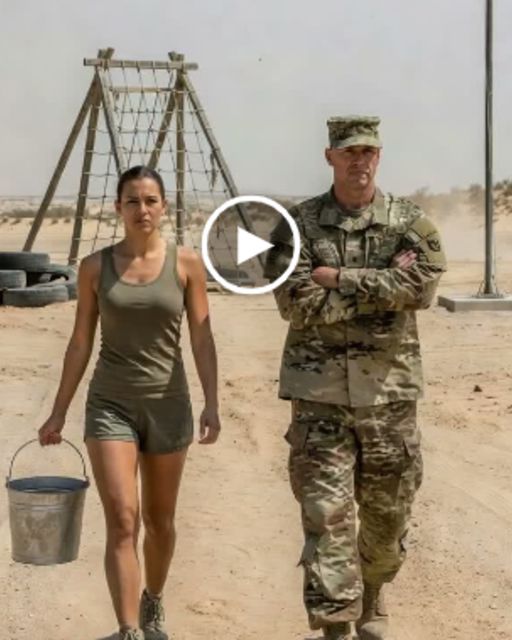
The only sound that morning was the soft tap of empty casings sliding into a metal bucket. Jessica moved with the kind of steady rhythm you barely notice until everything else goes still. She kept her eyes down, stepped carefully behind the firing line, and did the job nobody pays attention to—tidying up while others made noise and impressions.
She had no reason to stand out. The serious shooters, with crisp gear and big talk, leaned over their rifles and argued about wind and distance like it was a contest you win with volume. The valley shimmered in the heat, and the air had that dry taste that makes sound carry farther than it should.
Called Forward
I was watching the instructors move along the benches when Mark, the range lead, stepped back from a rifle that looked more like a precision instrument than a weapon. Two trainees were hanging on his every word, full of confidence you get from being watched. The target—a steel plate—sat so far out it may as well have been on the edge of the earth. Four thousand meters. A distance where the bullet takes its time getting there, and every variable matters.
Mark locked the bolt and stepped away. He didn’t look at his eager trainees. He turned, scanning behind the line until his eyes landed on the quiet girl with the bucket.
“Hey,” he called out, steady and calm. “Come take this shot.”
Everything froze. Even from where I stood, I felt a chill. One of the trainees—Peterson—let out a loud, dismissive snort. “You’re kidding. That recoil will knock her flat.”
Jessica stopped. The metal handle of the bucket rattled against the side. She set it down, wiped her hands on her jeans, and walked forward. No excuses. No nervous laugh. Just a quiet acceptance, like she was stepping into a room she’d been in before.
She slid behind the bench, pressed her cheek to the stock, and settled into the scope like she had been born there. She didn’t ask about the wind or the exact range. Her hand rose, found the elevation dial without searching, and made the smallest adjustment. It wasn’t a guess. It was memory—the kind that settles into your bones and stays.
Her breathing slowed. The line went silent. She squeezed the trigger.
The rifle’s report rolled across the valley. It felt like we could hear the seconds stretching out while the bullet traveled all that way. The spotter, who had been calm all morning, leaned hard into his glass. A long beat passed, then another. Something in his face changed. He dropped his radio, color draining as he stared out toward that distant plate.
He didn’t announce a hit. He turned toward the trainees with his hands shaking and his voice barely there. “It didn’t hit the center,” he said.
Peterson let out a laugh, the kind meant to be heard. “Told you. A miss.”
The spotter shook his head slowly, eyes locked on Jessica. “She hit the mounting bolt,” he whispered. “The top one. The one-inch hex bolt holding the plate to the post.”
Every sound on the range seemed to fall away. Hitting a man-sized target at that distance is the kind of thing people tell stories about for years. Hitting the specific bolt that holds it up is the kind of thing people say can’t be done at all.
Jessica eased back from the rifle. No smile, no triumph, no need to be seen. She made room for the next person like she had simply finished a chore and was moving on to the next one.
A Name from the Past
Davies, the quieter trainee, stared at Jessica with something like recognition. I saw the moment understanding hit him. He didn’t look confused. He looked shaken.
“The Angel’s Kiss,” he said, barely above a breath.
Jessica’s steps paused. Her back to us, her shoulders tensed—just a little, but enough to make it clear the words landed somewhere deep.
Mark nodded once. He wasn’t surprised. He knew more than the rest of us, and he’d been waiting for this moment to speak for itself.
Peterson blinked, lost. “The what? What are you talking about?”
Davies kept his eyes on Jessica. “There was a story,” he said quietly. “Out in the badlands. A friendly unit pinned down, no communications. They were getting picked apart by a single, very skilled enemy marksman. Then, far off in the distance, there was one shot. Just one.”
He took a breath. “The enemy fire stopped. When they moved up, they found the opposing sniper was done. The round had gone straight through the center of the scope. One impossible shot, from an angle nobody thought was reachable.”
There were a dozen versions of that legend, told in mess tents and over campfires. People called it the Angel’s Kiss because it ended the danger with such stillness and precision. But nobody knew who made that shot. The shooter was a ghost in the stories—a shadow behind the glass, a whisper of skill and restraint.
Until now.
Jessica turned around at last. The quiet, unseen helper was gone. Her eyes were clear, steady, and carrying a weight I could feel from where I stood. “That was a long time ago,” she said softly. No drama. No invitation to keep asking.
She reached for her bucket again and started back toward the small supply shed that doubled as her office. The casings clinked and rattled, a gentle sound that somehow felt louder than the rifle’s report.
“Jess,” Mark called after her, gentle but firm. “Don’t just disappear.”
She didn’t slow. The rest of us stayed rooted in place as the heat rippled across the range. Mark looked at the trainees and spoke in a tone that carried more lesson than lecture. “First rule,” he said quietly. “Don’t judge. You have no idea who you’re standing next to. Second, the people who can do the most rarely need to say a word.”
Later, I saw Mark and Jessica outside her shed. He talked with open hands and careful words. She stood with her arms folded, shaking her head. Not angry—just tired in a way that comes from long stretches of responsibility and too many long memories.
The Storm and the Call No One Wanted to Hear
By afternoon the sky turned a bruised purple and the wind rose into a steady howl. Dust and rain swirled together, and the canyons around the facility caught the sound and tossed it back in echoes. Then the radio crackled. The county sheriff’s voice cut through with the strained edge you hear when time is running out.
A hiker was missing. An older man named Arthur had headed out that morning for the old caves on Razorback Ridge. The storm had blown in fast. Helicopters were grounded, and ground teams were slogging through a maze of canyons and false peaks. There was a rough idea of where he might be, but not enough daylight left to waste. The sheriff knew we had powerful optics and was grasping at any chance for even a small clue.
Mark answered, voice flat with honesty. “We’re trying, but the wind is shaking everything. The image isn’t staying sharp.”
The instructors worked every angle they could, but nature has a way of humbling the best gear. The scopes trembled. The picture blurred. The sheriff’s voice tightened with each minute that slipped away.
Mark stepped out of the command tent and walked straight to Jessica’s shed. He opened the door and faced her in the doorway. I couldn’t hear their words, but I could read the shape of them. He asked. She resisted. He pointed toward the ridge and then back to the tent. She shook her head again, quieter but firmer, as if protecting something precious inside herself.
He didn’t press. He waited. He made room for her to choose, trusting the person he knew she still was, even beneath the scars no one could see.
At last she stepped out and moved past him. She didn’t reach for the massive rifle from earlier. She unlocked a hardened case and lifted out a leaner, older rifle—the kind that looked like it had belonged to her for a very long time. No flash, no new paint, just careful wear and familiarity.
Reading the Land
Jessica climbed to the highest rock outcropping above the range, a solid perch where no platform would vibrate under the wind. She lay down on the cold stone and set her rifle, then pressed her face to the scope with calm economy. Peterson and Davies followed with a spotter scope and a radio and, for the first time that day, the right kind of humility. They weren’t would-be stars anymore. They were there to help.
Jessica swept the ridge in careful arcs. She wasn’t just looking; she was reading. The pattern of wind through folds of rock. The way rain darkened granite, leaving small clues behind. The few places where a person might crawl in to get out of the worst of it.
Minutes stretched into an hour. The light thinned. The radio ticked to life now and then with the sheriff’s voice, trying to balance urgency with patience. Mark spoke to Jessica through a line open only to her. “Anything?” he asked softly.
Her answer was calm. “Wait.”
Watching her, I understood something. For some people, the shot is the problem—the sound, the shock, the aftermath. But the search? The wait? The listening for what the land wants to show you? That was different. That was where she could breathe.
Then her body tightened by a fraction. Focus settled over her like a quiet sheet.
“I’ve got something,” she whispered. “North face, about a third of the way down. There’s a small stand of juniper.”
Davies adjusted the spotter scope, breath quick with hope. “I only see rocks,” he said, frustrated.
“Below the rocks,” Jessica answered, still and certain. “There’s a cave mouth. Almost hidden by a slide. The rain has darkened most of the face, but there’s a patch that’s still dry—about the size of a shoebox. That’s the lip of the overhang.”
The calm in her voice carried everyone for a moment. Mark relayed the grid to the sheriff. The ground team shifted direction, but they still had a long way to go, and night was arriving fast.
“They won’t reach him before dark,” the sheriff said, worry bleeding through. “If he’s injured or cold, that’s a bad combination.”
Jessica didn’t lift her eye from the scope. “I need Peterson,” she said over the local net. “With a tracer.”
Peterson glanced at Mark, who simply nodded. Jessica took his rifle, checked it, made the smallest adjustments, and handed it back with simple directions. Her tone was firm but not harsh—the voice of someone who knows because they’ve done it in worse conditions.
“You’re going to aim above the cave,” she said. “Far enough to be safe. When I say now, send it.”
“What if I start a slide?” he asked, fear honest in his voice.
“You won’t,” she said, gentle but sure. “This is just to make a bright spark—enough to be seen, not enough to cause trouble.”
She settled back onto her own rifle, watching that small, stubborn patch of dry stone. Wind pulled at our jackets. The last light felt thin and brittle.
“Now,” she said.
Peterson took the shot. The tracer cut across the valley in a thin red line and struck high on the face. For a heartbeat, bright sparks spilled and faded, no more dangerous than a handful of vivid fireflies against wet rock.
In that brief glow, Jessica saw it—a hand, slow and shaking, lifted from the shadowed crack of the cave.
“He’s there,” she said into the radio, a touch of feeling finally warming her voice. “He’s alive. And he just saw help.”
The command tent erupted into cheers you could hear even over the wind. Peterson stared at his rifle and then at Jessica with something like awe. He hadn’t just fired a round—he’d become part of a plan that pierced the dark without harming a thing.
Found and Brought Home
It took another hour for the ground team to reach Arthur. They found him cold and weak but holding on. He told them that just as he was giving up, he saw a spray of sparks like a signal in the storm. He knew then that he hadn’t been forgotten. He knew help was close.
By the time Jessica climbed down from her perch, the wind had eased and the heavy clouds were breaking into long, torn strips. She walked back toward the line with rain and dust streaking her face. She looked tired. She also looked, for the first time since I’d seen her, at peace. Some old piece of her had loosened its grip.
She stopped in front of Mark. “That instructor position,” she said softly. “Is it still open?”
Mark’s relief showed in a smile that reached his eyes. “For you? Always.”
She nodded and turned to Peterson and Davies. “Dawn tomorrow,” she said, voice quiet but unmistakably in charge. “We start over. Lesson one is how to see.”
Peterson’s reply was simple and sincere. “Yes, ma’am.” No swagger. Just respect.
What the Day Taught Us
As the last of the storm moved off and the range settled back into the ordinary sounds of a long day ending, I thought about what we had witnessed. It wasn’t just the impossible shot on steel, remarkable as that was. It wasn’t even the legend that found a name and a face. It was the way skill became service. It was the quiet confidence that doesn’t need applause. It was the decision to use hard-won ability not to prove a point, but to help someone get home.
For anyone who has lived long enough to understand the cost of experience, the lesson felt familiar and comforting. Real strength doesn’t shout. It pays attention. It watches the wind. It knows when to step forward and when to step back. It listens, not only to the land and the weather, but to the room—to the people who need a chance to choose their way back.
Jessica didn’t return to the line because anyone forced her. She came back because, in the quiet work of looking and finding, she recognized the part of herself that had always been there. She didn’t need applause to confirm it. She just needed to do the next right thing in front of her, with care and precision.
That day, a bolt at four thousand meters rang like a bell and silenced a lot of careless talk. Later, a handful of sparks in the storm told a frightened man that he wasn’t alone. Both moments were precise. Both were merciful. And both carried Jessica, step by steady step, out of the shadows of who she used to be and into the clear light of the work she was meant to do.
Some people show their worth by making the loudest noise. Others show it by seeing what no one else can, by holding steady when the wind picks up, and by finding a way to shine just enough light for someone else to find the path. Jessica’s greatest shot that day wasn’t the one everyone will tell stories about for the rest of their lives. It was the one that gave hope, guided a lost soul home, and, in doing so, gently guided her home too.