
1) What a potato battery is (quick)
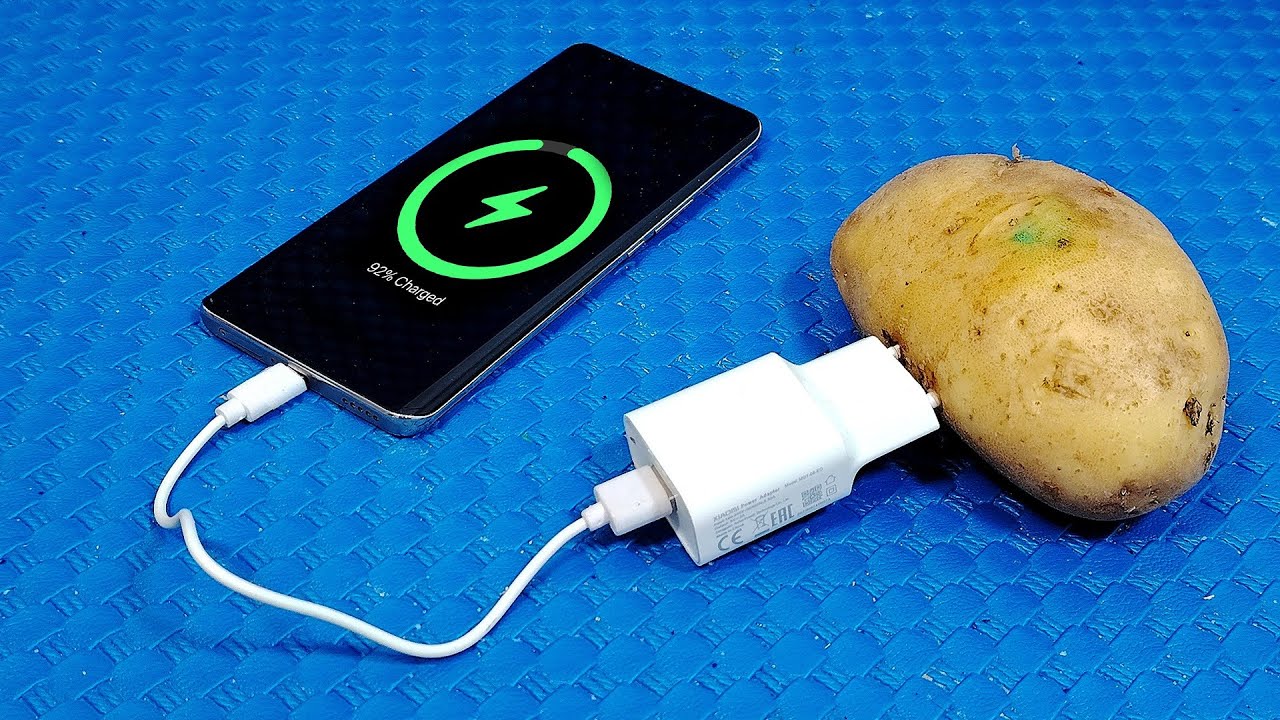
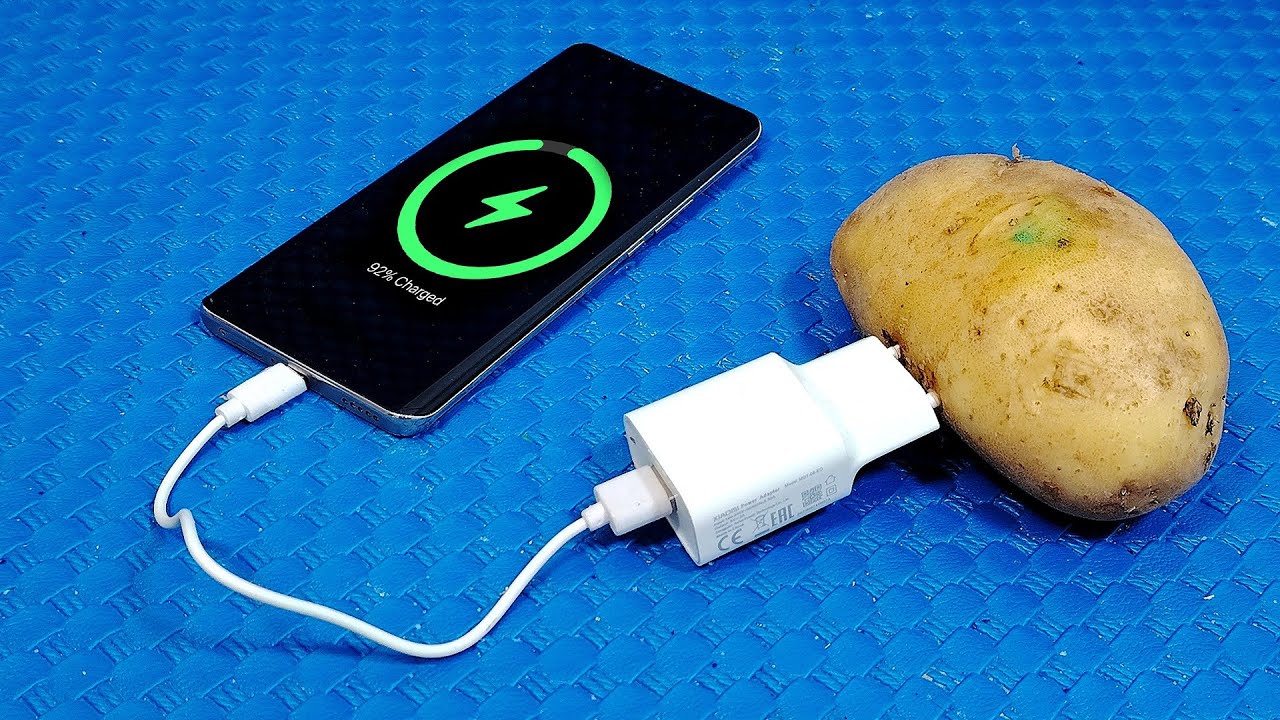
A potato cell uses two different metal electrodes (typically zinc and copper) inserted into the potato. A chemical reaction between the metals and the potato’s electrolytes creates a small voltage and a very small current. Good for lights, LEDs, or science demos — not for real charging of modern phones.
2) Materials
- Potatoes (any)
- Copper strips or thick copper wire (clean) — copper electrode
- Zinc nails/screws/plate (galvanized nails are common) — zinc electrode
- Alligator clip leads or insulated wire
- Multimeter (to measure V and mA)
- Small load for testing (LED + resistor)
- Optional: DC–DC boost converter module (step-up to 5V USB output), and a USB charging module (only for experiments, not recommended for charging a phone directly)
3) Make one potato cell (step-by-step)
- Insert a copper electrode into one side of the potato.
- Insert a zinc electrode 3–5 cm away (don’t let them touch).
- Connect copper to the multimeter positive lead, zinc to the negative.
- Measure open-circuit voltage (V): typically ~0.5–1.0 V per potato cell. Measure short-circuit or loaded current — usually microamps to a few milliamps, depending on electrode size and potato freshness.
4) Combine cells to get higher voltage/current
- Voltage in series: voltages add. Example: 5 cells × 0.8 V ≈ 4.0 V.
- Current in parallel: currents add. If one cell can supply ≈1 mA under load, two parallel strings give ≈2 mA.
Realistic math example (step-by-step):
• Assume each potato cell = 0.8 V and can provide ~1 mA under load.
• To reach 5 V you need cells in series: 5 V ÷ 0.8 V ≈ 6.25 → round up → 7 cells in series gives ~5.6 V.
• A smartphone typically wants ~500 mA (safe slow current) at 5 V. If each series string provides ~1 mA, you need 500 parallel strings to reach ≈500 mA.
• Total potatoes = 7 cells/series × 500 parallel strings = 3,500 potatoes.
So: ~3,500 potatoes to supply a single 500 mA USB charge — totally impractical.
Even for a tiny trickle (say 50 mA):
- 50 mA ÷ 1 mA = 50 parallel strings × 7 = 350 potatoes.
5) If you still want to experiment safely
- Build one potato cell, measure voltage/current, light an LED. Learn series/parallel wiring.
- If you try to boost voltage to 5V with a DC–DC module, do not connect that directly to a phone battery pack — phone batteries (Li-ion) require precise charging circuits and protections. Using a potato array + boost converter risks damaging the phone or battery.
6) Practical alternatives to actually charge a phone
- A small USB solar panel (5–10 W) — inexpensive and reliable.
- A small USB power bank (portable battery) — safe and convenient.
- Hand-crank USB generators for emergency charging.
These are affordable and safe compared to trying to scale potato cells.
7) Safety & final notes
Never attempt to charge lithium batteries without proper charging circuitry and protections.
Potato batteries are fun educational projects.
They are not a feasible practical power source for modern electronics.



