The Five Words That Stopped Time
Instead, written in shaky blue ink, were five words that changed my life forever.
Because he saved my life.
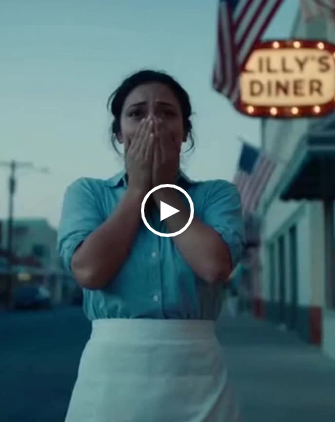
I held the check so carefully that it might as well have been a glass bird. My hands trembled. My breath came shallow. The small-town diner I knew so well suddenly felt hushed and holy, like a church lighted only by candles. In the corner, Wayne faded into the shadows, his face the color of milk, his lips moving but making no sound at all.
Colonel Arthur Vance stood steady in front of me. He did not hurry me. He had no reason to. He knew exactly what this meant and what it would do to a person’s heart to read those words on a check and feel that kind of weight.
I lifted my eyes to meet his. You knew my grandfather?
He nodded once, slow and certain. He spoke with a voice that had seen deserts and snow and a thousand long nights. He told me my grandfather had carried him five miles under enemy fire. He told me my grandfather saved his life. He told me my grandfather had asked him to live a life that counted and to pay good forward whenever he could. And he said he had tried, every day since, to do just that.
The clock ticked. Far-off birds chirped like they had no idea that a storm had just cleared inside me. I looked down again at the check to be sure I was not dreaming. It was still there. It was all real.
Why me? I asked so softly I barely heard my own voice.
Because you passed the test, he said. You chose dignity when you did not think anyone was looking. You were kind to a man you believed had nowhere to go and nothing to give you. You did it because it was right. That kind of simple goodness is rare. That is who I want to lead my most important location.
A Debt Repaid Across Generations
I felt something shift inside me in that moment. It was like a dam finally breaking after years of holding too much water. Out poured pride and relief and grief and the sharp, clean truth that sometimes the world still makes sense. My legs went soft, and I reached back for the edge of a booth so I would not fall.
Arthur Vance stepped forward and steadied me with a hand that was gentle, not grand. He told me the words I never imagined hearing. It is yours now, Clara. The diner. The business. The future.
Wayne snapped to attention like someone had lit a fuse beneath him. He shouted that it could not happen. He declared I was just a waitress, as if that word meant small, as if it meant unworthy. He tried to make the room forget that being the person who serves others is a kind of strength that builds muscle in the heart.
Arthur’s look cut through that noise. He spoke evenly, but you felt the edge. He named the truth about what Wayne had done here. He named the harm of mocking people who needed a break, of turning a place meant for comfort into a room for fear. Then he told him to leave.
Wayne tried one more protest. Arthur stopped him with a crisp, final I can, and I just did. Two soldiers came in, not to start trouble, simply to draw a line. Wayne put on his coat, sent one last glare like a thrown stone, and slammed the door behind him.
Silence came back. Not the same silence, though. This one felt clean, like someone had opened a window and let stale air go.
Outside, the formation shifted with the grace of a tide. Boots turned. A car rolled on. The street remembered it had other things to do. The diner settled again around us, quiet and expectant.
A Test I Did Not Know I Was Taking
Arthur and I sat together then, just the two of us. I still held the check as if it might fly away if I loosened my fingers. I told him I did not know what to say. He nodded in a way that said there would be time for words later. He told me to show him with the work I would do. He set a small black card holder on the table. Inside were his personal details, a list of trusted local contractors, and a keycard for the company account. Use it wisely, he said. My team will be in touch.
He turned to go, then paused at the door. Clara, he said, your grandfather would be proud.
The door shut with the gentle click you hear when a long story closes a chapter right on cue. I sat for a while after that. Time did not move in minutes. It moved in breaths. My coffee went cold. I did not drink it. The neon hummed like it always had. The vinyl booth felt the same under my palm. But nothing was the same, not anymore.
Watching An Old Life Close, Hearing A New One Open
When I finally stood, I walked the diner the way you might walk through a museum of a life you had only rented before and now, somehow, owned. I traced the counter’s edge. I looked into the kitchen and remembered heat and rush and tickets stacking up like a mountain that never stopped growing. I remembered Wayne’s voice, too loud and too eager to make someone else small. I remembered the face I made when he laughed at my request for a promotion, the way that laugh sat on my chest like a weight I could not shake.
I pushed open the office door. His office. Now mine. I settled into the cracked leather chair and opened the folder again like it might teach me how to begin.
Deed. Check. Photo.
I picked up the photograph and held it steady in both hands. My grandfather looked out from it with eyes that were both fierce and kind. He was holding up a young soldier who would one day be a colonel. I did not fight the tears when they came. They were not weakness. They were release. They carried out of me the old heaviness—debt and hunger and the helpless feeling of spending your strength and still going home empty.
And when the tears were done, something strong rose up in their place. Resolve. That same steady, quiet thing I used every time I showed up, even when it was hard. I wiped my face. I breathed in and out until my lungs felt full again.
Sitting With The Weight Of It
I began with the simplest step. I made the first calls. My voice shook on the first one. After that, it steadied. By noon, inspectors walked the space, asking calm questions about pipes and ducts and wiring. I watched and listened and learned. By evening, I sat at my little kitchen table in my small apartment with a borrowed laptop humming and papers spread out in careful rows. Budgets. Blueprints. A plan that did not exist that morning, now living in ink and hope.
That night, my body lay down, but sleep stayed far away. My mind kept moving, one careful step at a time, through the work ahead. When the sun climbed back up, I was at the diner door with tape and a pen. I wrote out a note and pressed it against the glass with both palms so it would sit straight and honest.
Closed for renovation. Grand Reopening Soon. — Clara James, Owner.
Seeing those words made the air in my chest feel wider. It felt like a promise I had made out loud to myself and to the people who would come sit at these tables again someday and call this place theirs.
Choosing What Comes Next
The days that followed melted together like sugar in hot coffee. I chose paint. I drafted a menu that tasted like comfort and care. I met with people who knew how to fix things I could not even name before they showed me. I signed papers and asked simple questions without apology. Each yes felt like a small door opening.
I kept the name Charlie’s. It belonged to my grandfather, and it belonged to this town. But I let almost everything else change. The booths found fresh stitching and new life. The floors shone again like they remembered their own grain. The kitchen got a second chance with clean lines and working parts. And I put something on the menu that no repairman could sell me. I put respect there.
I hired the way I had always hoped someone would hire me. I looked for people with open hands and steady hearts. I welcomed single parents who needed a schedule that did not punish them for loving their kids. I welcomed veterans who missed teamwork and purpose. I welcomed people who had made mistakes and now wanted honest work that gave them a reason to get up. If someone showed me they would try and treat others well, that was enough to start.
We learned together. We burned a batch here and there. We fixed what went wrong. We laughed more often than we cried. We practiced a simple rule that, every day, made the place gentler. We would speak to each other the way we wished to be spoken to when the day ran long and the ticket rail got full. We would treat our guests like we were glad they walked through the door, not impatient that they wanted to sit a while.
Learning The Ropes, One Call At A Time
I called every vendor myself for the first month. I listened more than I talked. Older hands taught me shortcuts I would have missed and pitfalls I could now walk around. I learned to read invoices with a clear eye and to count change with gratitude, not fear. I learned that a good refrigerator can be a better friend than an expensive sign, and that a mop is an honest partner if you use it with purpose. These simple lessons came one by one, like beads added to a string.
At night, I wrote down what went well and what needed work. That notebook kept me honest and kept me moving. When doubt arrived, I would open to any page and see proof that I could keep going. The story of who we were becoming sat there in my own handwriting.
Putting Respect On The Menu
There was one thing I knew we had to do right. Training. Not the kind that barks orders, but the kind that sees people. We practiced how to greet someone who looked worried. We practiced how to guide someone through the menu who could not decide. We learned how to talk with patience when the place was busy and the line stretched long. We had a simple phrase: slow is smooth, smooth is fast. That phrase kept tempers low and kindness high.
We chose dishes that felt like home without being heavy in your pocket. We brought back meatloaf the way folks remembered it, and we added a fresh, bright salad that tasted like summer even in cold months. We kept coffee hot and steady. We made a pie we were proud to serve to anyone’s grandmother. We called it The Hero’s Slice. Cherry bourbon. Sweet, a little bold, and served with a story.
A Wall For Remembering
Two weeks before we opened our doors again, I met a local artist with paint under his nails and a quiet smile. I asked him for a gift to the room. He listened to my grandfather’s story and nodded like he had been waiting for someone to tell him just that. He painted a mural on the back wall. In it, my grandfather stands in uniform, holding up a wounded soldier. Above them, in simple script, it reads: Honor is how you treat those who can’t help you.
People who came in during the last days of preparation would stop and look. Some stood with their hands folded. Some reached up to touch the words very lightly, as if a blessing could pass through paint. That wall turned the room into a place that remembered what mattered.
The Day The Doors Opened Again
On the morning of the grand reopening, the line curled around the block the way old stories curl around a family table at the holidays. Folks who had not stepped into Charlie’s for years came back to see what had changed and what had not. Some told me they remembered my grandfather pouring coffee with a joke and a wink. One woman brought a worn newspaper clipping of him receiving a medal. A teenager asked for a picture beside the mural, and I stood off to the side and watched him grin.
Then I saw Colonel Vance among the crowd. No uniform this time, just a leather jacket that had known rain and sun. He ordered a black coffee and a slice of The Hero’s Slice. He took one slow bite and nodded once in a way I understood from the very first day. He did not need many words. The nod said enough.
The lunch rush filled the room until conversation rose and fell like gentle waves. Plates came hot and steady. Coffee poured without fuss. When a mistake happened, we fixed it with a smile and a second chance. By late afternoon, we had that soft quiet that comes after a job well done. I stepped outside into clear air and looked up at the neon. Charlie’s, it glowed, not flashy, just faithful.
Not Just Business, But Belonging
For the first time in a long while, I was not simply surviving. I was living. And I was not doing it by myself. My team stood beside me. This town stood around us. My family’s history steadied my steps. All of it wove together into something stronger than one person’s effort.
As I stood there, a little girl ran up the sidewalk holding her father’s hand. Daddy, this is the place, she said, the one with the picture! She pressed her palms to the glass and pointed at the mural like she had found treasure. I smiled because I knew what it meant to find a place where you felt welcome, even if you could not name why just yet.
Inside, one of our new hires, a quiet man who had served and was now learning the rhythm of the grill, lifted his head to watch her. He smiled, too. There it was, I thought. That thin, bright line that runs between people when a place does what it is meant to do. Feed the hungry. Give the tired somewhere to rest. Remind the lonely they are not alone.
Only The Beginning
When I locked up that night, my steps were sore in a good way. I turned off lights and touched the counter once more, the way you pat the shoulder of a friend who stood by you. I looked again at the photo in the office, then at the mural in the dining room. Two images of the same promise, carried across years by people doing the best they could with what they had.
I thought of the five words on the check. Because he saved my life. Those words had stretched a hand from the past into my present and said, Keep going. Be the kind of person who lifts, not the kind who pushes down. Pay good forward. Keep the coffee warm and the welcome warmer.
There will be hard days ahead. Freezers break. People get sick. Supplies run late. Some mornings will start before the sun and end long after the chairs are flipped onto the tables. But now I know exactly why it matters. This place is more than walls and recipes. It is a light you can see from the street when the evening comes early. It is a room where a person can sit and eat and remember that the world still offers second chances.
Before I left, I wrote one last note to tuck under the register where I would see it first thing the next morning. Do the next right thing, it said. Small steps count. Be kind first. That was my plan, and it was enough.
I locked the door and stepped into the night with a calm I had not felt in years. The sign above me hummed like a faithful friend. I breathed in deep. Then I headed home, not to stare at a wall in shock, but to sleep the kind of sleep that comes only when your work and your heart finally line up.
This is only the beginning, I thought, and I believed it. Because now, when someone walks in and sits down at Charlie’s, they are not just buying a meal. They are taking part in a promise made long ago on a battlefield, carried forward in a diner, and kept today at every table we serve.