
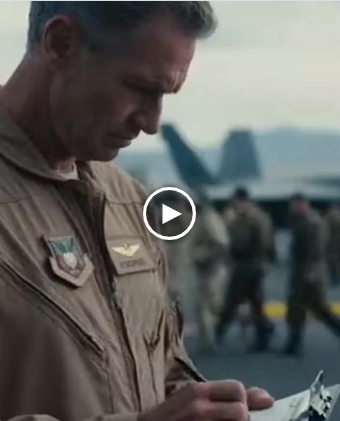
The Name He Wasnt Ready to Hear
He saw it before he understood it. A flash behind his eyes, not light but memory. The smell of smoke. The scream of metal tearing. A Blackhawk helicopter on the ground where it should have been in the air. A mission name he had locked away like a box he swore he would never open again. Emberwatch. One survivor, they had whispered at the time, but no one ever proved it. The story faded into rumor, and rumor faded into ash.
Now she stood in front of him, chin lifted, eyes level. Her voice, when she spoke, was quiet but steady. She told the colonel her call sign was Phantom Seven, and something in him tilted. He felt the weight of a decade shift on his ribs.
He cleared his throat, and when he spoke, his words came out rough. He asked her where she had been in 2014. She did not hesitate long, and when she answered, it cost her. She said she had been flying into the fire, trying to bring people home who had been left behind.
Ramsey stared at her. In his mind, the sealed door to Emberwatch swung open. Everything rushed out. The alarms. The order to abort. The silence afterward, deeper than any night. He had not been on that helicopter, but he had carried it every day since.
She said it again, softer this time, as if she was reaching across years and flames with bare hands. Flying into the fire.
He gripped the edge of the table. He told her she had not been on the roster. He told her he had known every pilot assigned to the operation. He told her she had not been there.
She met his eyes. She said she was never supposed to be. She said she should not have made it out.
He felt himself take a step back he had not planned. The old hurt pushed in. The math no longer balanced. She was real, breathing, steady. If she was real, then so was everything around her story. He repeated what had been an unanswered rumor. The shadow bird. The one no one was told about. The unauthorized run after the call to pull out. She did not argue. She did not need to.
He told her he had watched the footage again and again. On the thermal scan, a second shape went in after the mission had already been called off. They dismissed the image as a glitch, but he had never quite believed it. He said it aloud now. You went in anyway.
She did not raise her voice. She only said she had to. People had been left behind. She could not do nothing and live with it.
His hand dragged down his face, rasp over stubble. He told her she had disobeyed orders and risked everything. She did not flinch. She said she had lost everything, and still no one had written her name on any wall. No memorial. No record. Not even the comfort of official grief.
For a long moment, they stood in the rising heat of the desert morning like two people at the edge of a fire they could not get past. Jets thundered overhead. Someone shouted for a roll call. The base moved around them, alive and loud, but the space between the two of them felt like the only quiet place on earth.
The Past Comes Back with Teeth
He asked her why now. He asked why she had stepped from shadow into daylight after all these years. She stood a little straighter. She said someone had started reactivating old code names, the kind that should have stayed sealed. She said she had tracked two of them. Both were dead, and the way they died did not look like chance. One had been a systems analyst who worked Emberwatch. The other had been in combat logistics for the same operation.
He felt the ground shift under that. Those names were part of the old circle. She nodded when he said it. She said both of them had been scrubbed from the books after the mission, just like her. She said the pattern was too clean to ignore.
He asked if she thought someone was tying up loose ends. She said she did not think it. She knew it. She said she was next in line.
He lowered his voice and asked why she had come here instead of vanishing. She said this base was next on the list. She said she had heard encrypted chatter, brief bursts of signal that came like footsteps you catch out of the corner of your ear. It looked like a staging ground for something bigger. She did not know the full shape of it yet, but it was tied to Emberwatch and to the people who had buried the truth afterward.
He told her this was a military base, sealed up tight. Nothing moved here without a pass. She said someone already had the pass. The threat was not outside the fence. It was on the inside.
He wanted to refuse that idea. He could see she was not guessing. She was remembering. He made a decision. He told her to use the simulation bays, to pull logistics logs, to open secure channel 9Z quietly. He told her to be careful. He reminded her he could have a drone drop her at Langley if she so much as breathed wrong. She said she understood. And then, over the next days, she did not breathe wrong at all.
Tracks in the Dust
Phantom Seven worked like a person sifting a dry riverbed for what the river left behind. Files moved. Access logs blinked. Where there had been clean surfaces, faint prints began to show. She ensured nothing pointed back at her, but the bases secrets began to surface like bones under shifting sand.
What she found was simple to state and hard to accept. There were orders stamped with clearance levels that did not exist. There were fuel requests for flights that were not in any flight plan. There was a particular hangarHangar 42marked again and again for special cargo that never showed up in official records. The facts lay there, unadorned and ugly.
Then she went quiet.
At 0300, the call woke him like a shock. They told him she had not reported to her quarters. They said her badge had pinged near Hangar 42 but the cameras went dark. He was already moving before they finished the sentence.
He drove across the base with his heart thudding in his throat. When he arrived, the guards outside the hangar were strangers in fresh uniforms with nothing on their sleeves. No patches. No names he recognized. No paperwork that made sense.
He told them to open the hangar. They did not move. He told them again, louder this time, and one of them lifted a radio very slowly. The air felt tight, the way it does just before a storm breaks.
The blast, when it came, rolled in from the northeast and punched the night open. Heat and light climbed into the air. The ground under his boots shook hard enough to jar his teeth. Over the comms, someone yelled that the control tower had been hit, systems were going down, and a cyber intrusion was twisting the radios. Frequencies jammed. Voices smeared into each other like oil on water.
He turned toward the flame. And then he saw her.
She was running toward him through smoke and confusion, her left arm slick with blood and her side scorched. Her eyes found him and did not leave. She told him they had triggered it. She said there was a stealth drone in prep, a quiet machine with its own rules. It had an internal kill list and Emberwatch names were only the beginning. The next set of targets were still breathing. Some wore uniforms. Some held public office. Some were ordinary people who had the bad luck to be near the wrong place at the wrong time.
He asked who had signed off on it. She said she could not pull the whole list in time, but the drone was made to vanish after it struck, leaving no trace. A perfect ghost. The kind of thing you only build if you plan to swear it never existed.
He asked again who had given the order. She hesitated, looked past him as if trying to hear a voice from a different room. Then she said she thought it came from inside the Pentagon. A general or someone even higher. Someone who needed the past cleared away before they stood up and announced something big.
The second explosion shook the hangar and scattered loose grit across the concrete. The two guards lifted their rifles. He did not let them bring the barrels level. He moved without thinking, the way a body does after years of drills, and the guards dropped before they could fire. He pulled Reyes behind a stack of crates and forced his breath even.
He asked if the drone had launched. She said it was minutes away, driven by a software brain seeded through the base. Not a person behind the controls. Not something they could argue with over a headset. It was a set of rules and a destination. It would not choose. It would just go.
He swore and made a choice of his own. They would fly.
Into the Burning Sky
The runway roared with chaos. Emergency lights pulsed red and white against smoke. Sirens curled around the sound of engines. Fuel trucks burned at the far end, and each new flare painted the hangars in quick, unreal daylight. Through all of it, they ran. Ahead of them, a Hornet sat on standby, fast and light, not set for a fight but built to move.
Reyes climbed into the back seat and slid a cable into the flight systems, fingers working with the calm speed of habit. She said she could find the drone if she could sync with its signature. He told her to do it and brought the jet to life.
They rose off the tarmac into a layered sky. Debris drifted. Heat waves bent the light. The radio was a wall of broken voices, reports about unknown aircraft, bad signals, sudden electrical pulses knocking systems out in sector five. He held the plane steady and watched the horizon. She worked, head down, hands sure.
She found it. Ten kilometers west, low and quiet, sliding under radar like a fish under dark water. Headed straight for Phoenix.
His stomach lurched. In Phoenix, there was a conference today that drew high officials and their teams. Many people. Many cameras. If the drone hit, the world would see fire and fear, and the story would write itself. He said it aloud. She agreed and added the rest. It would look like a terror attack. Then someone would step forward, ready with a plan for more force, more reach, more control. Global enforcement, she said in a voice that carried no drama, just fact.
He said no. He pushed the jet into a dive, hunting the black shape that shimmered against the morning like a shadow pretending to be a cloud. The drone adjusted, aware of the predator now behind it.
She said she could force a handshake, a quick connection that would let her talk to it. But to do that, they needed to get close, closer than made sense to anyone who wanted to live a long life. He dropped altitude. The jet vibrated, protesting. She kept her focus on the code, her lips moving with numbers and short phrases.
Closer. Closer. She struck the key that sent the request.
There was a sound like a soft note from a glass. She said the manual sync was in. For one breath, it felt like they had the thing on a leash.
Then the drone threw itself toward a neighborhood, a hard dive meant to leave no time. She shouted that it was in a fallback mode, set to wipe everything and drop the full payload if anyone tried to make it heel.
He scanned the streets below, saw the maze of roofs and roads and lives. He said he could ram it. He could hit it hard enough to blow it out of the sky before it reached homes and people. She told him plainly he would not survive. He looked up and caught her eyes in the mirror. He said neither would they.
For a half second, she held his gaze. Then she reached forward, slid the cover, and pulled the ejection handle for his seat.
He shot into the sky, the world narrowing to roar and wind and the hard slap of the chute opening. He yelled into the comm in fury and disbelief. She answered calmly. She reminded him she had volunteered long ago for the job no one wanted to remember. She told him he had done enough.
Below, the Hornet met the drone head-on. The explosion flowered into the pale dawn like a terrible sun rising early.
The Quiet After
He hit the ground hard in a span of desert that did not care who he was or what he had seen. The chute dragged across rock and scrub. He tore loose, stumbled, and went to his knees. When he could breathe, he stood and shouted her name into the radio. The channel answered with only static. He tried again. The same result held. He stood alone with the sound of his own breath.
Two days later, the official word came. Killed in action. The words were short and meant to carry weight. He read them, and they felt both too heavy and not heavy enough for the person they were supposed to hold.
Then a package arrived without a sender. No mark on the outside. Inside, a small thumb drive waited in silence. He sat with it for a long time before he slid it into a port.
It was locked, but the lock answered to a key she had already taught him without seeming to. When it opened, what spilled out was not a single thread but a web. There were hidden logs. Communications that should have been wiped. Surveillance files that had been meant to vanish into the dark. Thousands of pieces that fit together into a picture no one in power wanted seen.
At the end of the list, there was one message in plain words.
We all have ghosts, Jack. Time to burn the house down. It was signed with a simple mark. P7.
He sat back and let out a breath that seemed to leave with years attached to it. Then he leaned forward and began to read for real, from the top, as if he had all the time in the world and none to waste. The work would be careful. The work would be patient. The work would be done.
What Stays and What Goes
The years had taught him one hard truth. The past does not stay buried just because we refuse to look at it. It stays buried only as long as the people who know the grave agree to keep the ground smooth. Once someone steps in and starts to dig, the shape of what happened comes back up, dusty but whole. Emberwatch had been buried for a long time. The names had been pushed off the ledgers. The files had been stamped and sealed. A ghost pilot had been written out of the world and told to disappear. And still, truth has a way of waiting.
He thought of the moment on the tarmac when he had threatened to put her on a drone back to headquarters if she crossed a line. He had said it like a warning he might have to repeat. She had taken it in with a nod and gone to work. No drama. No speeches. The right tools. The right questions. Quiet patience. Careful steps in the sand so the wind would not see them and wipe them away too soon. Then, when it counted, she had done what he had known in his bones she would do the minute she said her call sign aloud. She had stepped forward. She had gone into the fire again and made sure it did not reach the people below.
Now the files she sent would make their own path. He would not move fast. He would move sure. He would find the right eyes at the right time, and he would make sure the story did not break in a way that warned the very people it could expose. He understood this part better than anyone might guess. He had lived long enough to know that truth is not only about what is right. It is also about when you bring it into the room and to whom you hand it first.
He closed his eyes and saw a Blackhawk caught in firelight. He opened them and saw a clean desk, a cup of coffee cooling, a screen filled with lines of text that had waited years for this moment. He was an old soldier in a world that loved new toys and quick answers. But some work does not change. You show up. You return to the scene. You read every line. You list what you can prove. You listen to the quiet between the words. If he did it well, then the people who had thought they were safe behind rank and walls would feel the ground shift the way he had when she said her name.
He was not alone. Even now, he believed that. Some part of her was still in the room with him, in the patient order of how the files had been arranged, in the careful notes set beside the largest gaps. There are many ways to leave a message. The best ones carry the shape of the senders mind. These did. Phantom Seven had signed with more than three characters. She had signed with the work itself.
He leaned closer to the screen and began again at the beginning, reading not as a man who was trapped by the past, but as one who finally had what he needed to face it without flinching. Outside, the desert sun lifted slowly, lighting the base that had nearly become a crime scene and not a station at all. Inside, he made a promise to someone who was gone and somehow not gone.
He would follow the path she had marked. He would find the ones who had pulled the strings. He would not rush. He would not warn them. He would do the work. Because some debts are not paid with medals or press briefings or tidy endings. Some are paid with persistence and the simple courage to keep looking until the last hidden door swings open. That is how you honor a call sign. That is how you speak a name out loud and make sure it stays.
He reached for the next file. The room was quiet enough that he could hear the click when he opened it. He smiled at the sound. Patient, clear, and without fear, he began.



