
The Moment The Doors Opened
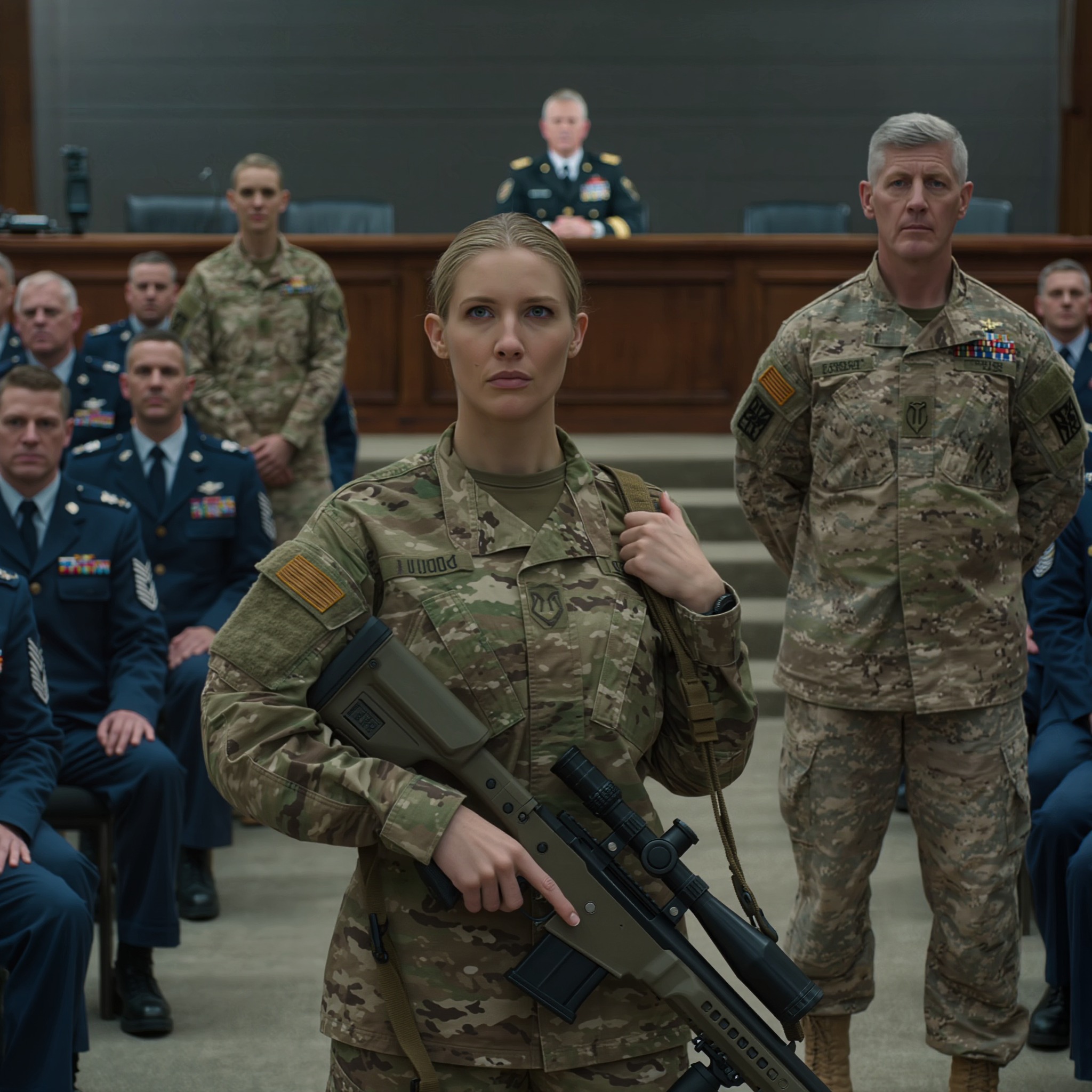
I did not expect the night to turn. I had been standing under bright chandelier light, cuffs still cold around my wrists, the cameras hungry for a picture they could write a thousand stories about. The agents had come to collect me, and the room had already judged me. Then the rear doors opened, and the sound of measured boots on marble cut through the music and whispers. Heads turned. Conversations died mid-sentence. And in marched my Rangers, moving with the kind of discipline that steadies crowded rooms and shakes loose the truth.
Sergeant First Class Reyes led them, tall and steady, eyes forward. I knew that walk. I had seen it in Kandahar when the air burned and the ground shook. I had once been dragged out of a smoking vehicle by the very same man. He had walked through fire then. He walked through a ballroom now, and the result was the same: people moved aside. The agents, who only moments ago had commanded the room, were now statues in neatly pressed suits.
Reyes did not waste a moment. He came straight to me, standing firm on the stage that had been meant for applause and polite speeches. He took my hands, turned the cuffs in his grip, and with a swift click, freed me. His key never faltered. His voice did not either.
“Colonel Pool,” he said with calm certainty, “you’re being recalled under Executive Directive Seven-Two-Niner. You’re no longer under civilian jurisdiction.”
An agent stepped closer, careful but confrontational. “That directive hasn’t been authorized in two decades.”
Reyes did not blink. “Until last night. Signed by the President herself. Check your files.”
The words rippled outward. Phones appeared like a new layer of armor in trembling hands. Eyes dipped to screens. I could almost hear the new headlines popping into place. Mutiny. Military intervention. A rogue unit. But beneath the noise, I knew exactly what it meant. The plan I had hidden for years had finally come alive.
When The Past Stepped Onto The Stage
My father moved next. He was never a man to let a room get ahead of him. Brigadier General Arthur Pool had built a lifetime of certainty out of rank, reputation, and the impression of iron principles. He strode down the staircase and tightened his jaw for the cameras.
“This is a disgrace,” he said loudly enough for the front row of reporters to catch every syllable. “She’s a traitor, not a hero.”
Reyes glanced at me once, waiting. I gave him the smallest nod. He turned back to my father. “Sir, I suggest you step back. You’re interfering in a matter of national security.”
My father fired back. “I am national security. You think she’s innocent? You think she hasn’t hidden something all these years? I made her career possible.”
He did not realize the cameras were still rolling. He did not realize people were listening for contradictions. He did not realize that the same stage he had often owned now belonged to truth, as plain and heavy as steel.
I stepped forward, my dress uniform crisp, a medal still gleaming on my chest. “That’s the first true thing you’ve said tonight, Dad. You did make this possible. Because of you, I joined the military. Because of you, I learned how to survive betrayal.”
Something in the room shifted then. The agents stopped pressing. The reporters stopped performing. The faces around us stopped guessing and started absorbing. The story, buried for thirty years, finally had a way out.
The Screen That Spoke Louder Than Any Speech
Reyes pressed a small flash drive into my palm. “Everything’s loaded, Colonel.”
I raised the drive so the cameras could see it, not to taunt, but to be clear. “To everyone watching — I never intended to make this public. But tonight, you deserve to know the truth. Not just about me, but about the man who turned me in.”
The giant screen behind us, which had been set to show smiling photos and event footage, went black. Reyes tapped a command on his phone. The screen brightened again, now filled with stills and documents that had never been meant for a crowd: satellite images with grid overlays, transaction logs, snippets of recorded calls with clean timestamps. Not rumor. Not guesswork. Proof.
A hush fell as if sound itself had been ordered to stand down. People watched the path of money skimmed from military operations into shell companies scattered like decoys. They followed crates of weapons that were meant for one front but slipped onto another. And then, at the center of the web, a name appeared large enough that even those at the back could read it clearly.
Brigadier General Arthur Pool.
I spoke simply into the microphone, because this was not a time for complicated sentences. “Thirty years ago, a young logistics officer discovered a covert operation siphoning resources from active war zones. That officer was silenced. Their report was buried. But the records weren’t destroyed. They were encrypted and hidden.”
I tapped the drive. “My father thought turning me in would protect his legacy. What he didn’t know was that I had already unlocked the code. I’ve spent the last two years gathering the missing pieces. Everything you’re seeing has been verified. It’s all ready to come out.”
For one heartbeat, the room held absolutely still.
“My name is Colonel Demi Pool. And I did not betray this country. I exposed the man who did.”
My father lunged for the microphone, but Reyes was quicker. He restrained him with a firm, practiced motion — the same choreography I had felt minutes before. This time, there was no applause, no anger, no cheers. Only recognition. And a kind of quiet grief that always follows the truth when it arrives late.
The Case Turns On Its Axis
The agents had not left. They had not surrendered the room. They had simply gone silent, speaking only into their radios. The one who had cuffed me earlier approached with care, his posture no longer declarative but thoughtfully cautious.
“Colonel,” he said, “if this is true—”
“It is,” I replied gently. “You can verify every file, every timestamp, every conversation. The chain of custody is intact. I’ve kept receipts. All of them.”
He nodded once. Then he signaled to his partner without raising his voice. “Secure the father. We’re flipping the case.”
That was the moment the world stopped calling me a suspect. I knew others would still debate it. But officially, I was no longer the villain of the story. I was the witness who would not be dislodged.
My mother stood near the side of the room, her hands clasped, her color drained. She met my eyes, and I saw two truths collide — love and knowledge — and neither one won. There was nothing I could give her just then except the truth we both deserved.
Reyes and the team formed a protective ring as we moved. The ballroom receded behind us, the questions growing louder but the meaning of the moment becoming clearer. In the alley, a black SUV waited with its engine low and ready. We slid inside, the doors closed, and the city resumed at its usual speed. Inside the car, silence felt like the only respectful response.
The Bunker And The Real Drive
We drove through the night along the George Washington Parkway, the city falling away in a trail of distant lights. After ten minutes, Reyes finally exhaled. “You did it,” he said softly.
“No,” I answered. “We did.”
There are things you say to yourself for years to stay steady. Then there are things you say out loud to tell the truth. I reached into my coat and took out a second flash drive. It was smaller, plainer, and far more dangerous. I had not told Reyes about it because not every plan survives the first hour, and this one could not be compromised.
“I need to finish this,” I told him. “There’s more than just my father. He wasn’t alone.”
Reyes did not ask for names. He did not ask for proof. He had already seen what truth looks like when it stands up on its own. “Where do we go?”
“To the bunker.”
We reached it beneath an old textile mill outside the city, a long-forgotten building with broken windows and weary bricks. A place that once built cloth and now hid something sturdier — a hardened terminal and a network with redundancies no single hand could cut. Inside, fluorescent lights flickered as if they had a right to be tired. I sat at the terminal and connected the second drive.
The login screen blinked back at me. I did not hesitate. The sequence I entered was one I had memorized long ago, a passphrase my father would never have guessed because it came from a source he had overlooked for decades.
My mother.
In her quiet way, she had left me a map. Not words spoken aloud, but a date here, a phrase in the margin of an old note, a photograph placed one slot out of order in a family album. Signposts left by someone who could not fight but could still guide. When I finished entering the sequence, the terminal unlocked without fanfare. The truth does not need a drumroll.
Operation Bronze Falcon
The files opened with calm inevitability. The name rose to the center of the screen like a ship emerging from fog.
Operation Bronze Falcon.
The documents were dense but clear. They outlined a black budget slush fund designed to steer arms deals, reroute humanitarian aid, and silence anyone who stumbled onto the wrong account at the wrong moment. My father was there, yes. But he was not alone. Five other high-ranking officers were listed by code name and cross-referenced by communications, approvals, and transfers. One of them was still on active duty. One had already launched a Senate campaign on a platform of integrity.
My chest tightened. I was not surprised. But knowing something in your bones is different than watching it rise line by line in front of you. If this became public all at once, it could do more than end careers. It could break trust in institutions that many of us had spent entire lives defending and believing in. It could make people ask if anything was real.
Reyes stood behind me, his presence steady and unintrusive. “We release this,” he said carefully, “and there’s no going back.”
I nodded. “There never was.”
Sending The Truth Where It Could Not Be Stopped
We worked in a rhythm built over years. We encrypted the files and prepared them in segments, each with its own verification, each with its own trail. We did not rely on one outlet or one gatekeeper. We sent sealed packets to trusted journalists who had earned the word with sweat and time. We sent copies to Internal Affairs. We sent another set to two members of the oversight committee who had proven able to read a document without first asking which way the wind was blowing.
The approach was simple: redundant, distributed, unstoppable. If one copy was buried, five more would surface. If one voice was shouted down, ten others would repeat the same facts. When you have lived long enough in the shadow of power, you learn the value of patience and the danger of putting everything in one safe labeled just in case.
By the time we finished, the clock had edged toward morning. The lights hummed their worn little song. I leaned back in a chair that had never been comfortable and let the truth settle. Something inside me, a knot tied long ago with a child’s hands and a soldier’s determination, finally loosened.
Breaking Free Of A Long Shadow
I understood then that I had not freed myself by running from my father, or by obeying him, or by pretending the old rules still kept us safe. I had stepped into full daylight and said the thing that needed saying. That was how the shadow lifted.
Reyes opened a locker marked Emergency and took out a small bottle and two dented tin cups. He poured and slid one to me with a nod. “To burning the rot,” he said.
I raised mine. “To building something better.”
The first swallow burned. The second steadied. We did not need many words after that. Some nights do not ask for speeches. They ask for courage, and then they let you sleep.
By Dawn, The World Knew
When morning came, my name was everywhere. Some called me a hero. Some called me a traitor. Anyone who has ever stood between what is comfortable and what is right knows those two labels can be neighbors. But for once, I did not fear the story people told about me. I had given them the facts, not a polished version or a silence dressed up like dignity. The narrative was not theirs to twist. It was ours to hold steady.
That same morning, I put on my uniform. I checked the seams and the pins, the way I always had, out of respect for the cloth and what it represented when worn well. Then I walked onto Capitol Hill. No side doors. No evasions. No apologies for taking up space. It was time to speak under oath, with nothing left to hide and no need to raise my voice to be heard.
I had spent years in rooms where power filled every seat. This time, I brought something stronger than rank. I brought records, witness accounts, and the steady knowledge that a lifetime of service means nothing if it cannot withstand a simple question: Did you tell the truth when it mattered?
What Comes Next
The day ahead would be long. It would involve closed-door briefings and open testimonies, private refusals and public reckonings. The agents who had once placed cuffs on my wrists now handled a different set of restraints with the same care. The journalists who had chased a scandal the night before now chased facts. Some people would cling to the old picture because it felt safer. Others would accept the new one because they could not look away from what the documents said out loud.
Not everything would break cleanly. It never does. But the work had begun, and it would not end in a headline or a courtroom dust-up. It would end in a ledger that finally balanced honesty with consequence, duty with accountability. It would end when people trusted, not because we asked them to, but because we earned it the hard way.
I knew there would be more to uncover. I knew there would be those who had long counted on quiet corridors and unrecorded approvals. But I also knew we had changed something fundamental. We had shown that even old secrets lose their shape when brought into the light. We had proved that a plan made of patience and proof can stand longer than any reputation held up by fear.
A Final Word To Those Who Watched
If you were watching that night — from the ballroom, from your living room, from a hospital bed, or from a distant post — know this. I did not break faith with the country I love. I kept it. I kept it by believing that the rules are not a shield for the powerful, but a promise to the people. I kept it by trusting the kind of teammates who do not hesitate when it matters. And I kept it by listening to the quiet wisdom of a mother who could not fight on a battlefield but could still pass a lantern in the dark.
The work will continue. The hearings will be loud. The reckonings will be real. I will show up, and I will answer every question put to me. The uniform I wear does not make me perfect. It makes me responsible. Today, that responsibility begins, not with a salute to what used to be, but with clear eyes about what must come next.
My name is Colonel Demi Pool. Last night, men came to take me into custody on serious charges. Before the hour was over, my Rangers arrived to say words that changed the course of my life and, I hope, the life of this country. “Colonel, we’re here to bring you home.”
Now I am home, not because I returned to a building or a base, but because I stood where I was and told the truth. And this time, when I testify, they will listen.



