
A Practical Joke That Went Too Far
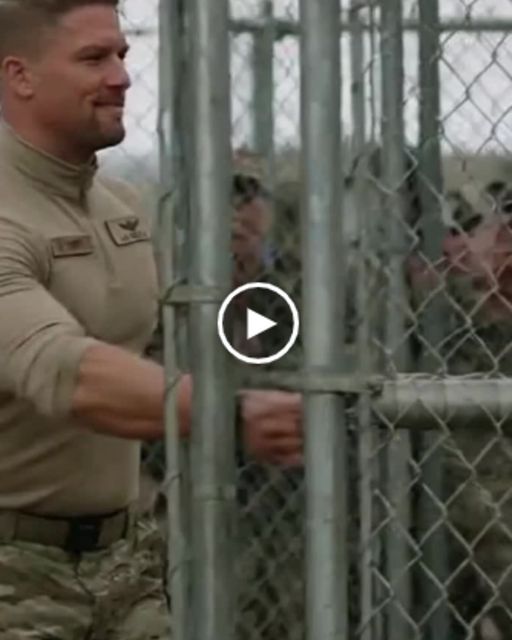
“Enjoy the chew toys, sweetheart.” Roland laughed as he swung the heavy iron gate closed with a clang that echoed across the yard.
I stood in the center of a muddy K9 exercise pen, clipboard in hand, boots sinking an inch with every step. Three Belgian Malinois circled with stiff tails and high alert. Their ribs showed they had not yet had their morning meal. I could feel the thrum of their energy like a wire pulled tight.
On the other side of the fence, a row of young handlers leaned in with their phones up, smirking. This was their welcome routine for a supposed newcomer. They wanted a show, and they thought they were about to get one.
“Ten seconds till she cries,” someone muttered just loud enough for the group to hear. A couple of them snickered.
The largest Malinois, a battle-tested dog with a scar down his cheek and a nameplate that read Sarge, halted and fixed me with a stare. His growl vibrated the air, deep and certain. He lowered his head and tightened his muscles like a spring.
Roland folded his arms and grinned. “You’d better run, new girl.”
Then Sarge launched. Paws pounded the dirt, jaws open, every instinct ready to do what he had been trained to do.
I did not shout. I did not move. I dropped the clipboard into the mud and gave a short, sharp whistle. Two notes. Clean and clear.
Sarge halted in a tangle of legs, skidding as if he had hit an invisible wall. The growl stopped on a dime. His ears twitched forward, head tilted, waiting.
I raised my hand, palm flat, and spoke softly. “Zitz.” The simple command for sit.
To the shock of the onlookers, the big dog folded to the ground and wagged his tail, a low, hopeful whine bubbling up as he looked at me like an old friend.
Silence rolled across the fence line. Phones lowered. The laughter dried up mid-breath. Roland’s mouth fell open.
I stepped up to Sarge and rubbed the soft fur behind his ears. He relaxed and leaned into the touch like a dog who remembered every hour of our work together.
Revealed: Not an Intern, but the Expert
The Base Commander strode into the yard with a face like a thunderhead. He did not look at me. He looked straight at Roland.
“Private,” he barked, voice cutting through the air. “Open that gate. Now.”
Keys rattled in Roland’s shaking hands. “Sir, it was—this was just a joke. The new transfer—”
“New transfer?” The Commander’s voice sharpened. “That is Master Sergeant Trisha Vance.” He pointed at the dog pressing his head into my palm. “She raised Sarge. She runs the K9 division.”
Color bled from Roland’s face. He stepped back as I walked out of the pen with Sarge heeling neatly at my side, every step in sync with mine.
I stopped in front of Roland and handed him a folded envelope. “I was going to give you this at briefing,” I said, calm and even. “But given the morning we’ve had, you should read it now.”
He opened it. His eyes moved fast at first, then slowed. The paper trembled in his grip. When he looked up, fear had replaced swagger.
“Please,” he whispered. “Not there.”
I tapped the small print at the bottom. “You’re not going alone.” I turned my head toward the line of handlers. Most tried to disappear into their uniforms. One young private stood out by doing nothing at all. He had kept his phone away and his eyes steady. His name tape read Miller.
“Your assigned supervisor is newly promoted Corporal Miller.”
Roland’s head snapped toward Miller. The young man looked struck by lightning. He was the newest of the group, the one usually asked to fetch coffee and mop floors. The idea that he would supervise Roland cut deeper than any faraway posting.
Accountability and a Hard Lesson
Colonel Davies, the Base Commander, turned his gaze across the group. His tone cooled to a dangerous calm.
“Every one of you who took part in this is on report. You endangered a fellow soldier and misused our K9 unit for a cheap laugh.” He let the words hang. “You will spend the next month’s weekends scrubbing every kennel on this base with a toothbrush.”
Then he faced Roland. “Your conduct shows poor judgment and a lack of respect. Those qualities have no place in a handler.”
Roland looked down at his orders again. Twelve months. An outpost in the Aleutian Islands. A place the old hands called The Freezer—where wind gnaws at bone, clouds sit low for days, and the idea of summer feels like a story someone once told.
I crouched to scratch Sarge’s chest. “This dog has saved more lives than you’ve had hot meals,” I said softly. “He is not a party prop. He is a partner. He is family.”
I told Roland what most people did not know. Sarge started life as the smallest pup in a shelter litter, marked for the worst outcome because no one wanted the runt. I had looked in his eyes and seen not fear, not anger, but raw potential. Years of training followed—patience, consistency, and a bond so strong that one whistle could bring him back from a full-speed charge.
“You see a weapon,” I said. “I see a hero waiting for his moment.”
A Quiet Conversation and a Big Decision
The Colonel cleared his throat and nodded toward the far end of the yard. I walked with him a few paces, Sarge padding along, relaxed now that the tension had broken.
“Are you certain about Miller?” he asked in a low voice. “He’s green.”
“He is, sir,” I said. “But he knew today was wrong. That matters. Character is the ground we build on.”
I explained that the remote outpost had been asking for K9 support for years. The terrain was unforgiving. People got lost more often than anyone liked to admit. If we sent a dog and a handler who could grow into the job, we could do real good there. This would be more than discipline. It would be a mission.
The Colonel took a breath and nodded. “So it’s not just a penalty.”
“No, sir,” I said. “It’s a chance to remake a soldier.”
An Unlikely Team Begins
A week later, Roland boarded a northbound transport without a wisecrack to his name. He kept to himself, the old bravado knocked loose by an arctic wind that had not even touched him yet.
Back on base, Miller stood in my office, trying not to fidget. I could see the nerves under the calm.
“Master Sergeant, I don’t understand,” he said. “Why pick me? I’m not anybody important.”
“You are, Corporal,” I said. “You were the one person who didn’t laugh. That’s called a backbone. We can teach skills. We can’t teach that.”
We began meeting daily. I walked him through K9 basics, how dogs think, why they work, and how partnership beats force every time. He asked good questions and listened even better.
Up in Alaska, Roland settled into a tiny station with three civilian meteorologists who were polite but distant. His first required check-in emails were short and sour. He listed the wind, the gray sky, the sound of nothing at night. Loneliness has weight, and it sat heavy on him.
One month in, a supply plane delivered a single crate. Inside was a Belgian Malinois puppy with big paws and bigger eyes. The tag on his collar said Sparky. I had sent a note.
“He’s Sarge’s nephew. Your assignment is to train him for search and rescue. Corporal Miller will be your remote supervisor. Your first lesson is attached.”
Roland’s reply came fast and hot. He said he knew nothing about training. He called it a joke with teeth. He asked to be reassigned.
My answer was simple. Reassignment denied. The training manual was in his inbox. The first video call with Corporal Miller would begin at 0800 the next morning.
Slow Starts and First Steps
The early video calls were rough. Roland kept his jaw clenched and his answers clipped. Sparky was pure puppy—mouthing, tugging, tumbling, and peeing whenever the mood struck. Nothing worked at first.
“He won’t listen,” Roland snapped. “He only wants to play.”
Miller stayed steady. “It’s not about forcing him. It’s about building a reason for him to want to listen. Start with page twelve. Bonding exercises. Let him learn you. Let him learn your voice.”
With nothing but time and a long winter stretching ahead, Roland tried. He sat on the floor for quiet minutes that grew into hours, letting Sparky explore his hands and sleeves and scent. He fed him by hand. He practiced a calm tone for praise and a clear voice for simple cues. He learned to turn games into lessons and lessons into trust.
Weeks passed. The angry emails stopped. In their place came short, careful reports about Sparky. “Subject complied with sit.” “Subject followed scent path with improving accuracy.” He kept his tone clinical, but I could hear something loosening in him. In the videos, his shoulders settled. When Sparky found a hidden object for the first time, Roland’s mouth twitched into the smallest smile, like a man remembering how.
By spring’s pale light, Sparky had grown long-legged and keen-eyed. He shadowed Roland’s every step. On that lonely scrap of rock, they had become each other’s world.
Into the Storm
Half a year into the tour, a brutal coastal storm rolled in. A local fisherman named George failed to return. His boat washed up on the shore, broken. No sign of the man. The Coast Guard was grounded, and the town’s volunteer searchers were exhausted and cold.
The outpost’s supervisor turned to Roland and glanced at the young dog by his knee. “He’s not fully certified,” the supervisor said.
Roland nodded once. “He’s all we have.”
They caught a brief window to fly toward the search zone. The wind bullied the helicopter, and snow came down so thick it felt like flying inside a cloud. They touched down at the edge of a blinding white world.
Roland knelt and held a glove from the fisherman’s boat under Sparky’s nose. His voice was calm and clear. “Find him, Sparky. Go find.”
Sparky surged forward, head low, tail slicing the air. Roland followed, fighting the cold that stabbed through his gear. The ground hid traps—ice-slick rocks and sudden dips—and the wind shoved him sideways when his legs were already tired.
Minutes turned to hours. Doubt nipped at the edges of his mind. Then Sparky’s bark cut through the storm, sharp and urgent.
The dog stood at the lip of a small ravine, shoveling snow with frantic paws and looking back at Roland, pleading for speed. Roland slid down and saw a flash of orange under the drift—the corner of a life vest nearly swallowed by fresh snow.
He dug with bare hands until his fingers burned. Under the powder lay George, unconscious and cold as stone, but breathing. Just enough.
Roland pressed his radio. “I’ve got him. He’s alive. Need immediate evac.”
When the rescue helicopter’s lights finally cut through the white, Roland sank to the ground next to Sparky and hugged him hard. “You did it, boy,” he said, breath fogging the air. “You did it.”
Sparky licked his face and thumped his tail against the snow, happy and steady, a dog satisfied by a job done right. In that moment, Roland finally understood what I had tried to teach him from the first day. True handling is not about power. It is about trust. It is about two living beings leaning on each other and becoming more together than either could be alone.
Redemption in the Cold
Word of the rescue traveled quickly down the chain. Private Roland and Sparky were credited with saving a life in impossible weather. The story warmed places even the Aleutian wind could not reach.
When I landed at the outpost a few months later with Colonel Davies and Sarge, a different man met us on the tarmac. The same face, but trimmed by wind and work. The same frame, but steadier, with a kind of quiet that comes from doing hard things and seeing them through.
“Master Sergeant. Sir.” Roland’s voice was respectful and sure.
“We read the report,” the Colonel said. For him, the smile was rare and real. “Well done.”
Roland scratched Sparky behind the ear. “It was him more than me,” he said. “I just held the leash.”
He walked us through a small but spotless K9 space he had carved out of a storage shed. Logs were neat. Supplies labeled. Plans for an obstacle course drawn with care. He had built more than a corner of a building. He had built the beginnings of a program.
Later, under a sky that glowed with a strange northern light, we stood side by side. The wind had eased to a whisper. Out there, silence feels like company.
“I get it now,” he said after a while. “What you meant about seeing potential.” He glanced at me, a shy half-smile. “I was the runt, wasn’t I?”
“No one is a lost cause,” I said. “Sometimes they just need a different path. Sometimes they need a reason.”
He nodded, eyes on Sparky. “That dog saved me as much as we saved George.”
A New Beginning
Before we left, I handed Roland another sealed envelope. He went still, bracing for bad news. He opened it and stared. Then his shoulders lowered and his breath came out slow.
Inside was a commendation for bravery, along with new orders. He was to take permanent charge of a newly established K9 Search and Rescue attachment for the Alaskan sector. The last line named his promotion. Sergeant.
His eyes shone. This time the tears had nothing to do with fear. They were the kind that come when a person recognizes how far they have climbed.
He looked over at Miller, who had flown up with us, Corporal stripes neat and new. “So I guess you’re still my supervisor,” he said, grinning now.
“Looks like we’re teammates, Sergeant,” Miller answered, proud and easy.
What We Carry Forward
We left them there with their plans and their dogs and their long northern road ahead. I did not break a soldier. I helped shape one. Roland’s worst day had become the door to his best work.
Here is what I know after all these years with dogs and people. You cannot judge someone solely by their mistakes. You learn who they are by how they grow from them. Strength is not loud or cruel. Real strength builds. It steadies the ground under someone who has slipped. It points toward a better path and then walks the first mile beside them.
Sometimes the toughest assignments feel like punishment. Often, they are gifts in disguise. They strip away noise and leave room for the person you were meant to be. Out there in the wind and snow, with a good dog at his side, a man remembered his purpose. And a young handler named Miller learned that doing the right thing when no one is watching can change the course of someone’s life.
That is the promise of the K9 bond. Not just finding those who are lost in the world, but helping us find what is best in ourselves.



